Plot Explained Spoilers guaranteed!
Plot Explained

Browse by genre

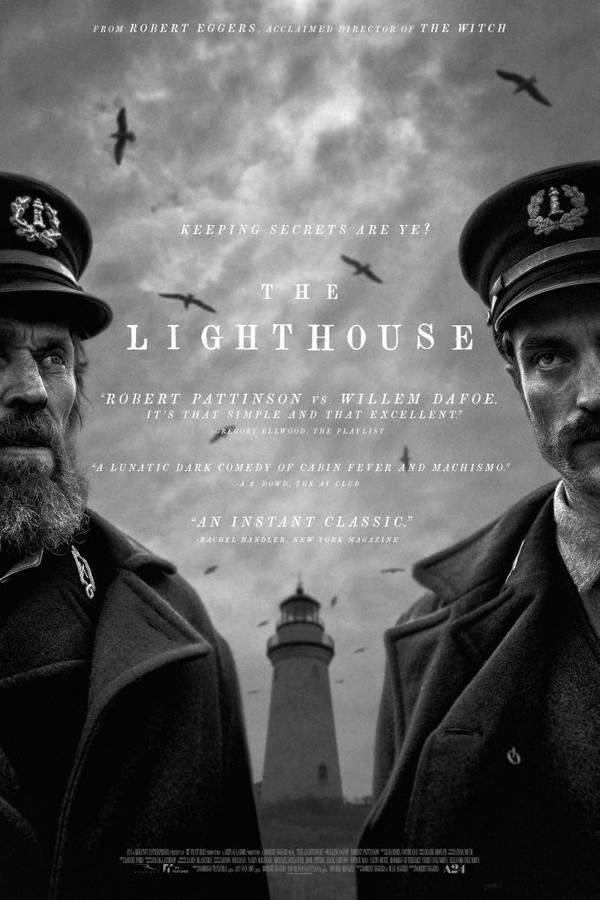
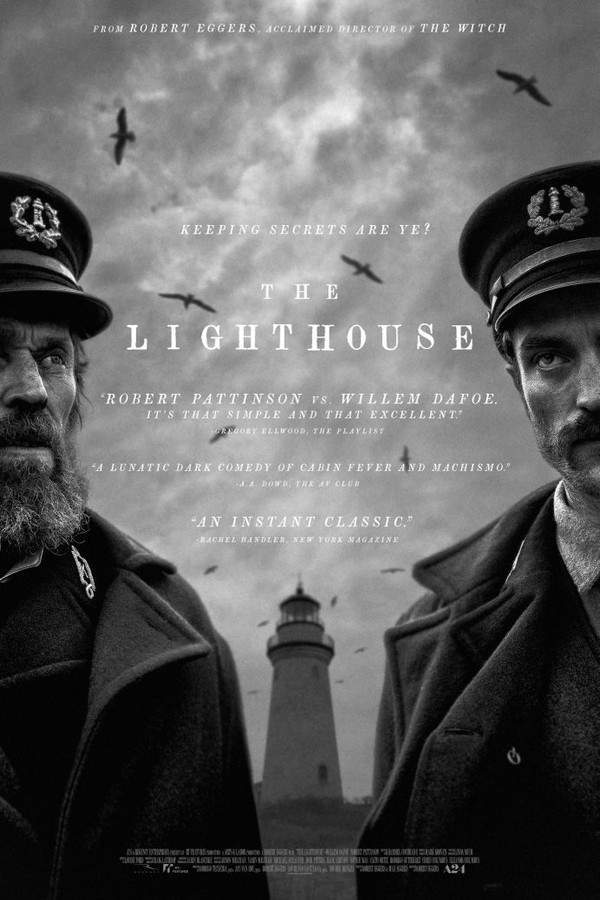
The Lighthouse (2019) movie poster

Ending Explained

The Lighthouse (2019) Ending Explained – Final Scene & Meaning

Release, runtime and language
2019 · 109 min · English
Echo score 89
Loading streaming availability…
Directed by
Robert Eggers
Starring
Willem Dafoe, Robert Pattinson, Valeriia Karaman
Budget
$11M

In 19th-century New England, two lighthouse keepers find themselves isolated on a remote island, battling the elements and their own deteriorating sanity. As a fierce storm traps them, the men confront unsettling secrets and question their perceptions of reality, blurring the lines between dream and despair. The harsh environment and growing tension test their relationship and push them to the brink.

On this page (8)
  1. 1 Where to watch
  2. 2 What happens at the end
  3. 3 Final events in order
  4. 4 Ending questions answered
  5. 5 The book behind the movie
  6. 6 Movie threads
  7. 7 Movies like The Lighthouse
  8. 8 Every angle
Loading streaming availability…

Ending explained · contains spoilers

What Happens at the End of The Lighthouse?

How The Lighthouse (2019) ends, what the final scene means, which earlier moments set it up and how to read the ending if the film leaves it open. The full ending explained, with every spoiler.

The ending of The Lighthouse leaves viewers with a powerful sense of ambiguity and mythic symbolism. Throughout the film, Winslow (later revealed to be Thomas Howard) is consumed by guilt and a desire to uncover the secrets of the lighthouse, which pushes him towards madness. The final scenes are deliberately vague—Winslow is shown burying Wake alive, and then lying on the rocks with seagulls tearing into his body, echoing the myth of Prometheus, who suffers eternal punishment for seeking forbidden knowledge. This brutal image suggests that Winslow's obsession with understanding the lighthouse's mysteries has led him to a similar fate of eternal torment.

Meanwhile, Wake’s prophetic final monologue about Proteus and Prometheus hints at the broader themes of knowledge, power, and self-destruction. The mythology references reflect the two characters’ psychological struggles and their symbolic roles—Prometheus representing the desire for enlightenment, and Proteus embodying the elusiveness of truth. The closing visuals—flocks of seagulls and the barren, rocky landscape—underline the idea that Winslow’s pursuit of truth is ultimately destructive, and that the line between reality and fantasy, self and Other, has blurred beyond distinction.

In the end, The Lighthouse does not provide clear answers but rather immerses the viewer in its mythic, psychological landscape, leaving the fate of Winslow ambiguous. Is he a survivor of his own madness, or has he become a myth himself, sacrificed to the dark, primal forces that govern the sea and the human mind? The film’s ending invites us to interpret his journey as either a descent into eternal punishment or a symbolic awakening to the truths that lie hidden behind the lighthouse’s shadow. Ultimately, it’s a haunting meditation on humanity’s relentless quest for knowledge and the inevitable costs that come with it.

Last updated: June 25, 2025 at 08:57

Was this helpful?

The last 4 events

How The Lighthouse Ends: The Final Events in Order

The last events of The Lighthouse (2019) in chronological order, the run-up to the ending explained above. The complete timeline has all 12 events, scene by scene.

Open the full timeline
  1. Spiraling Madness

    The stormy winds and relentless isolation heighten the psychological warfare between Winslow and Wake. As the power dynamic shifts, Winslow begins to experience vivid hallucinations, seeing Wake as various monstrous figures.

    When
    During a storm
    Where
    Lighthouse
  2. Attempts to Escape

    Desperation drives Winslow to make a frantic attempt to escape their harrowing existence. This decision leads to terrifying consequences that further entrap him within the nightmarish reality of their isolation.

    Where
    Lighthouse
  3. Climactic Revelation

    Winslow reaches the top of the lighthouse, where the blinding light becomes overwhelmingly consuming. This moment marks a critical turning point where joy morphs into madness, leading him into delusional laughter that pierces the night.

    Where
    Top of the Lighthouse
  4. Final Haunting

    The film culminates in a haunting image of Winslow, left vulnerable to the elements. Surrounded by relentless seagulls, his fate remains uncertain, echoing the themes of isolation, madness, and the supernatural that permeate his experience.

    Where
    Island

Ending questions answered

The Lighthouse Ending: Your Questions Answered

The questions people ask most about the ending of The Lighthouse (2019): what the final scene means, how the twist works, what happens to each character and how to read the ending. Each answer contains spoilers.

Q1

Why does Winslow bury Wake alive?

Winslow buries Wake alive as the culmination of his descent into madness. After weeks of isolation, sleeplessness, and obsession with the lighthouse and its secrets, Winslow's grip on reality shatters completely. The act represents his final rejection of the only other person on the island, as he chooses his own path toward the lighthouse's mysteries, seeing Wake as an obstacle rather than a companion.

Foreshadowing: Earlier scenes show Winslow's growing resentment of Wake's control over the lighthouse and his increasing hallucinations.

  • winslow
  • wake
  • burial
  • madness
  • lighthouse keeper
  • murder
Q2

What happens to Winslow at the end?

Winslow lies on the rocky shoreline as seagulls tear into his flesh, mirroring the myth of Prometheus. The film leaves ambiguous whether he dies from this attack or if this is a hallucinatory vision. The final image suggests he has become a mythic figure himself, eternally punished for his obsessive pursuit of the lighthouse's forbidden knowledge.

Foreshadowing: Wake repeatedly warns Winslow about the dangers of the light and the price of seeking what lies beyond.

  • winslow ending
  • seagulls
  • prometheus
  • death
  • myth
Q3

What does the Prometheus ending mean?

The Prometheus imagery signifies that Winslow's relentless pursuit of the lighthouse's secrets has led him to suffer eternal punishment, just as Prometheus suffered for stealing fire from the gods. His obsession with knowledge and enlightenment has consumed him entirely, leaving him broken on the rocks as a sacrifice to forces beyond human understanding.

Foreshadowing: Wake's references to the gods and his final monologue directly invoke Prometheus and Proteus.

  • prometheus myth
  • lighthouse symbolism
  • forbidden knowledge
  • punishment
Q4

Is Winslow really Thomas Howard?

The film reveals that Winslow's full name is Thomas Howard, making him the son of the previous lighthouse keeper. This revelation explains his mysterious pull toward the lighthouse and why he seems destined to follow in his father's footsteps. His obsession with the light becomes a literal inheritance, a familial compulsion to uncover whatever secrets the lighthouse holds.

Foreshadowing: Winslow displays an unusual familiarity with the island and an intense curiosity about the lighthouse's inner workings from the start.

  • thomas howard
  • winslow identity
  • lighthouse keeper heritage
  • father
Q5

What is Wake talking about in his final monologue?

Wake's final monologue about Proteus and Prometheus directly addresses the film's central themes. Proteus represents the elusive nature of truth, always shifting and impossible to grasp, while Prometheus symbolizes the dangerous quest for forbidden knowledge. By invoking these myths, Wake frames their entire ordeal as a timeless struggle between humanity's desire to understand and the cosmic forces that punish such ambition.

Foreshadowing: Wake has referenced Greek mythology and the gods throughout the film, treating the lighthouse as a sacred, dangerous entity.

  • proteus
  • prometheus
  • wake monologue
  • mythology
  • truth
  • knowledge
Q6

Why do the seagulls attack Winslow at the end?

The seagull attack represents cosmic retribution for Winslow's transgressions. In the myth of Prometheus, eagles (often associated with seagulls) tear at the Titan's liver daily. By having seagulls devour Winslow, the film visually enacts this eternal punishment, suggesting the lighthouse's power has transformed him into a mythic sacrifice. Some interpretations also view the attack as Winslow's mind fully collapsing into hallucination.

Foreshadowing: Wake repeatedly calls seagulls 'the angels' and treats them with reverence, hinting at their symbolic significance.

  • seagulls
  • prometheus punishment
  • hallucination
  • cosmic punishment
Q7

What was the secret of the lighthouse?

The lighthouse's secret remains deliberately ambiguous, which is central to the film's meaning. Rather than revealing concrete knowledge, the film suggests the lighthouse represents the ultimate, unknowable truth that drives men to madness when they pursue it. Whether it contains actual supernatural power, represents psychological projection, or embodies something else entirely is left for the viewer to interpret.

Foreshadowing: Wake guards the lighthouse's upper chamber jealously and insists that Winslow is not yet ready to see what lies within.

  • lighthouse secret
  • truth
  • forbidden knowledge
  • mystery
  • illumination
Q8

Is Winslow alive or dead at the end?

The film deliberately leaves Winslow's fate uncertain. He could be dying on the rocks as the seagulls attack, he could already be dead and experiencing a final hallucination, or he could have transcended into a mythic state. This ambiguity reflects the film's broader exploration of reality versus fantasy, suggesting that the distinction no longer matters by the end, Winslow has become part of the lighthouse's legend either way.

Foreshadowing: The film consistently blurs reality and hallucination throughout, making any definitive reading unreliable.

  • winslow fate
  • survival
  • death ambiguity
  • ending interpretation
Q9

What does the ending symbolize thematically?

The ending serves as a meditation on the destructive nature of obsessive knowledge-seeking. Winslow's journey illustrates how the relentless pursuit of truth, power, or enlightenment can consume a person entirely. The lighthouse, once a symbol of guidance and hope, becomes an agent of destruction, revealing that some truths are meant to remain hidden and that the cost of forbidden knowledge is the self.

Foreshadowing: From the start, the lighthouse is presented as an object of almost religious obsession for Winslow.

  • themes
  • knowledge
  • obsession
  • enlightenment
  • destruction
  • sacrifice
Q10

Was Wake actually a mermaid or siren?

Wake is not literally a mermaid or siren, these visions are products of Winslow's deteriorating mental state. However, the mermaid imagery serves a symbolic purpose: in mythology, sirens lure sailors to their destruction, and Wake seems to be luring Winslow deeper into madness. The ambiguous flashbacks showing Winslow with the mermaid figure suggest these are either memories of his previous life or complete hallucinations that reflect his distorted desires and fears.

Foreshadowing: Winslow's flashbacks to the mermaid appear at key moments when his mental state is most fragile, suggesting they are psychological rather than literal.

  • mermaid
  • siren
  • hallucination
  • wake identity
  • fantasy vs reality
Q11

Why does Winslow become so obsessed with the light?

Winslow's obsession stems from multiple factors: his identity as Thomas Howard and perhaps a hereditary compulsion, his desperate need for purpose and meaning during isolation, and the light's symbolic representation of truth and transcendence. As his sanity deteriorates, the lighthouse becomes both the answer to all his problems and the source of his destruction, the only thing he can think about despite Wake's warnings about its dangers.

Foreshadowing: Winslow immediately asks to be allowed into the lighthouse's lantern room and becomes increasingly fixated on it throughout the film.

  • obsession
  • lighthouse light
  • truth
  • transcendence
  • madness

Movie threads

More Movies Like The Lighthouse, by Mood & Story

Curated lists built around what makes The Lighthouse tick: the same mood, the same kind of story or the same emotional payoff. Each list explains why these movies belong together.

Movies about descent into madness in isolation like The Lighthouse

Characters trapped in remote locations slowly succumb to paranoia and madness. Explore movies like The Lighthouse where extreme isolation fuels a slow-burn psychological breakdown. These stories feature characters trapped in remote outposts, space stations, or deserted landscapes, battling their own minds as much as their environment. If you liked the paranoid, claustrophobic dread of The Lighthouse, you'll find similar themes here.

  • claustrophobic
  • paranoid
  • unsettling
  • oppressive
  • despairing
  • psychological
  • Tone: dark, paranoid, bleak
  • Pacing: slow burn, atmospheric
Why these movies?

The story pattern: The narrative is a steady, inescapable spiral from order into chaos. Characters, often in pairs or small groups, are confined to a single, oppressive location. Tensions escalate through psychological warfare, haunting visions, and the erosion of trust, culminating in a bleak or ambiguous ending where sanity is lost.

Why they belong together: They are grouped by the core experience of watching sanity corrode under the stress of confinement. They share a DARK tone, HEAVY emotional weight, and a SLOW, deliberate pacing that builds an oppressive, claustrophobic atmosphere. The central conflict is internal, pitting the characters against their own perceptions.
Movies with ambiguous supernatural horror like The Lighthouse

Stories where supernatural dread blurs the line between hallucination and myth. Discover films similar to The Lighthouse that masterfully blend psychological breakdown with ambiguous supernatural elements. These movies leave you questioning the nature of the horror—is it a curse, a monster, or a mind unraveling? If you enjoyed the mythic undertones and reality-bending delirium of The Lighthouse, this collection is for you.

  • dreamlike
  • unsettling
  • mythic
  • ambiguous
  • supernatural
  • psychological
  • Tone: dark, dreamlike, unsettling
  • Pacing: slow, immersive
Why these movies?

The story pattern: The plot unfolds as a character's grip on reality weakens, interwoven with symbolic or folkloric imagery. Key events—like visions, curses, or encounters with mythical beings—are intentionally left open to interpretation. The story structure is often non-linear or dreamlike, prioritizing mood and thematic resonance over clear-cut explanations.

Why they belong together: They share a COMPLEX narrative approach that challenges the viewer's perception. The experience is defined by a constant, unsettling ambiguity, a DARK tone, and a HEAVY emotional weight derived from existential dread. The films use slow, immersive pacing to build a world where logic is subordinate to atmosphere and symbolism.

If you liked this

Movies Like The Lighthouse

Similar movies to The Lighthouse: the same genre, themes or kind of story. Each one comes with its own plot summary, timeline and ending explained.

Browse all movie summaries

Every angle

The Lighthouse (2019) Explained: Plot, Ending, Timeline & Characters

Everything about The Lighthouse in one place: what happens in the plot summary, the timeline in chronological order, the characters and meaning, the ending explained and a spoiler-free summary. What's After the Movie adds the cast, box office and post-credit scenes.

Coming soon on iOS and Android

The Plot Explained Movie Summary App

Plot summaries, endings explained and timelines on your phone. Catch up on any movie in minutes, save your favorites and never miss a twist again.

Be the first to know when we launch. Your email stays private, always.

Learn more about the app