Plot Explained Spoilers guaranteed!
Plot Explained

Browse by genre

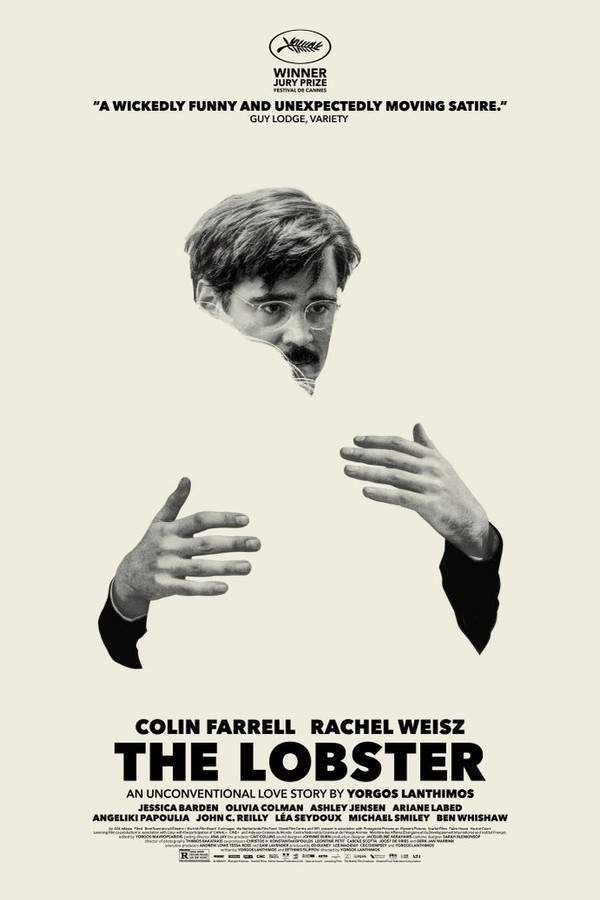
The Lobster (2016) movie poster

Plot Summary

The Lobster (2016) Plot Summary & Ending Explained

Release, runtime and language
2016 · 119 min · English
JustWatch #5,003 20
Directed by
Giorgos Lanthimos
Starring
Rachel Weisz, Colin Farrell, Olivia Colman, Jessica Barden

In a dystopian world, unmarried individuals are obligated to find a partner or risk being transformed into animals and disappearing into the wilderness. After escaping a peculiar hotel where singles are pressured to couple up, one man seeks refuge in the woods and unexpectedly falls for a woman. Their forbidden relationship challenges the strict rules governing love and freedom, leading to unforeseen consequences in this darkly comedic and thought-provoking story.

On this page (7)
  1. 1 Where to watch
  2. 2 What happens: full plot
  3. 3 Plot questions answered
  4. 4 How it ends
  5. 5 Movie threads
  6. 6 Movies like The Lobster
  7. 7 Every angle

Where to watch

Where to Watch The Lobster (2016)

Where can you watch The Lobster? Stream, rent or buy it in the US, including on HBO Max, Amazon Video and Apple TV Store: current JustWatch availability with up-to-date prices.

Streaming availability powered by JustWatch

Full plot summary · contains spoilers

What Happens in The Lobster: Full Plot Summary

The whole story of The Lobster (2016) explained, from the opening scene to the final frame: every key event, every twist and what it all adds up to. Read it as a quick recap before the sequel, to check a scene you missed, or to finally understand what really happened.

David finds himself at a hotel after his wife leaves him for another man. Upon arrival, the hotel manager informs him that individuals who are single have a mere 45 days to find a partner, or else they will be transformed into an animal of their choice. David, whose loyal canine companion is his brother Bob, is determined to become a lobster should he fail to secure a mate. During his stay, he meets Robert, a man with a lisp, and John, a man with a limp, as all guests seem to obsessively pursue partners with superficial similarities, believing such traits to be essential for compatibility.

Within the hotel's walls, a myriad of absurd rules dictate the residents' lives: while masturbation is strictly forbidden, receiving sexual stimulation from the hotel maid is compulsory. Guests find themselves attending dances and consuming propaganda that glorifies the benefits of being in a partnership. A particularly grim method for extending their deadline is hunting and capturing the “loners,” individuals residing in the forest who shun relationships. For each loner caught, guests gain an extra day in their hunt for love. During one such excursion, a woman enamored with butter biscuits attempts to seduce David, who respectfully declines. She reveals her dire plan to end her life by jumping from the hotel window if she remains unpaired.

As the plot unfolds, John cleverly gains the affection of a woman plagued by constant nosebleeds by deliberately injuring himself. They are consequently moved to the couples' section to begin a trial relationship. David, meanwhile, opts to pursue a notoriously ruthless woman known for her record of tranquilizing loners. Their initial meeting is interrupted by the anguished cries of the biscuit-loving woman, who has injured herself after her desperate leap from a window. To win the cold-hearted woman's favor, David feigns enthusiasm for her suffering. Their connection grows when they share time in a hot tub, where she pretends to choke on an olive to gauge his responsiveness. Satisfied with his indifference, she concludes they are well-matched, and they are soon shifted to the couples' suite.

David awakens one morning to the horrifying sight of his brother being brutally killed by his new partner. In his grief, David realizes that their bond is based on deception and attempts to escape her clutches. With the help of a compassionate maid—who is later revealed to be a spy for the loners—he tranquilizes his partner and transforms her into an undisclosed animal.

Fleeing the hotel, David joins the loners, who live by a strict code forbidding romance under threat of mutilation. Among them, David forms a secret bond with a woman who shares his short-sightedness, and together, they develop a unique gestural language for communication. Their secret missions into the nearby city require them to pose as a married couple, a ruse they both secretly relish.

The loners soon orchestrate a raid on the hotel. In a twist, David informs the woman with nosebleeds about John's feigned condition. Other loners manage to hold the hotel manager and her husband at gunpoint, coercing him into shooting her to save himself; however, the gun is ironically unloaded, leaving the couple to confront one another in their desperate situation.

As chaos ensues, the leader of the loners uncovers the short-sighted woman’s journal containing David's escape plans. In a cruel ploy, the leader and the maid take the woman to the city under the pretense of curing her sight but instead blindfold her permanently. In a fit of rage, she tries to retaliate against the leader, who uses the maid as a shield, ultimately leading to the maid's demise.

Now confronted with the stark realization that they struggle to find common ground, David finds himself enraged. One fateful morning, he manages to subdue the leader, leaving her tied in an open grave to be devoured by wild dogs. He and the blind woman make their escape, stopping at a restaurant in the city. In a moment of uncertainty, David heads to the restroom and contemplates a drastic decision as he hesitates to blind himself with a steak knife.
Last updated: November 16, 2024 at 18:03

Was this helpful?

Plot questions answered

The Lobster Plot Explained: Your Questions Answered

The questions people ask most about The Lobster (2016): what happens in the confusing scenes, why the characters do what they do, the twists, hidden details and what the ending means. Each answer contains spoilers.

Q1

Why does the hotel force guests to receive sexual stimulation from maids?

The hotel enforces this rule as part of its absurd system of controlling single people. The regime treats forced intimacy as acceptable while punishing natural desires like masturbation, demonstrating how the hotel's rules are designed to manipulate and dehumanize guests under the guise of helping them find partners.
Foreshadowing: Earlier, David learns that masturbation is forbidden while sexual acts with staff are mandatory, establishing the inverted moral logic of the hotel.

  • hotel rules
  • sex
  • maids
  • manipulation
  • control
Q2

Why does John hurt himself to attract the woman with nosebleeds?

John deliberately injures himself to mimic the nosebleed woman's condition, believing that superficial physical similarities are the basis for compatibility in the hotel's system. This calculated deception allows him to be paired with her and escape transformation, reflecting how guests exploit the absurd matching criteria.

Foreshadowing: Earlier, guests are shown obsessively pursuing partners with superficial similarities, suggesting that the nosebleeds condition could be exploited.

  • john
  • nosebleeds
  • deception
  • matching
  • superficial
Q3

Why does David's partner kill his brother Bob?

David's partner kills Bob, his actual brother who was transformed into a dog, as a display of dominance and commitment to the hotel's system. The murder demonstrates that her relationship with David was purely strategic, not genuine, and serves as a warning about the consequences of entering the couples' section without authentic connection.

Foreshadowing: Earlier, David's partner shows ruthless efficiency in tranquilizing loners during hunting expeditions, establishing her dangerous nature.

  • bob
  • killing
  • brother
  • partner
  • escape
Q4

Why are loners forbidden from falling in love?

The loners in the forest forbid relationships as a reaction against the hotel's oppressive coupling system. Their leader enforces this rule through mutilation as a form of control, creating an equally rigid alternative to the hotel's marriage mandate. Both factions use extreme rules to enforce conformity, making the loners morally similar to the hotel they oppose.

Foreshadowing: Earlier, the hotel's absurd pressure to couple up drives some guests to escape into the forest, suggesting the loners' philosophy emerges as a response to that pressure.

  • loners
  • forbidden
  • love
  • rebellion
  • control
Q5

What happens to the short-sighted woman at the end?

The loner leader tricks the short-sighted woman into thinking they're taking her to get her eyes cured, but instead permanently blindfolds her as punishment for her secret relationship with David. This act of cruelty occurs after discovering her journal with escape plans, leaving her visually impaired and trapped.

Foreshadowing: Earlier, David and the short-sighted woman develop their secret bond through gesture communication, which the leader monitors through the maid spy.

  • blindfold
  • short-sighted woman
  • leader
  • punishment
  • betrayal
Q6

Why does the ruthless woman pretend to choke on an olive?

She pretends to choke as a test to see if David genuinely cares about her wellbeing. When he shows indifference rather than concern, she interprets this as proof they are well-matched, since she values emotional detachment. This disturbing test confirms their compatibility within the hotel's twisted system.

Foreshadowing: Earlier, she is established as the most ruthless guest at the hotel, known for tranquilizing numerous loners, showing her capacity for manipulation.

  • olive
  • choke
  • test
  • ruthless
  • indifference
Q7

Why does the hotel manager's husband have to shoot his wife during the raid?

During the loners' raid, they force the manager's husband at gunpoint to shoot his wife to save himself, testing whether their claimed love is genuine. The gun is unloaded, revealing the couple's relationship was also based on self-interest rather than authentic connection when they refuse to sacrifice for each other.

Foreshadowing: Earlier, the hotel manager enforces strict rules about finding partners, suggesting her own marriage may be equally calculated.

  • manager
  • husband
  • shoot
  • raid
  • test
Q8

Does David blind himself with the steak knife at the end?

The film ends ambiguously with David in the restaurant restroom, holding a steak knife and contemplating blinding himself to match his now-blind partner. The scene cuts to black before showing his actual decision, leaving whether he followed through intentionally unresolved to mirror the film's theme of extreme sacrifice for love.

Foreshadowing: Earlier, the short-sighted woman expresses joy at the possibility of getting her eyes cured, and David shares her condition, setting up the parallel sacrifice.

  • blind
  • knife
  • ending
  • restaurant
  • decision
Q9

Why do hotel guests hunt loners in the forest?

Hotel guests hunt loners to extend their 45-day deadline for finding a partner. Each loner captured grants them one extra day, creating a perverse incentive where killing desperate outcasts becomes the price of avoiding animal transformation. This system turns guests into willing participants in the regime's violence.

Foreshadowing: Earlier, the hotel manager explains the transformation deadline, establishing the stakes that make hunting loners attractive.

  • hunting
  • loners
  • forest
  • deadline
  • extension
Q10

Why does the hotel require guests to find partners with superficial similarities?

The hotel's matching system requires guests to find partners with obvious physical or behavioral similarities, such as nosebleeds, lisps, or limps, as the primary basis for compatibility. This rule exposes the absurdity of treating superficial traits as indicators of deeper connection, satirizing shallow dating criteria in the real world.

Foreshadowing: Earlier, David meets Robert with a lisp and John with a limp, demonstrating how guests obsess over these arbitrary matching requirements.

  • similarities
  • matching
  • superficial
  • physical traits
  • compatibility

Ending explained

What Happens at the End of The Lobster?

How The Lobster (2016) ends, in short: the final scene, the last twist and what it means for the characters. The full ending explained, with every spoiler, lives on its own page.

Read the full ending explained

The ending of The Lobster is deliberately ambiguous and open to interpretation, emphasizing the film's themes of love, societal pressure, and personal choice. Throughout the story, David, played by Colin Farrell, is caught between a system that values superficial traits for pairing and his own desire for genuine connection. His decision to attempt blinding himself in the film’s final moments is a deeply symbolic act driven by his desperation to maintain his relationship with the Short-Sighted Woman, played by Rachel Weisz. This shocking gesture reflects his belief that by sharing the same inability to see, they can belong together, overcoming the superficial matchmaking system that has dictated their lives.

Some interpret David’s act as a true sacrifice — a literal self-blinding to align with the woman he loves and to prove his commitment. Others see it as a symbolic gesture of his rejection of society's shallow criteria for love, or perhaps even a sign of his complete surrender to the oppressive world around him. The film leaves hanging whether David actually goes through with blinding himself or if he hesitates at the last moment, with the screen fading to black before revealing his fate. This ambiguity underscores the movie’s critique of how society and personal fears distort the notion of love and connection. Ultimately, David’s choice, or his hesitation, prompts viewers to reflect on the lengths to which people are willing to go — including extreme acts — to find or maintain love in a world that often devalues genuine emotional bonds. The ending stays with audiences, raising questions about whether true love requires sacrifice, self-denial, or perhaps rebellion against societal norms.

The Lobster ending explained in full

Movie threads

More Movies Like The Lobster, by Mood & Story

Curated lists built around what makes The Lobster tick: the same mood, the same kind of story or the same emotional payoff. Each list explains why these movies belong together.

Dystopian Satires of Conformity like The Lobster

Absurd societies where rigid rules expose the cruelty of fitting in. If you liked the absurd social critique in The Lobster, explore more movies that use dystopian or surreal settings to question the rules of society and relationships. These films blend dark humor with serious themes about the cost of fitting in.

  • absurd
  • satirical
  • unsettling
  • oppressive
  • bleak
  • cold
  • Tone: dark, satirical, unsettling
  • Pacing: steady, methodical
Why these movies?

The story pattern: Stories typically follow a protagonist navigating a society with absurd, strictly enforced rules. The central conflict arises from the tension between individual desire and systemic pressure to conform, often leading to extreme choices and ambiguous outcomes that critique the system itself.

Why they belong together: They are grouped by their shared use of a satirical, high-concept framework to explore themes of social pressure, identity, and the artificiality of prescribed relationships. The tone balances dark, intellectual humor with a palpable sense of existential unease.

Bleak and Absurdist Relationship Dramas like The Lobster

Love stories where connection is a desperate act in a cruel world. For viewers who appreciated the harsh and unconventional love story in The Lobster, this collection features movies where romance is twisted by dystopian settings or existential crises, resulting in heavy, thought-provoking emotional journeys.

  • bleak
  • existential
  • forbidden love
  • unsettling
  • psychologically intense
  • absurdist
  • Tone: bleak, heavy, absurdist
  • Pacing: steady, deliberate
Why these movies?

The story pattern: The narrative revolves around characters seeking connection in environments that are inherently hostile to genuine emotion. Love becomes a form of rebellion or survival, leading to intense moral dilemmas, profound sacrifices, and endings that question the very nature of the relationship.

Why they belong together: These films share a deeply pessimistic view of romance, where love is fraught with existential danger and emotional manipulation. They combine a heavy emotional weight with an absurdist sensibility, creating a unique blend of dread, dark comedy, and poignant human struggle.

If you liked this

Movies Like The Lobster

Similar movies to The Lobster: the same genre, themes or kind of story. Each one comes with its own plot summary, timeline and ending explained.

Browse all movie summaries

Every angle

The Lobster (2016) Explained: Plot, Ending, Timeline & Characters

Everything about The Lobster in one place: what happens in the plot summary, the timeline in chronological order, the characters and meaning, the ending explained and a spoiler-free summary. What's After the Movie adds the cast, box office and post-credit scenes.

Coming soon on iOS and Android

The Plot Explained Movie Summary App

Plot summaries, endings explained and timelines on your phone. Catch up on any movie in minutes, save your favorites and never miss a twist again.

Be the first to know when we launch. Your email stays private, always.

Learn more about the app