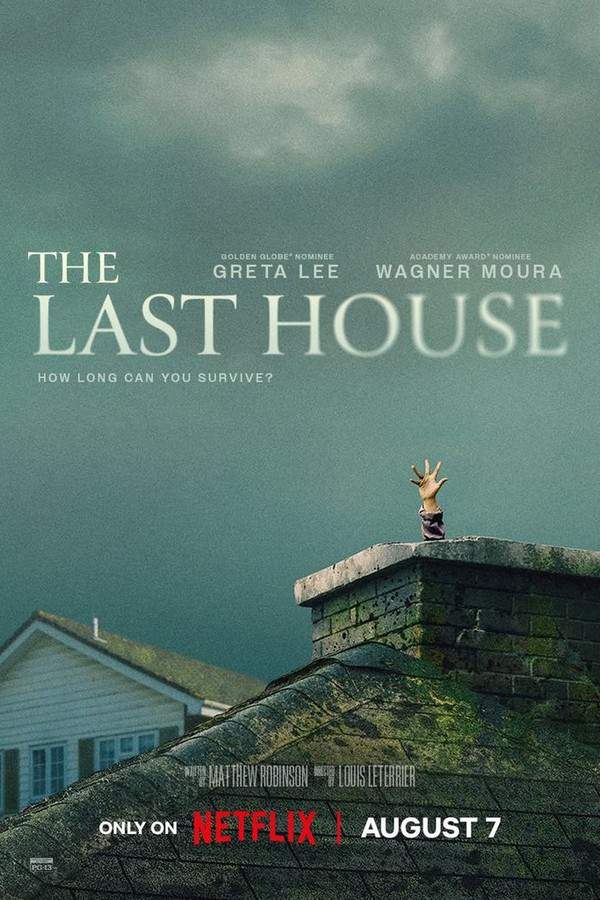
When a sudden, unseen force seals a family of four inside their house, they find themselves cut off from the outside world. With dwindling supplies and an ominous presence pressing in, they must rely on each other’s strengths, confront rising fear, and devise ways to endure the mysterious threat that refuses to let them escape.
Find where to stream, rent, or buy The Last House (2026) in the US with current JustWatch availability, up-to-date pricing, and platform listings for subscription, rental, and digital purchase options.
Warning: spoilers below!
Haven’t seen The Last House yet? This summary contains major spoilers. Bookmark the page, watch the movie, and come back for the full breakdown. If you're ready, scroll on and relive the story!
Still thinking about how The Last House (2026) ended? Here’s a full breakdown of the ending, key final moments, major twists, and the deeper meaning behind the film’s conclusion.
After more than five years sealed inside their home, the Delgado family faces the ancient ocean dwellers that have flooded the world in response to humanity’s pollution and overheating of the seas. Ann dives through the submerged house and sewer system, while Ruth realizes the creatures are attempting to communicate rather than merely hunt them. Jason finally trusts his daughter, lowers his weapons, and stops trying to dominate the threat. That act of mercy convinces the creatures that the family can change, and they release the doors, allowing Ann, Jason, Graham, and Ruth to leave the house alive.
The family steps into a transformed, water-covered world rather than recovering the neighborhood that existed before. The apparent alien invasion is revealed as the return of beings who were on Earth before humanity, making the Delgados the intruders who must learn to coexist. Ruth later calls over a radio to ask whether anyone else survived, and a faint voice answers hello just before the credits. The identity of the speaker remains deliberately secret, but the response confirms that the family’s release is not an isolated reprieve. The ending trades Jason’s survival-through-control ethic for listening, leaving hope in a first contact made through a child’s openness rather than another battle.
Last updated: August 25, 2026 at 14:20
Read frequently asked questions about the ending of The Last House (2026), including final-scene interpretation, twist explanations, character outcomes, and the deeper meaning behind the conclusion. This ending explained FAQ is designed for viewers searching for clear spoiler-heavy answers and ending breakdown insights.
The ancient ocean dwellers release the Delgado family because Jason stops trying to fight and dominate them, instead trusting his daughter Ruth's insight that the creatures are attempting to communicate rather than hunt. Ruth's realization that the presence is reaching out, combined with Jason lowering his weapons and choosing mercy over control, convinces the beings that humans are capable of change. That single act of restraint transforms a five-year siege into a first contact, and the doors unlock as a result.
Ruth had previously tried to warn her father that the creatures were not what he assumed, framing his aggression as the real obstacle to their survival.
The identity of the voice that replies to Ruth on the radio is deliberately left secret by the film, and no name or location is ever revealed. What the response does confirm is that the Delgados are not the only survivors of the flood, turning what looked like an isolated reprieve into evidence of a wider remnant of humanity. The ambiguous speaker functions as a narrative hook, suggesting the family will not face the new world alone while refusing to commit to a specific outcome.
The ending reveals that the creatures are not invaders at all but ancient beings who lived on Earth long before humans, resurfacing because of humanity's pollution and the overheating of the oceans. From their perspective, the flood is a reclamation, and the Delgados are the intruders who must learn to coexist. This reframing turns the apparent alien invasion into a warning about ecological debt rather than an extraterrestrial attack.
The creatures only emerged during rainfall and behaved like custodians of the water rather than conquerors of land, hinting at an older origin.
Jason lowers his weapons because, after five years of failed attempts to fight or outsmart the creatures, he finally accepts that his survival-through-control ethic has only prolonged the standoff. Ruth's insistence that the beings are trying to communicate forces him to confront the possibility that his aggression is what keeps the doors locked. Choosing to listen rather than fight is the turning point that convinces the creatures the family can change, and it is the moment that ends the siege in The Last House.
Jason's earlier dismissals of Ruth's instincts are positioned as the family conflict driving the stalemate, making her final insight feel earned.
When the Delgado family steps out of the house, they discover that the neighborhood they remember has been swallowed by water and transformed beyond recognition. The Earth has been reshaped by the flood that the ancient beings unleashed, leaving them to emerge into a post-apocalyptic landscape rather than a recovering Seattle street. The film deliberately denies the family a return to normalcy, framing their freedom as survival in unfamiliar territory.
Earlier scenes showed water creeping into the home, signaling long before the ending that the siege was tied to a global rise in sea level.
Ruth comes to understand that the creatures are not hunting the family but trying to communicate with them, reframing every terrifying encounter of the past five years as failed attempts at contact. Her breakthrough shifts the family's interpretation of the threat from predator to neighbor, which is what ultimately prompts Jason to stand down. The film positions this child's perspective as the emotional and narrative key to ending the siege.
Ruth had previously been the only one to speak to the creatures calmly rather than fight, hinting at her role as translator.
The ending of The Last House trades the survival-through-control ethic that Jason embodies for a philosophy of listening, suggesting that humanity's future depends on humility rather than dominance. By making first contact possible only through a child's openness, the film argues that cooperation with the natural world requires abandoning the assumption that strength and weapons are the only answers. The flooded Earth becomes a visual reminder that the cost of refusing that lesson has already been paid.
Ann physically leads the final escape by diving through the submerged house and navigating the sewer system while the rest of the family follows. Her willingness to enter the flooded lower levels of the home turns Ruth's insight into action, giving the family a route out that was previously inaccessible. Without Ann's courage in the water, Jason's act of mercy would have had no door to open onto.
Ann had previously been the most restless family member, the one most desperate to leave, which makes her eventual role as the one who physically breaks out feel consistent.
The ending is deliberately bittersweet: the Delgados survive and make contact with another survivor on the radio, but they emerge into a flooded, post-apocalyptic Earth rather than the home they once knew. Hope comes from the fact that the family escaped through compassion and that humanity is not entirely gone, while loss comes from the destruction of their old world and the years of trauma they carry out with them. The film refuses to pretend the crisis is over, choosing instead to leave the door cracked open rather than fully resolved.
The family genuinely survives, but the flooded world outside functions as a larger and less forgiving enclosure than the house they have just left. They are free to move and to seek other survivors, as Ruth's radio call confirms, yet they must now exist on a planet reclaimed by the creatures they once feared. The ending is not a trap, but it makes clear that survival no longer means returning to the life they had before the siege began.
Don't stop at just watching - explore The Last House in full detail. From the complete plot summary and scene-by-scene timeline to character breakdowns, thematic analysis, and a deep dive into the ending - every page helps you truly understand what The Last House is all about. Plus, discover what's next after the movie.
Read a complete plot summary of The Last House, including all key story points, character arcs, and turning points. This in-depth recap is ideal for understanding the narrative structure or reviewing what happened in the movie.
Track the full timeline of The Last House with every major event arranged chronologically. Perfect for decoding non-linear storytelling, flashbacks, or parallel narratives with a clear scene-by-scene breakdown.
Discover the characters, locations, and core themes that shape The Last House. Get insights into symbolic elements, setting significance, and deeper narrative meaning - ideal for thematic analysis and movie breakdowns.