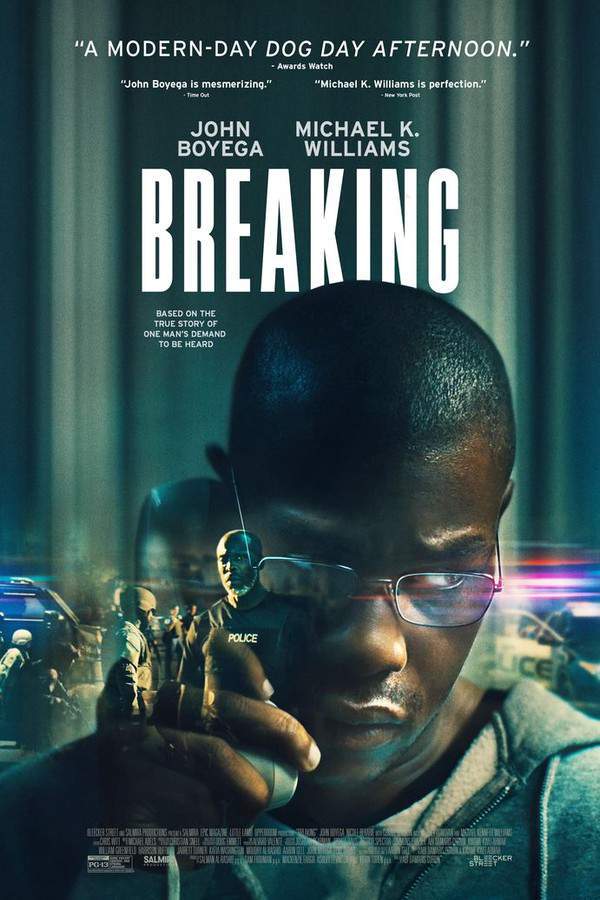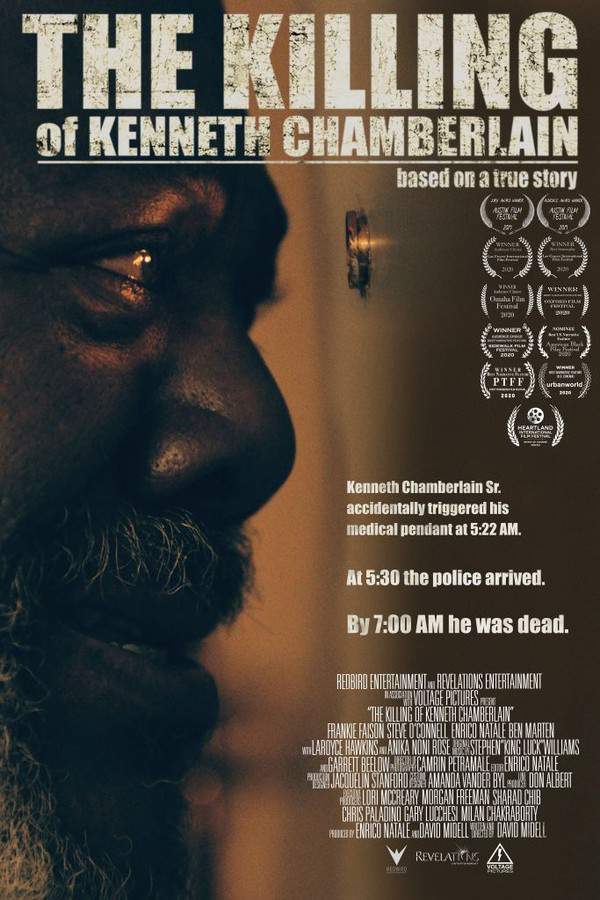
This film recounts the true and tragic story of Kenneth Chamberlain Sr., a decorated African-American veteran. A malfunction with his medical alert device triggers a police response at his home. What follows is a disturbing confrontation where Chamberlain calmly attempts to explain the situation, but the encounter escalates, resulting in a heartbreaking and senseless loss of life. The film explores the devastating consequences of misunderstanding and miscommunication.
Find where to stream, rent, or buy The Killing of Kenneth Chamberlain (2021) in the US with current JustWatch availability, up-to-date pricing, and platform listings for subscription, rental, and digital purchase options.
Warning: spoilers below!
Haven’t seen The Killing of Kenneth Chamberlain yet? This summary contains major spoilers. Bookmark the page, watch the movie, and come back for the full breakdown. If you're ready, scroll on and relive the story!
Trace every key event in The Killing of Kenneth Chamberlain (2021) with our detailed, chronological timeline. Perfect for unpacking nonlinear stories, spotting hidden connections, and understanding how each scene builds toward the film’s climax. Whether you're revisiting or decoding for the first time, this timeline gives you the full picture.
Last updated: March 05, 2026 at 18:39
Find frequently asked questions about the The Killing of Kenneth Chamberlain (2021) timeline, including chronological order, nonlinear jumps, cause-and-effect links, and scene sequence clarifications. This timeline FAQ helps explain when key events happen, how moments connect, and why the story unfolds in that specific order.
The officers insisted on entering because their protocol required visual contact to verify Kenneth's welfare. They were concerned when Kenneth kept the door closed and refused to show himself, leading them to speculate that something illegal or dangerous might be happening inside, despite having no actual evidence of a crime.
The officers' insistence on entry was driven by standard welfare check procedures, but their suspicion grew as Kenneth remained behind the closed door.
Kenneth refused to open the door because he was convinced the people at his threshold might harm him. As an elderly man facing unexpected visitors in the early morning, he feared for his personal safety and believed he had the right to keep his door closed since there was no warrant or probable cause for the officers to enter.
Kenneth's refusal stemmed from a growing sense of vulnerability and mistrust that developed as the confrontation continued.
The situation escalated through a chain of misunderstandings: Kenneth's refusal to open the door made officers suspect something was wrong, Kenneth's mumbling to himself was misinterpreted as someone else being present, one officer's attempt to de-escalate was overruled, backup was called increasing the pressure, Kenneth produced a knife in desperation, a racial slur was used inflaming tensions, and the door was forcibly breached leading to his death.
Each misunderstanding compounded the next, turning a simple welfare check into a deadly standoff.
Kenneth slid a knife through the door opening as a desperate measure to deter the officers from forcing their way inside. Panicked and feeling cornered, he hoped the visible threat would convince them to retreat. He also argued that their actions were illegal without proper authorization, believing the knife would protect his rights.
This desperate act marked a turning point where Kenneth's fear transformed into defiance.
The racial slur used by one officer underscored the underlying racial tensions present during the confrontation. It represented a deeply harmful and inflammatory element that further escalated an already volatile situation, highlighting the racial dynamics that complicated the interaction between the Black veteran and the police officers.
This use of slurs reflects the systemic issues the film explores regarding race and policing.
The police breached the door because their concerns about potential danger inside had outweighed Kenneth's explanations. Despite Kenneth's insistence that the alert was accidental, the officers feared for his safety or the safety of others they believed might be in the apartment. They felt their duty to verify welfare outweighed his refusal, leading them to force entry.
The decision to breach came from the officers' escalating suspicion rather than any concrete evidence of danger.
The officers misinterpreted Kenneth mumbling to himself inside the apartment as evidence that another person was present. This private expression of fear, meant only for Kenneth himself, was overheard by the officers and incorrectly interpreted as conversation with someone else, deepening their suspicion that something illegal was occurring behind the closed door.
This misinterpretation added to the officers' growing determination to enter the apartment.
Kenneth was tasered as the officers moved to restrain him during the breach. The police used the taser to subdue him as they attempted to gain control of the situation and take him into custody. The force escalated quickly from the use of the taser to the fatal shooting as the officers secured the interior of the apartment.
The use of force escalated rapidly once the door was breached.
Yes, one officer attempted to de-escalate and wanted to leave Kenneth in peace rather than force entry. However, his attempt was rebuffed by the other officers who pressed for entry and decided to call for backup, overriding his preference for a more cautious approach.
This brief moment of de-escalation was overruled, setting the course for the tragic outcome.
Kenneth argued that without a search warrant or probable cause, the officers had no legal right to enter his home. He maintained that the situation was illegal, asserting his right to privacy and safety in his own apartment. Despite his arguments, the officers proceeded with forced entry, believing their welfare check protocol justified their actions.
Kenneth's invocation of his legal rights ultimately did not prevent the fatal outcome.
Discover curated groups of movies connected by mood, themes, and story style. Browse collections built around emotion, atmosphere, and narrative focus to easily find films that match what you feel like watching right now.
Stories where a confined space becomes an arena for escalating, high-stakes conflict.If you found the escalating dread and single-location intensity of 'The Killing of Kenneth Chamberlain' compelling, this section features movies with similar high-stakes standoffs. These films use confined settings to create a powerful sense of claustrophobia and inescapable conflict.
These narratives typically unfold in real or near-real time within a confined space, such as an apartment, a room, or a vehicle. A simple misunderstanding or initial conflict becomes amplified by the inability to escape, leading to a relentless, linear escalation towards a tragic or explosive conclusion. The story is driven by dialogue, psychological pressure, and the dynamics of power within the confined space.
Movies are grouped here because they share a core structural similarity: the use of a single, oppressive location to generate and sustain extreme tension. They focus on the psychological toll of confinement and the way a simple situation can spiral out of control when there's no way out, creating a consistently anxious and stressful viewing experience.
Powerful films where institutional failure leads to heartbreaking and senseless loss.For viewers moved by the tragic real-life story and heavy themes of 'The Killing of Kenneth Chamberlain,' this section highlights films that tackle similar issues of systemic bias and police brutality. These movies share a somber, heavy emotional weight and a focus on real-world consequences.
The narrative follows a downward spiral where an individual's encounter with an institution—be it law enforcement, the justice system, or social services—escalates due to prejudice, protocol, or misunderstanding. The story is often straightforward and impactful, charting a clear path from a minor incident to a catastrophic, irreversible conclusion, highlighting the human cost of systemic failure.
These films are grouped together because they confront difficult, real-world themes of injustice and systemic bias head-on. They share a heavy emotional weight, a somber tone, and a focus on the tragic consequences of miscommunication and prejudice, leaving viewers with a profound sense of loss and a call for reflection.
Don't stop at just watching - explore The Killing of Kenneth Chamberlain in full detail. From the complete plot summary and scene-by-scene timeline to character breakdowns, thematic analysis, and a deep dive into the ending - every page helps you truly understand what The Killing of Kenneth Chamberlain is all about. Plus, discover what's next after the movie.
Read a complete plot summary of The Killing of Kenneth Chamberlain, including all key story points, character arcs, and turning points. This in-depth recap is ideal for understanding the narrative structure or reviewing what happened in the movie.
Discover the characters, locations, and core themes that shape The Killing of Kenneth Chamberlain. Get insights into symbolic elements, setting significance, and deeper narrative meaning - ideal for thematic analysis and movie breakdowns.
Discover movies like The Killing of Kenneth Chamberlain that share similar genres, themes, and storytelling elements. Whether you’re drawn to the atmosphere, character arcs, or plot structure, these curated recommendations will help you explore more films you’ll love.
The Killing of Kenneth Chamberlain (2021) Plot Summary & Movie Recap
The Killing of Kenneth Chamberlain (2021) Scene-by-Scene Movie Timeline
The Killing of Kenneth Chamberlain (2021) Spoiler-Free Summary & Key Flow
Movies Like The Killing of Kenneth Chamberlain – Similar Titles You’ll Enjoy
The Murder of Fred Hampton (1971) Ending Explained & Film Insights
The Chamber (1996) Complete Plot Breakdown
The Killing Fields (1985) Story Summary & Characters
The Killing of John Lennon (2008) Story Summary & Characters
A Time to Kill (1996) Full Summary & Key Details
The Killing Jar (2010) Full Movie Breakdown
A Deadly American Marriage (2025) Full Movie Breakdown
The Killing Yard (2001) Spoiler-Packed Plot Recap
The Killing of Kenneth Chamberlain (2019) Spoiler-Packed Plot Recap
The Killing of Randy Webster (1981) Story Summary & Characters
The Killing of America (1981) Movie Recap & Themes
Right to Kill? (1985) Detailed Story Recap
The Killing Floor (1984) Full Summary & Key Details
The Murder of Stephen Lawrence (1999) Full Movie Breakdown
The Killing Jar (1997) Full Summary & Key Details