Plot Explained Spoilers guaranteed!
Plot Explained

Browse by genre

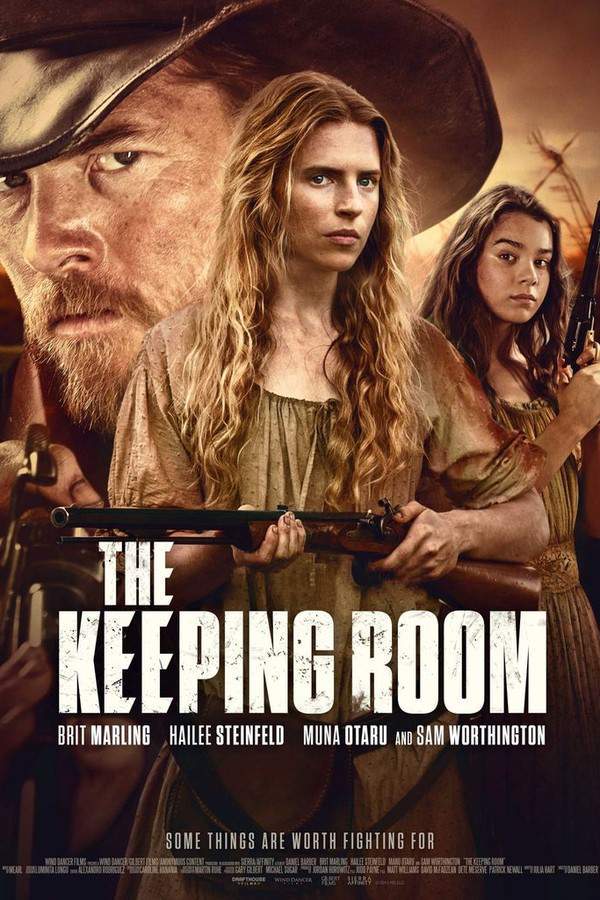
The Keeping Room (2015) movie poster

Characters & Themes

The Keeping Room (2015) Characters, Setting & Themes Explained

Release, runtime and language
2015 · 95 min · English
Loading streaming availability…
Directed by
Daniel Barber
Starring
Hailee Steinfeld, Sam Worthington, Brit Marling, Muna Otaru, Kyle Soller

In the aftermath of the Civil War, two vengeful soldiers invade Augusta’s secluded farmhouse, turning it into a dangerous refuge. Augusta, her sister Louise, and their enslaved companion, Mad, find themselves forced to defend their home against the intruders. They must rely on their wits and courage to survive the escalating threat and protect themselves from the soldiers’ relentless pursuit, facing a desperate struggle for survival.

On this page (8)
  1. 1 Where to watch
  2. 2 Characters explained (6)
  3. 3 Character relationship map
  4. 4 Where & when it takes place
  5. 5 Themes & meaning (3)
  6. 6 Character & meaning questions
  7. 7 Movie threads
  8. 8 Every angle
Loading streaming availability…

6 main characters · contains spoilers

The Keeping Room Characters Explained: Who Is Who

The main characters of The Keeping Room (2015), heroes and villains: what drives them, how they change over the course of the story and what each of them reveals about the film's bigger ideas.

  • Augusta (Hailee Steinfeld)

    Augusta is the eldest sister, characterized by her steadfast determination and protective nature. She showcases remarkable strength and resourcefulness, particularly as she seeks to safeguard her sister and Mad against the chaos surrounding them. Despite her burden, Augusta embodies resilience even in the face of loss.

    • 👩‍⚖️ Determined
    • 🛡️ Protector
    • 💔 Grieving
  • Louise (Brit Marling)

    Louise, the younger sister, is portrayed as fragile yet strong, caught in the tumult of desperation and violence. Her vulnerability is immediately apparent, especially as she copes with her ailing health. Louise's character arc reflects themes of trauma and the impact of war on women.

    • 🌼 Vulnerable
    • 🏥 Ailing
    • 🎭 Torn
  • Mad (Muna Otaru)

    Mad is a powerful figure within the narrative, serving both as a resilient survivor and a harbinger of the past's traumas. Her strong spirit drives her actions, particularly in moments of vengeance, marking her as a crucial force in resisting their aggressors. Mad's story adds depth and poignancy to the themes of suffering and strength.

    • 💪 Resilient
    • 🌪️ Traumatized
    • ❤️ Defiant
  • Moses

    Moses is presented as a complex antagonist, representing the chaotic forces of war. Though a soldier with a fraught moral compass, his role reveals the desperation of those caught in the conflict. His interactions with the women underscore the unpredictability of the war and its impact on individuals.

    • ⚔️ Antagonist
    • 🚶‍♂️ Scavenger
    • 🥀 Chaotic
  • Henry

    Henry embodies the destructive forces of the war, marked by his violent actions. He stands as a symbol of the chaos wrought by conflicts, and his fate serves to escalate the narrative tension considerably. His horrific actions highlight the trauma inflicted on the female characters.

    • 🔪 Violent
    • 👤 Soldier
    • ⚡ Chaotic
  • Bill (Kyle Soller)

    Bill serves as a tragic figure whose arrival brings both hope and heartbreak. His presence is pivotal in revealing Mad's past and the desperation of love within a ravaged landscape. His untimely demise amplifies the themes of loss and urgency in the film.

    • 💔 Tragic
    • ⏳ Timeless
    • 👫 Lost Love

Last updated: October 28, 2026 at 16:44

Was this helpful?

5 characters · 5 connections · contains spoilers

The Keeping Room Character Relationship Map

Who is connected to whom in The Keeping Room: family, love, friendships, rivalries and hidden ties, colour-coded. Pick a character to see their side of the story, or a connection to see what brings two characters together.

How much of the story to show
AAugustaHailee SteinfeldLLouiseBrit MarlingMMadMuna OtaruHHenryBBillKyle Soller

Last updated: October 28, 2026 at 16:44

Was this helpful?

Setting

Where and When Does The Keeping Room Take Place?

The setting of The Keeping Room (2015): the year and time period, the places and locations, and how they shape the characters, the mood and the tension of the story.

Time period

American Civil War era

Set during the American Civil War, a period characterized by intense national division and struggle over issues such as states' rights and slavery. The war saw many lives disrupted and landscapes ravaged, placing the characters in a constant state of fear and urgency as they navigate personal and societal turmoil.

Location

Southern US, Tavern, Kitchen

The story takes place in the Southern United States during the American Civil War, a region known for its rich history and tumultuous conflict. The women find themselves in a secluded home, flanked by desolation and danger. Key scenes unfold in a nearby tavern and their own kitchen, both settings highlighting the severity of their isolation amid chaos.

  • 🏡 Home
  • 🍻 Tavern
  • 🍽️ Kitchen

Last updated: October 28, 2026 at 16:44

Was this helpful?

3 major themes

The Keeping Room Meaning: Themes & Message Explained

What is The Keeping Room (2015) really about? The emotional, social and philosophical themes the film keeps returning to, its symbolism and the message beneath the surface.

  • Survival

    The theme of survival permeates the narrative as the three women are forced to confront formidable threats in a harsh post-war landscape. Their desperate fight against rogue soldiers encapsulates the relentless struggle to protect themselves and each other. Survival becomes a shared mission, transforming each character as they adapt to their dire circumstances.

  • Resilience

    Resilience is a central theme showcased through the strength of the women as they face remarkable challenges. Even when confronted with violence and loss, Augusta, Louise, and Mad demonstrate an unwavering determination to reclaim their agency. Their collective endurance reflects a profound spirit amid the trauma wrought by war.

  • Desperation

    Desperation looms large as the women act out of sheer necessity to protect their lives. The harrowing events propel them to make extreme choices, including transforming into makeshift soldiers. The burning of their home stands as a metaphor for their desperate fight against an uncaring world.

Last updated: October 28, 2026 at 16:44

Was this helpful?

Character & theme questions

The Keeping Room Characters & Meaning: Your Questions Answered

The questions people ask about The Keeping Room (2015): who the characters really are, their relationships, what the symbols mean, where it takes place and what the movie is really about. Each answer contains spoilers.

Q1

Why is the secluded farmhouse significant in the story?

The isolated farmhouse serves as the women's sole refuge in a war-torn landscape. Its remoteness initially provides safety but also leaves them completely vulnerable when the soldiers arrive, with no nearby help or escape routes. The setting amplifies the sense of entrapment and forces the women to rely entirely on their own resources.

  • farmhouse
  • isolation
  • setting
  • refuge
  • Civil War South
Q2

How does the Civil War setting influence the film?

The Civil War creates a world where lawlessness prevails and women are left to fend for themselves while men fight. The era's breakdown of social order allows the soldiers to act with impunity, while the women's lack of legal protection becomes a central source of danger. The setting grounds the story in historical trauma and emphasizes how war leaves destruction in its wake.

  • Civil War
  • historical context
  • lawlessness
  • setting era
Q3

What does the survival theme represent in the movie?

Survival goes beyond physical existence, it represents the women's fight to maintain their dignity and agency in a world that offers them no protection. Each character transforms in response to threats, learning to use violence as a desperate tool. The theme explores how war forces ordinary people into extraordinary circumstances where survival becomes the only measure of success.

  • survival
  • fight
  • protection
  • war
  • transformation
Q4

How do the sisters demonstrate resilience?

Augusta embodies resilience through her protective drive, constantly strategizing to keep her sister and Mad safe despite mounting threats. Louise, despite her fragile health and vulnerability, finds inner strength she didn't know she possessed. Both women refuse to be victims, actively resisting rather than accepting their fate passively.

  • Augusta
  • Louise
  • resilience
  • strength
  • sisters
  • adaptation
Q5

What is Mad's role in the story?

Mad serves as both a survivor and a catalyst for vengeance, carrying the weight of past traumas inflicted by men like the soldiers who invade. Her determination to fight back drives much of the women's resistance. Mad represents the intersection of racial and gender oppression in the Civil War era, adding historical depth to the film's themes of suffering and strength.

  • Mad
  • enslaved character
  • vengeance
  • trauma
  • survival
Q6

Who are Moses and Henry as antagonists?

Moses and Henry represent the chaotic, morally corrupted nature of war itself, soldiers who have been broken by conflict and operate outside any code of conduct. Moses is portrayed as complex, his actions revealing the desperation of those consumed by war. Henry embodies pure destructive force, and his violent actions escalate the trauma the women endure. Together they symbolize the unpredictable threat that roaming soldiers posed to civilians.

  • Moses
  • Henry
  • soldiers
  • antagonists
  • war corruption
Q7

How is the theme of desperation depicted?

Desperation manifests through the women's transformation from domestic figures into makeshift soldiers. They resort to extreme measures, weaponizing household items, setting traps, and ultimately burning their own home. This desperation reflects the impossible choices facing civilians trapped behind enemy lines with no protection or hope of rescue.

  • desperation
  • violence
  • extreme choices
  • home invasion
Q8

What is Louise's significance in the narrative?

Louise represents the vulnerability of women during wartime, yet her character arc shows that vulnerability does not equal weakness. Her ailing health makes her seem fragile, yet she too finds the courage to fight. Louise's trauma and recovery embody the film's exploration of how war impacts women who are often overlooked as victims of conflict.

  • Louise
  • vulnerability
  • war trauma
  • women's role
  • strength
Q9

Why do the women burn their home at the end?

Burning the home symbolizes the women's refusal to let the soldiers claim any victory or shelter. It represents a defiant act of agency, they would rather destroy everything than surrender to their attackers. The burning also marks a point of no return, forcing the women into an uncertain future rather than allowing them to remain trapped in the past.

  • home burning
  • defiance
  • ending
  • symbolism
  • sacrifice
Q10

How does the kitchen and tavern setting affect the story?

The kitchen becomes a battleground where the women execute their defensive plans, turning domestic space into a site of resistance. The nearby tavern represents the outside world of violence and chaos threatening to breach their sanctuary. These contrasting settings emphasize the stark divide between the women's attempt at normalcy and the war's relentless encroachment.

  • kitchen
  • tavern
  • settings
  • domestic space
  • war intrusion
Q11

What do the three women collectively represent?

Together, Augusta, Louise, and Mad represent different forms of strength and survival under oppression. Augusta provides leadership and protection, Louise shows that courage can emerge from vulnerability, and Mad embodies resistance against both racial and gendered violence. Their alliance across social hierarchies during the Civil War era adds profound depth to the film's exploration of unity amid hardship.

  • female characters
  • unity
  • women
  • survival
  • solidarity

Movie threads

More Movies Like The Keeping Room, by Mood & Story

Curated lists built around what makes The Keeping Room tick: the same mood, the same kind of story or the same emotional payoff. Each list explains why these movies belong together.

Claustrophobic siege thrillers like The Keeping Room

Stories of cornered survivors fighting back against relentless attackers in confined locations. If you enjoyed the tense home invasion and desperate fight for survival in 'The Keeping Room', you'll find similar tension in these movies. This thread features films where characters are cornered in isolated locations, turning their refuge into a fortress against a relentless threat, creating a gripping, high-stakes survival experience.

  • tense
  • claustrophobic
  • desperate
  • brutal
  • defiant
  • trapped
  • Tone: tense, desperate, brutal
  • Pacing: steady, escalating threat
Why these movies?

The story pattern: The narrative pattern typically involves an initial intrusion that shatters the safety of a secluded space. The threat escalates steadily, forcing the besieged characters to use their wits and the environment itself as weapons. The story is a linear, intense build-up to a final, often brutal, confrontation.

Why they belong together: Movies are grouped here for their shared focus on spatial confinement and the visceral tension of a siege. They create a similar viewing experience of sustained suspense, moral desperation, and a primal fight for survival against overwhelming odds within a limited setting.


Grim historical survival dramas like The Keeping Room

Stories set against the brutal backdrop of war, where societal order gives way to primal struggle. For viewers who appreciated the bleak Civil War setting and heavy emotional themes of 'The Keeping Room', this thread highlights similar movies. These films explore survival amidst historical chaos, focusing on the trauma of war, female resilience, and the moral ambiguity of violence when society crumbles.

  • grim
  • oppressive
  • brutal
  • traumatic
  • desperate
  • historical
  • Tone: dark, grim, oppressive
  • Pacing: steady, character-driven
Why these movies?

The story pattern: These narratives follow characters navigating a world shattered by war or collapse. The journey is often straightforward, focusing on the immediate, physical and psychological struggle to survive. The endings are frequently ambiguous or bleak, reflecting the unresolved trauma and uncertain future left in the wake of conflict.

Why they belong together: These films are connected by their combination of a specific historical or collapsed-world setting with a dark, survival-focused plot. They share a gritty realism, a focus on the human cost of violence, and a generally heavy, oppressive atmosphere devoid of sentimentality or easy resolutions.

Every angle

The Keeping Room (2015) Explained: Plot, Timeline & Characters

Everything about The Keeping Room in one place: what happens in the plot summary, the timeline in chronological order, the characters and meaning and a spoiler-free summary. What's After the Movie adds the cast, box office and post-credit scenes.

Coming soon on iOS and Android

The Plot Explained Movie Summary App

Plot summaries, endings explained and timelines on your phone. Catch up on any movie in minutes, save your favorites and never miss a twist again.

Be the first to know when we launch. Your email stays private, always.

Learn more about the app