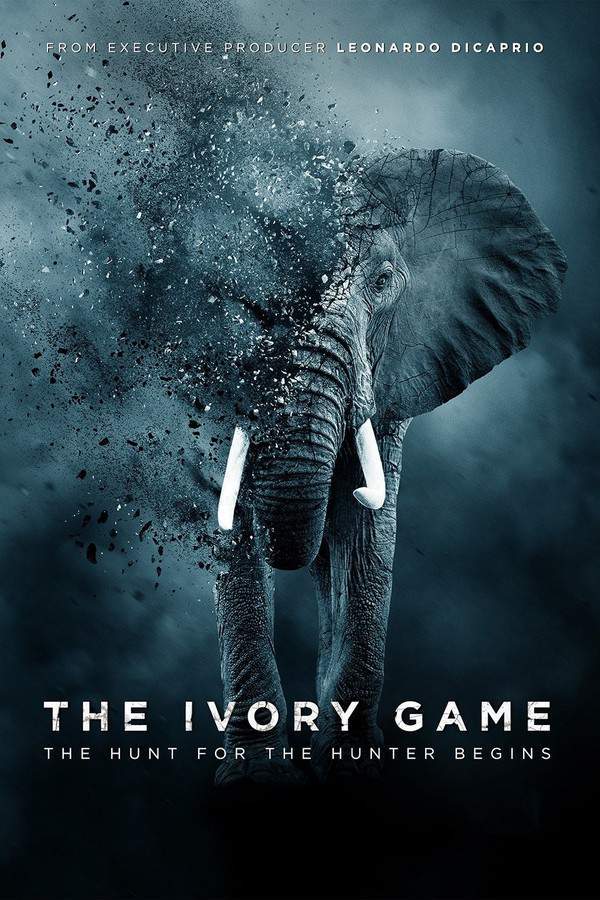
Filmmakers conduct an undercover investigation into the illegal ivory trade, spending 16 months embedded with those involved to expose the devastating impact on Africa. The documentary reveals how the demand for ivory in China fuels a brutal cycle of poaching and corruption, orchestrated by ruthless traffickers who profit from the mass slaughter of elephants. It's a revealing look at the dark side of the global ivory crisis and the people fighting to stop it.
Find where to stream, rent, or buy The Ivory Game (2016) in the US with current JustWatch availability, up-to-date pricing, and platform listings for subscription, rental, and digital purchase options.
Warning: spoilers below!
Haven’t seen The Ivory Game yet? This summary contains major spoilers. Bookmark the page, watch the movie, and come back for the full breakdown. If you're ready, scroll on and relive the story!
Read the complete plot breakdown of The Ivory Game (2016), including all key story events, major twists, and the ending explained in detail. Discover what really happened, and what it all means.
The documentary delves into the harrowing issue of elephant poaching in Africa, intricately linked to the ivory trade flourishing in China and Hong Kong. Directed by Keif Davidson and Richard Ladkani, the film captures the relentless efforts of their team over a 16-month undercover operation, exposing the grim reality of elephant killings for their valuable tusks, which are often viewed as status symbols in parts of Asia. Alarmingly, in the last five years alone, 150,000 elephants have been slaughtered for their ivory, leading to vast regions in Africa being devoid of these majestic creatures. The remaining populations are primarily concentrated in western and southern Africa.
The documentary illustrates the stark contrast between the illicit black market and the desperate efforts by conservationists. It takes the audience from Tanzania, Kenya, and Zambia to China, Hong Kong, and even a brief stop in London. The opening scene unfolds in Tanzania, where Elisifa Ngowi, the head of intelligence for the Task Force, and his dedicated officers conduct a nighttime sting operation to apprehend Shetani, a notorious poacher responsible for the deaths of 10,000 elephants. This man hires hitmen to kill elephants and smuggles vast quantities of ivory—some collections weighing as much as 3000 kg. Poachers earn approximately $7 per kilogram, while the ivory fetches an astounding $3000 per kilogram in the Chinese market. It’s noted that African elephant populations have plummeted from 100,000 to 50,000 in just five years.
Ngowi diligently pursues intelligence regarding Shetani's operations, sharing critical information with Zambian wildlife authorities. The team, led by Georgia, employs aerial surveys to monitor elephant populations in the Zambezi region, uncovering local ivory sellers. Meanwhile, in Kenya, Craig Millar, the head of security at the Big Life Foundation, tirelessly works to prevent poaching before it occurs, often clashing with local communities whose crops are raided by elephants. One poignant scene showcases Craig discovering a family of elephants that have been brutally slain, emphasizing the grim reality that even females and calves are at risk for their tusks.
As the narrative unfolds, we also learn about the integral role of electric fences in safeguarding elephant habitats, which Ian Craig has championed for decades to facilitate conservation efforts. The film highlights a collaboration between Craig and Ian as they track a migrating herd towards Somalia, a region notorious for acute poaching.
In a parallel narrative, Andrea Crosta, the investigative head for Wildleaks, and journalist Hongxiang Huang launch a precarious undercover operation in China to unveil the rampant illegal trade of ivory. They navigate the treacherous landscape of the ivory market, exposing dealers who boast about circumventing regulations and illicitly importing ivory from Africa. The Chinese government’s allowance of 5 tons of ivory to licensed dealers complicates the situation, blurring the lines between legal and illegal transactions.
The urgency of the documentary crescendos as Huang and Crosta confront the perilous realities of their investigation, which sees them gathering damning evidence against significant players in the ivory trade. With the stakes high, they strive to present their findings to authorities, aiming for an ivory trade ban that could ultimately save elephants from impending extinction.
As the film culminates, it reveals shocking statistics: without immediate action from governments worldwide, elephants may face extinction within the next 15 years. The documentary not only exposes a pressing global crisis but also serves as a clarion call for conservation, urging viewers to understand the profound implications of the ivory trade on the survival of one of Earth’s most iconic species.
Last updated: November 07, 2024 at 22:53
Explore frequently asked questions about The Ivory Game (2016) with spoiler-rich answers covering the full plot summary, major story beats, character motivations, hidden details, and ending meaning. This movie summary FAQ helps explain confusing scenes, plot twists, and narrative decisions in clear, searchable detail.
Shetani is a notorious Tanzanian poacher featured in the documentary who orchestrated large-scale elephant slaughter. He hired hitmen to kill elephants and smuggled massive quantities of ivory, with some collections weighing up to 3000 kg. His operations were responsible for approximately 10,000 elephant deaths, making him one of the most destructive poachers in Africa.
The documentary opens with a nighttime sting operation in Tanzania specifically targeting Shetani, establishing the scale of his criminal enterprise from the start.
The massive price difference reflects the entire illegal supply chain. Poachers in Africa earn approximately $7 per kilogram for raw ivory, which then passes through multiple intermediaries, smugglers, wholesale dealers, and retailers, each adding markup before reaching Chinese consumers at $3000 per kilogram. This enormous profit margin creates powerful financial incentives for organized criminal networks.
The documentary explicitly contrasts these figures early in the film to explain the economic drivers fueling poaching.
The Chinese government permits licensed dealers to sell up to 5 tons of ivory, which creates a legal loophole that illegal traders exploit. Licensed dealers can claim their ivory came from legal sources, making it nearly impossible for authorities to distinguish between legal and illegal ivory. This blurring of lines between legal and illegal trade significantly complicates enforcement efforts.
Andrea Crosta and Hongxiang Huang's undercover investigation in China directly encounters this regulatory complication.
Electric fences serve as physical barriers around protected areas and elephant habitats, preventing both poachers from entering and elephants from wandering into conflict zones where they might be killed or destroy local crops. Ian Craig has championed this approach for decades as a proactive conservation strategy that reduces poaching incidents before they occur.
The documentary shows Ian Craig's collaboration with conservationists to track migrating herds and highlights how fences facilitate safe elephant migration routes.
Andrea Crosta from Wildleaks and journalist Hongxiang Huang conducted a risky undercover operation in China, secretly recording ivory dealers who boasted about bypassing regulations and illegally importing ivory from Africa. They gathered damning evidence including hidden camera footage and dealer admissions, which they compiled to present to authorities in hopes of prompting an ivory trade ban.
The documentary builds tension as Huang and Crosta face perilous situations while gathering evidence against major players in the ivory market.
Scientists predict elephants could face extinction within 15 years if governments worldwide do not take immediate action because 150,000 elephants have been slaughtered in just five years, reducing African populations from 100,000 to 50,000. At this rate of decline, remaining populations cannot sustain themselves, and without urgent intervention, elephants will disappear from the wild.
The documentary's opening statistics about mass slaughter establish the urgency that culminates in this dire warning.
While male elephants typically have larger tusks, females and calves also have tusks, and poachers kill them indiscriminately for any ivory they can yield. The documentary shows a heartbreaking scene where Craig Millar discovers an entire family of elephants, including females and calves, brutally slain, demonstrating that poachers show no regard for age or gender when harvesting tusks.
This emotional moment underscores the ruthlessness of poachers and serves as a turning point highlighting the indiscriminate nature of the slaughter.
In parts of China and Asia, ivory has traditionally been valued as a luxury material for carved artwork, jewelry, and decorative items that signify wealth and status. This cultural demand creates a lucrative market that drives the illegal ivory trade, with Chinese consumers willing to pay thousands of dollars per kilogram for tusks despite international bans.
The documentary explicitly connects the demand for ivory as status symbols in Asian cultures to the supply-driven poaching in Africa.
Craig Millar heads security for the Big Life Foundation in Kenya, focusing on preventing poaching before it occurs rather than reacting after elephants are killed. He patrols protected areas, responds to poaching threats, and often confronts local communities whose crops are raided by elephants, highlighting the complex human-wildlife conflict that complicates conservation efforts.
His work represents the frontline defense against poaching that the documentary follows alongside the investigative and policy efforts.
The undercover investigation in China and Hong Kong revealed that illegal ivory trade operates openly despite official bans, with dealers openly boasting about their ability to circumvent regulations and import ivory from Africa. The investigation exposed how the illegal market functions with relative impunity, connected to organized crime networks that profit from Africa's elephant slaughter.
This parallel narrative to the African anti-poaching efforts demonstrates the global nature of the ivory crisis.
Discover curated groups of movies connected by mood, themes, and story style. Browse collections built around emotion, atmosphere, and narrative focus to easily find films that match what you feel like watching right now.
Real-world investigations that feel like tense, urgent crime movies.Movies like The Ivory Game that play out like high-stakes thrillers. If you were captivated by the tense undercover operations and urgent race against time, you'll find similar gripping stories of real-world investigation and exposé here.
These narratives typically follow a clear, cause-and-effect structure, tracking an investigation from discovery to confrontation. The journey is driven by determined protagonists who operate in the shadows, often facing significant personal risk and systemic corruption to bring a critical issue to light.
We group these movies together because they share a core DNA: the fusion of factual, journalistic rigor with the suspenseful, high-intensity pacing of a crime thriller. They create a specific, urgent, and sobering vibe that is both informative and emotionally gripping.
Powerful documentaries that expose a global crisis and demand change.Discover more documentaries like The Ivory Game that serve as urgent calls to action. These films expose critical global crises with a heavy emotional tone, balancing stark reality with the determined efforts of activists.
The narrative arc in these films often presents a devastating problem—such as environmental collapse, human rights abuses, or systemic corruption—and then follows the activists, scientists, or journalists on the front lines. The journey is emotionally taxing, leading to an ending that is rarely purely happy, but instead bittersweet, highlighting both the scale of the challenge and the necessity of continued fight.
These films are grouped by their shared purpose and emotional impact. They are not passive viewings; they are designed to inform, horrify, and ultimately mobilize the audience. The combination of heavy themes, a steady investigative pace, and a ultimately hopeful, if weary, determination creates a uniquely powerful and motivating experience.
Don't stop at just watching - explore The Ivory Game in full detail. From the complete plot summary and scene-by-scene timeline to character breakdowns, thematic analysis, and a deep dive into the ending - every page helps you truly understand what The Ivory Game is all about. Plus, discover what's next after the movie.
Track the full timeline of The Ivory Game with every major event arranged chronologically. Perfect for decoding non-linear storytelling, flashbacks, or parallel narratives with a clear scene-by-scene breakdown.
Discover the characters, locations, and core themes that shape The Ivory Game. Get insights into symbolic elements, setting significance, and deeper narrative meaning - ideal for thematic analysis and movie breakdowns.
Discover movies like The Ivory Game that share similar genres, themes, and storytelling elements. Whether you’re drawn to the atmosphere, character arcs, or plot structure, these curated recommendations will help you explore more films you’ll love.
The Ivory Game (2016) Scene-by-Scene Movie Timeline
The Ivory Game (2016) Movie Characters, Themes & Settings
The Ivory Game (2016) Spoiler-Free Summary & Key Flow
Movies Like The Ivory Game – Similar Titles You’ll Enjoy
The Elephant Queen (2019) Plot Summary & Ending Explained
Trophy (2017) Movie Recap & Themes
When Lambs Become Lions (2019) Detailed Story Recap
Ivory. A Crime Story (2016) Ending Explained & Film Insights
The Last Animals (2019) Story Summary & Characters
My Africa (2018) Ending Explained & Film Insights
The Ivory Ape (1980) Full Summary & Key Details
Ivory Hunters (1990) Spoiler-Packed Plot Recap
Tusks (1988) Movie Recap & Themes
In the Footsteps of Elephant (2020) Complete Plot Breakdown
The Conservation Game (2021) Complete Plot Breakdown
Just Animals (2022) Complete Plot Breakdown
Ivory Coast Adventure (1965) Film Overview & Timeline
The Lion Hunters (1966) Detailed Story Recap
Africa’s Elephant Kingdom (1998) Full Movie Breakdown