Plot Explained Spoilers guaranteed!
Plot Explained

Browse by genre

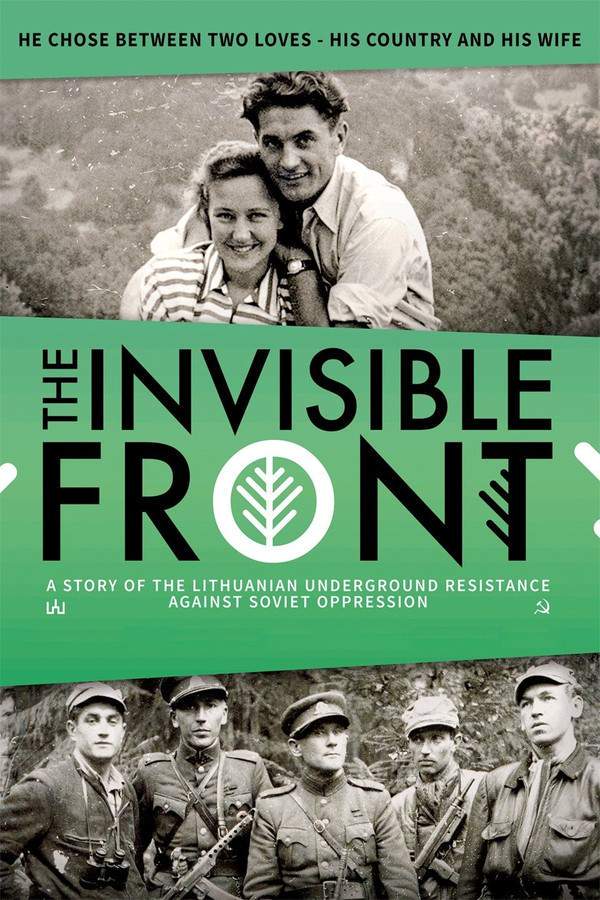
The Invisible Front (2014) movie poster

Characters & Themes

The Invisible Front (2014) Characters, Setting & Themes Explained

Release, runtime and language
2014 · 76 min · English
Loading streaming availability…
Directed by
Jonas Ohman, Vincas Sruoginis

During the Soviet occupation of Lithuania in 1944, a group of young people formed the Forest Brothers, a guerrilla army resisting the invaders. Juozas Luksa, a charismatic leader and writer, initially found love and documented his experiences in Paris before being air-dropped back to lead the liberation effort. Alongside his brothers, he faced immense danger, their struggle and sacrifices revealed through his personal writings and heartfelt letters to Nijole, offering a glimpse into a nation’s fight for freedom.

On this page (7)
  1. 1 Where to watch
  2. 2 Characters explained (2)
  3. 3 Where & when it takes place
  4. 4 Themes & meaning (3)
  5. 5 Character & meaning questions
  6. 6 Movie threads
  7. 7 Every angle
Loading streaming availability…

2 main characters · contains spoilers

The Invisible Front Characters Explained: Who Is Who

The main characters of The Invisible Front (2014), heroes and villains: what drives them, how they change over the course of the story and what each of them reveals about the film's bigger ideas.

  • Juozas Luksa

    Juozas Luksa is portrayed as a symbol of resistance against Soviet oppression, leading the charge alongside the Forest Brothers. His journey reflects the sacrifices made by many individuals who risked everything in the fight for freedom, embodying courage and determination in dire circumstances.

    • 🦸‍♂️ Hero
    • ✊ Resistance
    • 🎖️ Legacy
  • Andrius Mamantovas

    Andrius Mamantovas lends his voice to narrate the powerful accounts of those who lived through the resistance. His narration serves to connect viewers emotionally to the stories, emphasizing the personal and collective struggles faced throughout this tumultuous period.

    • 🎤 Narrator
    • 🎶 Musician
    • 📖 Storyteller

Last updated: October 22, 2024 at 21:06

Was this helpful?

Setting

Where and When Does The Invisible Front Take Place?

The setting of The Invisible Front (2014): the year and time period, the places and locations, and how they shape the characters, the mood and the tension of the story.

Time period

1940-1991

The film spans over five decades, beginning with the onset of armed resistance in 1940 and extending through the collapse of the Soviet Union in 1991. This era was marked by numerous uprisings and the struggle for national identity in the Baltic states, ultimately leading to significant geopolitical changes in Eastern Europe.

Location

New York, Washington DC, Estonia, Latvia, Lithuania

The movie takes viewers through significant locations including New York and Washington DC, where much of the documentary's interviews were conducted, and the Baltic nations of Estonia, Latvia, and Lithuania, which were at the heart of the armed resistance against Soviet oppression. These places are known for their historical significance during the Cold War and the fight for independence from Soviet influence.

  • 🌍 Locations
  • 🎥 Documentary
  • 📜 History

Last updated: October 22, 2024 at 21:06

Was this helpful?

3 major themes

The Invisible Front Meaning: Themes & Message Explained

What is The Invisible Front (2014) really about? The emotional, social and philosophical themes the film keeps returning to, its symbolism and the message beneath the surface.

  • Resistance

    The theme of resistance is central to the documentary, showcasing the struggles of the Forest Brothers as they fought against oppressive regimes. It highlights not only the armed conflict but also the unarmed resistance that emerged over decades, illustrating the complexities of standing up to authority.

  • Historical Legacy

    This theme delves into the fading legacy of the resistance movement in the former Soviet territories. By sharing personal stories and archival footage, the documentary preserves the memories of those who fought and provides a deeper understanding of this critical historical chapter.

  • Collaboration

    The film examines the relationships between various groups involved in the struggle against the Soviet regime, including those who collaborated with oppressive forces. This dynamic adds a layer of complexity to the narrative, showing that choices were often fraught with moral ambiguity.

Last updated: October 22, 2024 at 21:06

Was this helpful?

Character & theme questions

The Invisible Front Characters & Meaning: Your Questions Answered

The questions people ask about The Invisible Front (2014): who the characters really are, their relationships, what the symbols mean, where it takes place and what the movie is really about. Each answer contains spoilers.

Q1

Where does the documentary take place?

The documentary features interviews conducted in New York and Washington DC, but focuses primarily on the Baltic nations of Estonia, Latvia, and Lithuania, which were at the center of the armed resistance against Soviet oppression.

  • locations
  • baltic states
  • lithuania
  • estonia
  • latvia
  • documentary settings
Q2

What time period does the film cover?

The film spans over five decades, beginning with the onset of armed resistance in 1940 and extending through the collapse of the Soviet Union in 1991.

  • time period
  • 1940s
  • 1990s
  • cold war
  • soviet union
  • history
Q3

Who were the Forest Brothers?

The Forest Brothers were a guerrilla army composed of young people who formed during the Soviet occupation of Lithuania in 1944. They conducted armed resistance against Soviet invaders, with some members continuing their struggle for decades after the initial occupation.

  • forest brothers
  • guerrilla army
  • lithuanian resistance
  • partisans
Q4

Who is Juozas Luksa in the documentary?

Juozas Luksa is portrayed as a charismatic leader and writer who became a symbol of resistance against Soviet oppression. He was initially in Paris, where he found love and documented his experiences, before being air-dropped back to Lithuania to lead the liberation effort alongside the Forest Brothers.

  • juozas luksa
  • leader
  • resistance leader
  • forest brothers
Q5

Who narrates the documentary?

Andrius Mamantovas narrates the documentary, lending his voice to recount the powerful accounts of those who lived through the resistance. His narration connects viewers emotionally to the personal and collective struggles faced throughout this tumultuous period.

  • andrius mamantovas
  • narrator
  • voice
  • documentary narration
Q6

What does the documentary say about resistance?

The theme of resistance is central to the documentary, showcasing the struggles of the Forest Brothers against oppressive regimes. It highlights not only the armed conflict but also the unarmed resistance that emerged over decades, illustrating the complexities of standing up to authority.

  • resistance
  • oppression
  • freedom fight
  • armed resistance
Q7

What historical legacy does the film explore?

The documentary delves into the fading legacy of the resistance movement in the former Soviet territories. By sharing personal stories and archival footage, it preserves the memories of those who fought and provides deeper understanding of this critical historical chapter in Baltic history.

  • historical legacy
  • memory
  • archives
  • baltic history
  • soviet occupation
Q8

What is the collaboration theme about in the film?

The film examines the complex relationships between various groups involved in the struggle against the Soviet regime, including those who collaborated with oppressive forces. This adds moral ambiguity to the narrative, showing that choices during occupation were often fraught with difficult dilemmas.

  • collaboration
  • moral ambiguity
  • occupation
  • complicity
Q9

Why are the Baltic countries significant to the story?

Estonia, Latvia, and Lithuania were at the heart of the armed resistance against Soviet influence. These nations experienced decades of Soviet occupation and multiple uprisings, making them central to understanding the fight for national identity and independence in Eastern Europe.

  • baltic states
  • estonia
  • latvia
  • lithuania
  • independence
  • soviet oppression
Q10

What major historical events does the documentary cover?

The documentary covers the Soviet occupation beginning in 1940, the armed resistance of the 1940s, and continues through the decades of struggle for independence, culminating in the collapse of the Soviet Union in 1991 and the subsequent geopolitical changes in Eastern Europe.

  • soviet occupation
  • world war 2
  • cold war
  • 1991
  • independence

Movie threads

More Movies Like The Invisible Front, by Mood & Story

Curated lists built around what makes The Invisible Front tick: the same mood, the same kind of story or the same emotional payoff. Each list explains why these movies belong together.

Documentaries of Lost Resistance like The Invisible Front

Gripping archival documentaries chronicling tragic but necessary resistance. For viewers who appreciated the historical weight and archival approach of The Invisible Front, this section features movies like it that chronicle real-world resistance movements. Explore similar documentaries, historical dramas, and biographical films focused on political oppression and the personal cost of freedom.

  • historical
  • somber
  • resigned
  • hopeful
  • tense
  • melancholic
  • Tone: dark, somber, reflective
  • Pacing: steady, chronological
Why these movies?

The story pattern: Stories in this thread typically unfold through a combination of firsthand accounts, letters, and historical footage, presenting a chronological or thematic exploration of a resistance effort. The narrative often focuses on individual figures within a larger movement, building towards an inevitable yet profound sense of loss and remembrance.

Why they belong together: These movies are grouped by their shared commitment to documenting tragic historical events with emotional gravity. They balance a dark, somber tone with elements of hope found in human resilience, using a steady, reflective pace to let the weight of history and personal sacrifice fully resonate with the viewer.

Intimate War Stories of Sacrifice like The Invisible Front

Stories where the brutality of war is measured in personal letters and love. If you were moved by the personal letters and tragic journey of Juozas Luksa in The Invisible Front, discover other movies like it. This collection features intimate war dramas and biographies where the focus is on personal sacrifice, romantic undertones, and the heavy emotional toll of resistance.

  • tense
  • melancholic
  • heartfelt
  • brave
  • tragic
  • hopeful
  • Tone: dark, melancholic, heartfelt
  • Pacing: steady, character-driven
Why these movies?

The story pattern: The narrative pattern centers on a protagonist whose idealism and personal relationships are tested by the immense pressures of armed conflict. The journey often involves a cycle of hope, struggle, and profound loss, with the emotional core derived from personal writings, memories, and the contrast between love and duty.

Why they belong together: These films share a common thread of exploring war not just as a geopolitical event, but as a deeply personal tragedy. They combine high tension and disturbing themes with moments of poignant humanity, resulting in a heavy, emotionally resonant experience focused on the individuals behind the history.

Every angle

The Invisible Front (2014) Explained: Plot, Timeline & Characters

Everything about The Invisible Front in one place: what happens in the plot summary, the timeline in chronological order, the characters and meaning and a spoiler-free summary. What's After the Movie adds the cast, box office and post-credit scenes.

Coming soon on iOS and Android

The Plot Explained Movie Summary App

Plot summaries, endings explained and timelines on your phone. Catch up on any movie in minutes, save your favorites and never miss a twist again.

Be the first to know when we launch. Your email stays private, always.

Learn more about the app