Year: 1974
Runtime: 95 mins
Language: French
Director: Michel Mitrani
In occupied Paris, 1942, the police round up about 13,000 Jews for deportation. Teenager Paul (Christian Rist) tries to stop the roundup. He first attempts to rescue two elderly Jews, who accept their fate, then briefly keeps Jeanne (Christine Pascal) from joining the convoy, but exhaustion forces him to let her go.
Warning: spoilers below!
Haven’t seen Black Thursday yet? This summary contains major spoilers. Bookmark the page, watch the movie, and come back for the full breakdown. If you're ready, scroll on and relive the story!
Read the complete plot breakdown of Black Thursday (1974), including all key story events, major twists, and the ending explained in detail. Discover what really happened—and what it all means.
On 16 July 1942 in Paris, Paul, a young student on the Left Bank, learns that the German-occupied city is rounding up Jewish residents for deportation. Driven by a impulse to resist the evil of the occupation and the collaborationist regime, he crosses to the Right Bank in a quiet but determined effort to save someone from the looming threat. The streets are tense, and the French police are everywhere, herding Jewish people from their homes and loading them onto commandeered buses. The authorities already know the lists of names and addresses, and the yellow star sewn to clothing makes it easy to identify who is at risk.
Paul moves through the crowd, trying to read people and their fears. Many he speaks to misunderstand the danger or mistrust his motives, but a young woman catches his attention—Jeanne—who is urgently pulled into a shop by its owner. Inside, the shopkeeper reveals that Jeanne’s mother and sister have just been taken, and he even cuts the yellow star from her jacket. With a blend of hesitation and hope, Jeanne agrees to let Paul escort her to the apartment of relatives. The plan is thwarted by orders to pack and move quickly; when the police arrive to take people away, the relatives hide both Paul and Jeanne, buying them a temporary, fragile shelter from the roundup.
Left without a clear destination, Jeanne is wary of trusting Paul completely, and the path out of the Jewish quarter remains perilous. Plainclothes police roam the streets, scrutinizing identities, and every step toward the river feels like crossing a line. The two spend moments pretending to steady their bond—brief closeness that helps them blend into the backdrop of fear rather than stand out as targets. They slip into a café frequented by prostitutes and their pimps, hoping to vanish into anonymity, but a plainclothes officer notices Jeanne.
Her narrow escape hinges on a quick intervention by a pimp, who knocks the cop to the floor and gives them a chance to slip away. The chase continues through the city’s shadowed corners, with danger lurking at every turn. Eventually they find themselves in the quiet, vast courtyard of the Louvre, where Paul speaks from the heart, detailing his motives and painting a vision of a better life they might share if they survive this perilous time.
From there, their journey crosses toward the bridge that links the right and left banks. Yet, as they reach halfway across toward the Left Bank, Jeanne experiences a sudden weight of doubt and fear, realizing she cannot go any further with him. The moment crystallizes the tension between courage and survival, leaving their fragile bond hanging in the balance as the city’s dark history presses ever closer.
Last Updated: October 09, 2025 at 12:34
Discover curated groups of movies connected by mood, themes, and story style. Browse collections built around emotion, atmosphere, and narrative focus to easily find films that match what you feel like watching right now.
Individuals facing impossible ethical choices in oppressive societal systems.If you were moved by the ethical struggle in Black Thursday, this collection features movies like it, where characters face impossible choices under oppressive regimes. Find similar historical dramas and tense stories about moral conscience and individual resistance against overwhelming power.
Stories in this thread follow a character who is morally compelled to act against a corrupt or violent system, often with little hope of success. The narrative focuses on the internal conflict and the external obstacles, building towards an ending that is frequently somber, highlighting the cost of resistance and the weight of conscience.
These films are grouped together because they share a core focus on the individual's ethical struggle within a hostile environment. They create a similar viewing experience of high tension and heavy emotional weight, driven by themes of integrity, sacrifice, and the often-tragic gap between intention and result.
Intense dramas where historical events crush individual lives.For viewers who appreciated the intense historical setting of Black Thursday, this section lists similar movies about life under oppressive regimes. Discover other grim dramas that capture the fear and desperation of wartime occupation, political persecution, and survival against impossible odds.
The narrative pattern involves ordinary people navigating a world defined by a dark historical event, such as war or genocide. The plot is often straightforward, following their attempts to survive or protect others, but the overarching historical reality dictates a bleak trajectory, emphasizing the powerlessness of the individual.
These movies are united by their ability to make history feel immediate and crushing. They share a dark tone, high emotional intensity, and a steady pacing that builds a palpable sense of dread. The similarity lies in the immersive, oppressive atmosphere and the focus on the human cost of history.
Don't stop at just watching — explore Black Thursday in full detail. From the complete plot summary and scene-by-scene timeline to character breakdowns, thematic analysis, and a deep dive into the ending — every page helps you truly understand what Black Thursday is all about. Plus, discover what's next after the movie.
Track the full timeline of Black Thursday with every major event arranged chronologically. Perfect for decoding non-linear storytelling, flashbacks, or parallel narratives with a clear scene-by-scene breakdown.
Discover the characters, locations, and core themes that shape Black Thursday. Get insights into symbolic elements, setting significance, and deeper narrative meaning — ideal for thematic analysis and movie breakdowns.
Get a quick, spoiler-free overview of Black Thursday that covers the main plot points and key details without revealing any major twists or spoilers. Perfect for those who want to know what to expect before diving in.
Visit What's After the Movie to explore more about Black Thursday: box office results, cast and crew info, production details, post-credit scenes, and external links — all in one place for movie fans and researchers.
Discover movies like Black Thursday that share similar genres, themes, and storytelling elements. Whether you’re drawn to the atmosphere, character arcs, or plot structure, these curated recommendations will help you explore more films you’ll love.
Black Thursday (1974) Scene-by-Scene Movie Timeline
Black Thursday (1974) Movie Characters, Themes & Settings
Black Thursday (1974) Spoiler-Free Summary & Key Flow
Movies Like Black Thursday – Similar Titles You’ll Enjoy
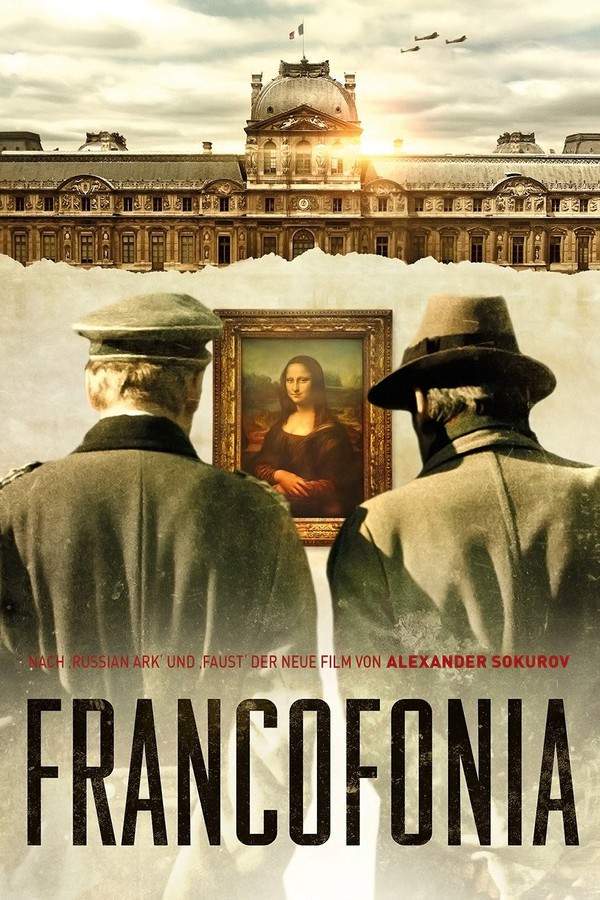
Francofonia (2016) Ending Explained & Film Insights
Free Men (2012) Full Summary & Key Details
Black Mercedes (2019) Full Summary & Key Details
93, rue Lauriston (2004) Plot Summary & Ending Explained
Black List (1984) Complete Plot Breakdown
Paris Underground (1945) Movie Recap & Themes
La Traversée de Paris (1956) Detailed Story Recap
Mr. Klein (1976) Complete Plot Breakdown
The Good and the Bad (1976) Movie Recap & Themes
Le Jour de gloire (1976) Full Movie Breakdown
Before the Deluge (1954) Ending Explained & Film Insights
Paris After Dark (1943) Full Summary & Key Details
Border Street (1948) Full Summary & Key Details
Holy Week (1995) Full Movie Breakdown
The Future Awaits (2025) Plot Summary & Ending Explained