Plot Explained Spoilers guaranteed!
Plot Explained

Browse by genre

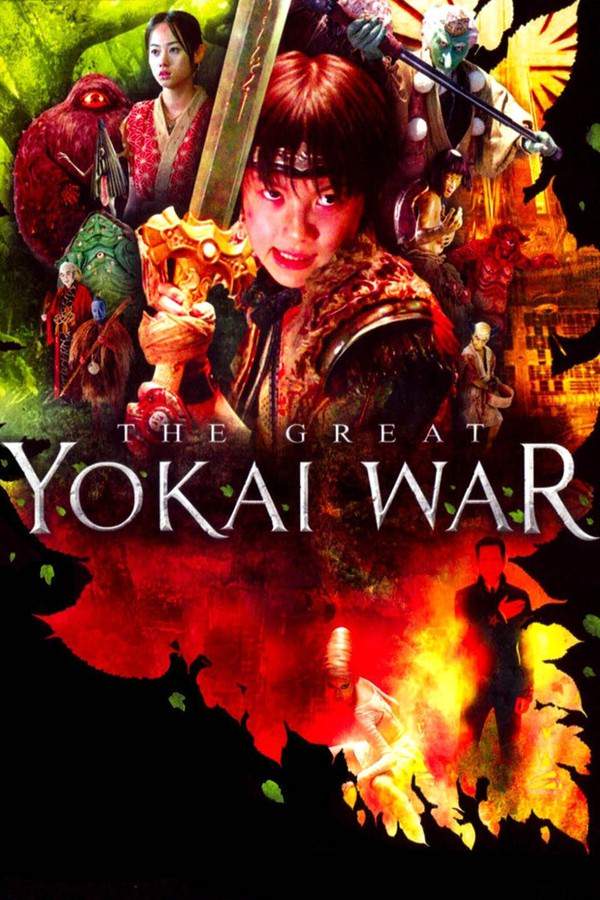
The Great Yokai War (2006) movie poster

Plot Summary

The Great Yokai War (2006) Plot Summary Explained

Release, runtime and language
2006 · 124 min · Japanese
Loading streaming availability…
Directed by
Takashi Miike

When ancient myths and modern terror intertwine, a young boy named Tadashi Ino is called upon to defend virtue against encroaching darkness. He must confront the sinister Lord Kato, who threatens to plunge the land into chaos with his mechanical army. Tadashi's quest involves rescuing kidnapped children and preventing the complete destruction of his world, facing formidable challenges along the way.

On this page (6)
  1. 1 Where to watch
  2. 2 What happens: full plot
  3. 3 Plot questions answered
  4. 4 Movie threads
  5. 5 Movies like The Great Yokai War
  6. 6 Every angle
Loading streaming availability…

Full plot summary · contains spoilers

What Happens in The Great Yokai War: Full Plot Summary

The whole story of The Great Yokai War (2006) explained, from the opening scene to the final frame: every key event, every twist and what it all adds up to. Read it as a quick recap before the sequel, to check a scene you missed, or to finally understand what really happened.

A young boy, Tadashi Ino, finds himself in a new town following his parents' divorce. During a local festival, he is unexpectedly honored as this year's Kirin Rider, a title derived from the legendary Chinese chimera, the Qilin, known for being a guardian of goodness. However, this title proves to be more than ceremonial when a malevolent spirit, Yasunori Katō, emerges. Katō, a demon fueled by rage over the devastation of Japan’s indigenous tribes, seeks retribution against modern Japanese society for their mistreatment of the yōkai.

To execute his revenge, Katō aligns himself with a yōkai named Agi, summoning a fiery entity called Yomotsumono, which embodies the bitterness of all that humanity has discarded. Katō enflames his vendetta by feeding yōkai into Yomotsumono’s flames, amalgamating their essence with discarded relics to create formidable creatures known as kikai. These kikai, under Katō's control, ruthlessly capture other yōkai to bolster their ranks while preying upon humans.

Amidst this turmoil, a sunekosuri escapes from Katō's grasp and befriends Tadashi, who embarks on a quest to obtain the Daitenguken, a sword vital for a Kirin Rider, as part of his initiation. Terrified by the legends surrounding the mountain where the sword is said to dwell, Tadashi hesitates and nearly turns back. However, driven by fate and with the clever intervention of the sea spirit Shōjō, he faces a challenge that ultimately proves his valor. Accompanied by Shōjō, Kawahime, and Kawatarō, he reaches the Daitengu, who bestows the sword upon him, only for it to shatter as Agi captures his sunekosuri companion, leaving Tadashi unconscious.

Upon regaining consciousness, Tadashi finds himself among the yōkai, engaging in discussions to fix his broken sword. They conclude that they must seek help from the blacksmith Ippondatara, discovering that he too is imprisoned. Led by General Nurarihyon, their group departs to rescue the blacksmith. Meanwhile, Kawataro attempts to restrain an ittan-momen, mistakenly misinterpreting the bumbling Azukiarai's antics as bravery, not realizing he is merely incapacitated.

When Katō's airship-like fortress launches towards Tokyo, Tadashi and his newfound companions pursue it. They arrive just in time as the fortress engulfs the Shinjuku Capital Building of Tokyo, and they find Ippondatara, who skillfully reforges the sword. Ashamed of his own capture, Ippondatara refuses to disclose his escape, revealing that the sunekosuri had taken his place as a kikai. Clad in new gear, Tadashi and his allies march into battle, confronting overwhelming foes until they receive unexpected support from an army of yōkai, lured by the notion of a festive celebration. This chaotic brawl allows Tadashi and Kawahime to infiltrate the fortress, joined by a reporter named Sata, whom Kawahime had previously rescued.

In a heartbreaking moment, Tadashi must confront the kikai that his sunekosuri friend has become, battling fiercely to return it to its true form, albeit gravely wounded. Gripped by anger, he faces Agi, who is abruptly summoned by Katō to complete a dreadful ritual involving Yomotsumono. Despite his frantic efforts, Tadashi struggles against Katō’s formidable power. Kawahime, conflicted yet resolute, reveals her disdain for humans, stemming from her abandonment, but clarifies she harbors no need for vengeance—an emotion she considers distinctly human. Unmoved, Katō dispenses with them as Azukiarai arrives in a clumsy fashion.

In a final showdown, Katō calls upon Agi once more, but her love proves detrimental to his plans. In a chilling moment, he slays her and enters an oven to merge with Yomotsumono. Yet, thanks to Sata's intervention, an adzuki bean from Azukiarai inadvertently triggers a cascade of positive feelings that obliterates Yomotsumono.

As the yōkai disperse, Tadashi and Sata find themselves back on the street, where the boy fabricates his first white lie about Kawahime’s affections for him. Fast forward years later, and we see Tadashi as a man who can no longer perceive yōkai, including his dear sunekosuri friend. The film concludes hauntingly, revealing the sunekosuri facing a now Azuki-pupiled Katō.
Last updated: November 15, 2024 at 17:08

Was this helpful?

Plot questions answered

The Great Yokai War Plot Explained: Your Questions Answered

The questions people ask most about The Great Yokai War (2006): what happens in the confusing scenes, why the characters do what they do, the twists, hidden details and what the ending means. Each answer contains spoilers.

Q1

Why does Katō want to destroy humanity?

Katō is a demon spirit fueled by rage over the historical devastation of Japan's indigenous tribes and the mistreatment of yōkai by modern Japanese society. His vendetta stems from centuries of persecution, making him seek revenge against all of modern humanity for these past wrongs.

Foreshadowing: Katō's hatred is introduced when he awakens, motivated by anger over indigenous tribe destruction.

  • katō motivation
  • revenge
  • yōkai persecution
  • indigenous tribes
Q2

What are kikai and how does Katō create them?

Kikai are powerful creature-weapons created by Katō through a dark process. He feeds yōkai into Yomotsumono's flames while combining their essence with discarded human relics, transforming them into mindless soldiers under his control. These creatures then capture more yōkai to expand his army.

Foreshadowing: The timeline establishes Katō mobilizing yōkai and creating kikai early in the conflict.

  • kikai creation
  • yōkai army
  • yomotsumono
  • katō forces
Q3

Why was Tadashi chosen as the Kirin Rider?

Tadashi was chosen as the Kirin Rider during a local festival, though the exact selection criteria isn't detailed in the summary. The role is derived from the legendary Qilin, a Chinese chimera known as a guardian of goodness, suggesting the title is ceremonial but carries genuine responsibility to defend against evil forces.

Foreshadowing: The title is introduced as more than ceremonial when Katō emerges shortly after.

  • kirin rider
  • tadashi chosen
  • qilin
  • guardian
Q4

How does the sunekosuri become a kikai?

After Agi captures Tadashi's sunekosuri companion, the creature is transformed into a kikai through Katō's dark process, fed into Yomotsumono's flames and merged with discarded relics. This robs the sunekosuri of its identity, turning it into one of Katō's mindless soldiers that attacks Tadashi.

Foreshadowing: Agi captures the sunekosuri right after Tadashi obtains the Daitenguken, leading directly to this transformation.

  • sunekosuri captured
  • transformation
  • agi
  • kikai
Q5

Why does the Daitenguken sword shatter?

The Daitenguken shatters when Agi captures Tadashi's sunekosuri companion at the moment of the sword's retrieval. The sudden attack and capture appear to disrupt the weapon's integrity, possibly because the quest's completion was tied to the sunekosuri's involvement or because the chaotic moment broke the sword's magical bond.

Foreshadowing: The sword's shattering occurs immediately following Tadashi's successful retrieval but before he can properly claim it.

  • daitenguken
  • broken sword
  • mountain quest
  • reforged
Q6

Why does Katō kill Agi?

Katō kills Agi during the final confrontation because her love for him proves detrimental to his ritual completion. Despite their alliance, Agi's emotional attachment causes her to interfere with his plans to merge with Yomotsumono, so he murders her without hesitation to ensure his revenge can be completed.

Foreshadowing: Agi's conflicted loyalty is established earlier when she helps Tadashi briefly during the battle.

  • agi killed
  • katō betrayal
  • final battle
  • sacrifice
Q7

How does the adzuki bean destroy Yomotsumono?

When Azukiarai accidentally drops an adzuki bean during the climax, it triggers a cascade of positive emotions that destroys Yomotsumono. The bean represents wholesome, positive human feelings, associated with festivals and happiness, which contradicts the entity's nature as embodies of discarded negativity, causing its destruction.

Foreshadowing: The yōkai army is lured by the notion of a festive celebration, establishing the power of positive emotions.

  • adzuki bean
  • yomotsumono destroyed
  • positive feelings
  • azukiarai
Q8

Why can't Tadashi see yōkai anymore at the end?

Years after the battle, Tadashi has grown up and lost the ability to perceive yōkai entirely, including his beloved sunekosuri friend. This suggests he has returned to the mundane human world, with his childhood perception of the spirit realm fading as he became an adult, a common theme in yokai narratives.

Foreshadowing: Tadashi fabricates his first white lie about Kawahime, showing his reentry into ordinary human deception.

  • tadashi grown up
  • cannot see yokai
  • adult world
  • sunekosuri lost
Q9

What is Yomotsumono?

Yomotsumono is a fiery entity summoned by Katō through his alliance with Agi. It embodies the bitterness of all that humanity has discarded, negative emotions, waste, and forgotten things. It serves as the power source for creating kikai and the ultimate weapon in Katō's revenge plan.

Foreshadowing: Katō mobilizes yōkai and summons Yomotsumono early in his campaign.

  • yomotsumono entity
  • fire entity
  • discarded bitterness
  • katō weapon
Q10

What happened to Kawahime after the battle?

Kawahime's exact fate after the battle is unclear from the summary. She infiltrates the fortress with Tadashi and confronts Katō, revealing her disdain for humans due to past abandonment, but she doesn't appear in the final scenes with Tadashi on the street, suggesting she returned to the sea or faded away like other yōkai when the conflict ended.

Foreshadowing: Kawahime explains her hatred of humans but clarifies she feels no need for vengeance.

  • kawahime fate
  • sea spirit
  • final battle
  • disappeared
Q11

Why do the yōkai help Tadashi in Tokyo?

An army of yōkai arrives to support Tadashi and his allies after being lured by the notion of a festive celebration. This unexpected reinforcement turns the tide of battle, providing the crucial support needed to infiltrate Katō's fortress while his forces are distracted.

Foreshadowing: The battle in Tokyo shows yōkai rallying to Tadashi's cause during the chaotic brawl.

  • yokai army reinforcement
  • festival celebration
  • tokyo battle
Q12

What does the final image of Katō with azuki eyes mean?

The haunting final scene shows the sunekosuri facing a now Azuki-pupiled Katō, suggesting either a transformation of Katō into a more benign entity or that the sunekosuri has become his companion in some new form. The azuki beans that destroyed Yomotsumono may have also reformed Katō's spirit, creating this mysterious new dynamic.

Foreshadowing: The adzuki bean connection and the sunekosuri's fate are tied to Katō's ultimate end.

  • azuki eyes
  • final scene
  • katō transformed
  • sunekosuri companion

Movie threads

More Movies Like The Great Yokai War, by Mood & Story

Curated lists built around what makes The Great Yokai War tick: the same mood, the same kind of story or the same emotional payoff. Each list explains why these movies belong together.

Mythical Creature Adventures with a Dark Edge like The Great Yokai War

Fantastical journeys where playful mythology collides with genuine peril. Discover movies like The Great Yokai War, where vibrant folkloric worlds are threatened by dark forces. These similar fantasy adventures blend fun creature encounters with serious stakes, creating bittersweet and chaotic quests perfect for fans of imaginative, high-stakes family films.

  • fantastical
  • whimsical
  • adventurous
  • darkly comedic
  • melancholic
  • chaotic
  • Tone: whimsical, darkly comedic, melancholic
  • Pacing: fast, quest-driven
Why these movies?

The story pattern: Stories in this thread typically follow a protagonist, often young or inexperienced, who is thrust into a hidden world of mythical beings. Their initial wonder is soon challenged by a significant threat that endangers both the magical and human realms, leading to a fast-paced quest where whimsical encounters are interspersed with moments of genuine tension and emotional weight.

Why they belong together: Movies are grouped here for their shared foundation in folklore, their blend of whimsical tone with darker thematic undercurrents, and their structure of a hero's quest that is both adventurous and emotionally impactful. They offer a specific mix of fantastical fun and poignant stakes.

Bittersweet Chosen One Stories like The Great Yokai War

Stories where a child's triumphant quest is shadowed by poignant loss. If you liked the emotional journey of Tadashi in The Great Yokai War, explore these similar movies about young chosen ones. These films feature fast-paced adventures where a child hero faces great evil, but their triumph is tempered by loss and mature themes, creating a powerful bittersweet feeling.

  • hopeful
  • melancholic
  • adventurous
  • coming of age
  • bittersweet
  • heroic
  • Tone: hopeful, melancholic, bittersweet
  • Pacing: fast, action-oriented
Why these movies?

The story pattern: The narrative pattern involves an ordinary child being called to an extraordinary destiny. They must rally allies and confront a formidable evil, but their success is not a pure, uncomplicated win. The resolution is bittersweet, emphasizing that courage and growth are born from confronting hardship and that true heroism involves accepting difficult consequences.

Why they belong together: These films are connected by their focus on the 'chosen one' archetype applied to a young protagonist, a pacing that keeps the adventure moving, and a definitively bittersweet emotional conclusion. The shared experience is one of exhilarating heroism intertwined with the poignant cost of that heroism.

If you liked this

Movies Like The Great Yokai War

Similar movies to The Great Yokai War: the same genre, themes or kind of story. Each one comes with its own plot summary, timeline and ending explained.

Browse all movie summaries

Every angle

The Great Yokai War (2006) Explained: Plot, Timeline & Characters

Everything about The Great Yokai War in one place: what happens in the plot summary, the timeline in chronological order, the characters and meaning and a spoiler-free summary. What's After the Movie adds the cast, box office and post-credit scenes.

Coming soon on iOS and Android

The Plot Explained Movie Summary App

Plot summaries, endings explained and timelines on your phone. Catch up on any movie in minutes, save your favorites and never miss a twist again.

Be the first to know when we launch. Your email stays private, always.

Learn more about the app