Plot Explained Spoilers guaranteed!
Plot Explained

Browse by genre

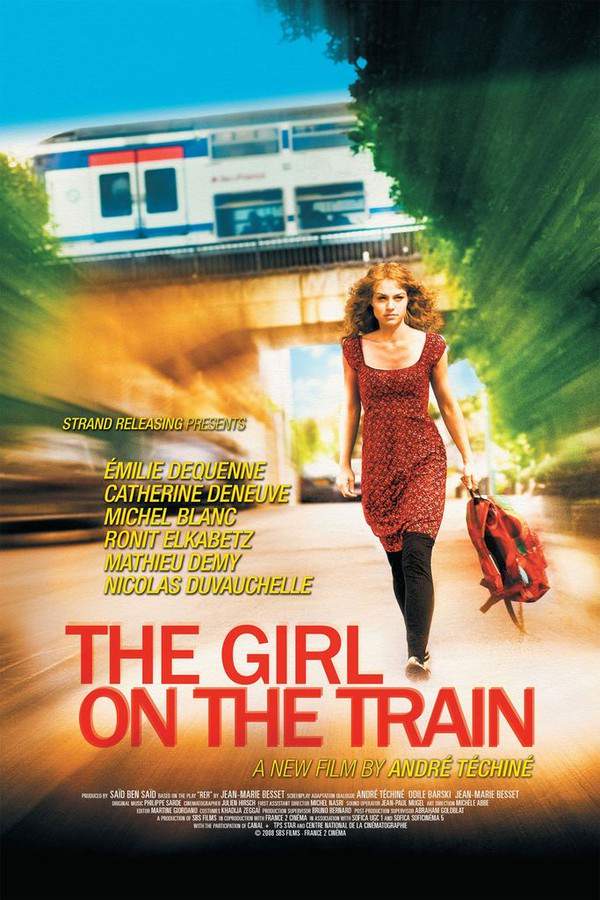
The Girl on the Train (2010) movie poster

Spoiler-Free Summary

The Girl on the Train (2010) Spoiler-Free Summary – What It's About

Release, runtime and language
2010 · 105 min · French
Directed by
André Téchiné
Starring
Émilie Dequenne, Catherine Deneuve, Michel Blanc
Budget
$9M

A woman struggling with memory loss and personal turmoil becomes entangled in a mystery when she witnesses something disturbing from a train window. Her observations lead her to believe a young couple is involved in a disappearance. As she investigates, her own life unravels, and she finds herself a suspect in a dangerous situation. The pursuit of truth exposes hidden secrets and tests the fragile connections between strangers.

On this page (5)
  1. 1 What it is about
  2. 2 Is it worth watching?
  3. 3 After you watch
  4. 4 Movie threads
  5. 5 Every angle

Spoiler-free summary · safe to read

What Is The Girl on the Train About? (No Spoilers)

The plot of The Girl on the Train (2010) without spoilers: what it is about, who it follows and where it takes place, told without the twists or the ending. Enough to decide whether it is your next watch, not enough to ruin it.

In the commuter rails that thread through a restless metropolitan landscape, Rachel Watson spends her mornings watching life unfold through a window she can never quite enter. Still nursing the remnants of a once‑stable marriage to Tom and the haze of frequent blackouts, she clings to the rhythm of the train as a fragile anchor. The carriage becomes a moving stage where she observes the seemingly perfect lives of strangers—a polished couple whose quiet intimacy hints at secrets, a young mother whose smile masks a deeper ache. The daily ritual is both a comfort and a provocation, urging her to piece together fragments of a world that feels simultaneously close and out of reach.

The film settles into a mood of muted tension, where the ordinary scenery of commuter stations and city streets is drenched in the soft glow of sunrise and the cold steel of the tracks. Rachel’s internal struggle—her battle with memory lapses, lingering shame, and an unsteady sense of self—mirrors the external mystery that flickers just beyond the glass. The tone is a careful blend of psychological intrigue and quiet melancholy, inviting viewers to share in her heightened sensitivity to the ordinary moments that many pass by unnoticed.

As the train carries her onward, Rachel finds herself drawn into a quiet obsession with the couple she watches, sensing that something vital is slipping through the cracks of their routine. The allure of the unknown prickles her curiosity, urging her to look beyond the surface of everyday interactions. In this world of fleeting glances and whispered possibilities, the line between observer and participant blurs, setting the stage for a journey that will test her perception, her courage, and her hope for redemption.

Last updated: August 10, 2025 at 08:38

Was this helpful?

What to expect

Is The Girl on the Train Worth Watching? What It Feels Like

Is it dark, sad, slow, intense or confusing? The mood of The Girl on the Train (2010) in a few tags, without a word about how it ends. Each tag opens a list of movies that feel the same.

After you watch

Seen The Girl on the Train? Now Read the Spoilers

Once you have watched The Girl on the Train (2010), come back for the full story: the plot summary with spoilers, the timeline in chronological order, the characters and meaning.

Movie threads

More Movies Like The Girl on the Train, by Mood & Story

Curated lists built around what makes The Girl on the Train tick: the same mood, the same kind of story or the same emotional payoff. Each list explains why these movies belong together.

Unreliable Narrator Mysteries like The Girl on the Train

Stories where the protagonist's fractured perception obscures a dangerous truth. Discover movies like The Girl on the Train where the central mystery is filtered through a protagonist with a fractured memory or distorted perception. These psychological thrillers and dramas make you question reality, building suspense as the unreliable narrator's search for truth unravels their own life.

  • unreliable narrator
  • psychological
  • suspenseful
  • disorienting
  • tense
  • cerebral
  • Tone: dark, suspenseful, psychological
  • Pacing: variable, building to intense reveals
Why these movies?

The story pattern: This narrative pattern follows a protagonist, often grappling with addiction, trauma, or psychological turmoil, who becomes involved in a mystery. Their compromised point of view—due to blackouts, lies, or mental illness—creates a fog of uncertainty. The plot unfolds through their flawed perspective, forcing the audience to sift through misdirection and half-truths until a final, often shocking, clarity is reached.

Why they belong together: Movies in this thread are grouped by their shared core device: an unreliable central perspective. They create a specific kind of suspense that hinges on the audience's doubt, blending psychological character study with intricate plotting to deliver tense, cerebral, and often emotionally heavy experiences.

Atmospheric Slow Burn Crime Movies like The Girl on the Train

Mood-driven crime stories where atmosphere and character unraveling take center stage. If you liked the suspenseful and melancholic atmosphere of The Girl on the Train, explore these atmospheric slow burn crime stories. These films focus on psychological tension, character-driven mysteries, and a heavy mood, rather than action, creating a gripping and somber viewing experience centered on trauma and secrets.

  • atmospheric
  • somber
  • gripping
  • melancholic
  • suspenseful
  • anxious
  • Tone: dark, somber, melancholic
  • Pacing: variable, slow burn tension
Why these movies?

The story pattern: The narrative unfolds at a deliberate pace, often beginning with an observer or an outsider being drawn into a disturbing situation. The investigation is internal and psychological, paralleling the protagonist's personal turmoil with the central mystery. The climax is less about physical confrontation and more about the devastating emotional and psychological revelations that shatter the characters' lives.

Why they belong together: These films are connected by their shared emphasis on mood over momentum. They use a variable or slow pacing to build a deep sense of dread and unease, focusing on the emotional and psychological damage caused by crime rather than the procedural aspects. The experience is defined by its heavy, somber, and gripping atmosphere.

Every angle

The Girl on the Train (2010) Explained: Plot, Timeline & Characters

Everything about The Girl on the Train in one place: what happens in the plot summary, the timeline in chronological order, the characters and meaning and a spoiler-free summary. What's After the Movie adds the cast, box office and post-credit scenes.

Coming soon on iOS and Android

The Plot Explained Movie Summary App

Plot summaries, endings explained and timelines on your phone. Catch up on any movie in minutes, save your favorites and never miss a twist again.

Be the first to know when we launch. Your email stays private, always.

Learn more about the app