



Plot Explained Spoilers guaranteed!
Plot Explained

Browse by genre

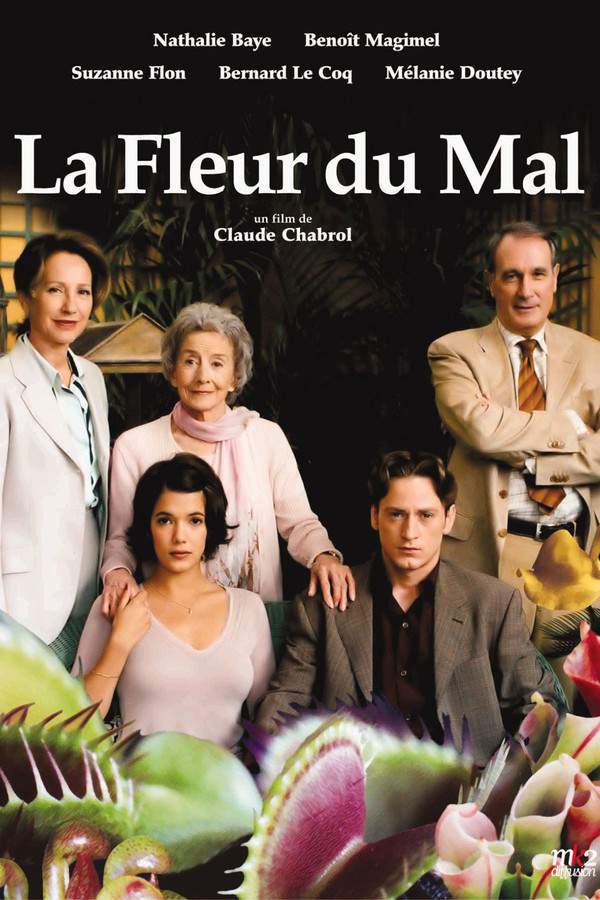
The Flower of Evil (2003) movie poster

Timeline

The Flower of Evil (2003) Timeline Explained – Every Event in Order

Release, runtime and language
2003 · 104 min · French
Directed by
Claude Chabrol
Starring
Suzanne Flon, Benoît Magimel, Nathalie Baye, Mélanie Doutey

A French woman in her fifties, Anne Charpin-Vasseur, challenges societal norms by entering the race for mayor. Her campaign is quickly embroiled in a whirlwind of personal and political turmoil, forcing her to confront deeply buried secrets. Allegations of her family's involvement with the Nazis surface, threatening to dismantle her reputation and expose complex family dynamics. She must navigate these treacherous circumstances while battling to protect her future and uncover the truth about her past.

On this page (6)
  1. 1 Where to watch
  2. 2 Events in order (12)
  3. 3 Timeline questions answered
  4. 4 Movie threads
  5. 5 Movies like The Flower of Evil
  6. 6 Every angle

Where to watch

Where to Watch The Flower of Evil (2003)

Where can you watch The Flower of Evil? Stream, rent or buy it in the US, including on Apple TV Store, Google Play Movies and YouTube: current JustWatch availability with up-to-date prices.

Streaming availability powered by JustWatch

12 events in order · contains spoilers

The Flower of Evil Timeline: Events in Chronological Order

Every key event of The Flower of Evil (2003) in order, scene by scene, with when and where it takes place. Use it to untangle flashbacks, time jumps and parallel storylines, to refresh your memory before the sequel or to find the exact scene you are thinking of.

  1. Gérard's Disdainful Lifestyle

    Gérard, the head of a pharmaceutical empire, lives a life filled with excessive drinking and promiscuous behavior. This lifestyle attracts derision from his son François, who has just returned from the USA, creating tension within the household.

    Where
    Bordeaux
  2. Anne's Political Ambitions

    Amidst the family chaos, Gérard's second wife, Anne, is campaigning for local municipal elections. Her political aspirations further exacerbate the family's already strained dynamics, especially with François back home.

    Where
    Bordeaux
  3. François and Michèle's Romance

    François and Michèle, Anne's daughter from a previous marriage, develop a romantic connection upon his return. Their relationship grows during a getaway to Pyla-sur-Mer, where they indulge in their affection away from the family turmoil.

    Where
    Pyla-sur-Mer
  4. Line's Support for the Lovers

    Line, Anne's elderly aunt, plays a supportive role in François and Michèle's burgeoning romance. She encourages the young lovers, providing a rare moment of solace amidst the family's unfolding drama.

  5. Pamphlet Sabotage

    Trouble arises for Anne's political campaign when an anonymous pamphlet begins to circulate, damaging the family's reputation. The pamphlet raises questions about Gérard's possible involvement, intensifying the tension among family members.

    Where
    Bordeaux
  6. Mayor's Offer to Anne

    Despite the setbacks, the current mayor recognizes Anne's skills and offers her a potential position in his office if she wins the election. This moment of hope adds complexity to the family's fraught situation.

    Where
    Bordeaux
  7. Election Night Gatherings

    On the night of the election, the family assembles at the town hall to witness the outcome, with the exception of Michèle. She stays home, primarily focused on finishing a vital university assignment which adds to the family's growing divides.

    When
    Election Night
    Where
    Town Hall, Bordeaux
  8. Gérard's Fatal Assault

    In a drunken stupor, Gérard returns home and violently confronts Michèle. This confrontation escalates, resulting in a tragic accident where Gérard falls, leading to his untimely death.

    Where
    Bordeaux
  9. Line's Dark Secret

    In a shocking revelation, Line confides in Michèle about her past and her deep love for her brother, who was executed during World War II for his role in the French Resistance. This confession unearths hidden family betrayals that complicate their history.

  10. The Truth of Betrayal

    Line uncovers that their father was a Nazi collaborator who betrayed her brother, driving her to take revenge. This chilling family secret adds layers to their already complex relationships and histories.

  11. Line's Acceptance of Guilt

    After significant turmoil, Line decides to accept responsibility for Gérard's death. This moment of acceptance illustrates the complexities of guilt and familial obligations within their troubled household.

    Where
    Bordeaux
  12. Election Celebration

    Amidst the tragic family events, cars honk and supporters gather at the household to celebrate Anne's electoral victory. They toast with champagne, signifying a new beginning for the family, despite the shadow of their recent tragedies.

    Where
    Bordeaux

Last updated: November 15, 2024 at 17:21

Was this helpful?

Timeline questions answered

The Flower of Evil Timeline Explained: Your Questions Answered

When does it happen, and why in that order? The questions people ask about the chronology of The Flower of Evil (2003): time jumps, flashbacks, cause and effect between scenes and the correct order of events, each answered with spoilers.

Q1

Why does Line support François and Michèle's relationship?

Line supports the young lovers because she sees an opportunity for genuine happiness in their relationship. However, her support also stems from her own painful past. Line has carried the burden of a devastating family secret for decades, and her encouragement of François and Michèle may represent her desire for love to flourish in the family despite its dark history.

Foreshadowing: Line's unusual support for the romance hints at her deeper understanding of family secrets and her yearning for redemption through the younger generation's happiness.

  • line
  • francois
  • michele
  • romance
  • support
  • aunt
Q2

Who wrote the anonymous pamphlet attacking Anne's family?

The pamphlet was likely authored by someone seeking to sabotage Anne's political campaign by exposing damaging family secrets. While Gérard was suspected by some family members, the summary does not definitively identify the author. The pamphlet appears designed to damage Anne's reputation by associating her family with Nazi collaboration, a sensitive topic in French society.

Foreshadowing: The pamphlet's revelation of Nazi collaboration connects directly to Line's later confession about her brother's execution and her father's betrayal.

  • pamphlet
  • anonymous
  • anne
  • campaign
  • sabotage
  • nazi
Q3

Why does Gérard attack Michèle on election night?

Gérard returns home drunk and assaults Michèle in a violent confrontation. The exact motivation is not fully detailed in the summary, but the assault appears to be connected to his generally dissolute and aggressive behavior. His drunken state lowers his inhibitions, and the family tensions surrounding the election, combined with his known promiscuous and controlling nature, create a volatile situation that escalates tragically.

Foreshadowing: This violent attack occurs despite Line's protective presence in the household, making her later decision to take responsibility for Gérard's death more understandable.

  • gerard
  • michele
  • assault
  • election night
  • drunk
  • violence
Q4

How exactly does Gérard die?

Gérard dies during a struggle with Michèle on election night. He returns home inebriated and assaults Michèle. During the physical confrontation, Gérard accidentally falls, resulting in his death. The summary describes it as an accident, though the circumstances are violent and traumatic for Michèle.

Foreshadowing: Line's immediate decision to take responsibility for the death suggests she may have had pre-existing feelings about Gérard or knew this violent confrontation was possible.

  • gerard
  • death
  • fall
  • struggle
  • michele
  • accident
Q5

What is Line's dark secret?

Line reveals to Michèle that she was deeply in love with her own brother, who was executed during World War II for being part of the French Resistance. This revelation exposes a painful family history involving incestuous love, wartime betrayal, and multigenerational trauma that has haunted Line throughout her life.

Foreshadowing: Line's secret explains her unusual perspective on family loyalty and her willingness to support forbidden relationships between François and Michèle.

  • line
  • secret
  • brother
  • resistance
  • execution
  • wwii
Q6

Who killed Line's brother during the war?

Line's brother was executed by the Nazis (or their collaborators) for his role in the French Resistance during World War II. However, the deeper betrayal came from within their own family. Line discovers that their father was a Nazi collaborator who betrayed his own son to the authorities, making him indirectly responsible for his brother's death.

Foreshadowing: This revelation about their father's collaboration explains Line's motivation for killing him and adds layers of betrayal to the family's dark history.

  • line
  • brother
  • resistance
  • execution
  • father
  • collaborator
Q7

Why does Line kill her father?

Line kills her father as an act of revenge for betraying her brother to the Nazis. When she discovers that her father was the Nazi collaborator who caused her brother's execution, she takes matters into her own hands and murders him. This patricide is motivated by her deep love for her brother and the desire to avenge his death.

Foreshadowing: Line's acceptance of responsibility for Gérard's death mirrors her earlier act of killing her own father, both are responses to betrayal and moral compromises within the family.

  • line
  • father
  • kill
  • revenge
  • brother
  • collaboration
Q8

Why does Line confess to Gérard's death?

Line decides to take responsibility for Gérard's death, likely because she views it as protecting Michèle from legal consequences, but also because she sees a pattern in her life of bearing the family's moral burdens. Having already killed her own father for betraying her brother, Line may feel compelled to again shoulder guilt to shield the younger generation. Her decision reflects her complex role as both perpetrator and protector within the family.

Foreshadowing: Line's pattern of accepting guilt for family crimes connects her past (killing her father) to present actions (confessing to Gérard's death).

  • line
  • confession
  • gerard
  • death
  • responsibility
  • guilt
Q9

Why does Anne's mayoral campaign matter to the plot?

Anne's campaign serves as the catalyst that brings the family's hidden secrets to the surface. The anonymous pamphlet attacking her with Nazi collaboration allegations forces the family to confront its past. Additionally, the election-night setting creates the circumstances for Gérard's death by removing most family members from the house, leaving Michèle alone with the drunken Gérard.

Foreshadowing: The campaign brings political pressure that mirrors the family's internal pressure, culminating in both electoral victory and personal tragedy on the same night.

  • anne
  • campaign
  • mayor
  • election
  • pamphlet
  • politics
Q10

What happens to François and Michèle after Gérard's death?

After Gérard's death, François and Michèle's relationship is left in a deeply complicated position. They share a romantic connection, but the violent death of François's father, combined with Michèle's assault, creates an enormous emotional burden. The summary does not detail their specific fate, but the traumatic events would inevitably affect their future together.

Foreshadowing: The lovers' getaway to Pyla-sur-Mer, presented as a romantic escape, is overshadowed by the darkness that emerges on election night.

  • francois
  • michele
  • relationship
  • future
  • aftermath
Q11

What does Anne's election victory represent?

Anne wins the mayoral election and celebrates with her supporters, but this political triumph is deeply ironic. Her victory occurs on the same night her husband dies and her family reveals decades of hidden trauma including Nazi collaboration, incest, and murder. The ending is bittersweet, the political success cannot erase the moral compromises and tragedies the family has endured.

Foreshadowing: The festive celebration with champagne contrasts sharply with the earlier violent death, symbolizing how public success masks private devastation.

  • anne
  • victory
  • election
  • celebration
  • mixed ending
Q12

Why does Gérard disdain his son François?

Gérard's disdain for François stems from their fundamental differences in values and lifestyle. François has just returned from the USA and clearly judges his father's dissolute way of life, his excessive drinking and promiscuity. This tension between father and son reflects their contrasting moral perspectives and possibly François's disapproval of how his father treats the family.

Foreshadowing: This father-son conflict sets up the unstable household dynamics that contribute to the tragedy on election night.

  • gerard
  • francois
  • father
  • son
  • tension
  • disdain

Movie threads

More Movies Like The Flower of Evil, by Mood & Story

Curated lists built around what makes The Flower of Evil tick: the same mood, the same kind of story or the same emotional payoff. Each list explains why these movies belong together.

Movies about family secrets exposed by public scrutiny like The Flower of Evil

When a public life puts a private, dark family history under the microscope. If you liked the tense unraveling of family history in The Flower of Evil, explore more movies where political campaigns, legal battles, or public fame act as the catalyst for exposing dark secrets. These films blend personal drama with societal pressure for a gripping, high-stakes narrative.

  • tense
  • suspenseful
  • melancholic
  • oppressive
  • anxious
  • revelatory
  • Tone: dark, tense
  • Pacing: steady, methodical
Why these movies?

The story pattern: These narratives typically follow a protagonist striving for public success or validation. Their ascent draws unwanted attention, sparking an investigation or rumors that methodically peel back layers of deception, often revealing abuse, crime, or trauma within the family unit, leading to a moral and personal crisis.

Why they belong together: They are grouped by the compelling narrative engine of a public facade clashing with a private truth. The shared experience is one of rising tension as personal and public worlds collide, exploring themes of reputation, truth, and the inescapable weight of the past.

Claustrophobic family thrillers with a dark tone like The Flower of Evil

Thrillers where the true horror is the toxic environment within the family home. Fans of The Flower of Evil's oppressive exploration of a toxic family will appreciate these similar thrillers. Discover movies where the home is not a sanctuary but a prison of secrets, built on a foundation of abuse, incest, and lies, filmed with a steady, dread-inducing pace.

  • claustrophobic
  • oppressive
  • dark
  • somber
  • psychological
  • disturbing
  • Tone: dark, oppressive, somber
  • Pacing: steady, slow burn
Why these movies?

The story pattern: The story unfolds within the confines of a family home or small community, slowly revealing a history of dysfunction through tense dialogues and shocking discoveries. The plot is driven by the characters' attempts to break free from or expose the rot at their core, often with tragic consequences.

Why they belong together: They share a specific mood: a sense of inescapable dread generated by familial bonds turned sinister. The similarity lies in the oppressive atmosphere, the focus on psychological horror over physical action, and the exploration of profoundly disturbing themes like abuse and inherited trauma.

If you liked this

Movies Like The Flower of Evil

Similar movies to The Flower of Evil: the same genre, themes or kind of story. Each one comes with its own plot summary, timeline and ending explained.

Browse all movie summaries

Every angle

The Flower of Evil (2003) Explained: Plot, Timeline & Characters

Everything about The Flower of Evil in one place: what happens in the plot summary, the timeline in chronological order, the characters and meaning and a spoiler-free summary. What's After the Movie adds the cast, box office and post-credit scenes.

Coming soon on iOS and Android

The Plot Explained Movie Summary App

Plot summaries, endings explained and timelines on your phone. Catch up on any movie in minutes, save your favorites and never miss a twist again.

Be the first to know when we launch. Your email stays private, always.

Learn more about the app