Plot Explained Spoilers guaranteed!
Plot Explained

Browse by genre

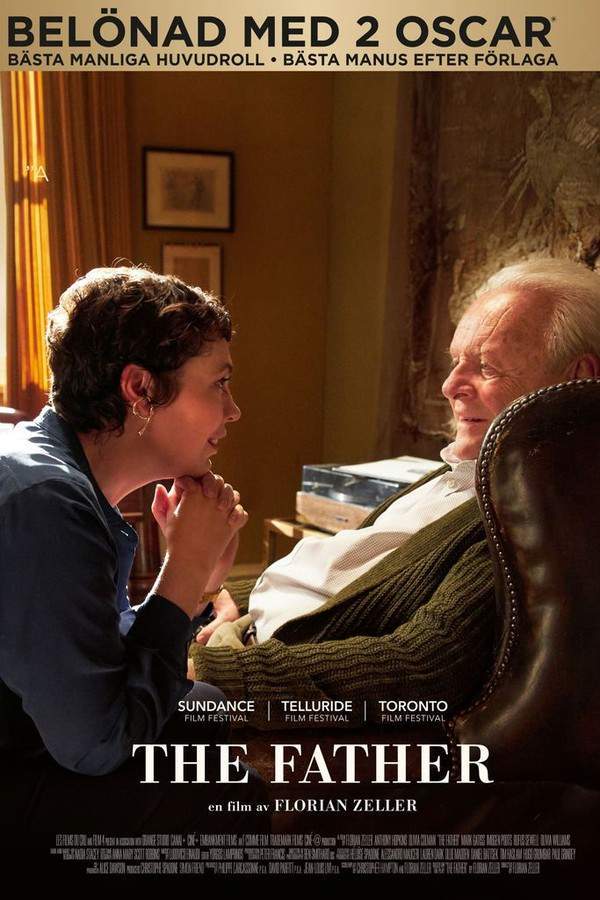
The Father (2021) movie poster

Ending Explained

The Father (2021) Ending Explained – Final Scene & Meaning

Release, runtime and language
2021 · 97 min · English
Echo score 84
Loading streaming availability…
Directed by
Florian Zeller
Starring
Anthony Hopkins, Imogen Poots, Olivia Williams, Mark Gatiss, Olivia Colman, Adnan Kundi
Budget
$6M

As an 80-year-old man resists help and fiercely maintains his independence, his daughter struggles to support him while protecting their bond. The lines of reality become increasingly blurred as memories resurface, prompting profound questions about identity and the impact of aging. The film explores the complexities of family relationships and the challenges of confronting mortality and the fragility of the human mind.

On this page (8)
  1. 1 Where to watch
  2. 2 What happens at the end
  3. 3 Final events in order
  4. 4 Ending questions answered
  5. 5 The book behind the movie
  6. 6 Movie threads
  7. 7 Movies like The Father
  8. 8 Every angle
Loading streaming availability…

Ending explained · contains spoilers

What Happens at the End of The Father?

How The Father (2021) ends, what the final scene means, which earlier moments set it up and how to read the ending if the film leaves it open. The full ending explained, with every spoiler.

At the end of The Father, Anthony is shown in an assisted living facility, where his grasp on reality has completely deteriorated. The film’s final scenes are emotionally intense, with Anthony overwhelmed by a memory of his mother, expressing a deep sense of loss and confusion. He confides in Catherine, the nurse caring for him, that he feels he's "losing all his leaves," a poignant expression that signifies his sense of slipping away from the moments and memories that once defined him. As tears roll down his face and he clings to her, she reassures him that everything will be okay and that they will go for a walk later, even though neither of them truly understands if that will happen. The camera then gently drifts outside his window to observe the trees, their leaves rustling, symbolizing the ongoing cycle of life and growth despite Anthony's fading consciousness.

The film’s structure, which blurs the lines between reality and Anthony’s perceptions, leaves viewers questioning what is real and what is a product of his dementia. Scenes where Anthony misremembers faces or experiences imagined assaults emphasize his confusion and vulnerability. For example, he perceives his daughter Anne as Catherine and his son-in-law Paul as Bill, and in some moments, he believes he is being attacked or mistreated—though these are often projections of his mind. He also repeatedly brings up his deceased younger daughter Lucy, especially how much she resembles his current caregiver, despite her having died after a serious accident he cannot remember clearly. This recurring focus on Lucy and the hallucinations or nightmares involving her represent his ongoing grief and unresolved feelings.

It is left ambiguous what truly happened to Anthony—whether he died in the moments shown or another part of his mind is creating that illusion. The final scene does not provide a definitive answer, but the overarching message suggests that Anthony’s journey is more about his internal experience than his physical death. The ending, with the peaceful image of the trees, hints at the inevitability of life’s ongoing cycle and a form of quiet acceptance. Amid the heartbreak, the film emphasizes that even in his final days, Anthony's life was meaningful, filled with love and loss, just like the cycle of leaves on a tree—constantly changing yet enduring.

Ultimately, The Father explores dementia as a labyrinth of the mind, capturing its disorienting and heartbreaking effects. The visual metaphor of the rustling leaves signifies hope amidst despair—life goes on, with growth and cycles, even when the individual can no longer hold on to reality or memories. The ending leaves us with a haunting reflection on the fragility of human existence and the resilience of life’s ongoing story, long after the final scene fades away.
Last updated: June 25, 2025 at 08:57

Was this helpful?

The last 4 events

How The Father Ends: The Final Events in Order

The last events of The Father (2021) in chronological order, the run-up to the ending explained above. The complete timeline has all 13 events, scene by scene.

Open the full timeline
  1. The Nursing Home

    In the nursing home, a nurse informs Anthony of Anne's new life in Paris with Paul. This news pushes Anthony into a deeper emotional crisis as he grapples with his fading memories and loneliness.

    Where
    Nursing home
  2. Yearning for Familiarity

    Haunted by the news of his family's changes, Anthony desperately longs for familiarity and connection. His emotional state illustrates the pain of losing touch with the reality he once knew.

    Where
    Nursing home
  3. Expressing Grief

    In a deeply poignant moment, Anthony cries out for his mother, symbolizing his profound sense of loss. He expresses his fear of 'losing his leaves,' a metaphor for his deteriorating grasp on reality.

    Where
    Nursing home
  4. The Final Imagery

    The film concludes with evocative scenes of rustling leaves, mirroring Anthony's struggles. This imagery symbolizes the fragility of life and the painful process of memory fading away.

Ending questions answered

The Father Ending: Your Questions Answered

The questions people ask most about the ending of The Father (2021): what the final scene means, how the twist works, what happens to each character and how to read the ending. Each answer contains spoilers.

Q1

Why is Anthony in an assisted living facility at the end of the movie?

By the film's end, Anthony's dementia has progressed so severely that he can no longer live independently. His daughter Anne has placed him in an assisted living facility where round-the-clock care is available. His confusion has become so extreme that he no longer recognizes his own daughter, mistaking her for his caregiver Catherine, demonstrating that his condition has reached a point where professional care is necessary for his safety and wellbeing.

Foreshadowing: Earlier scenes showed Anthony refusing help and insisting he didn't need assistance, making his eventual move to a care facility a tragic inevitability.

  • anthony
  • assisted living
  • dementia
  • anne
  • care facility
Q2

What does Anthony mean when he says he's losing all his leaves?

When Anthony says he's "losing all his leaves," he's using the leaf metaphor to describe his fading memories and deteriorating sense of self. Just as trees lose their leaves in autumn, Anthony feels himself losing the moments, identities, and memories that once defined him. This poignant expression captures his awareness, however fragmented, of his own cognitive decline and the gradual stripping away of his identity.

Foreshadowing: The film opens with Anthony insisting nothing is wrong with him, creating a tragic contrast with his later acknowledgment of losing himself.

  • leaves metaphor
  • memory loss
  • identity
  • dementia
  • anthony
Q3

Does Anthony die at the end of The Father?

The film deliberately leaves Anthony's death ambiguous. The final scene shows him crying for his mother while clinging to nurse Catherine, but it's unclear whether this moment represents his actual death or another product of his confused mind. The camera pulling away to show rustling trees suggests a peaceful transition, but the film never confirms whether Anthony physically dies in that moment or if we're witnessing another mental illusion.

  • anthony death
  • ending
  • ambiguous
  • final scene
Q4

Who is Lucy and why does Anthony keep talking about her?

Lucy is Anthony's younger daughter who died after a serious accident. His memory of this tragedy has become fragmented due to his dementia, he can't clearly remember what happened to her. Throughout the film, Anthony repeatedly brings up Lucy, especially noting how much she resembles his current caregiver. This recurring focus represents his unresolved grief and guilt, with his mind clinging to the loss of a child even as other memories dissolve.

  • lucy
  • daughter
  • death
  • grief
  • anthony
Q5

Why does Anthony mistake Anne for Catherine at the end?

Anthony's mistake of calling his daughter Anne by the name of his nurse Catherine reflects the severe progression of his dementia. His ability to recognize faces and distinguish between people has broken down completely. Since Catherine is the primary caregiver in his current reality, her face has replaced his daughter's in his mind. This confusion devastates Anne, who watches her father fail to recognize her as she visits.

  • anne
  • catherine
  • mistaken identity
  • dementia
  • confusion
Q6

What do the trees and leaves symbolize at the end of the movie?

The trees with rustling leaves in the final scene symbolize the ongoing cycle of life and nature's resilience despite individual decay. While Anthony is losing his "leaves", his memories and identity, the trees represent life continuing forward. The metaphor suggests that though Anthony's personal story is ending, life itself goes on. The gentle rustling offers a sense of peace and acceptance amid the tragedy, implying that decay and renewal are both part of existence's natural cycle.

  • trees
  • leaves
  • symbolism
  • cycle of life
  • nature
Q7

Is the final scene with Anthony and Catherine real or a hallucination?

The final scene deliberately blurs this boundary, which is central to the film's exploration of dementia. Given that Anthony's reality has completely deteriorated by this point, the scene could be interpreted as another hallucination or memory fragment. Alternatively, it could represent his actual final moments of clarity before death. The film's structure mimics the experience of dementia itself, where the distinction between real and imagined becomes meaningless.

  • hallucination
  • reality
  • dementia
  • confusion
  • final scene
Q8

Why does Anthony cry for his mother at the end?

In his final moments of extreme vulnerability, Anthony reverts to a childlike state and calls out for his mother. This represents a return to his earliest, most primal memory, the comfort and safety associated with his mother. As his dementia has stripped away almost all his adult identities and memories, he is left with this fundamental, instinctive need. His tearful cry "I want my mummy" underscores the tragic reversal of his character from an independent, stubborn man to someone completely dependent and frightened.

  • mother
  • crying
  • vulnerability
  • childlike
  • anthony
Q9

What is Catherine's role in the ending of the film?

Catherine is the nurse caring for Anthony in the assisted living facility. In the final scene, she provides him with comfort and reassurance when he is distressed, letting him hold her hand and promising they will go for a walk later. Though neither of them knows if that will happen, her compassionate presence offers Anthony some peace in his final moments. She represents the human connection and kindness that persists even when all else is lost to dementia.

  • catherine
  • nurse
  • care
  • compassion
  • assisted living
Q10

What is the deeper meaning behind the leaf metaphor in The Father?

The leaf metaphor extends beyond Anthony's personal experience to represent universal themes of life, death, and renewal. Just as trees shed their leaves seasonally, humans shed memories, identities, and ultimately life itself. The film suggests this loss is natural and part of a larger cycle, leaves return to nourish the tree, just as our lives contribute to the ongoing story of those we leave behind. The ending offers quiet acceptance rather than despair, finding beauty and meaning even in the inevitable decay of the human body and mind.

  • leaf metaphor
  • acceptance
  • life cycle
  • meaning
  • theme

Movie threads

More Movies Like The Father, by Mood & Story

Curated lists built around what makes The Father tick: the same mood, the same kind of story or the same emotional payoff. Each list explains why these movies belong together.

Movies with disorienting perspectives like The Father

Stories where reality is unreliable, told from a character's subjective, crumbling perspective. If you were captivated by the unique narrative of The Father, these movies also use complex storytelling to place you directly inside a character's fragile psyche. Explore similar films about unreliable perception and the search for identity amidst mental turmoil.

  • disorienting
  • unreliable narrator
  • psychological
  • anxious
  • reflective
  • claustrophobic
  • Tone: anxious, melancholic, disorienting
  • Pacing: slow, deliberate, reflective
Why these movies?

The story pattern: These narratives often reject a linear, objective reality, instead structuring the plot around a protagonist's fragmented or distorted perception. The central conflict is often internal, as the character grapples with their own mind, while the audience is left to question what is real.

Why they belong together: They are grouped by their shared commitment to a subjective, psychologically immersive experience. The narrative structure itself becomes a tool for conveying theme, creating a deep sense of unease and emotional resonance by mirroring the character's mental state.

Heartbreaking family dramas similar to The Father

Intimate stories about the heavy emotional toll of caregiving and fractured family relationships. For viewers who appreciated the emotional weight and family focus of The Father, this list features other deeply moving dramas. Discover movies that explore the complex bonds between parents and children, the burdens of care, and the quiet grief of decline.

  • heartbreaking
  • melancholic
  • family drama
  • caregiving
  • grief
  • intimate
  • Tone: melancholic, heartbreaking, reflective
  • Pacing: slow, character-driven
Why these movies?

The story pattern: The narrative follows the emotional arcs of family members as they confront a shared crisis, often related to illness, aging, or estrangement. The plot is secondary to the exploration of relational dynamics, sacrifice, and the slow, painful recalibration of love and duty.

Why they belong together: They share a melancholic tone, heavy emotional weight, and a slow, deliberate pace that allows for deep character study. The core similarity is the focus on the heartbreaking reality of family life under strain, producing a reflective and poignant viewing experience.

If you liked this

Movies Like The Father

Similar movies to The Father: the same genre, themes or kind of story. Each one comes with its own plot summary, timeline and ending explained.

Browse all movie summaries

Every angle

The Father (2021) Explained: Plot, Ending, Timeline & Characters

Everything about The Father in one place: what happens in the plot summary, the timeline in chronological order, the characters and meaning, the ending explained and a spoiler-free summary. What's After the Movie adds the cast, box office and post-credit scenes.

Coming soon on iOS and Android

The Plot Explained Movie Summary App

Plot summaries, endings explained and timelines on your phone. Catch up on any movie in minutes, save your favorites and never miss a twist again.

Be the first to know when we launch. Your email stays private, always.

Learn more about the app