Plot Explained Spoilers guaranteed!
Plot Explained

Browse by genre

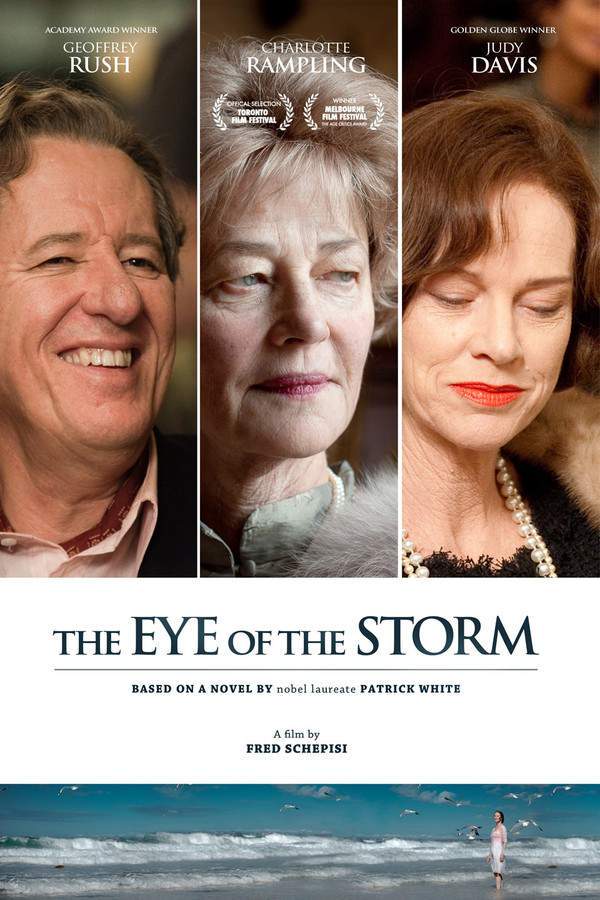
The Eye of the Storm (2012) movie poster

Timeline

The Eye of the Storm (2012) Timeline Explained – Every Event in Order

Release, runtime and language
2012 · 119 min · English
Loading streaming availability…
Directed by
Fred Schepisi

In a Sydney suburb, a complex web of relationships unfolds around the aging Elizabeth Hunter. Maria and Flora, her nurses, along with housekeeper Lotte and lawyer Arnold, attend to her as her estranged son, Basil, a struggling actor in London, and her daughter, Dorothy, a divorced princess, return to be with her at her bedside. Tensions rise as each grapples with their own motivations and desires surrounding Elizabeth's considerable inheritance and her impending departure from Australia.

On this page (7)
  1. 1 Where to watch
  2. 2 Events in order (14)
  3. 3 Timeline questions answered
  4. 4 The book behind the movie
  5. 5 Movie threads
  6. 6 Movies like The Eye of the Storm
  7. 7 Every angle
Loading streaming availability…

14 events in order · contains spoilers

The Eye of the Storm Timeline: Events in Chronological Order

Every key event of The Eye of the Storm (2012) in order, scene by scene, with when and where it takes place. Use it to untangle flashbacks, time jumps and parallel storylines, to refresh your memory before the sequel or to find the exact scene you are thinking of.

  1. Elizabeth Hunter's Deathbed Gathering

    In a Sydney suburb, a poignant scene unfolds as two nurses, a housekeeper, and a solicitor attend to Elizabeth Hunter in her final moments. Her expatriate children, Sir Basil and Dorothy, gather at her deathbed, bringing the complexities of their past relationships to the forefront.

    Where
    Sydney Suburb
  2. Confronting Estrangement

    Sir Basil, a well-known but struggling actor, and Dorothy, an underprivileged French princess, face the reality of their estranged relationship with their mother. Their attempts to reconcile reveal their shared history of disappointment and inadequacy.

  3. The Siblings' Joint Scheme

    In their quest to inherit their mother's vast fortune, Sir Basil and Dorothy unite to devise a plan. They enlist the help of Arnold Wyburd, their mother's lawyer, to orchestrate a move to a nursing home, aiming to hasten her demise.

    Where
    Sydney
  4. Manipulating Circumstances

    The children navigate Sydney's social scene while developing their scheme, highlighting their desperation and moral conflict. Their ambitions cast a shadow over the emotional weight of their mother's impending death.

    Where
    Sydney
  5. Arnold Wyburd's Unrequited Love

    Arnold Wyburd, the family lawyer, grapples with his long-held affection for Mrs. Hunter. His complicity in the scheme serves as a painful reminder of his own feelings and the family's complex dynamics.

  6. The Panic Among Care Staff

    As the family’s plan becomes evident, panic sets in among the nursing home's staff. They sense the end of an eccentric chapter and the impending loss of Mrs. Hunter, adding tension to the atmosphere.

    Where
    Nursing Home
  7. Mrs. Hunter's Reflection

    Amidst the turmoil, Mrs. Hunter shares her regrets, particularly about failing to embody the humility and grace experienced during a cyclone fifteen years earlier. This reflection reveals her profound understanding of life's fragility.

  8. The Realization of Compassion

    For the first time, Basil and Dorothy experience true compassion as they confront their mother's vulnerability. This moment of empathy transforms their perception of their relationship with her, challenging their motives.

  9. A Ferocious Storm Approaches

    As a fierce storm brews outside, the atmosphere inside the nursing home grows tense and charged. The impending chaos reflects the emotional turbulence within the Hunter family as they face the reality of losing their mother.

  10. Mrs. Hunter's Departure

    In a powerful and poignant ending, Mrs. Hunter passes away during the storm, not out of frailty but as an assertion of her will. Her death serves as a final act of defiance, showcasing her enduring strength.

    Where
    Sydney
  11. Revisiting the Cyclone

    As she closes her eyes for the last time, Mrs. Hunter relives her experience in the cyclone, standing on a beach surrounded by devastation. This moment symbolizes her peace amidst chaos and her ultimate acceptance of death.

    Where
    Beach
  12. Aftermath of Loss

    Following their mother's death, Basil and Dorothy grapple with their inheritance and the emotional implications of their actions. The loss forces them to reevaluate their lives and the authenticity of their desires.

  13. Legacy of Elizabeth Hunter

    Mrs. Hunter's legacy looms large over her children, illustrating the complexity of familial bonds and the weight of unfulfilled expectations. Her departure leaves them to confront their own identities stripped of maternal influence.

  14. The Continuing Cycle of Life

    In the wake of their mother's death, Basil and Dorothy must learn to navigate their lives without her formidable presence. Their journey symbolizes the perpetual cycle of life and death, marked by the love and conflicts that shape us.

Last updated: September 26, 2026 at 05:35

Was this helpful?

Timeline questions answered

The Eye of the Storm Timeline Explained: Your Questions Answered

When does it happen, and why in that order? The questions people ask about the chronology of The Eye of the Storm (2012): time jumps, flashbacks, cause and effect between scenes and the correct order of events, each answered with spoilers.

Q1

Why do Basil and Dorothy want to transfer Elizabeth to a nursing home?

In The Eye of the Storm, Basil and Dorothy plot to move their dying mother into a nursing home in order to accelerate her death and claim her considerable inheritance sooner. Despite their polished exteriors, both siblings are financially dependent on Elizabeth's fortune and view her prolonged dying as an obstacle to their security. They enlist their mother's longtime lawyer, Arnold Wyburd, to formalize the transfer, hoping the change of environment will shorten her final days.

  • basil
  • dorothy
  • nursing home
  • inheritance
  • scheme
  • elizabeth hunter
Q2

What is the significance of the cyclone Elizabeth recalls fifteen years later?

The cyclone Elizabeth experienced fifteen years earlier represents a moment of unexpected humility and grace that she was never able to reproduce in her ordinary life. In The Eye of the Storm, this memory surfaces during her dying hours as she regrets losing touch with that sense of surrender and vulnerability beneath her usual commanding presence. The cyclone becomes the emotional benchmark against which she measures her entire existence, and it is what she ultimately reaches for at the moment of her death.

Foreshadowing: The cyclone reference is set up early as a memory and paid off visually in Elizabeth's final vision on the beach.

  • cyclone
  • memory
  • humility
  • grace
  • regret
  • elizabeth
Q3

What does it mean that Elizabeth dies "through an assertion of will"?

Elizabeth's death in The Eye of the Storm is described not as a failure of will but as its ultimate expression, since she appears to choose the moment and manner of her passing on her own terms. Even as her body fails, she reclaims control over how she leaves the world, frustrating the scheming that tried to dictate her end. This final act mirrors the cyclone memory: a moment of surrender that is paradoxically an act of profound agency, proving that her formidable nature persists even in death.

  • death
  • will
  • defiance
  • dying
  • elizabeth hunter
Q4

What causes Basil and Dorothy to finally experience compassion?

Basil and Dorothy experience genuine compassion for the first time when they confront the reality of their mother's vulnerability and imminent death. In The Eye of the Storm, watching Elizabeth reflect on her regrets and relive her cyclone memory strips away their sophistication, pretensions, and lifelong emotional armor. This shared witnessing of a woman who never showed them love now revealing her own fragility breaks through defenses built over decades.

  • compassion
  • vulnerability
  • estrangement
  • realization
  • siblings
Q5

What does Elizabeth's final vision of the beach symbolize?

Elizabeth's closing vision of standing peacefully on a beach surrounded by cyclone destruction symbolizes her reconciliation with mortality and her rediscovery of grace. In The Eye of the Storm, this image mirrors the cyclone memory from fifteen years earlier, suggesting that death has finally returned her to that lost moment of humility. The serenity she feels amid devastation represents her ultimate acceptance of life's impermanence and the end of her lifelong struggle against it.

Foreshadowing: The cyclone memory planted earlier in the film returns in full as her dying vision, completing the foreshadowed arc.

  • beach
  • cyclone
  • death
  • acceptance
  • symbolism
  • peace
Q6

Why does Arnold Wyburd help Basil and Dorothy scheme against Elizabeth?

Arnold Wyburd, the family lawyer, assists the siblings because he has long harbored deep, unrequited love for Elizabeth Hunter. In The Eye of the Storm, his involvement in the scheme is driven by a painful mixture of professional obligation and personal longing, since he knows Elizabeth never returned his affection. By helping her children, Arnold clings to a twisted connection to the woman he loves, even as it betrays her final wishes and his own conscience.

  • arnold wyburd
  • elizabeth hunter
  • unrequited love
  • lawyer
  • complicity
Q7

Why are both Basil and Dorothy desperate for the inheritance despite living very different lives?

Despite Basil's status as a knighted actor in London and Dorothy's title as a French princess, both are financially dependent on their mother's fortune. In The Eye of the Storm, their polished exteriors mask lives of quiet desperation: Basil's career is fading while Dorothy's royal marriage collapsed into poverty. The inheritance represents their only realistic path to security, which is why they abandon dignity to conspire against their dying mother.

  • inheritance
  • basil
  • dorothy
  • financial desperation
  • poverty
Q8

Why was Elizabeth unable to express love to her children?

Elizabeth Hunter was portrayed as a formidable, domineering matriarch whose lifelong emotional armor prevented her from showing affection directly. In The Eye of the Storm, this emotional rigidity shaped Basil and Dorothy's estrangement, since they grew up measuring themselves against her impossible standards of poise and command. Her inability to express love is not portrayed as cruelty but as a deeply ingrained defense mechanism that even death cannot fully dissolve, only soften through her final cyclone memory.

  • elizabeth hunter
  • estranged children
  • emotional armor
  • matriarch
  • love
Q9

How does the storm outside mirror the family's emotional turmoil?

The ferocious cyclone that brews over Sydney functions as a visual and thematic parallel to the emotional chaos inside the Hunter household. In The Eye of the Storm, the approaching storm channels the unresolved tension, scheming, and grief swirling around Elizabeth's deathbed. As the physical storm intensifies outside, so does the family's internal reckoning with mortality, inheritance, and their own moral compromises, culminating together at the moment of her death.

Foreshadowing: The brewing storm foreshadows Elizabeth's cyclone memory and her eventual return to that moment of grace.

  • storm
  • emotional turmoil
  • symbolism
  • cyclone
  • family
Q10

How does Elizabeth's death change Basil and Dorothy after the funeral?

Following Elizabeth's death in The Eye of the Storm, Basil and Dorothy are forced to confront their inheritance, their scheming, and the emotional consequences of their actions without her formidable presence to rail against. Stripped of the maternal figure who defined their lives, they must reevaluate who they are beyond her influence. Their mother's passing leaves them to navigate their futures alone, carrying the weight of unfulfilled expectations and the compassion they only discovered at the very end.

  • aftermath
  • legacy
  • identity
  • estrangement
  • basil
  • dorothy
Q11

Why does the nursing home staff panic as Elizabeth's death approaches?

The nursing home staff experiences panic because they sense the collapse of Elizabeth Hunter's eccentric, formidable world and the personal meaning her presence gave their work. In The Eye of the Storm, caring for her has been an exercise in navigating a singular personality, and her departure signals the end of a unique chapter in their professional lives. Their anxiety reflects a loss that extends beyond one patient to an entire way of being they had organized around her.

  • staff
  • panic
  • loss
  • eccentric world
  • nursing home

Movie threads

More Movies Like The Eye of the Storm, by Mood & Story

Curated lists built around what makes The Eye of the Storm tick: the same mood, the same kind of story or the same emotional payoff. Each list explains why these movies belong together.

Deathbed family dramas and inheritance intrigue like The Eye of the Storm

Where a dying matriarch pulls scattered, scheming family members back into one complicated room. If you were moved by the inheritance scheming and bedside reckoning in The Eye of the Storm, you'll find more slow-burn family dramas here. These movies center on dying parents, estranged children, and the tangled motives surrounding a final inheritance. Expect heavy emotional weight, layered character dynamics, and bittersweet endings that linger long after the credits roll.

  • deathbed
  • inheritance
  • scheming
  • dysfunctional family
  • mortality
  • estrangement
  • Tone: somber, scheming, bittersweet
  • Pacing: slow, deliberate
Why these movies?

The story pattern: Stories typically open with the news of a parent's declining health or imminent death, pulling adult children back to a childhood home or family estate. Each returning relative carries unresolved resentment, secret debts, or quiet schemes about what they stand to gain. As the parent fades, conversations grow more pointed, loyalties are tested, and small acts of cruelty or compassion reshape the family. The arc usually moves from self-interest toward some form of reckoning, with the inheritance serving as both plot engine and emotional symbol of what was never spoken aloud.

Why they belong together: These films share a recognizable architecture: a dying matriarch or patriarch, adult children with competing agendas, a domestic setting saturated with memory, and an inheritance that reveals more about the family than the will itself. They tend to be slow, character-driven, heavy with mortality, and emotionally complex, often drawing on literary or stage sources for their layered dialogue and interior perspective.


Slow literary family dramas like The Eye of the Storm

Contemplative stories where grief, memory, and family secrets unfold at the pace of a long sigh. Movies like The Eye of the Storm for viewers who want quiet, literary dramas about complicated families. These slow-paced, character-driven stories linger on atmosphere, voiceover, and emotional interiority rather than action. They carry heavy emotional weight and bittersweet, sometimes melancholy endings, perfect for fans of contemplative Australian and European drama.

  • literary
  • slow burn
  • contemplative
  • somber
  • domestic
  • reflective
  • Tone: melancholic, reflective, bittersweet
  • Pacing: slow burn, contemplative
Why these movies?

The story pattern: Films in this thread often unfold in a single household or small social world, using confined spaces to mirror inner lives. Time stretches, scenes breathe, and the camera lingers on gestures, food, weather, and silence. Characters tend to be older, articulate, and morally complicated, and the narrative moves through memory, ritual, and conversation rather than event. Climaxes are internal, arrived at through small revelations about love, aging, or humility rather than dramatic confrontation.

Why they belong together: They share a literary sensibility, a domestic or contained setting, a slow and steady rhythm, and a willingness to sit with sadness rather than resolve it quickly. The tone is usually bittersweet or melancholic, the complexity high, and the emotional weight significant. Many are adapted from novels or plays, and they reward patience with richly observed performances and themes of grace, mortality, and the quiet cost of family life.

If you liked this

Movies Like The Eye of the Storm

Similar movies to The Eye of the Storm: the same genre, themes or kind of story. Each one comes with its own plot summary, timeline and ending explained.

Browse all movie summaries

Every angle

The Eye of the Storm (2012) Explained: Plot, Timeline & Characters

Everything about The Eye of the Storm in one place: what happens in the plot summary, the timeline in chronological order, the characters and meaning and a spoiler-free summary. What's After the Movie adds the cast, box office and post-credit scenes.

Coming soon on iOS and Android

The Plot Explained Movie Summary App

Plot summaries, endings explained and timelines on your phone. Catch up on any movie in minutes, save your favorites and never miss a twist again.

Be the first to know when we launch. Your email stays private, always.

Learn more about the app