Plot Explained Spoilers guaranteed!
Plot Explained

Browse by genre

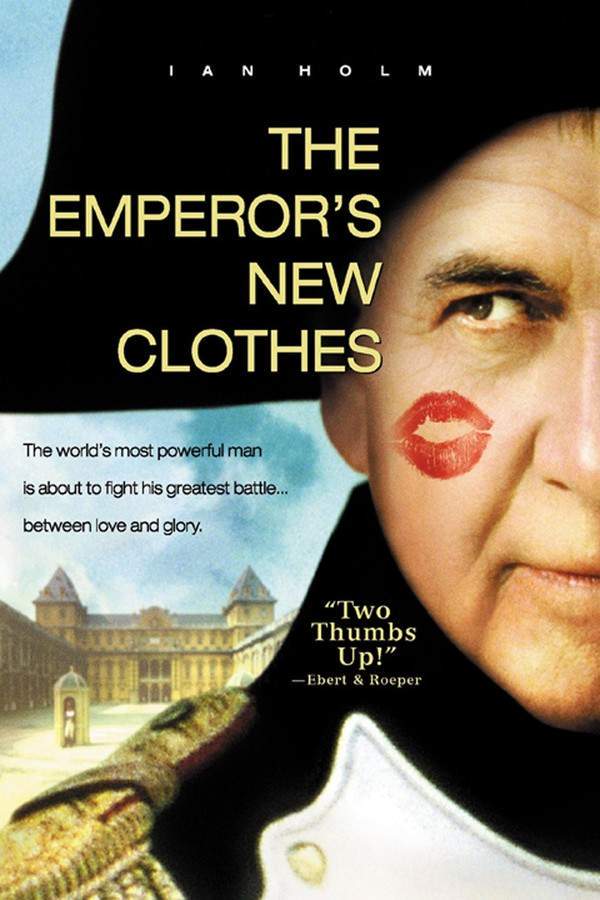
The Emperor's New Clothes (2002) movie poster

Plot Summary

The Emperor's New Clothes (2002) Plot Summary Explained

Release, runtime and language
2002 · 107 min · English
Loading streaming availability…
Directed by
Alan Taylor
Starring
Ian Holm, Iben Hjejle

Napoleon Bonaparte attempts to regain his throne, but his plans are complicated when he unexpectedly switches places with a commoner named Eugene Lenormand. The two men must then navigate each other's very different lives, struggling to maintain the deception and adapt to their new circumstances. As Napoleon experiences the challenges of ordinary life, and Eugene enjoys unexpected luxury, they face the risk of their elaborate scheme unraveling.

On this page (6)
  1. 1 Where to watch
  2. 2 What happens: full plot
  3. 3 Plot questions answered
  4. 4 Movie threads
  5. 5 Movies like The Emperor's New Clothes
  6. 6 Every angle
Loading streaming availability…

Full plot summary · contains spoilers

What Happens in The Emperor's New Clothes: Full Plot Summary

The whole story of The Emperor's New Clothes (2002) explained, from the opening scene to the final frame: every key event, every twist and what it all adds up to. Read it as a quick recap before the sequel, to check a scene you missed, or to finally understand what really happened.

Napoleon finds himself in exile on the remote island of St. Helena after the defeat at the Battle of Waterloo. Intent on reclaiming his power, his loyal followers devise an audacious plan to smuggle in a look-alike to take his place. The plan is for the imposter to masquerade as Napoleon, allowing the real Emperor to secretly escape to Paris where he can announce his return. The intent is that once the imposter declares himself, the genuine Napoleon can emerge to the cheers of the French, who are eager for their leader’s resurgence.

However, the situation becomes complicated when the imposter, reveling in the lavish lifestyle and privileges of being an emperor, becomes increasingly enamored with his newfound identity. He stubbornly refuses to disclose the truth, even when a fellow general—who is also in exile—attempts to expose him. Instead, the imposter discredits the general, claiming he has succumbed to madness due to the isolation of St. Helena.

Back in France, the real Napoleon faces a dilemma; his citizens are unaware of his true situation, believing him to be a prisoner of war. Surprisingly, most Parisians have never seen Napoleon in person, and his appearance now reflects the passage of time—he appears older and more disheveled. To add to the absurdity, it turns out that a multitude of individuals in a Paris insane asylum have taken it upon themselves to dress as Napoleon, all claiming to be the true Emperor.

As the narrative unfolds, Napoleon finds himself trapped by circumstance. Tragedy strikes when the imposter dies on St. Helena, leading to the announcement of Napoleon's death to the world. With this, the last chance for the real Napoleon to reclaim his identity and his place in history fades away. Nonetheless, during his time in exile, he has formed a meaningful relationship with the widow of one of his soldiers from the Grand Army. Although she views his claims of being Napoleon as mere delusions of grandeur, she lovingly assures him he can still be "her Napoleon."

This film boldly explores profound questions of identity and self-perception, suggesting that our understanding of who we are is, at least in part, shaped by the perceptions and beliefs of those around us.

Last updated: May 21, 2025 at 07:31

Was this helpful?

Plot questions answered

The Emperor's New Clothes Plot Explained: Your Questions Answered

The questions people ask most about The Emperor's New Clothes (2002): what happens in the confusing scenes, why the characters do what they do, the twists, hidden details and what the ending means. Each answer contains spoilers.

Q1

Why does the impostor refuse to reveal himself when confronted by the general?

The impostor refuses to reveal his identity because he has grown comfortable living as the Emperor. After spending time in Napoleon's luxurious lifestyle, he becomes enamored with the power, privilege, and status that comes with being perceived as Napoleon. When the general tries to expose him, the impostor cleverly turns the accusation around, claiming the general has gone mad from isolation. This allows him to maintain his deception and continue enjoying his newfound identity.

  • impostor
  • general
  • exposure
  • identity
  • refusal
Q2

Why can't Napoleon simply return to Paris and claim his throne?

Napoleon cannot simply return to Paris because his appearance has changed significantly during his exile. He now looks older and disheveled, and most Parisians have never actually seen him in person. Without the impostor creating a narrative of his continued presence, Napoleon has no way to prove his identity to a public that only knows him from propaganda portraits and legends. The film highlights how his legendary status has become disconnected from the actual man.

  • paris
  • identity
  • appearance
  • exile
  • return
Q3

What happens when the impostor dies on St. Helena?

When the impostor dies on St. Helena, the news of Napoleon's death is announced to the world. This destroys any remaining chance for the real Napoleon to reclaim his identity and throne. With the impostor dead, there is no one to sustain the narrative that Napoleon is alive and planning his return. The announcement of his death effectively ends Napoleon's political ambitions forever, trapping him in exile.

  • impostor
  • death
  • announcement
  • exile
  • hopes
Q4

Why do people in the Paris asylum claim to be Napoleon?

The asylum inmates claiming to be Napoleon reflects the film's exploration of identity and perception. Since most people in France have never seen the real Napoleon, his image has become almost mythological. The asylum residents dressing as Napoleon demonstrates how his identity has become detached from the actual person, anyone can claim to be him because no one truly knows what he looks like. This phenomenon also highlights the absurdity of identity itself in the story.

  • asylum
  • paris
  • identity
  • confusion
  • imitation
Q5

What does the widow mean when she calls Napoleon 'her Napoleon'?

When the widow calls Napoleon 'her Napoleon,' she is accepting him not as the historical Emperor or legendary figure, but as the man he has become during his exile. Though she doubts his claims of being the real Napoleon, she loves him for who he is now, a fallen, vulnerable man rather than a powerful ruler. This moment encapsulates the film's theme that identity is shaped by how others perceive and accept us, regardless of historical truth or social status.

Foreshadowing: The film earlier establishes that Napoleon has changed significantly in appearance and circumstance, making the widow's acceptance of him as 'her Napoleon' a meaningful shift from his former identity.

  • widow
  • identity
  • acceptance
  • love
  • relationship
Q6

Why does the general get discredited as insane?

The general gets discredited because when he attempts to expose the impostor, the impersonator accuses him of being the one who has lost his mind. The impostor claims the general's exposure attempts are delusions caused by the isolation and hardship of exile on St. Helena. Since the general is also living in exile away from civilization, his accusations sound like the ramblings of a mentally unstable person rather than legitimate concerns about an impostor.

  • general
  • discredited
  • insanity
  • exposure
  • exile
Q7

What was the original plan to restore Napoleon to power?

The original plan involved smuggling a look-alike into St. Helena to impersonate Napoleon while the real Emperor secretly escaped to Paris. The impostor would masquerade as Napoleon, creating the appearance that the Emperor was still alive and planning his return. Once the impostor publicly declared himself, the real Napoleon would emerge in Paris to the cheers of the French people, who were eager for his resurgence. The plan relied on the public never seeing Napoleon in person and believing in his continued existence.

  • plan
  • restoration
  • impostor
  • escape
  • followers
Q8

How does the film explore the theme of identity?

The film explores identity through the physical exchange of roles between Napoleon and his impostor, as well as the broader phenomenon of people claiming to be Napoleon in Paris. It asks whether identity is determined by one's position, power, and how others perceive us, or by our inner sense of self. The ending particularly emphasizes this: Napoleon loses his historical identity but gains a personal one through genuine human connection, suggesting identity is partly shaped by relationships rather than external titles.

  • identity
  • perception
  • self
  • theme
  • roles
Q9

What makes Napoleon's situation ironic by the film's end?

The irony of Napoleon's ending is that he loses his historical legacy and throne but gains something more personal, a genuine human connection. The man who once commanded an empire now finds peace in a small, humble relationship with a widow who accepts him without requiring him to be the legendary Emperor. He trades global power for intimate acceptance, gaining personal happiness while losing his place in history.

  • irony
  • legacy
  • ending
  • identity
  • gain loss

Movie threads

More Movies Like The Emperor's New Clothes, by Mood & Story

Curated lists built around what makes The Emperor's New Clothes tick: the same mood, the same kind of story or the same emotional payoff. Each list explains why these movies belong together.

Bittersweet Historical Role Reversals like The Emperor's New Clothes

Characters trading lives and learning the true cost of power and simplicity. Explore movies like 'The Emperor's New Clothes' where historical figures or characters from different social strata swap lives. These similar stories blend drama, irony, and reflection, often leading to bittersweet endings about identity and lost opportunities in a period setting.

  • identity crisis
  • wistful
  • reflective
  • ironic
  • historical
  • melancholic absurd
  • Tone: melancholic, ironic, bittersweet
  • Pacing: steady, character-driven
Why these movies?

The story pattern: The narrative revolves around a central identity swap, often between figures of high and low status, which serves as a catalyst for personal discovery. The plot follows the challenges of maintaining the deception and the characters' adaptation to their new circumstances. The journey typically culminates in a reckoning, where the initial goals of the swap are re-evaluated against the personal connections and insights gained.

Why they belong together: These films are grouped by their shared premise of a life-swapping deception set against a historical backdrop, their melancholic and ironic tone, and their focus on the bittersweet emotional payoff of trading grand ambition for personal truth.


Melancholic Fables of Lost Power like The Emperor's New Clothes

Stories about former rulers or powerful figures grappling with obscurity and a changed world. If you liked the reflective mood of 'The Emperor's New Clothes', discover other movies about fallen leaders and powerful figures in exile. These similar dramas explore melancholy, identity crises, and bittersweet acceptance with a steady, character-focused pacing.

  • melancholic
  • wistful
  • exile
  • reflective
  • identity crisis
  • lost glory
  • Tone: melancholic, wistful, reflective
  • Pacing: steady, contemplative
Why these movies?

The story pattern: The narrative follows a protagonist who has experienced a dramatic fall from power, station, or influence. The story is less about reclaiming what was lost and more about the internal struggle of accepting a new, simpler reality. The journey is introspective, often involving interactions with ordinary people that challenge the protagonist's worldview and lead to a poignant, character-driven resolution.

Why they belong together: These films share a core emotional throughline: a melancholic exploration of power lost and identity reforged. They are united by a steady, reflective pace, a medium emotional weight, and a bittersweet tone that comes from reconciling a grand past with a humble present.

If you liked this

Movies Like The Emperor's New Clothes

Similar movies to The Emperor's New Clothes: the same genre, themes or kind of story. Each one comes with its own plot summary, timeline and ending explained.

Browse all movie summaries

Every angle

The Emperor's New Clothes (2002) Explained: Plot, Timeline & Characters

Everything about The Emperor's New Clothes in one place: what happens in the plot summary, the timeline in chronological order, the characters and meaning and a spoiler-free summary. What's After the Movie adds the cast, box office and post-credit scenes.

Coming soon on iOS and Android

The Plot Explained Movie Summary App

Plot summaries, endings explained and timelines on your phone. Catch up on any movie in minutes, save your favorites and never miss a twist again.

Be the first to know when we launch. Your email stays private, always.

Learn more about the app