Plot Explained Spoilers guaranteed!
Plot Explained

Browse by genre

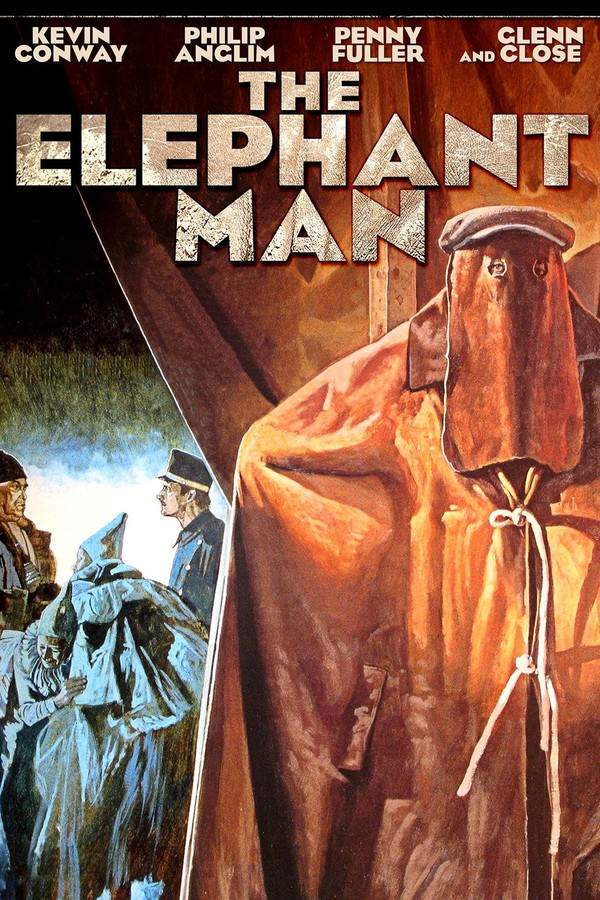
The Elephant Man (1980) movie poster

Plot Summary

The Elephant Man (1980) Plot Summary Explained

Release, runtime and language
1980 · 124 min · English
Directed by
David Lynch
Starring
Anthony Hopkins, John Gielgud, John Hurt, Wendy Hiller, Anne Bancroft, Hannah Gordon

John Merrick endures a life of isolation due to severe physical deformities. Exploited and mistreated, he finds an unexpected advocate in surgeon Frederick Treves, who sees beyond Merrick’s appearance and recognizes his inherent dignity. Treves attempts to provide Merrick with a more humane existence, but struggles against the pervasive cruelty and prejudice of Victorian society. The story explores themes of compassion, acceptance, and the definition of humanity itself, challenging viewers to confront their own biases.

On this page (6)
  1. 1 Where to watch
  2. 2 What happens: full plot
  3. 3 Plot questions answered
  4. 4 Movie threads
  5. 5 Movies like The Elephant Man
  6. 6 Every angle

Where to watch

Where to Watch The Elephant Man (1980)

Where can you watch The Elephant Man? Stream, rent or buy it in the US, including on Amazon Video, Apple TV Store and Fandango At Home: current JustWatch availability with up-to-date prices.

Streaming availability powered by JustWatch

Full plot summary · contains spoilers

What Happens in The Elephant Man: Full Plot Summary

The whole story of The Elephant Man (1980) explained, from the opening scene to the final frame: every key event, every twist and what it all adds up to. Read it as a quick recap before the sequel, to check a scene you missed, or to finally understand what really happened.

The cinematic odyssey begins on a remote African island, where a tragic meeting between wild elephants and John Merrick's mother sets in motion a profoundly moving story of isolation and redemption. As Merrick's mother meets her untimely end, the cries of baby John resonate through the air, inadvertently summoning a ghostly parade of lifeless elephants.

Fast forward to Victorian-era London, where Frederick Treves, a kindhearted surgeon at the renowned London Hospital, discovers Merrick, a captivating yet tormented soul trapped in a grim freak show located in the East End. The malevolent ringmaster, Mr. Bytes, treats Merrick barbarically, exploiting his physical deformities and cognitive challenges for his own profit. Moved by Merrick's dire situation, Treves negotiates with Bytes, securing Merrick's liberation and bringing him to the hospital for a detailed examination.

Upon his arrival at the hospital, Treves introduces Merrick to his colleagues, illuminating the striking features of his deformed skull, which compels him to sleep in an uncommon posture. While Merrick attempts to find peace, he faces a brutal beating from Bytes, urging Treves to step in and rescue him from his previous torment.

Once at the hospital, Merrick finds himself in the compassionate care of Mrs. Mothershead, who protects him from the unsympathetic nursing staff. However, Governor Carr Gomm holds reservations about Merrick's presence in the institution due to concerns regarding his perceived intellectual incapacity and "incurability." Fueled by a desire to demonstrate that Merrick possesses untapped potential, Treves embarks on a mission to teach him basic conversational skills.

As Merrick begins to recite the 23rd Psalm with unexpected eloquence, Gomm's skepticism begins to waver. Acknowledging Merrick's capacity for development, he allows him to stay at the hospital, where he finds comfort in conversations with Treves and immerses himself in creative endeavors, such as constructing a miniature cathedral.

With newfound confidence, Merrick opens up to Treves and his wife about his innermost fears, sharing a treasured photograph of his mother. Overwhelmed by the kindness surrounding him, Merrick hopes his mother would be proud to witness him embraced by such caring friends. As he starts to welcome visitors, including the esteemed actress Madge Kendal, Merrick's world broadens, revealing the healing power of human connections.

However, as Merrick's foray into the elite circles of high society continues to spark curiosity, Mrs. Mothershead expresses concern that he is seen more as a spectacle than as a valued member of the community. Treves wrestles with the ethical implications of his decisions, while the dubious ticket vendor Jim profits off of Merrick's notoriety, hosting raucous late-night exhibitions for locals eager to gawk at the mysterious "Elephant Man."

The stability of Merrick's stay at the hospital comes under scrutiny during a council meeting, but his place is secured thanks to Queen Victoria's intervention via her daughter-in-law, Alexandra. In the meantime, Jim's unscrupulous antics draw the attention of Bytes, who plots a sinister kidnapping of Merrick under the cloak of night.

When Treves discovers Jim's treachery and confronts him, he is promptly dismissed by Mrs. Mothershead. Seizing the moment, Bytes attempts to reintroduce Merrick as a circus act; however, their show in Belgium leads to disaster as Merrick collapses due to his frail condition. Bytes callously confines him with apes and abandons him, but Merrick finds salvation through the intervention of his fellow freak show performers.

Upon returning to London, Merrick encounters chaos at Liverpool Street station, where he is confronted by a rowdy group of boys. An unfortunate altercation ensues, forcing him to face the harsh truth of his societal mistreatment. In a desperate shout, he exclaims: > "I am not an elephant! I am not an animal! I am a human being! I...am...a...man!" before succumbing to utter exhaustion.

As the police escort Merrick back to the hospital and the care of Treves, he begins to recuperate from this latest ordeal, yet he ultimately succumbs to chronic obstructive pulmonary disease. Treves and Mrs. Mothershead join Princess Alexandra at a whimsical pantomime where Kendal dedicates the performance to Merrick, receiving a thunderous ovation from the audience.

As Merrick's condition deteriorates, he reflects on his life with heartfelt appreciation towards Treves. He completes his cathedral model before lying down, ultimately passing away. Consoled by a vision of his mother, who recites Lord Tennyson's moving words from "Nothing Will Die," Merrick finds peace, knowing that his story will serve as a testament to the unyielding human spirit.

Last updated: November 21, 2024 at 09:29

Was this helpful?

Plot questions answered

The Elephant Man Plot Explained: Your Questions Answered

The questions people ask most about The Elephant Man (1980): what happens in the confusing scenes, why the characters do what they do, the twists, hidden details and what the ending means. Each answer contains spoilers.

Q1

Why did Frederick Treves decide to help John Merrick?

Frederick Treves, a surgeon at London Hospital, discovered Merrick in a degrading freak show and was moved by his plight. Despite the social norms of Victorian society that viewed Merrick as a spectacle, Treves saw beyond his deformities and recognized his inherent humanity and capacity for growth. He negotiated with Mr. Bytes to secure Merrick's release, bringing him to the hospital for examination and care.

Foreshadowing: Earlier, Treves witnesses Merrick's dire conditions in the freak show, which triggers his decision to intervene.

  • frederick treves
  • john merrick
  • compassion
  • surgeon
  • freak show
Q2

Why did Mr. Bytes keep pursuing Merrick after he was released?

Mr. Bytes viewed Merrick as a lucrative financial asset. Despite accepting Treves's payment for Merrick's release, Bytes refused to relinquish his claim over him. He tracked Merrick to the hospital, brutally beat him, and later plotted to kidnap him and reintroduce him as a circus act. Bytes's greed outweighed any regard for Merrick's wellbeing or dignity.

Foreshadowing: Bytes's exploitative nature is established early when he treats Merrick barbarically in the freak show for profit.

  • mr bytes
  • kidnapping
  • exploitation
  • freak show
  • circus
Q3

How did Queen Victoria become involved in Merrick's situation?

When the hospital council considered removing Merrick due to concerns about his perceived incurability and cost, Princess Alexandra (Queen Victoria's daughter-in-law) intervened on his behalf. Her intervention secured Merrick's permanent place at the London Hospital, demonstrating that recognition of Merrick's humanity had reached the highest levels of Victorian society.

Foreshadowing: The council meeting represents the ongoing threat to Merrick's security at the hospital.

  • queen victoria
  • princess alexandra
  • hospital
  • council
  • intervention
Q4

Why did Merrick collapse during the Belgium performance?

Merrick's frail health, weakened by years of exploitation and his chronic obstructive pulmonary disease, could not withstand the physical and emotional toll of being put on display again. When Bytes forced him to perform in Belgium, Merrick collapsed from exhaustion and illness. Bytes callously abandoned him with apes, leaving him to die until fellow performers from the freak show rescued him.

Foreshadowing: Merrick's unique medical condition, including his difficulty breathing and unusual posture, was established when Treves examined him upon arrival at the hospital.

  • belgium
  • collapse
  • health
  • abandonment
  • circus performance
Q5

What was the significance of Merrick reciting the 23rd Psalm?

Governor Carr Gomm doubted Merrick's intellectual capacity and questioned whether he deserved to remain at the hospital. When Treves taught Merrick to read and speak, Merrick recited the 23rd Psalm with unexpected eloquence, proving he possessed significant cognitive abilities. This moment changed Gomm's mind and secured Merrick's place at the institution, transforming him from a perceived hopeless case to a person with recognized potential.

Foreshadowing: Treves's determination to teach Merrick conversational skills establishes this pivotal demonstration of Merrick's intelligence.

  • 23rd psalm
  • recitation
  • carr gomm
  • intelligence
  • potential
Q6

Why did Merrick cry out "I am not an elephant" at Liverpool Street station?

After being kidnapped and abandoned in Belgium, Merrick returned to London only to be harassed by a group of boys at Liverpool Street station. The confrontation erupted into an altercation that forced Merrick to confront the brutal reality of how society perceived him. In a heartbreaking moment of desperate humanity, he shouted "I am not an elephant! I am not an animal! I am a human being! I...am...a...man!" - a powerful declaration of his dignity against the dehumanization he had endured.

Foreshadowing: Merrick's earlier experiences in the freak show and as a public spectacle established the cumulative trauma behind this outburst.

  • liverpool street
  • dignity
  • humanity
  • declaration
  • society
Q7

Why was Merrick so attached to his mother's photograph?

Merrick's mother died on a remote African island when he was a baby, killed by wild elephants during a tragic encounter. The traumatic loss of his mother left Merrick with deep emotional wounds. The photograph represented his only tangible connection to her and to a sense of family love. When he shared it with Treves and his wife, Merrick expressed hope that his mother would be proud of him finding kindness and friendship at the hospital.

Foreshadowing: The opening scene on the African island establishes the foundational trauma of Merrick's mother's death.

  • mother
  • photograph
  • childhood trauma
  • emotional healing
  • family
Q8

What caused John Merrick's death?

Merrick succumbed to chronic obstructive pulmonary disease, a condition that had plagued him throughout his life due to the physical deformities affecting his breathing and posture. Despite finding compassion and dignity at the hospital, his body was ultimately too frail to recover. He died peacefully after completing his miniature cathedral model, comforted by a vision of his mother reciting poetry.

Foreshadowing: Treves noted during the initial examination that Merrick's unique skull shape affected his breathing and required him to sleep in an unusual position.

  • death
  • chronic obstructive pulmonary disease
  • cathedral model
  • peace
  • passing
Q9

Why did Mrs. Mothershead worry about Merrick becoming a spectacle?

As Merrick gained recognition and visited by high society figures including actress Madge Kendal, Mrs. Mothershead grew concerned that people were coming to see him out of curiosity rather than genuine compassion. She feared that Merrick's integration into elite circles was perpetuating the same dehumanizing treatment he experienced in the freak show, just in a more socially acceptable form. This reflected the film's theme that society's cruelty could take many forms.

Foreshadowing: Mrs. Mothershead's protective nature was established early when she shielded Merrick from unsympathetic nursing staff.

  • spectacle
  • society
  • curiosity
  • mrs mothershead
  • exploitation
Q10

How did the freak show performers help Merrick after he was abandoned in Belgium?

When Merrick collapsed during the disastrous Belgium performance and Bytes abandoned him with the apes, his former fellow performers from the freak show intervened to rescue him. Despite being marginalized themselves, they refused to let Merrick's story end in tragedy. This act of solidarity demonstrated that those who had experienced similar exploitation showed more compassion than the respectable society that gawked at Merrick.

Foreshadowing: The earlier depiction of the freak show community establishes the bonds between the performers.

  • freak show performers
  • rescue
  • belgium
  • abandonment
  • solidarity
Q11

What was the purpose of Merrick's miniature cathedral?

During his time at the hospital, Merrick immersed himself in creative endeavors, including constructing an elaborate miniature cathedral. This project represented his search for beauty and spirituality, his desire to create rather than merely be observed, and his aspiration toward transcendence beyond his physical form. He completed it just before his death, making it a meaningful final achievement.

Foreshadowing: Merrick's recitation of the 23rd Psalm ("The Lord is my shepherd") establishes his spiritual inclination.

  • cathedral
  • creativity
  • spirituality
  • model building
  • transcendence
Q12

Why did Governor Carr Gomm initially oppose Merrick remaining at the hospital?

Governor Carr Gomm questioned whether Merrick should stay at the London Hospital because he doubted Merrick's intellectual capacity and believed his condition was incurable. In Victorian society, institutions often rejected individuals seen as beyond help, as they were considered burdens rather than persons worthy of care. Gomm's initial resistance represented the institutional prejudice Merrick faced.

Foreshadowing: Treves's determination to prove Merrick's potential directly challenges Gomm's assumptions.

  • carr gomm
  • governor
  • hospital
  • opposition
  • intellectual capacity

Movie threads

More Movies Like The Elephant Man, by Mood & Story

Curated lists built around what makes The Elephant Man tick: the same mood, the same kind of story or the same emotional payoff. Each list explains why these movies belong together.

Movies about human dignity like The Elephant Man

Stories that find humanity and grace in the most difficult of circumstances. Discover movies like The Elephant Man that explore the profound theme of human dignity against overwhelming adversity. These films often feature compassionate advocates and characters facing isolation, offering emotionally heavy dramas centered on acceptance and the strength of the human spirit.

  • somber
  • heartbreaking
  • compassionate
  • uplifting
  • lonely
  • reflective
  • Tone: melancholic, compassionate
  • Pacing: steady, reflective
Why these movies?

The story pattern: These narratives often follow a central figure suffering from extreme prejudice or a debilitating condition, whose essential humanity is initially overlooked. The story arc involves their gradual recognition by a compassionate outsider, leading to moments of profound connection that contrast with the cruelty of the world, typically culminating in a bittersweet but dignified resolution.

Why they belong together: Movies are grouped here because they share a core thematic focus on the inherent worth of a person, regardless of their external circumstances. They create a similar emotional experience by balancing heartbreaking injustice with uplifting moments of kindness, all within a heavy, melancholic atmosphere.

Historical dramas about outsiders like The Elephant Man

Emotional period pieces about society's outcasts seeking acceptance. If you liked The Elephant Man, explore other historical dramas featuring isolated outcasts. These similar films are set in the past and follow characters struggling for acceptance against societal cruelty, offering steady-paced, bittersweet stories with a heavy emotional weight.

  • somber
  • lonely
  • heartbreaking
  • reflective
  • oppressive
  • period setting
  • Tone: somber, bittersweet
  • Pacing: steady, character-driven
Why these movies?

The story pattern: The narrative pattern involves an isolated protagonist in a specific historical setting, whose life is marked by exploitation or misunderstanding. Their journey is one of small, hard-fought steps toward a more humane existence, often facilitated by a few kind individuals, but the overarching societal forces ensure the conclusion remains bittersweet, acknowledging the tragedy while honoring the progress made.

Why they belong together: These films share a cohesive feel through their combination of a historical setting, a steady, deliberate pacing, and a focus on an outsider's plight. The mood is consistently somber and reflective, with a high emotional intensity derived from the protagonist's struggle against an unkind world, culminating in a similarly bittersweet emotional resolution.

If you liked this

Movies Like The Elephant Man

Similar movies to The Elephant Man: the same genre, themes or kind of story. Each one comes with its own plot summary, timeline and ending explained.

Browse all movie summaries

Every angle

The Elephant Man (1980) Explained: Plot, Timeline & Characters

Everything about The Elephant Man in one place: what happens in the plot summary, the timeline in chronological order, the characters and meaning and a spoiler-free summary. What's After the Movie adds the cast, box office and post-credit scenes.

Coming soon on iOS and Android

The Plot Explained Movie Summary App

Plot summaries, endings explained and timelines on your phone. Catch up on any movie in minutes, save your favorites and never miss a twist again.

Be the first to know when we launch. Your email stays private, always.

Learn more about the app