Plot Explained Spoilers guaranteed!
Plot Explained

Browse by genre

Attenborough and the Giant Elephant (2017) movie poster

Plot Summary

Attenborough and the Giant Elephant (2017) Plot Summary Explained

Release, runtime and language
2017 · 58 mins · English
Loading streaming availability…
Directed by
Stephen Dunleavy
Starring
David Attenborough

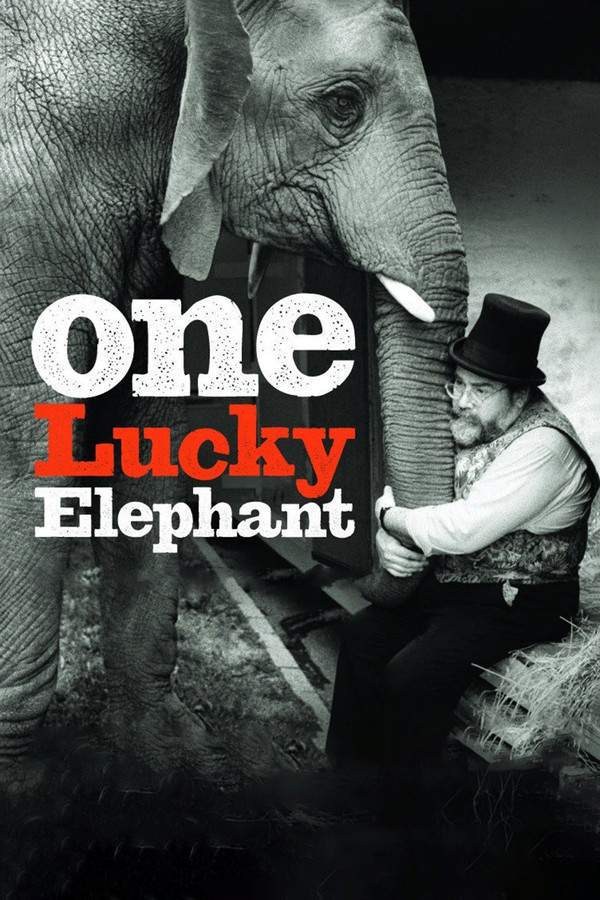
David Attenborough explores the extraordinary life and death of Jumbo, a celebrated African elephant believed by many to be the largest in the world. The documentary follows a team of scientists and conservationists as they investigate Jumbo’s story, separating fact from the myths surrounding his life. With exclusive access to Jumbo’s skeleton at the American Museum of Natural History, the team examines his size, treatment in captivity, and the circumstances of his death, ultimately uncovering vital clues about this remarkable animal whose story is rumored to have inspired the film Dumbo.

On this page (6)
  1. 1 Where to watch
  2. 2 What happens: full plot
  3. 3 Plot questions answered
  4. 4 Movie threads
  5. 5 Movies like Attenborough and the Giant Elephant
  6. 6 Every angle
Loading streaming availability…

Full plot summary · contains spoilers

What Happens in Attenborough and the Giant Elephant: Full Plot Summary

The whole story of Attenborough and the Giant Elephant (2017) explained, from the opening scene to the final frame: every key event, every twist and what it all adds up to. Read it as a quick recap before the sequel, to check a scene you missed, or to finally understand what really happened.

Presented by David Attenborough, Attenborough and the Giant Dinosaur chronicles the discovery of a massive new species of titanosaur—a long-necked, plant-eating sauropod—in the Chubut Province of Patagonia, Argentina. The fossils, dating back to the Cretaceous period, were first spotted by a shepherd at La Flecha Farm. Under the leadership of Dr. Diego Pol and Dr. José Luis Carballido, specialists excavated approximately 220 bones belonging to seven different individuals.

The documentary tracks two years of intensive research, from the initial stabilization of bones using plaster of Paris to the creation of a life-size fiberglass replica in Toronto. Because no skull was found, scientists reconstructed one based on a single tooth and known titanosaur anatomy. With a femur measuring 2.4 meters, the creature is estimated to have been 37 meters long and weighed 70 metric tons, making it larger than the Argentinosaurus.

Key scientific findings include:

* Diet: The dinosaur fed on high-reaching conifers, ferns, and cycads.

Predation: The discovery of Tyrannotitan chubutensis* teeth suggests this carnivore may have hunted or scavenged the titanosaurs.

* Death Theories: Researchers speculate the animals may have died due to drought, volcanic eruptions, or being washed into the site.

David Attenborough also explores the Auca Mahuevo nesting site, the world's largest of its kind, and visits Whipsnade Zoo to compare the dinosaur's anatomy to modern giants like elephants and giraffes. The film highlights the scale of the find through the words of farm owner Alba Mayo:

> "I don't have many sheep, but I do have dinosaurs!"

Last updated: October 20, 2026 at 01:17

Was this helpful?

Plot questions answered

Attenborough and the Giant Elephant Plot Explained: Your Questions Answered

The questions people ask most about Attenborough and the Giant Elephant (2017): what happens in the confusing scenes, why the characters do what they do, the twists, hidden details and what the ending means. Each answer contains spoilers.

Q1

Why was the Patagonian titanosaur considered a new species?

A ridge on the back of one of the recovered vertebrae, together with several other distinctive anatomical features, convinced the research team that the fossils belonged to a species new to science. Although the animal was not formally named in the documentary, it was later scientifically described as Patagotitan mayorum in 2017, cementing Patagonia's reputation as a land of prehistoric giants.

Foreshadowing: Early in the excavation, the team already suspected the bones were unusually large, hinting that they belonged to an animal unlike anything previously catalogued.

  • new species
  • titanosaur
  • Patagotitan mayorum
  • vertebrae
  • paleontological discovery
Q2

How did scientists reconstruct the titanosaur's skull when no skull was found?

Because no skull had been recovered by the end of filming, the team selected the most likely of the three known titanosaur skulls as the basis for the reconstruction. Their choice was guided by a single titanosaur tooth found at the site, which helped narrow down the closest match among the limited skull specimens available.

  • titanosaur skull
  • skull reconstruction
  • titanosaur tooth
  • computer modelling
Q3

Why were seven individual titanosaurs found at the same site?

A total of 223 bones from seven different individuals were recovered on three separate geological levels at La Flecha Farm. These distinct layers indicate that titanosaurs were deposited at the location on three separate occasions rather than all at once, suggesting recurring environmental events drew animals to the same spot over an extended period.

Foreshadowing: At the start of the dig, the team assumed all the remains came from a single individual, only gradually realising the true scale of the find.

  • seven individuals
  • La Flecha
  • fossil site
  • bone layers
  • titanosaur discovery
Q4

What killed the titanosaurs at the La Flecha excavation site?

The documentary presents three competing theories for the repeated deaths. The titanosaurs may have perished at water pools that later dried up, leaving them stranded without water. A second possibility is that local rivers were too small to wash the carcasses into the site, meaning the animals simply died where they were found. A third theory points to nearby volcanic eruptions that either killed the animals directly or wiped out the vegetation they relied on for food.

  • titanosaur extinction
  • volcanic eruption
  • drought theory
  • fossil deposit mystery
Q5

How big was the new titanosaur compared to Argentinosaurus?

Based on a 2.4-metre-long femur and a humerus with a 79-centimetre circumference at the shaft, the team estimated the animal at roughly 37 metres long and around 70 metric tons in weight. These measurements already suggested a creature larger than Argentinosaurus, and the finished replica revealed the individual was still not fully grown, leading them to conclude the species was about 10% bigger than Argentinosaurus overall.

  • titanosaur size
  • Argentinosaurus
  • femur measurement
  • biggest dinosaur
  • Patagotitan
Q6

How did scientists figure out how the titanosaur walked?

Researchers turned to living animals for clues about locomotion. At Whipsnade Zoo, Professor John Hutchinson studied the gait of elephants, the largest living land animals, to model how the titanosaur might have moved, while Attenborough watched giraffes to understand how a long neck enables high browsing. The 3D scan data was also used to build a computer model of posture and gait, and Ben Garrod joined the team in Argentina alongside Komodo dragons to help illustrate how the titanosaur may have balanced and used its heavy tail.

  • titanosaur movement
  • elephant gait
  • computer model
  • dinosaur locomotion
  • Komodo dragon
Q7

Why did Attenborough visit the Auca Mahuevo nesting site?

Auca Mahuevo, located 800 kilometres north of the excavation site, is the largest known dinosaur nesting ground in the world. The visit provided crucial context for titanosaur reproduction, with nests and embryos preserved across several kilometres. Four separate layers of eggs showed that the dinosaurs returned to the same nesting area repeatedly over time, while fossils at the Museo Carmen Funes revealed mineralised baby dinosaur skin and even unhatched limb bones and skulls.

  • Auca Mahuevo
  • dinosaur nesting site
  • fossil eggs
  • titanosaur reproduction
Q8

What did the titanosaur eat 101 million years ago?

Dating from 101.6 million years ago in the Cretaceous period, the titanosaur fed on cycads, ferns, and conifers, all fibrous, hard-to-digest, and low-nutrient plants. A living descendant of those ancient conifers, the monkey puzzle tree, still grows over 40 metres tall at the foot of the Andes, a height that only the long-necked titanosaur could reach to browse.

  • titanosaur diet
  • Cretaceous plants
  • monkey puzzle tree
  • sauropod feeding
Q9

How were the massive titanosaur fossils transported from the excavation site?

After excavation, each fragile bone was wrapped in wet toilet paper and encased in plaster of Paris to protect it from damage. A specially constructed road was then built out of the site so the heavy, plaster-jacketed fossils could be hauled out safely without breaking, before being transported to the Museum of Paleontology Egidio Feruglio for preparation.

  • fossil transport
  • excavation logistics
  • plaster jacket
  • La Flecha
  • Museum of Paleontology Egidio Feruglio
Q10

Why are titanosaur skulls so rarely found as fossils?

Dr Diego Pol explains that titanosaur skulls were very delicate bones held together by light sutures, making them unlikely to survive the fossilisation process. As a result, very few titanosaur skulls are known to science, which forced the reconstruction team to rely on the most likely candidate drawn from the small pool of existing specimens.

  • titanosaur skull fossilization
  • delicate bones
  • sutures
  • paleontological preservation
Q11

Was the titanosaur fully grown when it died?

The finished life-size replica revealed that the individual excavated at La Flecha was still not fully grown at the time of death. This meant that mature adults of the species would have been even larger, which led the scientists to conclude the animal was roughly 10% bigger than Argentinosaurus, making it one of the largest land animals ever to walk the Earth.

  • dinosaur growth
  • Argentinosaurus comparison
  • juvenile titanosaur
  • largest dinosaur
Q12

Was the titanosaur hunted or scavenged by Tyrannotitan?

More than 80 teeth from the carnivorous carcharodontosaurid Tyrannotitan chubutensis were recovered from the La Flecha site, and one titanosaur tail vertebra bore marks that could have been made by this giant predator. The evidence does not make it clear whether Tyrannotitan was actively hunting the titanosaurs or simply scavenging their remains, but it confirms a direct interaction between the two Cretaceous species.

  • Tyrannotitan chubutensis
  • predator marks
  • scavenging
  • hunting
  • carcharodontosaurid

Movie threads

More Movies Like Attenborough and the Giant Elephant, by Mood & Story

Curated lists built around what makes Attenborough and the Giant Elephant tick: the same mood, the same kind of story or the same emotional payoff. Each list explains why these movies belong together.

Quiet curiosity and scientific wonder like in Attenborough and the Giant Elephant

Stories where careful experts uncover hidden truths and reveal the marvels of the natural world. Movies like Attenborough and the Giant Elephant that follow researchers and naturalists on calm, educational journeys through natural history. If you liked this documentary's steady pace and focus on methodical discovery, you'll find similar science documentaries, museum stories, and wildlife investigations here. Perfect for viewers seeking informative, contemplative films full of quiet awe.

  • educational
  • contemplative
  • curious
  • grounded
  • wonder filled
  • informative
  • Tone: informative, curious, grounded
  • Pacing: steady and methodical
Why these movies?

The story pattern: These narratives unfold gradually as a host or guide leads viewers through layers of evidence, observation, and analysis. Conflicts are intellectual rather than emotional, often pitting established theories against newly uncovered data. The arc typically moves from mystery or question to careful investigation, then to a satisfying reveal of knowledge that reshapes how the audience sees the subject.

Why they belong together: Grouped for their shared calm pacing, educational depth, and reverence for natural history. Each film treats its subject with the same low intensity, steady rhythm, and focus on illuminating rather than sensationalizing. The emotional register stays grounded and curious, with wonder emerging from facts and findings rather than from scripted drama.
Legends of extraordinary animals like in Attenborough and the Giant Elephant

Films that chase the true stories behind the most famous creatures history ever recorded. Movies like Attenborough and the Giant Elephant that investigate the true stories behind famous animals from history. If you enjoyed this documentary's blend of myth, science, and museum investigation, you'll love similar films exploring legendary creatures, zoo history, and the intersection of folklore and zoology. Ideal for curious viewers seeking animal stories with depth.

  • animal legend
  • historical mystery
  • museum studies
  • myth vs fact
  • curious investigation
  • natural history
  • Tone: curious, reflective, mildly bittersweet
  • Pacing: steady investigative pace
Why these movies?

The story pattern: The narrative usually begins with a celebrated creature whose fame has outgrown the facts, then follows a team of experts as they reconstruct the true biography from bones, records, and eyewitness accounts. The shape is inherently detective driven, alternating between historical reconstruction and scientific measurement. The journey ends by reframing the legend with newly verified evidence, leaving viewers both enlightened and reflective about the gap between story and reality.

Why they belong together: Grouped because they all share a fascination with larger than life animals whose stories blur into myth. Each one treats its subject through a mix of historical inquiry, anatomical study, and gentle emotional reflection on captivity, freedom, or loss. The pacing is consistently measured, the tone curious rather than sensational, and the appeal lies in the slow unfolding of a beloved animal's real story.

If you liked this

Movies Like Attenborough and the Giant Elephant

Similar movies to Attenborough and the Giant Elephant: the same genre, themes or kind of story. Each one comes with its own plot summary, timeline and ending explained.

Browse all movie summaries

Every angle

Attenborough and the Giant Elephant (2017) Explained: Plot, Timeline & Characters

Everything about Attenborough and the Giant Elephant in one place: what happens in the plot summary, the timeline in chronological order, the characters and meaning and a spoiler-free summary. What's After the Movie adds the cast, box office and post-credit scenes.

Coming soon on iOS and Android

The Plot Explained Movie Summary App

Plot summaries, endings explained and timelines on your phone. Catch up on any movie in minutes, save your favorites and never miss a twist again.

Be the first to know when we launch. Your email stays private, always.

Learn more about the app