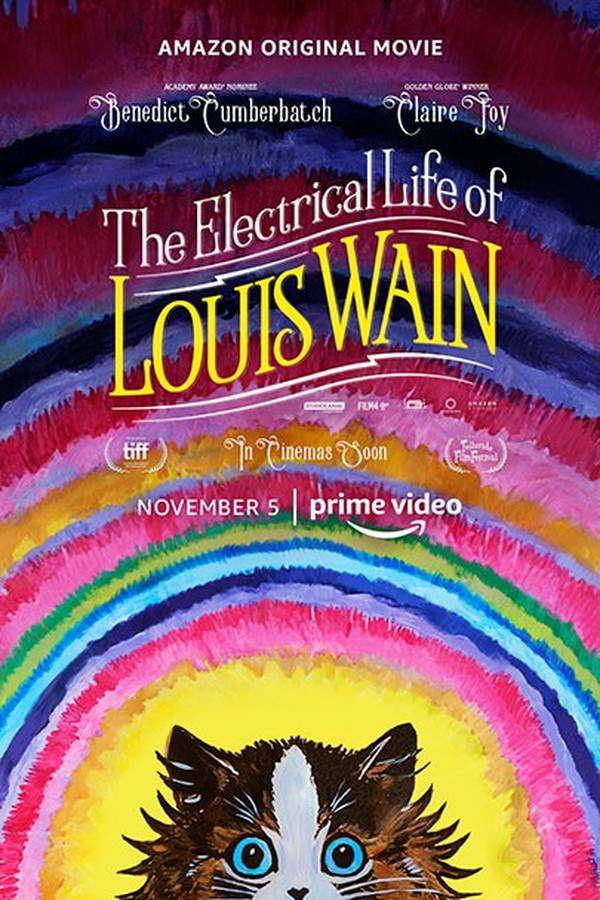
During the late 1800s in Britain, eccentric artist Louis Wain gains recognition for his unique and playful depictions of cats. The film follows his life through the Victorian era and into the 1930s, exploring his artistic evolution and his relationship with his wife, Emily Richardson. It reveals the story of an unconventional man whose work profoundly changed how cats were perceived and celebrated.
Find where to stream, rent, or buy The Electrical Life of Louis Wain (2021) in the US with current JustWatch availability, up-to-date pricing, and platform listings for subscription, rental, and digital purchase options.
Warning: spoilers below!
Haven’t seen The Electrical Life of Louis Wain yet? This summary contains major spoilers. Bookmark the page, watch the movie, and come back for the full breakdown. If you're ready, scroll on and relive the story!
Trace every key event in The Electrical Life of Louis Wain (2021) with our detailed, chronological timeline. Perfect for unpacking nonlinear stories, spotting hidden connections, and understanding how each scene builds toward the film’s climax. Whether you're revisiting or decoding for the first time, this timeline gives you the full picture.
Last updated: December 03, 2024 at 14:27
Find frequently asked questions about the The Electrical Life of Louis Wain (2021) timeline, including chronological order, nonlinear jumps, cause-and-effect links, and scene sequence clarifications. This timeline FAQ helps explain when key events happen, how moments connect, and why the story unfolds in that specific order.
Louis began painting cats as a coping mechanism after his wife Emily was diagnosed with breast cancer. To ease their grief, they adopted a stray kitten named Peter. As Emily's health declined, Louis started creating whimsical, anthropomorphic depictions of Peter, which evolved into his signature style of playful cat illustrations.
The film hints at his artistic shift when Louis first adopts Peter, showing how personal tragedy fueled his creativity.
Louis married Emily in 1884 because they had fallen deeply in love when she was hired as a governess for his sisters. Despite the scandal caused by their ten-year age difference and her status as a governess, Louis chose to pursue the relationship, leading to another rift within his family.
Their attraction is immediate from the moment Emily is hired, building toward the controversial marriage.
Louis was admitted to Springfield Mental Hospital in 1924 after suffering a complete mental breakdown. The cumulative grief of losing his wife Emily, mother, youngest sister Marie, his patron Sir William, and his beloved cat Peter had become overwhelming. His sisters made the difficult decision to have him institutionalized.
The film shows Louis's declining mental state escalating through multiple tragedies throughout the years.
Louis's cat illustrations gained immense popularity by 1891 because they were whimsical and playful, featuring anthropomorphic cats in imaginative scenarios. His work appeared on postcards and greeting cards, fundamentally changing public perception of cats as household pets. The unique artistic style stood out during a time when cats were not commonly kept as companions in Victorian England.
The Christmas edition success hints at the commercial potential that would eventually explode.
Louis fell into a coma after falling off a double-decker bus and hitting his head while attempting to jump off it. During his unconscious state, he experienced a vivid vision of the year 1999, which inspired him to design avant-garde cat toys upon waking.
The accident occurs during World War I, as Louis struggles with the cumulative weight of his losses.
Louis remained financially struggling because he failed to copyright his artwork. Without legal protection, others reproduced his cat illustrations without payment, and the Wain family constantly faced debt. This led to their eviction from their Sussex home, forcing them to rely on the charity of Sir William Ingram.
Sir William warns Louis about the importance of copyright early in his career.
Louis's youngest sister Marie began showing signs of mental illness during the family's financial struggles. She was eventually institutionalized in an asylum. Both Marie and their mother later died from influenza, adding to Louis's profound grief.
Marie first exhibits disturbing behavior when the family faces eviction and mounting pressures.
Louis traveled to New York in 1907 hoping to establish a successful career in America and relieve his family's chronic debts. Newspaper magnate William Randolph Hearst sponsored the trip, and Louis discovered his work was widely admired in America. However, tragedy struck when he learned of his mother's death from influenza shortly after arriving.
Sir William encourages Louis to seek opportunities abroad as financial pressures mount.
Louis's sisters committed him to Springfield Mental Hospital in 1924 because he was experiencing severe mental breakdowns from accumulated grief and was no longer functional. They felt it was necessary for his safety and care, though it was a painful decision for the family.
The film shows his mental state deteriorating progressively through multiple losses.
When Sir William Ingram first offered Louis a full-time position at The Illustrated London News in 1881, Louis initially turned it down because he hoped to succeed in music and playwriting instead. He wanted to find more creative and potentially lucrative avenues to support his family, but those efforts proved unsuccessful.
Louis shows interest in creative pursuits beyond illustration from the beginning.
During his coma following the bus accident, Louis experienced a vivid vision of the year 1999, which inspired him to create futuristic cat toys upon waking. This vision represented his enduring connection to his cats and his creative spirit, though the hope was dashed when a German U-boat destroyed the ship carrying the toys.
The coma occurs at a low point in Louis's life, and the vision symbolizes a brief glimpse of hope.
Louis was moved from Springfield to Bethlem Royal Hospital in Southwark after Dan Rider, who recognized Louis from their past, launched a fundraising campaign to secure better care. Thousands of admirers contributed, including author H.G. Wells. Bethlem was more humane and allowed patients to keep cats, eventually giving Louis companionship of his own.
Dan Rider remembers Louis from an earlier encounter and takes action during a hospital inspection.
Emily Richardson was the catalyst for Louis's iconic cat paintings. After her breast cancer diagnosis, they adopted Peter to cope with their grief. As her health worsened, Louis began painting Peter with increasingly anthropomorphic and whimsical qualities, creating the distinctive style that would make him famous. Her decline directly fueled his artistic transformation.
The film establishes early that Louis finds emotional comfort in Emily, which extends to their shared life with Peter.
Discover curated groups of movies connected by mood, themes, and story style. Browse collections built around emotion, atmosphere, and narrative focus to easily find films that match what you feel like watching right now.
Biopics of visionary creators whose brilliant minds are shadowed by personal tragedy.Discover films that, like The Electrical Life of Louis Wain, chronicle the lives of creative geniuses whose artistic triumphs are intertwined with profound personal suffering. If you were moved by this story of beauty born from pain, you'll find similar biographical dramas here.
These stories typically follow a linear biographical path, charting the rise to acclaim of a unique individual. The central conflict often lies within the protagonist's own mind or circumstances, as external success is juxtaposed with internal turmoil, loss, or mental health struggles, leading to a bittersweet or deeply saddening conclusion.
This thread groups movies that share a focus on the creative process, the burden of genius, and the emotional toll of a life lived outside conventional norms. They are connected by their melancholic tone, heavy emotional weight, and the recurring theme of legacy forged through suffering.
Intimate period dramas where love and loss intertwine amidst societal constraints.If you enjoyed the historical setting and bittersweet romance of The Electrical Life of Louis Wain, explore this collection of period dramas. These movies capture a similar feel of tragic love and personal struggle within the beautiful but constrained world of the past.
Narratives often center on an unconventional individual or couple navigating the rigid structures of their society. A tender romance or passionate pursuit is challenged by illness, loss, or social disapproval, leading to a poignant, emotionally heavy journey that acknowledges the pain of the past while honoring the beauty that existed within it.
Movies in this thread are united by their specific historical atmosphere, a core theme of tragic romance, and a consistent melancholic mood. They share a steady, character-driven pace and use their period setting to amplify the emotional weight of personal dramas.
Don't stop at just watching - explore The Electrical Life of Louis Wain in full detail. From the complete plot summary and scene-by-scene timeline to character breakdowns, thematic analysis, and a deep dive into the ending - every page helps you truly understand what The Electrical Life of Louis Wain is all about. Plus, discover what's next after the movie.
Read a complete plot summary of The Electrical Life of Louis Wain, including all key story points, character arcs, and turning points. This in-depth recap is ideal for understanding the narrative structure or reviewing what happened in the movie.
Discover the characters, locations, and core themes that shape The Electrical Life of Louis Wain. Get insights into symbolic elements, setting significance, and deeper narrative meaning - ideal for thematic analysis and movie breakdowns.
What really happened at the end of The Electrical Life of Louis Wain? This detailed ending explained page breaks down final scenes, hidden clues, and alternate interpretations with expert analysis and viewer theories.
Discover movies like The Electrical Life of Louis Wain that share similar genres, themes, and storytelling elements. Whether you’re drawn to the atmosphere, character arcs, or plot structure, these curated recommendations will help you explore more films you’ll love.
The Electrical Life of Louis Wain (2021) Plot Summary & Movie Recap
The Electrical Life of Louis Wain (2021) Scene-by-Scene Movie Timeline
The Electrical Life of Louis Wain (2021) Ending Explained & Theories
The Electrical Life of Louis Wain (2021) Spoiler-Free Summary & Key Flow
Movies Like The Electrical Life of Louis Wain – Similar Titles You’ll Enjoy
Waking Life (2001) Ending Explained & Film Insights
Mr. Turner (2014) Film Overview & Timeline
The Personal History of David Copperfield (2020) Detailed Story Recap
The Woodmans (2011) Ending Explained & Film Insights
At Eternity's Gate (2018) Story Summary & Characters
Loving Vincent (2017) Story Summary & Characters
Tesla (2020) Film Overview & Timeline
Awakenings (1990) Plot Summary & Ending Explained
Ed Wood (1994) Complete Plot Breakdown
Vincent (1987) Full Movie Breakdown
A British Picture: Portrait of an Enfant Terrible (1989) Film Overview & Timeline
Kitty (1945) Movie Recap & Themes
The Magic Box (1951) Spoiler-Packed Plot Recap
The Cat (1971) Complete Plot Breakdown
Lightning Over Water (1980) Ending Explained & Film Insights