Year: 1968
Runtime: 108 mins
Language: Italian
Director: Damiano Damiani
Set in Sicily, this gritty crime drama follows an Italian police detective sent to a remote island town to investigate the murder of a construction supplier. As he delves deeper, he confronts the pervasive power of the Mafia, which manipulates the locals and threatens to corrupt even his own sense of justice.
Warning: spoilers below!
Haven’t seen The Day of the Owl yet? This summary contains major spoilers. Bookmark the page, watch the movie, and come back for the full breakdown. If you're ready, scroll on and relive the story!
Trace every key event in The Day of the Owl (1968) with our detailed, chronological timeline. Perfect for unpacking nonlinear stories, spotting hidden connections, and understanding how each scene builds toward the film’s climax. Whether you're revisiting or decoding for the first time, this timeline gives you the full picture.
Last updated: March 05, 2026 at 18:40
Find frequently asked questions about the The Day of the Owl (1968) timeline, including chronological order, nonlinear jumps, cause-and-effect links, and scene sequence clarifications. This timeline FAQ helps explain when key events happen, how moments connect, and why the story unfolds in that specific order.
Colasberna was a truck driver delivering cement to a highway construction project. His murder was connected to the corruption surrounding the highway contract, which was controlled by Don Mariano Arena. He was killed to prevent him from revealing what he knew about the illegal arrangements between the construction company and the Mafia.
Rosa's husband witnessed Colasberna's killing from their house and vanished shortly after. While the exact reason is never confirmed, Don Mariano's associates spread rumors that he was the killer who fled. This disappearance conveniently redirected suspicion away from the Mafia and toward an absent man, reinforcing the town's code of silence.
The murder takes place within sight of Rosa's house, directly involving her husband in the events.
The honour system is a social code where townspeople protect each other by staying silent about crimes, particularly those involving the Mafia. Witnesses withhold information, lie to police, and refuse to cooperate out of loyalty to Don Mariano Arena. This code rewards silence with safety and punishes those who speak out, creating a wall of complicity that makes investigation nearly impossible.
Bellodi was removed from his post after his investigation threatened Don Mariano's power structure. Despite his relentless tactics, including arresting Don Mariano and trying to force witnesses to testify, his case never held up in court. He was accused of political motivations, and the authorities removed him, effectively ending his pursuit of justice and allowing the Mafia's influence to prevail.
At the end of the film, looking from his balcony as the new captain takes over, Don Mariano privately acknowledges Bellodi's integrity with this line. It represents a rare moment of respect from the Mafia boss toward an honest man, even one who opposed him. Despite Bellodi's failure to secure justice, Don Mariano recognizes him as a man of principle in a corrupt world, a stark contrast to the townspeople who bowed to his influence.
The highway project connecting to a remote Sicilian town was being built through a scheme controlled by Don Mariano Arena. The construction contract was secured through Mafia influence, with money and power exchanged to keep the operation running smoothly. Colasberna's murder was tied to this scheme, likely because he knew about the corruption or was about to expose it.
Bellodi couldn't secure testimony because of the town's honour system and deep-seated fear of the Mafia. People refused to speak not only out of loyalty but also survival, anyone who cooperated would become a target. Bellodi's tactics, like forging statements and staging confrontations, were attempts to break through this wall of silence, but ultimately the collective fear was too powerful to overcome.
Rosa Nicolosi remains in her house throughout the film, surrounded by rumors about her husband's alleged involvement in the murder. A man arrives with money claiming her husband found work in Palermo, but provides no verifiable address. By the end, after Bellodi's removal, the new captain sits on her balcony, implying she continues living under the Mafia's shadow, with her husband's fate left unresolved.
Bellodi employs aggressive, unconventional methods because the honour system leaves him no other options. With witnesses refusing to talk and the truth buried under layers of lies, he jails suspects for questioning, fabricates statements to test loyalties, and stages confrontations with false accusations to provoke reactions and reveal the truth. These desperate measures reflect his determination to break through the wall of silence, even at the cost of bending the rules.
Don Mariano maintains control through a combination of economic power, social influence, and fear. He controls the highway construction contract and distributes money to locals, creating dependence. The honour system ensures that nobody speaks against him, while those who might interfere, like Bellodi, face orchestrated resistance. His authority is so entrenched that even the police captain cannot challenge him without being removed.
Discover curated groups of movies connected by mood, themes, and story style. Browse collections built around emotion, atmosphere, and narrative focus to easily find films that match what you feel like watching right now.
When one honest investigator confronts an entire corrupt system.If you liked watching the honest investigator battle the mafia in The Day of the Owl, explore more movies where systemic corruption defeats individual efforts. These films capture the frustration of fighting a rigged system and the bleakness of institutional failure.
Stories typically follow a lone investigator or official who methodically pursues the truth, only to discover the corruption runs far deeper than imagined. The narrative arc shows their growing realization of powerlessness against an entrenched system that protects itself at all costs.
Movies are grouped by their shared focus on the futility of fighting systemic corruption. They share a dark tone, steady pacing that builds tension, and emotionally heavy endings where the system prevails over individual morality.
Stories set in isolated communities rotting from within.If you were drawn to the oppressive Sicilian town setting in The Day of the Owl, discover more movies about isolated communities corrupted from within. These stories use their settings to create palpable tension and explore how geography enables corruption to flourish.
The narrative typically follows an outsider arriving in an isolated community only to discover deep-seated corruption that the locals accept as normal. The story unfolds as they navigate the dangerous social dynamics and witness how the setting itself enables systemic rot.
These films share a strong sense of place and atmosphere, using isolated settings to amplify themes of corruption and complicity. They create tension through the juxtaposition of beautiful landscapes with moral decay, and feature communities bound by unspoken rules.
Don't stop at just watching - explore The Day of the Owl in full detail. From the complete plot summary and scene-by-scene timeline to character breakdowns, thematic analysis, and a deep dive into the ending - every page helps you truly understand what The Day of the Owl is all about. Plus, discover what's next after the movie.
Read a complete plot summary of The Day of the Owl, including all key story points, character arcs, and turning points. This in-depth recap is ideal for understanding the narrative structure or reviewing what happened in the movie.
Discover the characters, locations, and core themes that shape The Day of the Owl. Get insights into symbolic elements, setting significance, and deeper narrative meaning - ideal for thematic analysis and movie breakdowns.
Discover movies like The Day of the Owl that share similar genres, themes, and storytelling elements. Whether you’re drawn to the atmosphere, character arcs, or plot structure, these curated recommendations will help you explore more films you’ll love.
The Day of the Owl (1968) Plot Summary & Movie Recap
The Day of the Owl (1968) Scene-by-Scene Movie Timeline
The Day of the Owl (1968) Spoiler-Free Summary & Key Flow
Movies Like The Day of the Owl – Similar Titles You’ll Enjoy
Day of the Cobra (1980) Ending Explained & Film Insights
The Mafia Triangle (1981) Plot Summary & Ending Explained
The Sicilian (1987) Spoiler-Packed Plot Recap
One Hundred Days in Palermo (1984) Full Movie Breakdown
The Sicilian Connection (1985) Complete Plot Breakdown
The Sicilian Clan (1969) Full Movie Breakdown
The Sicilian Checkmate (1972) Detailed Story Recap
High Crime (1973) Spoiler-Packed Plot Recap
In the Name of the Law (1949) Plot Summary & Ending Explained
We Still Kill the Old Way (1967) Complete Plot Breakdown
The Sicilian Connection (1972) Full Summary & Key Details
The Sicilian Girl (2008) Spoiler-Packed Plot Recap
Sicilian Letters (2024) Movie Recap & Themes
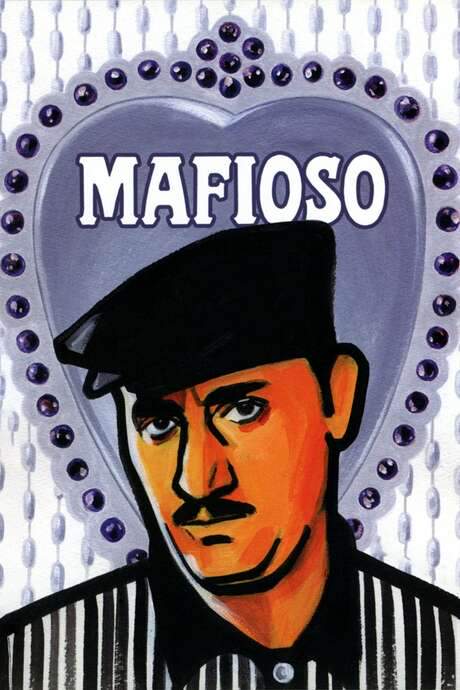
Mafioso (1962) Detailed Story Recap
Palermo – Milan One Way (1995) Plot Summary & Ending Explained