






Plot Explained Spoilers guaranteed!
Plot Explained

Browse by genre

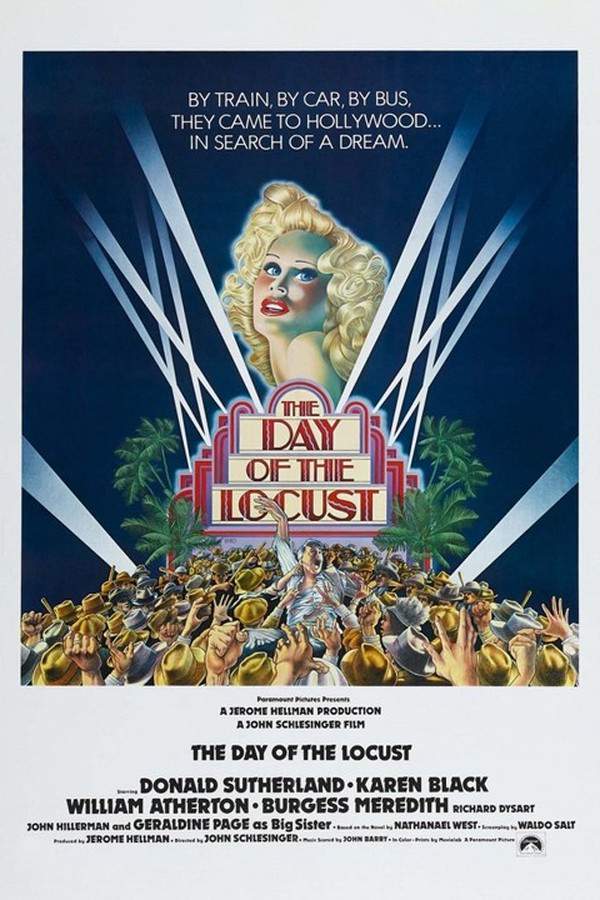
The Day of the Locust (1975) movie poster

Characters & Themes

The Day of the Locust (1975) Characters, Setting & Themes Explained

Release, runtime and language
1975 · 144 min · English
Directed by
John Schlesinger
Starring
Richard Dysart, Bo Hopkins, Burgess Meredith, Karen Black, Geraldine Page, Donald Sutherland

During the 1930s in Los Angeles, a struggling actress, an aspiring artist, and a former child star find themselves drawn together in a decaying apartment building. Observing the dark side of Hollywood and the corrosive effects of ambition, introverted accountant Homer Simpson witnesses the destructive power of greed and the unraveling of societal values as the city descends into chaos.

On this page (9)
  1. 1 Where to watch
  2. 2 Characters explained (5)
  3. 3 Where & when it takes place
  4. 4 Themes & meaning (3)
  5. 5 Character & meaning questions
  6. 6 The book behind the movie
  7. 7 Movie threads
  8. 8 Movies like The Day of the Locust
  9. 9 Every angle

Where to watch

Where to Watch The Day of the Locust (1975)

Where can you watch The Day of the Locust? Stream, rent or buy it in the US, including on Hoopla, Amazon Video and Apple TV Store: current JustWatch availability with up-to-date prices.

Streaming availability powered by JustWatch

5 main characters · contains spoilers

The Day of the Locust Characters Explained: Who Is Who

The main characters of The Day of the Locust (1975), heroes and villains: what drives them, how they change over the course of the story and what each of them reveals about the film's bigger ideas.

  • Tod Hackett

    played by Richard Dysart

    Tod Hackett is a recent Yale graduate and aspiring artist who moves to Hollywood eager to break into the film industry. His character embodies naivety and hope, yet he becomes entwined in a tumultuous world filled with ambition, heartbreak, and violence. As he struggles with his feelings for Faye, he navigates the complexities of love and the harsh realities of Hollywood.

    • 🎨 Artist
    • 🌟 Aspiration
  • Faye Greener

    played by Karen Black

    Faye Greener is a captivating yet struggling actress, desperately seeking fame and validation. She navigates her relationships with a blend of charm and manipulation, often leaving a wake of heartbreak in her pursuit of success. Her character represents the allure of Hollywood and the personal sacrifices made in its pursuit.

    • 🌹 Ambition
    • 🎬 Actress
  • Homer Simpson

    played by Lelia Goldoni

    Homer Simpson is a repressed accountant whose love for Faye leads him down a path of jealousy and desperation. His character is marked by internal conflict, as he seeks to support Faye while grappling with feelings of inadequacy. The tragic end of his story underlines the theme of unreciprocated love.

    • 💔 Obsession
    • 📊 Accountant
  • Harry Greener

    played by Bo Hopkins

    Harry Greener is Faye's father, an ex-vaudevillian whose presence adds to the burdens Faye faces. His struggles symbolize the generational dreams of fame that often remain unfulfilled, reflecting the tragic pursuits within the entertainment industry.

    • 🎭 Ex-vaudevillian
    • 👨‍👧 Father
  • Earle Shoop

    Earle Shoop is a cowboy who briefly captivates Faye's interest, embodying the carefree allure of Hollywood. His character serves as a contrast to the more obsessive relationships in the story, highlighting the variety of experiences in the quest for fame.

    • 🤠 Cowboy
    • 🌟 Charming

Last updated: October 22, 2024 at 21:55

Was this helpful?

Setting

Where and When Does The Day of the Locust Take Place?

The setting of The Day of the Locust (1975): the year and time period, the places and locations, and how they shape the characters, the mood and the tension of the story.

Time period

1930s

The 1930s were marked by the Great Depression in America, a time when many struggled to make a living and chase dreams amid economic hardship. This period influenced the arts significantly, as people turned to films for escapism. Hollywood became a playground of ambition and desperation, imbuing the story with a rich backdrop of societal challenges.

Location

Hollywood, San Bernardino Arms, Hollywood Hills, Grauman’s Chinese Theatre

The movie takes place primarily in 1930s Hollywood, a bustling hub of the film industry known for its glamour yet steeped in the struggles of aspiring artists. The San Bernardino Arms is a dilapidated bungalow court that serves as the home for colorful characters on the fringes of Hollywood. Grauman's Chinese Theatre, a notable venue for film premieres, becomes the scene for the film's climactic riot.

  • 🏙️ City
  • 🏠 Bungalow
  • 🎬 Film Studio

Last updated: October 22, 2024 at 21:55

Was this helpful?

3 major themes

The Day of the Locust Meaning: Themes & Message Explained

What is The Day of the Locust (1975) really about? The emotional, social and philosophical themes the film keeps returning to, its symbolism and the message beneath the surface.

  • Ambition

    The theme of ambition permeates the film as characters strive for success in the film industry. Tod Hackett's hopes of becoming an esteemed artist are contrasted with Faye Greener's relentless pursuit of fame, even at a personal cost. The narrative explores the lengths individuals will go to in order to achieve their dreams, highlighting both the allure and the dark side of ambition.

  • Desperation

    Desperation is a potent theme illustrated through the characters' struggles. Faye resorts to prostitution after her father's death, reflecting the lengths to which she must go to survive in a competitive environment. This sense of urgency and loss echoes throughout the film, exposing the grim realities behind the glitz of Hollywood.

  • Violence

    The theme of violence culminates in a chaotic riot during a film premiere, showcasing the volatile nature of human emotions and societal tension. The tragic events highlight the fragility of dreams in the face of overwhelming circumstances, as characters grapple with jealousy, betrayal, and the desperate need for validation.

Last updated: October 22, 2024 at 21:55

Was this helpful?

Character & theme questions

The Day of the Locust Characters & Meaning: Your Questions Answered

The questions people ask about The Day of the Locust (1975): who the characters really are, their relationships, what the symbols mean, where it takes place and what the movie is really about. Each answer contains spoilers.

Q1

What is the San Bernardino Arms in the movie?

The San Bernardino Arms is a dilapidated bungalow court in Hollywood where most of the characters live. It serves as a crumbling backdrop that reflects the decaying dreams of its residents, struggling actors, artists, and entertainers on the fringes of the film industry. The run-down setting symbolizes the gap between Hollywood's glamorous promise and the harsh reality faced by aspiring artists during the 1930s.

Foreshadowing: The apartment building's decay foreshadows the moral and social collapse that culminates in the violent riot.

  • san bernardino arms
  • hollywood housing
  • bungalow court
  • 1930s hollywood setting
Q2

What was Hollywood like in the 1930s according to the film?

The film portrays 1930s Hollywood as a turbulent mix of ambition and desperation. While the film industry thrived as escapism for Americans during the Great Depression, the city attracted thousands of dreamers chasing fame. The movie highlights the darker side, exploitation, poverty, and broken dreams, contrasting the glamour of premieres with the grim realities of those who never made it.

Foreshadowing: The disparity between Hollywood's polished exterior and the characters' miserable lives sets up the eventual eruption of violence.

  • 1930s hollywood
  • great depression
  • film industry
  • hollywood dreams
Q3

What is Grauman's Chinese Theatre's role in the story?

Grauman's Chinese Theatre serves as the venue for the film's climactic riot. This famous Hollywood landmark, known for film premieres and celebrity handprints, becomes the setting where the characters' accumulated frustrations explode into chaos. Its significance lies in transforming a place of Hollywood celebration into a scene of violence and collapse.

Foreshadowing: The theatre's association with celebrity and achievement makes it a stark contrast to the violent events that unfold there.

  • grauman's chinese theatre
  • premiere
  • riot
  • hollywood landmark
Q4

How does the Great Depression influence the story?

The Great Depression provides the economic backdrop that drives the characters' desperation. During the 1930s, many struggled to survive while clinging to dreams of stardom. The film shows how this era of hardship intensifies ambition and desperation, pushing characters like Faye Greener to extreme measures to survive. The period's mood of economic despair permeates every relationship and decision in the story.

  • great depression
  • 1930s
  • economic hardship
  • hollywood dreams
Q5

What does the film say about ambition in Hollywood?

The film presents ambition as both alluring and destructive. Characters like Tod Hackett and Faye Greener pursue their dreams relentlessly, Tod wanting to become a respected artist, Faye chasing fame at any cost. The movie explores how ambition can corrupt, trap, and ultimately destroy individuals who sacrifice their morality and relationships for success.

  • ambition
  • hollywood success
  • fame
  • artistic dreams
  • tod hackett
  • faye greener
Q6

How does desperation drive the characters' actions?

Desperation permeates every character, particularly Faye Greener, who resorts to prostitution after her father's death to survive. Homer Simpson's love for Faye manifests as obsessive jealousy. The characters' urgent need for validation, success, and love in an unforgiving environment leads them to destructive choices that erode their humanity.

Foreshadowing: The mounting desperation throughout the narrative builds toward the violent climax.

  • desperation
  • survival
  • faye greener
  • homer simpson
  • exploitation
Q7

What causes the violent climax at the film premiere?

The violence at Grauman's Chinese Theatre erupts from accumulated tensions, jealousy, betrayal, shattered dreams, and societal frustration. Characters like Homer, consumed by unrequited love and inadequacy, act on desperation. The riot represents the collapse of Hollywood's illusionary facade, exposing the volatile emotions simmering beneath the glamour.

  • riot
  • violence
  • premiere
  • climax
  • hollywood collapse
Q8

Who is Tod Hackett and what does he represent?

Tod Hackett is a Yale graduate and aspiring artist who moves to Hollywood full of hope but becomes entangled in its darkness. He represents the naive dreamer, educated, artistic, and hopeful, who discovers that Hollywood's reality is far harsher than his expectations. His unrequited love for Faye and his immersion in the industry's corruption illustrate the collision between idealism and cynical reality.

Foreshadowing: Tod's artistic eye for observation hints at his role as a witness to the coming disaster.

  • tod hackett
  • artist
  • yale graduate
  • protagonist
  • dreamer
Q9

Who is Faye Greener and what drives her?

Faye Greener is a captivating struggling actress whose relentless pursuit of fame defines her existence. She navigates relationships with charm and manipulation, often leaving heartbreak in her wake. Driven by an intense need for validation and success, she represents both Hollywood's magnetic allure and its devastating personal costs. Her descent into prostitution after her father's death underscores the desperate measures required to survive in the industry.

  • faye greener
  • actress
  • fame
  • manipulation
  • hollywood women
Q10

Who is Homer Simpson in the film?

Homer Simpson is a repressed accountant who falls hopelessly in love with Faye Greener. Unlike the ambitious actors and artists around him, Homer's tragedy stems from his inadequacy and inability to compete in Hollywood's ruthless environment. His unrequited love transforms into obsessive jealousy, ultimately contributing to the story's tragic events. He represents the outsiders destroyed by their inability to achieve their desires.

Foreshadowing: Homer's internal repression and mounting frustration foreshadow his explosive reaction at the climax.

  • homer simpson
  • accountant
  • love
  • jealousy
  • outsider

Movie threads

More Movies Like The Day of the Locust, by Mood & Story

Curated lists built around what makes The Day of the Locust tick: the same mood, the same kind of story or the same emotional payoff. Each list explains why these movies belong together.

Movies about shattered Hollywood dreams like The Day of the Locust

Stories exposing the seedy decay and broken promises behind the glamour of fame. If you liked The Day of the Locust's bleak portrait of 1930s Hollywood, explore more movies about fame's dark side. These similar dramas and thrillers delve into themes of ambition, corruption, and societal decay within the entertainment industry, capturing the disillusionment behind the spotlight.

  • cynical
  • decadent
  • oppressive
  • melancholic
  • anxious
  • feverish
  • Tone: cynical, dark, bleak
  • Pacing: steady, character-driven
Why these movies?

The story pattern: Narratives in this thread typically follow protagonists—aspiring actors, artists, or fading stars—as they navigate a corrupt system. Their initial hope or ambition is systematically crushed, leading to moral compromise, obsession, and often a tragic or bleak conclusion that underscores the hollowness of the dream.

Why they belong together: They are grouped by their shared focus on the dark underbelly of fame-centric worlds, a consistently cynical and oppressive tone, and the exploration of how ambition curdles into desperation. The emotional journey is one of inevitable disillusionment.
Movies about societal chaos and personal despair like The Day of the Locust

Character-driven dramas where personal unraveling mirrors a violent public breakdown. Discover more movies like The Day of the Locust that explore the connection between personal obsession and mass hysteria. These similar thrillers and dramas feature heavy emotional weight, bleak endings, and a narrative where individual stories collide with erupting societal decay and violence.

  • feverish
  • oppressive
  • anxious
  • chaotic
  • decadent
  • melancholic
  • Tone: dark, oppressive, bleak
  • Pacing: variable, building to chaos
Why these movies?

The story pattern: The pattern involves multiple character arcs—often lonely or obsessive individuals—whose personal crises unfold in parallel to growing communal anxiety. The story builds variably from a steady, character-focused setup to a chaotic, high-intensity climax where public disorder (like a riot) acts as a violent release for the pent-up tensions explored throughout.

Why they belong together: They share a specific structural and tonal blend: a variable pacing that builds to a feverish climax, a high intensity driven by both personal and collective violence, and a heavy, bleak emotional weight stemming from the theme of civilization's thin veneer cracking under pressure.

If you liked this

Movies Like The Day of the Locust

Similar movies to The Day of the Locust: the same genre, themes or kind of story. Each one comes with its own plot summary, timeline and ending explained.

Browse all movie summaries

Every angle

The Day of the Locust (1975) Explained: Plot, Timeline & Characters

Everything about The Day of the Locust in one place: what happens in the plot summary, the timeline in chronological order, the characters and meaning and a spoiler-free summary. What's After the Movie adds the cast, box office and post-credit scenes.

Coming soon on iOS and Android

The Plot Explained Movie Summary App

Plot summaries, endings explained and timelines on your phone. Catch up on any movie in minutes, save your favorites and never miss a twist again.

Be the first to know when we launch. Your email stays private, always.

Learn more about the app