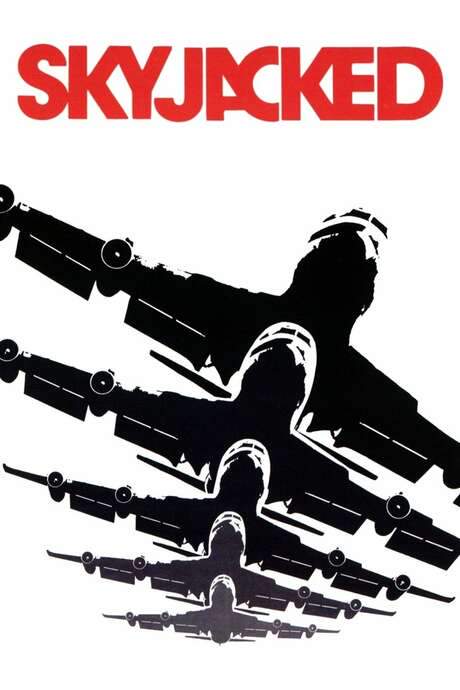
Kevin Harrison, a corrupt arms dealer, schemes to wreck an American-owned Concorde on its maiden flight after one of the passengers, the reporter Maggie Whelan, Susan Blakely uncovers his weapons deals to communist countries during the Cold War. The movie opens with a high-stakes tension that foregrounds political intrigue, personal ambition, and the fragile line between civilian flight and global politics. The Concorde blasts off from Charles de Gaulle in Paris and, despite a tense go-around caused by environmental protesters who drop a hot-air balloon into its approach path, it presses on toward its transatlantic journey.
The next day, Maggie’s brave reporting pushes the story into sharper view, revealing Harrison’s alleged Buzzard surface-to-air missile project. Carl Parker, Macon McCalman, steps forward with documents purportedly proving illegal arms deals, only to be shot by an unseen assailant who pursues Maggie before a passerby triggers a fire alarm, briefly scattering the threat. As the web of deception tightens, Maggie is warned by Harrison that someone is framing him, and he sends her off in a waiting car while privately plotting to ruin the Concorde by reprogramming an attack-drone test to target the very aircraft she rides on.
Onboard, the flight crew is joined by formidable colleagues: Captain Joe Patroni, George Kennedy, and Captain Paul Metrand, Alain Delon, who bring decades of experience to the cockpit. They are later joined by Peter O'Neill, David Warner, the 2nd officer and flight engineer, creating a tense fusion of skill and danger as the airplane carries passengers toward Europe. Harrison meets Maggie again at the airline check-in desk, pressing her to abandon the story, while Parker’s wife unexpectedly delivers the crucial documents to Maggie, revealing that Harrison’s assurances were lies.
The Concorde departs for Paris, but danger follows in the skies. An off-course surface-to-air missile heads straight for the plane, prompting the USAF to scramble F-15 fighters that shoot down the incoming threat. As the jet struggle continues, a second assault—this time from an F-4 Phantom II—engages the aircraft with missiles, drawing in French Air Force Mirage F1s to assist. The Concorde endures the assault, though one of the missiles damages its hydraulics, and the damaged plane is forced to divert to Le Bourget Airport. The dramatic descent tests every bit of the crew’s resolve, and Metrand’s quick thinking helps the jet survive the turbulence long enough to touch down near Paris. Isabelle, Sylvia Kristel, the passenger who has become entangled in the unfolding danger, is part of the human thread that threads through this crisis at the moment of landing.
The tension shifts from external threats to a calculated act of sabotage. Harrison promises to go public with the documents but tries to buy Maggie’s silence through a bribe, while a mechanic named Froelich places a concealed device inside the Concorde’s cargo door control unit, timed to trigger during flight. The money Froelich carries, dropped by accident during a checkpoint, signals the depth of the conspiracy and hints at the broad reach of Harrison’s scheme. The action intensifies as the plane continues toward its destination with this hidden danger aboard.
As the flight heads toward Moscow, the sabotaged cargo door finally opens, tearing a hole that precipitates a rapid decompression. The fuselage bears the strain as the floor tears away in sections, and the primary flight controls falter. With only backup systems functioning, Captain Patroni and Captain Metrand improvise under extreme pressure. They maneuver toward Innsbruck, aiming for a risky but potentially survivable belly landing on a snow-covered mountainside near Patscherkofel. The ski patrol marks a landing path, and the aircraft glides toward a desperate but hopeful touchdown.
Rescue crews reach the cabin as Maggie continues reporting the unfolding disaster, hinting at an even bigger story she is poised to publish. In a final, devastating turn, Harrison, caged by his own desperation, watches Maggie’s broadcast and chooses to take his own life from the air. The crew and passengers evacuate the wreckage just as the Concorde ruptures and explodes, leaving behind a trail of smoke and ash as the ski-country rescue operation wraps up the harrowing episode.
In the end, the film leaves viewers with a stark reminder of how a single person’s greed can threaten a global instrument of connection and progress, and how the brave work of pilots, reporters, and rescue teams can avert catastrophe even as the shadows of war and secrecy loom large. The story remains a taut, character-driven thriller that balances technical detail with human resilience, all grounded in a chilling Cold War paranoia that keeps the audience on edge until the final, explosive closure.