Plot Explained Spoilers guaranteed!
Plot Explained

Browse by genre

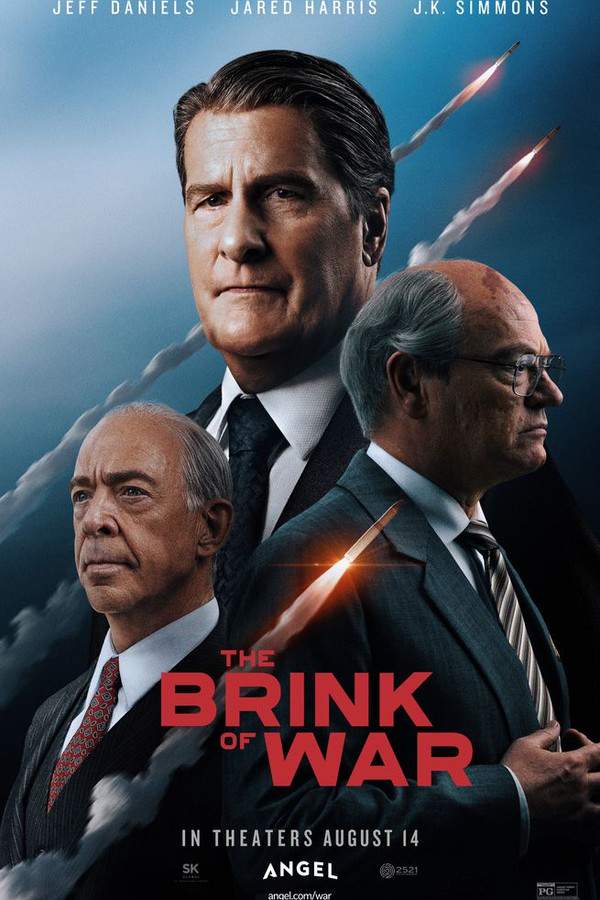
The Brink of War (2026) movie poster

Timeline

The Brink of War (2026) Timeline Explained – Every Event in Order

Release, runtime and language
2026 · 1 h 57 m · English
Loading streaming availability…
Directed by
Michael Russell Gunn
Starring
J.K. Simmons, Jared Harris, Adrian Rawlins, Hope Davis, Jeff Daniels, Jóhannes Haukur Jóhannesson
Budget
$21M

President Reagan races against time to salvage a fragile deal with Soviet leader Mikhail Gorbachev that could dismantle nuclear arsenals—or spark disaster. Advisors, intelligence agencies, and the weight of history pressure him, as every diplomatic exchange pulls the world nearer to peace or catastrophic destruction.

On this page (5)
  1. 1 Where to watch
  2. 2 Events in order (13)
  3. 3 Timeline questions answered
  4. 4 Movie threads
  5. 5 Every angle
Loading streaming availability…

13 events in order · contains spoilers

The Brink of War Timeline: Events in Chronological Order

Every key event of The Brink of War (2026) in order, scene by scene, with when and where it takes place. Use it to untangle flashbacks, time jumps and parallel storylines, to refresh your memory before the sequel or to find the exact scene you are thinking of.

  1. End of Reykjavik summit: Reagan's disappointment over a single word

    The film opens near the end of the Reykjavik summit, with Reagan telling Secretary of State George Shultz that he failed to secure a sweeping agreement because Gorbachev walked away over a single word. This moment frames the summit as a near miss, highlighting how a single term can derail diplomacy. It sets up the tension that will drive the retrospective narrative.

    When
    End of October 1986, Reykjavík
    Where
    Höfði House, Reykjavík
  2. The countdown begins: the negotiations reset 72 hours earlier

    The narrative shifts back 72 hours to the beginning of the talks, setting the stage for the breakthrough and the difficult concessions to come. Reagan and Gorbachev meet at Höfði with guarded optimism, and the atmosphere is charged with both possibility and suspicion. The stage is set for a broader, more consequential negotiation than either side anticipated.

    When
    72 hours before the end of the summit
    Where
    Höfði, Reykjavík
  3. First meeting: Gorbachev's surprise offer

    Reagan raises the Soviet dissidents' plight and requests Rostropovich's sister be allowed to visit. Gorbachev surprises Reagan by proposing a 50 percent reduction in their nuclear arsenals. The exchange signals a turning point from limited arms-control talk to a broader, high-stakes negotiation.

    When
    Early stage of talks
    Where
    Höfði, Reykjavík
  4. Reagan pushes beyond limits

    Reagan accepts the concept of reductions but insists they should go further, even contemplating the elimination of both sides' arsenals. The talks begin to broaden beyond technical limits, expanding into broader political questions. The atmosphere shifts from rigid position-taking to exploratory bargaining.

    When
    Early in the negotiations
    Where
    Höfði, Reykjavík
  5. Debates over systems: dissidents, racism, and freedom

    The discussions broaden into clashes over the two political systems. Reagan condemns the imprisonment of Soviet dissidents and restrictions on freedom, while Gorbachev cites American social problems like homelessness, high murder rates and racism. The exchange underscores mutual suspicion yet reveals a willingness to entertain ideas beyond pure arm control.

    When
    During talks at Höfði
    Where
    Höfði, Reykjavík
  6. The assassination reference

    Gorbachev notes that Reagan's opponents in the United States are free to shoot him, referring to the 1981 assassination attempt. The remark deepens the personal dimension of the negotiations and reminds both leaders of the fragility of power. The moment highlights how personal histories influence political dialogue.

    When
    During negotiations
    Where
    Höfði, Reykjavík
  7. Outside the talks: Raisa, press attention, and Blue Lagoon

    Raisa Gorbacheva attracts substantial press attention during public appearances, including a visit to the Blue Lagoon. Nancy Reagan remains in the United States and expresses regret at not accompanying her husband. The contrast between public optics and private diplomacy adds tension to the proceedings.

    When
    During the summit outside the talks
    Where
    Reykjavík, Iceland
  8. The watchful eyes: KGB, Secret Service, and media access

    KGB and Secret Service personnel patrol around Höfði as negotiations continue. Western journalists struggle to obtain substantive information, as access to the principals is restricted. The information blockade underscores the fragility of transparency in high-stakes diplomacy.

    When
    During the summit
    Where
    Höfði, Reykjavík
  9. Near agreement, but SDI looms large

    The talks progress toward unprecedented reductions, suggesting a breakthrough. The remaining disagreement centers on the Reagan-era SDI, with Gorbachev warning that an American defense would upset the nuclear balance. The standoff reveals how technical ambitions become political deadlocks.

    When
    Midpoint to late talks
    Where
    Höfði, Reykjavík
  10. The SDI impasse and a conditional offer

    Gorbachev proposes acceptance of the wider framework only if SDI research remains confined to the laboratory for ten years. Reagan refuses, insisting on continued U.S. progress toward missile-defense capabilities. The moment crystallizes the core impasse that prevents a deal.

    When
    Approaching final hours of talks
    Where
    Höfði, Reykjavík
  11. The structural obstacle: 'laboratory' becomes the deal-breaker

    The narrative returns to the opening scene, revealing that the single word 'laboratory' is the obstacle standing between a comprehensive agreement. Despite near agreement on reductions, the two leaders cannot reconcile the defense research with disarmament. The film uses this device to show how a single term shaping global security.

    When
    Closing phase
    Where
    Höfði, Reykjavík
  12. A humanitarian concession and a handshake

    Before departing, Reagan again asks for Rostropovich's sister to visit; Gorbachev agrees. The two leaders shake hands, signaling a human touch amid the stalemate. The final spoken word of the film is deal.

    When
    End of summit, departure day
    Where
    Höfði, Reykjavík
  13. Aftermath and INF Treaty groundwork

    Although the Reykjavik summit ends without a comprehensive agreement, the talks are portrayed as improving communication and laying the groundwork for future arms-control accords. The narrative foreshadows the INF Treaty signed by Reagan and Gorbachev the following year, signaling a path forward despite the collapse.

    When
    Following year, 1987
    Where
    Höfði, Reykjavík

Last updated: September 03, 2026 at 09:21

Was this helpful?

Timeline questions answered

The Brink of War Timeline Explained: Your Questions Answered

When does it happen, and why in that order? The questions people ask about the chronology of The Brink of War (2026): time jumps, flashbacks, cause and effect between scenes and the correct order of events, each answered with spoilers.

Q1

Why does Gorbachev walk away from the summit over a single word?

Gorbachev walks away because Reagan refuses to accept the condition that Strategic Defense Initiative (SDI) research be confined to the laboratory for ten years. The word "laboratory" embodied a demand Gorbachev considered non-negotiable: an operational U.S. missile shield could undermine the principle of mutual vulnerability that justified deep cuts on the Soviet side. Without that guarantee, he could not justify agreeing to the sweeping nuclear reductions both leaders had nearly embraced.

Foreshadowing: The film's opening scene telegraphs the collapse before rewinding, so the audience already knows the meeting will fail before the 72 hours of diplomacy play out.

  • gorbachev
  • single word
  • reykjavik
  • deal breaker
  • summit collapse
Q2

What does the word "laboratory" actually mean in the context of the Reykjavik talks?

In the film, "laboratory" refers to Gorbachev's demand that all SDI research remain confined to laboratory testing for a decade rather than being deployed. The Soviet position was that an active U.S. missile defense would render Soviet offensive forces useless, destabilizing the nuclear balance and pressuring Moscow into one-sided concessions. Restricting SDI to the lab was therefore the price of getting Gorbachev to accept deep cuts.

  • laboratory
  • sdi
  • strategic defense initiative
  • reykjavik
  • arms control
Q3

Why does Reagan refuse to abandon the SDI missile defense program?

Reagan sees SDI as a moral shield that could protect Americans and ultimately make nuclear weapons obsolete, a vision he had championed since the early 1980s. Accepting Gorbachev's ten-year laboratory restriction would have meant shelving a project Reagan considered central to both American security and his own legacy. He also believed giving up SDI would leave the United States vulnerable to a future Soviet breakout, making the concession strategically untenable.

  • reagan
  • sdi
  • missile defense
  • strategic defense initiative
  • lab restriction
Q4

How does SDI become the central deal-breaker at the Reykjavik summit?

Once both sides agree on dramatic reductions in nuclear arsenals, the question of whether the United States can still deploy SDI becomes the only remaining obstacle to a comprehensive agreement. Gorbachev ties his acceptance of the cuts to SDI being limited to the laboratory, while Reagan insists he cannot constrain a program that protects the homeland. With everything else aligned, the fate of the entire deal collapses onto a single contested term.

Foreshadowing: The opening scene's mention of "a single word" primes the viewer to watch for which precise term will derail the agreement.

  • sdi
  • deal breaker
  • reagan
  • gorbachev
  • nuclear deal
Q5

Why does Gorbachev propose a 50 percent reduction in nuclear arsenals so early in the talks?

Gorbachev opens with the dramatic offer to signal that he is serious about reshaping the Cold War dynamic after years of stalemate. He was pursuing radical reform at home through perestroika and glasnost, and a bold concession abroad was meant to demonstrate that the Soviet Union had genuinely changed. The 50 percent offer also forced Reagan off scripted arms-control limits and onto more transformative terrain.

  • gorbachev
  • 50 percent reduction
  • nuclear arsenals
  • opening offer
  • reykjavik
Q6

How does Reagan end up pushing for total nuclear elimination at Reykjavik?

Reagan accepts the concept of steep reductions and then escalates further by suggesting both sides could eliminate their nuclear arsenals entirely. The shift comes as trust builds during hours of face-to-face exchange, opening space for ideas that would have been unthinkable at the start. His willingness to go beyond traditional arms control is what turns the summit into the closest the Cold War ever came to total disarmament.

  • reagan
  • total elimination
  • nuclear weapons
  • summit breakthrough
Q7

Why does Gorbachev bring up the 1981 assassination attempt against Reagan?

Gorbachev references the attempt to undermine Reagan's criticism of Soviet political repression by arguing that American opponents are also free to use lethal violence against their leaders. The remark is a pointed counter during an ideological clash about freedom and human rights, designed to puncture what Gorbachev sees as American moral posturing. The exchange shows how each leader judges the other's system through personal history rather than abstract principle.

  • gorbachev
  • assassination attempt
  • reagan 1981
  • ideological clash
Q8

Why does Reagan keep raising the issue of Soviet dissidents during the talks?

Reagan treated human rights as inseparable from genuine Cold War reconciliation, believing that real change required freeing political prisoners and allowing free expression. Pressing the issue also tested whether Gorbachev's glasnost reforms were substantive or merely tactical concessions for the cameras. By tying moral concerns to the security negotiations, Reagan forced Gorbachev to defend the legitimacy of the Soviet system itself, not just its weapons.

  • reagan
  • soviet dissidents
  • human rights
  • glasnost
  • ideological debate
Q9

Why does Reagan keep asking about Rostropovich's sister throughout the summit?

Reagan raises the case of cellist Mstislav Rostropovich's sister as a concrete test of Gorbachev's commitment to humanitarian reform. By returning to the request at the summit's end, he is measuring whether Gorbachev's rhetoric about openness translates into actual policy. Gorbachev's eventual agreement becomes a symbolic concession that costs little strategically but preserves the personal relationship after the broader deal collapses.

Foreshadowing: Reagan's opening humanitarian plea foreshadows the final moment of the film, when Gorbachev grants the same request on departure day.

  • rostropovich
  • humanitarian appeal
  • reagan
  • gorbachev
  • sister visit
Q10

Why does the film open at the end of the summit and then rewind 72 hours?

The flashback structure creates immediate dramatic tension by revealing that the negotiations collapse over a single word before showing how the leaders arrived there. It frames the entire story as a near-miss, letting viewers watch the buildup knowing the outcome. The technique also mirrors how history remembers Reykjavik: a moment when peace was almost within reach before slipping away.

  • flashback
  • narrative structure
  • 72 hours
  • reykjavik
  • opening scene
Q11

What was the real outcome of the Reykjavik summit despite the deal falling apart?

Even though no comprehensive agreement was signed, the summit produced a much warmer personal rapport between Reagan and Gorbachev and broke through decades of hardened Cold War positions. The dialogue established at Reykjavik led directly to the Intermediate-Range Nuclear Forces Treaty signed the following year. The film presents the failed talks as a necessary step toward eventual arms control rather than a pure defeat.

  • reykjavik aftermath
  • inf treaty
  • 1987
  • arms control
  • cold war
Q12

Why does the film end with the spoken word "deal"?

The closing word reframes the summit's failure by emphasizing the smaller humanitarian agreement Gorbachev grants at departure, when he finally allows Rostropovich's sister to visit. It also leaves open the idea that a larger deal remains possible in spirit, foreshadowing the INF Treaty that followed. The understated ending reinforces the film's bittersweet tone, balancing profound disappointment with quiet forward-looking hope.

  • final word
  • deal
  • ending
  • reykjavik
  • inf treaty foreshadowing
Q13

What role do Raisa Gorbacheva and Nancy Reagan play in the story?

Raisa's public appearances, including her visit to Iceland's Blue Lagoon, dominate the media narrative while the real negotiations unfold behind closed doors at Höfði. Nancy Reagan's absence in the United States highlights the political constraints her husband faced at home and adds a layer of personal cost to the diplomacy. The contrast between the two first ladies reminds viewers that summit politics involve optics and symbolism as much as substance.

  • raisa gorbacheva
  • nancy reagan
  • first ladies
  • media attention
  • optics
Q14

What do the debates about racism, homelessness, and violence reveal about the talks?

The exchanges over American social problems alongside Soviet repression show that neither leader can claim clean moral authority, and that the Cold War rivalry was as much about legitimacy as missiles. The arguments humanize both men while also showing how personal experience shapes their view of the other's system. The clashes deepen the emotional weight of the negotiations and make the eventual collapse feel tragic rather than merely political.

  • ideological clash
  • racism
  • homelessness
  • legitimacy
  • cold war systems

Movie threads

More Movies Like The Brink of War, by Mood & Story

Curated lists built around what makes The Brink of War tick: the same mood, the same kind of story or the same emotional payoff. Each list explains why these movies belong together.

High-stakes diplomatic thrillers like The Brink of War

Stories where every word spoken could change history or end it. If you liked The Brink of War, these tense diplomatic thrillers and political dramas share its high-stakes negotiation feel, measured pacing, and the sensation that every word could tip the world toward peace or disaster. Similar cerebral historical films where powerful leaders face impossible choices in rooms that decide the future.

  • tense
  • diplomatic
  • high-stakes
  • cerebral
  • weighty
  • claustrophobic
  • Tone: tense, grave, cerebral
  • Pacing: steady, measured, pressure-driven
Why these movies?

The story pattern: These stories typically follow a tight clock, often days or hours before a summit, treaty, or crisis point, with flashbacks and parallel subplots revealing the personal histories, traumas, and political pressures bearing down on the negotiators. The conflict unfolds through dialogue, maneuvering, and small concessions, with each exchange either inching toward resolution or pulling the world closer to catastrophe. The climax usually arrives when a single word, signature, or compromise breaks the deadlock, sometimes for the better, sometimes not. Character arcs are defined by what each leader is willing to sacrifice, and the story lingers on the human cost of holding the line.

Why they belong together: They are grouped together because they share the same DNA: a small cast of powerful figures, a confined political setting, relentless tension without conventional action, and a mood that treats words as weapons. The pacing is steady rather than explosive, the tone is grave and tense, and the emotional weight comes from consequence rather than spectacle. Movies like this reward viewers who love to watch smart people sweat under impossible pressure.
Bittersweet historical dramas like The Brink of War

Stories that lose the big battle but quietly plant the seeds of change. If you liked The Brink of War, these bittersweet historical dramas share its heavy emotional weight, measured pacing, and quiet sense of hope emerging even after the central mission fails. Similar films where history remembers not the victory but the seeds planted in defeat, and where a handshake, treaty, or small agreement hints at a better future.

  • bittersweet
  • historical
  • reflective
  • heavy
  • somber
  • hopeful undercurrent
  • Tone: bittersweet, reflective, somber
  • Pacing: steady, contemplative
Why these movies?

The story pattern: These stories usually follow a morally complex leader or group fighting against long odds within a larger historical machinery that is slowly, inevitably turning. The narrative builds toward a decisive moment, often a summit, election, trial, or confrontation, and although the immediate goal is not fully achieved, a smaller victory, moral stand, or symbolic gesture plants a flag for the future. Character arcs center on cost, sacrifice, and the realization that progress is cumulative rather than sudden. The ending mixes melancholy with a soft, almost defiant glimmer of hope, and the audience is asked to judge the story over decades, not minutes.

Why they belong together: They are grouped together because they share the same emotional architecture: heavy subject matter, dignified performances, reflective pacing, and an ending that does not offer catharsis but offers meaning. The tonal blend of disappointment and quiet hope is the defining feature, along with a focus on real historical figures whose legacies are still being written. Movies like this appeal to viewers who want drama that respects intelligence, ambiguity, and the long arc of history.

Every angle

The Brink of War (2026) Explained: Plot, Timeline & Characters

Everything about The Brink of War in one place: what happens in the plot summary, the timeline in chronological order, the characters and meaning and a spoiler-free summary. What's After the Movie adds the cast, box office and post-credit scenes.

Coming soon on iOS and Android

The Plot Explained Movie Summary App

Plot summaries, endings explained and timelines on your phone. Catch up on any movie in minutes, save your favorites and never miss a twist again.

Be the first to know when we launch. Your email stays private, always.

Learn more about the app