Plot Explained Spoilers guaranteed!
Plot Explained

Browse by genre

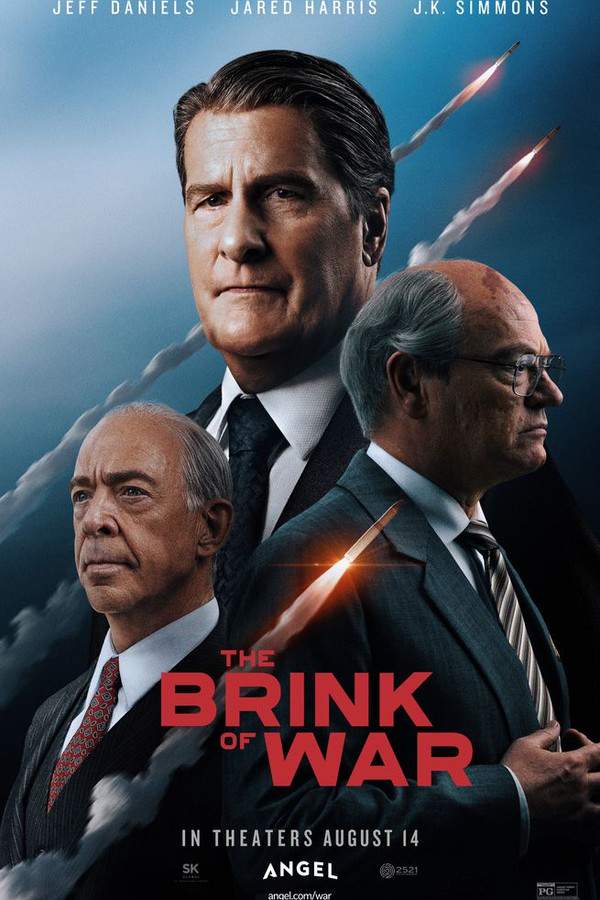
The Brink of War (2026) movie poster

Characters & Themes

The Brink of War (2026) Characters, Setting & Themes Explained

Release, runtime and language
2026 · 1 h 57 m · English
Loading streaming availability…
Directed by
Michael Russell Gunn
Starring
J.K. Simmons, Jared Harris, Adrian Rawlins, Hope Davis, Jeff Daniels, Jóhannes Haukur Jóhannesson
Budget
$21M

President Reagan races against time to salvage a fragile deal with Soviet leader Mikhail Gorbachev that could dismantle nuclear arsenals—or spark disaster. Advisors, intelligence agencies, and the weight of history pressure him, as every diplomatic exchange pulls the world nearer to peace or catastrophic destruction.

On this page (7)
  1. 1 Where to watch
  2. 2 Characters explained (9)
  3. 3 Where & when it takes place
  4. 4 Themes & meaning (3)
  5. 5 Character & meaning questions
  6. 6 Movie threads
  7. 7 Every angle
Loading streaming availability…

9 main characters · contains spoilers

The Brink of War Characters Explained: Who Is Who

The main characters of The Brink of War (2026), heroes and villains: what drives them, how they change over the course of the story and what each of them reveals about the film's bigger ideas.

  • Ronald Reagan (Jeff Daniels)

    The U.S. President drives the negotiations with a belief in bold disarmament, while grappling with the private trauma of an assassination attempt that fuels his sense of purpose. He pushes for deeper cuts than his advisers expect and seeks humanitarian concessions alongside strategic ones. His partnership with Gorbachev reveals a willingness to rethink entrenched positions in pursuit of a lasting deal.

    • 🇺🇸 President
    • 🎯 Leader
    • 🧭 Negotiator
  • Mikhail Gorbachev (Jared Harris)

    The Soviet leader engages Reagan with a mix of idealism and pragmatism, open to significant reductions in weapons while testing the limits of Soviet concessions. He counters Western critiques with his own arguments about domestic challenges and the risks of provoking instability. His interactions with Reagan highlight a rare moment of potential transformation in Cold War relations.

    • 🏛️ Leader
    • 🌍 Diplomat
    • ✨ Reformer
  • Raisa Gorbachev (Branka Katic)

    Raisa attracts global attention during public appearances, embodying a humane face to the Soviet leadership. Her presence signals the human dimension of the summit and adds a counterpoint to the hardline rhetoric. Her visit to the Blue Lagoon amplifies Iceland’s role as a peace-seeking venue.

    • 👩 First Lady
    • 🗣️ Public Figure
    • 🌍 Influence
  • Nancy Reagan (Hope Davis)

    Back in the United States, she regrets not accompanying her husband to Reykjavik, reflecting the personal dimensions of presidential diplomacy. Her absence underscores the media’s distance from the principals and the isolation of decision-making during the talks.

    • 🇺🇸 First Lady
    • 🗣️ Public Figure
    • 🎭 Drama
  • George Shultz (J.K. Simmons)

    As Secretary of State, he represents the U.S. negotiating team, balancing pressure from advisers with Reagan’s willingness to explore broader arms reductions. He anchors the talks with a strategic perspective, often mediating between competing viewpoints.

    • 🇺🇸 Secretary of State
    • 🧭 Diplomat
    • 🎯 Advocate
  • Max Kampelman (Adrian Rawlins)

    A veteran arms negotiator, he frames the negotiations in terms of practical progress and persistent pressure, guiding the American stance toward potential reductions. His role emphasizes the gap between public ambition and domestic constraints.

    • 🧭 Negotiator
    • 🗂️ Strategist
    • 🧪 Policy
  • Paul Nitze (Stephen Brennan)

    A seasoned adviser on arms control, he counsels cautious diplomacy and helps shape the negotiating framework. His experience underscores the enduring tension between ideal goals and pragmatic constraints.

    • 🧭 Strategist
    • 🗡️ Politico
    • 🧠 Veteran
  • Eduard Shevardnadze (Tim Dutton)

    As Soviet foreign minister, he participates in the dialogues, articulating Moscow’s positions while navigating the broader ideological rifts within the Soviet leadership. His contributions anchor the diplomatic face of the negotiations.

    • 🌍 Diplomat
    • 🗺️ Statesman
    • 🧭 Negotiator
  • Samantha Lightning (Tristan Roche)

    A White House staffer noted in the backdrop of the talks, she represents the smaller-scale human side of a high-stakes summit and the behind-the-scenes pace of presidential diplomacy.

    • 🗂️ Staffer
    • 🧭 Support
    • 👥 Civil Service

Last updated: September 03, 2026 at 09:20

Was this helpful?

Setting

Where and When Does The Brink of War Take Place?

The setting of The Brink of War (2026): the year and time period, the places and locations, and how they shape the characters, the mood and the tension of the story.

Time period

October 1986

Set during the late Cold War, the narrative unfolds across the Reykjavik summit in October 1986. The story moves through a tight 72-hour window of intense armaments talks, where leaders push beyond initial positions. It highlights how the time pressure and the pressure from advisers shape the negotiation dynamics. The period frames a near-breakthrough that is ultimately derailed by a single point of disagreement.

Location

Reykjavík, Höfði House, Blue Lagoon, Iceland

The primary setting is Höfði House in Reykjavik, where Reagan and Gorbachev meet during the Reykjavik summit. The film also scenes outside the venue, including Raisa Gorbacheva's public appearances and a visit to the Blue Lagoon, highlighting Iceland as a neutral diplomatic backdrop. The locations underscore the high-stakes negotiations taking place far from Washington or Moscow, amid a stark, ceremonial atmosphere.

  • 🗺️ Iceland
  • 🏙️ Reykjavík
  • 🏛️ Höfði House
  • 🏖️ Blue Lagoon

Last updated: September 03, 2026 at 09:20

Was this helpful?

3 major themes

The Brink of War Meaning: Themes & Message Explained

What is The Brink of War (2026) really about? The emotional, social and philosophical themes the film keeps returning to, its symbolism and the message beneath the surface.

  • Disarmament

    The core thrust is reducing nuclear arsenals, with Reagan and Gorbachev pushing beyond initial limits toward broader cuts. The film frames disarmament as a negotiated outcome, not a unilateral concession, showing both leaders weighing political risk against humanitarian aims. The SDI debate becomes the pivotal sticking point that prevents a final deal.

  • Diplomacy under Pressure

    Private conversations and public posturing alternate as the leaders test each other’s willingness to compromise. Communication barriers, mutual suspicion, and the presence of wary advisers challenge the possibility of consensus. The Icelandic setting strips away conventional diplomatic channels, forcing direct, high-stakes exchanges.

  • Rights vs Security

    Reagan foregrounds dissidents and freedom as moral imperatives, while Gorbachev counters with concerns about domestic conditions in the United States. The back-and-forth reveals how competing political systems justify different approaches to security and liberty. The tension between human rights and national defense underpins the talks' fragility.

Last updated: September 03, 2026 at 09:20

Was this helpful?

Character & theme questions

The Brink of War Characters & Meaning: Your Questions Answered

The questions people ask about The Brink of War (2026): who the characters really are, their relationships, what the symbols mean, where it takes place and what the movie is really about. Each answer contains spoilers.

Q1

Where does the film take place?

The Brink of War is set in Reykjavík, Iceland, with the Reykjavik summit unfolding primarily at Höfði House. The film also uses surrounding Icelandic locations, including a visit to the Blue Lagoon, to emphasize the country's role as a neutral stage far from Washington and Moscow.

  • reykjavik
  • iceland
  • hofdi house
  • blue lagoon
  • summit location
Q2

Why is Iceland chosen as the setting for the Reagan–Gorbachev meeting?

Iceland functions as a deliberately neutral diplomatic backdrop, geographically and politically removed from both U.S. and Soviet power centers. The film uses Reykjavik's stark, ceremonial atmosphere to strip away conventional diplomatic channels and force the leaders into direct, high-stakes exchanges.

  • iceland
  • neutral ground
  • reykjavik summit
  • diplomatic setting
Q3

When does the story take place?

The story is set in October 1986, during the late Cold War, and unfolds across a tight 72-hour window of intense armaments talks. The period frames a moment when both superpowers are pushing beyond initial positions, making the talks feel like a rare opportunity for transformation.

  • 1986
  • cold war
  • october
  • reykjavik summit
  • late cold war
Q4

What is the central theme about nuclear disarmament?

The central disarmament theme frames nuclear reductions as a negotiated outcome rather than a unilateral concession. The film shows Reagan and Gorbachev weighing political risk against humanitarian aims, with the SDI debate emerging as the pivotal sticking point that ultimately prevents a final comprehensive deal.

  • disarmament
  • nuclear arms
  • SDI
  • arms control
  • reagan
  • gorbachev
Q5

What does the film say about human rights versus national security?

The film positions rights versus security as a core tension running beneath the negotiations. Reagan foregrounds dissidents and freedom as moral imperatives, while Gorbachev counters with concerns about domestic conditions in the United States. The clash reveals how competing political systems justify different approaches to liberty and defense, and why a final deal proves so fragile.

  • human rights
  • dissidents
  • national security
  • cold war ideology
Q6

How does the film portray diplomacy under pressure?

Diplomacy under pressure is portrayed through a steady alternation between private conversations and public posturing, with wary advisers hovering at the edges. The Icelandic setting removes conventional diplomatic scaffolding, forcing Reagan and Gorbachev to negotiate face-to-face where missteps carry global consequences.

  • diplomacy
  • negotiation
  • advisers
  • reagan
  • gorbachev
Q7

Who is Ronald Reagan as portrayed in the film?

Reagan is portrayed as a U.S. President driven by a belief in bold disarmament, shaped in part by the lingering trauma of the 1981 assassination attempt. He pushes for deeper cuts than his advisers expect and seeks humanitarian concessions alongside strategic ones, revealing a willingness to rethink entrenched positions in pursuit of a lasting deal.

  • reagan
  • president
  • assassination attempt
  • disarmament
  • jeff daniels
Q8

How is Mikhail Gorbachev depicted in the film?

Gorbachev is depicted as a Soviet leader who engages Reagan with a mix of idealism and pragmatism, open to significant weapons reductions while testing the limits of what Moscow can concede. He counters Western critiques with arguments about domestic challenges and the risks of provoking instability, and his exchanges with Reagan highlight a rare moment of potential transformation in Cold War relations.

  • gorbachev
  • soviet leader
  • idealism
  • pragmatism
  • jared harris
Q9

What role does George Shultz play in the negotiations?

As Secretary of State, George Shultz anchors the U.S. negotiating team with a strategic perspective, balancing pressure from advisers against Reagan's willingness to explore broader arms reductions. He frequently mediates between competing viewpoints, representing the more institutional voice in talks shaped by two forceful principals.

  • george shultz
  • secretary of state
  • negotiation
  • u.s. team
Q10

Who is Raisa Gordonakerava in the film?

Raisa Gorbacheva is portrayed as a public-facing presence during the summit, attracting global attention and embodying a more humane face of Soviet leadership. Her appearances, including a visit to the Blue Lagoon, signal the human dimension of the talks and reinforce Iceland's image as a peace-seeking venue.

  • raisa gorbacheva
  • public appearance
  • blue lagoon
  • first lady
Q11

What roles do Eduard Shevardnadze and Paul Nitze play?

Eduard Shevardnadze participates as Soviet foreign minister, articulating Moscow's positions and navigating ideological rifts within the Soviet leadership. Paul Nitze, as a seasoned U.S. adviser on arms control, counsels cautious diplomacy and underscores the tension between ideal disarmament goals and the pragmatic constraints of domestic politics.

  • shevardnadze
  • paul nitze
  • advisers
  • arms control
  • foreign minister
Q12

Is The Brink of War based on a real summit?

The film dramatizes the real Reykjavik summit of October 1986 between Reagan and Gorbachev, a Cold War event remembered for its closeness to a sweeping nuclear deal that ultimately collapsed. The film channels that history through its characters and themes while framing the talks as a fragile, near-breakthrough moment in late Cold War diplomacy.

  • reykjavik summit
  • real events
  • cold war
  • reagan gorbachev meeting

Movie threads

More Movies Like The Brink of War, by Mood & Story

Curated lists built around what makes The Brink of War tick: the same mood, the same kind of story or the same emotional payoff. Each list explains why these movies belong together.

High-stakes diplomatic thrillers like The Brink of War

Stories where every word spoken could change history or end it. If you liked The Brink of War, these tense diplomatic thrillers and political dramas share its high-stakes negotiation feel, measured pacing, and the sensation that every word could tip the world toward peace or disaster. Similar cerebral historical films where powerful leaders face impossible choices in rooms that decide the future.

  • tense
  • diplomatic
  • high-stakes
  • cerebral
  • weighty
  • claustrophobic
  • Tone: tense, grave, cerebral
  • Pacing: steady, measured, pressure-driven
Why these movies?

The story pattern: These stories typically follow a tight clock, often days or hours before a summit, treaty, or crisis point, with flashbacks and parallel subplots revealing the personal histories, traumas, and political pressures bearing down on the negotiators. The conflict unfolds through dialogue, maneuvering, and small concessions, with each exchange either inching toward resolution or pulling the world closer to catastrophe. The climax usually arrives when a single word, signature, or compromise breaks the deadlock, sometimes for the better, sometimes not. Character arcs are defined by what each leader is willing to sacrifice, and the story lingers on the human cost of holding the line.

Why they belong together: They are grouped together because they share the same DNA: a small cast of powerful figures, a confined political setting, relentless tension without conventional action, and a mood that treats words as weapons. The pacing is steady rather than explosive, the tone is grave and tense, and the emotional weight comes from consequence rather than spectacle. Movies like this reward viewers who love to watch smart people sweat under impossible pressure.
Bittersweet historical dramas like The Brink of War

Stories that lose the big battle but quietly plant the seeds of change. If you liked The Brink of War, these bittersweet historical dramas share its heavy emotional weight, measured pacing, and quiet sense of hope emerging even after the central mission fails. Similar films where history remembers not the victory but the seeds planted in defeat, and where a handshake, treaty, or small agreement hints at a better future.

  • bittersweet
  • historical
  • reflective
  • heavy
  • somber
  • hopeful undercurrent
  • Tone: bittersweet, reflective, somber
  • Pacing: steady, contemplative
Why these movies?

The story pattern: These stories usually follow a morally complex leader or group fighting against long odds within a larger historical machinery that is slowly, inevitably turning. The narrative builds toward a decisive moment, often a summit, election, trial, or confrontation, and although the immediate goal is not fully achieved, a smaller victory, moral stand, or symbolic gesture plants a flag for the future. Character arcs center on cost, sacrifice, and the realization that progress is cumulative rather than sudden. The ending mixes melancholy with a soft, almost defiant glimmer of hope, and the audience is asked to judge the story over decades, not minutes.

Why they belong together: They are grouped together because they share the same emotional architecture: heavy subject matter, dignified performances, reflective pacing, and an ending that does not offer catharsis but offers meaning. The tonal blend of disappointment and quiet hope is the defining feature, along with a focus on real historical figures whose legacies are still being written. Movies like this appeal to viewers who want drama that respects intelligence, ambiguity, and the long arc of history.

Every angle

The Brink of War (2026) Explained: Plot, Timeline & Characters

Everything about The Brink of War in one place: what happens in the plot summary, the timeline in chronological order, the characters and meaning and a spoiler-free summary. What's After the Movie adds the cast, box office and post-credit scenes.

Coming soon on iOS and Android

The Plot Explained Movie Summary App

Plot summaries, endings explained and timelines on your phone. Catch up on any movie in minutes, save your favorites and never miss a twist again.

Be the first to know when we launch. Your email stays private, always.

Learn more about the app