Plot Explained Spoilers guaranteed!
Plot Explained

Browse by genre

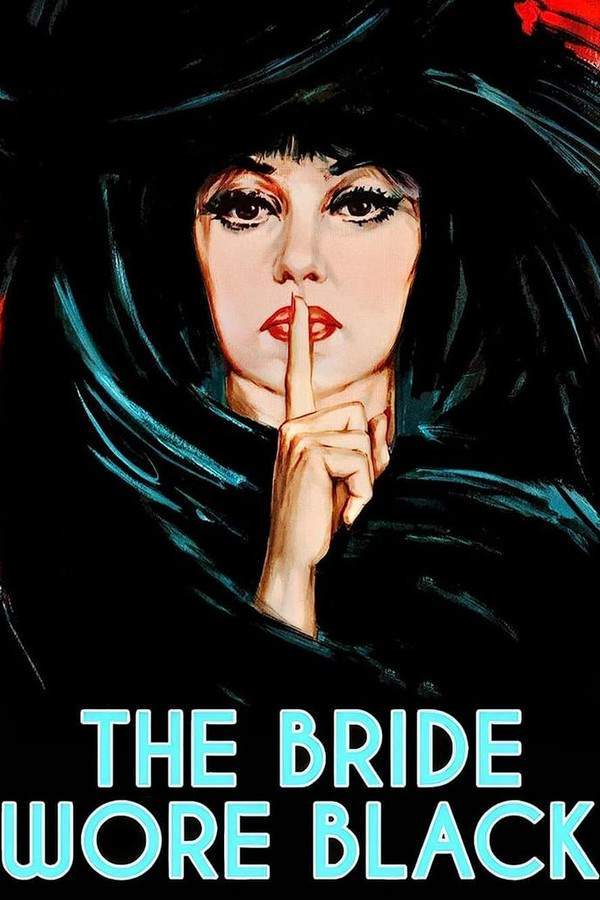
The Bride Wore Black (1968) (2011) movie poster

Timeline

The Bride Wore Black (1968) (2011) Timeline Explained – Every Event in Order

Release, runtime and language
2011 · 107 min · French
Starring
Jeanne Moreau, Jean-Claude Brialy

A grieving widow, Julie Kohler, embarks on a meticulously planned revenge plot against five men responsible for her husband’s death. Assuming different identities, she cleverly hunts down and eliminates each target one by one. As the list dwindles, a final man remains elusive, leading to a tense and dangerous pursuit that challenges her determination and mental state.

On this page (5)
  1. 1 Events in order (14)
  2. 2 Timeline questions answered
  3. 3 Movie threads
  4. 4 Movies like The Bride Wore Black (1968)
  5. 5 Every angle

14 events in order · contains spoilers

The Bride Wore Black (1968) Timeline: Events in Chronological Order

Every key event of The Bride Wore Black (1968) (2011) in order, scene by scene, with when and where it takes place. Use it to untangle flashbacks, time jumps and parallel storylines, to refresh your memory before the sequel or to find the exact scene you are thinking of.

  1. Julie Kohler's Distress

    The story begins with Julie Kohler in a deeply distressed state, attempting to leap from an upstairs window. Her mother, Luce Fabiole, intervenes just in time, highlighting the emotional turmoil Julie is facing.

  2. Julie’s Transformation

    Surprising everyone, Julie reemerges dressed in white, symbolizing a new beginning as she embarks on her quest to find Bliss. This stark contrast in her appearance signifies her shift from mourning to a determined pursuit.

  3. Encounter with Bliss

    At Bliss's extravagant wedding party, Julie captivates him with her aloof charm. However, this encounter takes a dark turn when she unexpectedly introduces herself before pushing him to his death off the balcony.

    Where
    Bliss's high-rise apartment
  4. Targeting Coral

    Julie sets her sights on Coral, a lonely bachelor, and lures him to a concert. This encounter sets the stage for her next deadly plan as she communicates with him to meet the following evening.

    Where
    Concert venue
  5. The Poisoned Drink

    On the arranged evening, Julie prepares a bottle of arak, lacing it with poison. When Coral drinks from it and collapses, she reveals her true identity, culminating in another chilling act of vengeance.

  6. Revealing the Past

    In a haunting flashback, viewers witness a tragic wedding procession interrupted by a gunshot, shedding light on Julie's sorrowful past as a widow. This moment serves to deepen the viewers' understanding of her motivations.

  7. Infiltrating Morane's Life

    Julie adopts the guise of a teacher named Miss Becker to ingratiate herself with the aspiring politician Morane and his family. This manipulative tactic allows her to get close to him and plan her next move.

  8. Trapping Morane

    When Morane helps Julie search for a lost ring, she ingeniously traps him in a closet. As he pleads for his life, the scene reflects the haunting echo of her other victims, underscoring the cycle of her revenge.

    Where
    Morane's home
  9. Eliminating Morane

    With cold precision, Julie suffocates Morane in the closet, leaving no trace except for the haunting presence of her vengeance. This act symbolizes her commitment to avenging her husband's tragic death.

  10. Confronting Fergus

    Julie seeks out Fergus, the last among the men responsible for her husband's murder. Disguised as a model for him, she ultimately delivers the lethal blow by shooting him in the back with an arrow.

  11. Defacing the Mural

    After killing Fergus, Julie defaces the mural that represents her as the huntress Diana. This act symbolizes her rejection of the identity that society pinned on her, a final declaration of her vengeance.

    Where
    Fergus's art studio
  12. Surrender at the Funeral

    At Fergus' funeral, Julie finds a moment of revelation and ultimately surrenders to her fate. Accepting her capture, she embodies an eerie calmness that contrasts sharply with her prior actions.

    Where
    Fergus's funeral
  13. Life in Prison

    As Julie adjusts to prison life, she begins working in the kitchen, hiding a knife amidst the meal cart. This act demonstrates her unyielding spirit, as she remains constantly scheming despite her circumstances.

    Where
    Prison
  14. Echoing Scream

    As the meal cart rolls out of view, a man's scream rings through the prison halls. This chilling moment echoes Julie's relentless quest for revenge, suggesting her legacy continues even behind bars.

    Where
    Prison

Last updated: November 16, 2024 at 17:39

Was this helpful?

Timeline questions answered

The Bride Wore Black (1968) Timeline Explained: Your Questions Answered

When does it happen, and why in that order? The questions people ask about the chronology of The Bride Wore Black (1968) (2011): time jumps, flashbacks, cause and effect between scenes and the correct order of events, each answered with spoilers.

Q1

Why was Julie's husband killed in the hunting accident?

Julie Kohler's husband was killed during a reckless hunting accident. He was shot by a group of five men, Bliss, Coral, Morane, Fergus, and Delvaux, while they were hunting together. The tragic event occurred during a wedding procession, as revealed in a haunting flashback where the celebratory atmosphere was shattered by a gunshot that killed Julie's husband.

  • hunting accident
  • julie husband killed
  • wedding procession
  • five men
Q2

How did Julie locate all the men responsible for her husband's death?

The film does not explicitly show how Julie tracked down each of the five men responsible for her husband's murder. She appears to have conducted her own investigation, locating Bliss first at his wedding party, then systematically pursuing each target. Her methodical approach and different aliases suggest she spent considerable time gathering information about each man's identity and whereabouts.

Foreshadowing: The opening scene shows Julie in deep mourning, establishing her obsessive focus on vengeance.

  • julie finds men
  • revenge
  • tracking down targets
  • five men
Q3

What happened to Delvaux, the fifth man from the hunting group?

Delvaux is only mentioned in passing as another member of the hunting group that killed Julie's husband. The film focuses on her hunt for Bliss, Coral, Morane, and Fergus. Delvaux is not shown being killed by Julie on screen, leaving his fate ambiguous. He may have died previously, escaped, or simply never been targeted in the film.

Foreshadowing: A flashback reveals Delvaux as part of the hunting group, but Julie's revenge focuses on the four men who are explicitly shown.

  • delvaux
  • fifth man
  • hunting group
  • julie revenge
Q4

Why did Julie change from black to white clothing after her husband's death?

After being found in a distressed state wearing black while attempting to jump from a window, Julie dramatically reappears dressed in pure white. This transformation symbolizes her shift from passive mourning and suicidal despair to an active, determined agent of vengeance. The white represents not purity but rather a blank canvas, she becomes whatever identity she needs to infiltrate her targets, a stark contrast to her earlier grief-stricken state.

Foreshadowing: The opening shows Julie in black, clearly in mourning, before her dramatic transformation into white.

  • white dress
  • black dress
  • julie transformation
  • symbolism
Q5

Why did Julie use different methods to kill each of her targets?

Julie employs a unique killing method for each victim, demonstrating both her adaptability and her personalized approach to vengeance. She pushes Bliss off his balcony, poisons Coral with laced arak, suffocates Morane with duct tape in a closet, and kills Fergus with an arrow while posing as a model. Each method reflects the victim's personality and circumstances, Bliss died from a fall like her husband's hunting accident, Coral succumbed to drink, Morane was trapped like the prey in a hunt, and Fergus was killed with a hunter's weapon.

  • julie killing methods
  • revenge tactics
  • each target different method
Q6

What was the significance of Julie defacing Fergus's mural?

After killing Fergus with his own arrow, Julie defaced the mural he had painted of her as the huntress Diana. This act symbolizes her rejection of the identity society imposed on her. Rather than being portrayed as a powerful huntress, Julie asserts her own identity as a widow seeking justice through murder. The defacement represents her final declaration that her vengeance belongs solely to her, not to any romanticized or mythic interpretation others might assign.

Foreshadowing: The mural was painted by Fergus while Julie posed as his model, creating his vision of her as Diana.

  • f Fergus mural
  • huntress diana
  • julie defaces painting
  • symbol
Q7

Why did Julie surrender to police at Fergus's funeral?

After completing her revenge by killing Fergus, the last target, Julie surrenders at his funeral. This moment appears to represent the end of her purpose, once all five men (in her mind) were avenged, she had no reason to continue fleeing. Her surrender is calm and almost peaceful, suggesting she had accepted the consequences of her actions. She had fulfilled her quest and likely understood there was nothing left to live for outside of accepting her fate.

  • julie surrenders
  • funeral
  • arrest
  • end of revenge
Q8

What happened at the end - who screamed in prison?

In the final scene, Julie is shown working in a prison kitchen where she hides a knife among the meal cart utensils. As the cart rolls away, a man's scream echoes through the prison halls. This chilling moment suggests Julie has continued her quest for vengeance even behind bars, implying she has killed or attacked someone with the hidden knife. The scream leaves her legacy ambiguous, whether her violence has truly ended remains unanswered.

Foreshadowing: Julie's calm demeanor while hiding the knife establishes she has not abandoned her vengeful nature.

  • prison ending
  • julie kills
  • knife
  • scream
  • final scene
Q9

Why did Julie get close to Morane's son as Miss Becker?

Julie ingratiated herself with Morane's family by posing as Miss Becker, a teacher. She specifically built a connection with his young son to establish herself as a trustworthy figure in the household. This allowed her to manipulate Morane into helping her search for a lost ring, which gave her the opportunity to trap him in the closet where she killed him. The use of a family-oriented cover made her appear harmless and gained her access she otherwise would not have had.

  • miss becker
  • morane son
  • julie infiltrates family
  • teacher disguise
Q10

Why did Julie target Bliss first and approach him at his own wedding?

Julie chose Bliss as her first target, arriving at his extravagant wedding party under the pretense of romantic interest. Her approach was calculated, she used her allure to captivate him on the balcony before pushing him to his death. Targeting him at his moment of greatest happiness served as poetic justice, mirroring how her own wedding day was shattered by his group's reckless actions. The wedding setting also provided access and a private moment away from guests.

Foreshadowing: A flashback reveals Julie's husband was killed during a wedding procession, making the wedding venue symbolically significant.

  • bliss first target
  • wedding party
  • julie kills bliss
  • balcony

Movie threads

More Movies Like The Bride Wore Black (1968), by Mood & Story

Curated lists built around what makes The Bride Wore Black (1968) tick: the same mood, the same kind of story or the same emotional payoff. Each list explains why these movies belong together.

Methodical Revenge Thrillers like The Bride Wore Black (1968)

Stories of chillingly precise retribution driven by grief and obsession. If you liked the cold, obsessive quest for vengeance in The Bride Wore Black, explore these movies. This collection features similar stories of grief-stricken characters executing meticulously planned revenge plots, creating tense and emotionally heavy thrillers.

  • vengeful
  • methodical
  • tense
  • grim
  • obsessive
  • melancholic
  • Tone: dark, grim, cold
  • Pacing: steady, methodical
Why these movies?

The story pattern: These narratives follow a singular, obsessive goal: retribution. The plot is typically structured around a list or a sequence of targets, with the protagonist systematically hunting them down. Flashbacks often reveal the traumatic incident that fuels the relentless, methodical pace, building towards a confrontation that questions the very concept of justice.

Why they belong together: Movies in this thread are unified by a cold, precise energy. They share a dark tone, steady pacing that mirrors the protagonist's meticulous planning, and a high intensity fueled by the high-stakes nature of revenge. The emotional core is consistently heavy, rooted in profound loss.

Movies About the High Cost of Revenge like The Bride Wore Black (1968)

Exploring the heavy emotional and psychological fallout of pursuing justice. For viewers who appreciated the heavy emotional weight and psychological depth of The Bride Wore Black, this list features films that similarly explore the dark side of revenge. These dramas and thrillers question whether vengeance brings closure or only deeper trauma.

  • psychological
  • heavy
  • tragic
  • morally complex
  • somber
  • tense
  • Tone: dark, melancholic, heavy
  • Pacing: steady, character-driven
Why these movies?

The story pattern: The narrative arc follows a character descending into an abyss of their own making. The initial righteous anger gives way to obsession, moral ambiguity, and psychological strain. The journey is internal as much as external, focusing on the character's deteriorating mental state and the hollow victory or tragic loss that awaits at the end.

Why they belong together: These films are grouped by their profound emotional weight and dark, often bleak, tone. They share a high intensity derived from internal conflict and a steady pacing that allows the psychological damage to accumulate. The ending feel is typically sad or bittersweet, emphasizing the cost paid.

If you liked this

Movies Like The Bride Wore Black (1968)

Similar movies to The Bride Wore Black (1968): the same genre, themes or kind of story. Each one comes with its own plot summary, timeline and ending explained.

Browse all movie summaries

Every angle

The Bride Wore Black (1968) (2011) Explained: Plot, Timeline & Characters

Everything about The Bride Wore Black (1968) in one place: what happens in the plot summary, the timeline in chronological order, the characters and meaning and a spoiler-free summary. What's After the Movie adds the cast, box office and post-credit scenes.

Coming soon on iOS and Android

The Plot Explained Movie Summary App

Plot summaries, endings explained and timelines on your phone. Catch up on any movie in minutes, save your favorites and never miss a twist again.

Be the first to know when we launch. Your email stays private, always.

Learn more about the app