The Battle of Algiers

The Battle of Algiers

Year: 2004

Runtime: 2 h 1 m

Language: French

Director: Gillo Pontecorvo

DramaWar

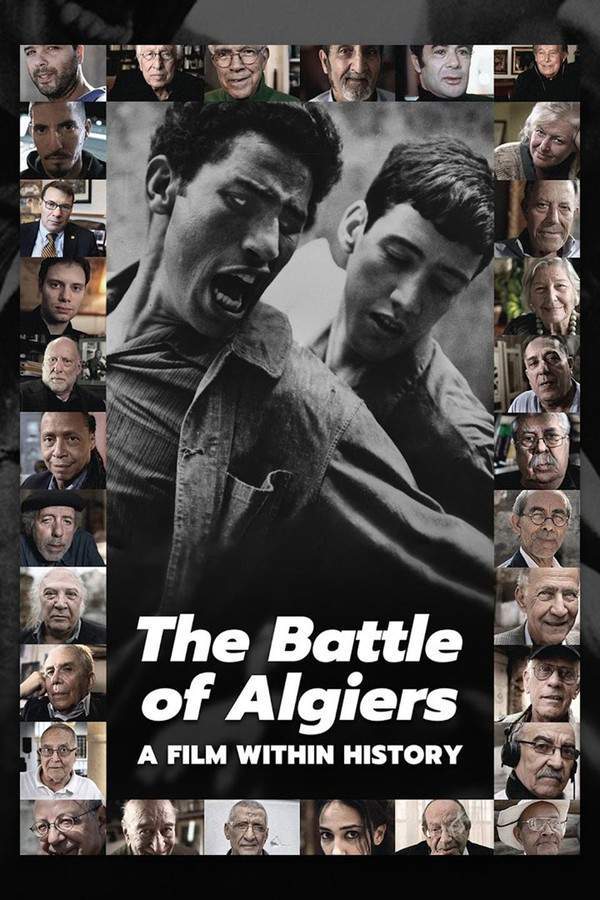
In 1954 Algiers, a violent struggle for independence from French rule erupts. As the Algerian National Liberation Front wages a guerrilla war, children become armed insurgents and ordinary citizens are drawn into the conflict. French paratroopers respond with increasingly harsh measures to suppress the rebellion, leading to a brutal and desperate fight for control of the city. The escalating tensions and bloodshed test the humanity of those caught in the crossfire, as both sides face devastating losses.

Warning: spoilers below!

Haven’t seen The Battle of Algiers yet? This summary contains major spoilers. Bookmark the page, watch the movie, and come back for the full breakdown. If you're ready, scroll on and relive the story!

The Battle of Algiers (2004) – Full Plot Summary & Ending Explained

Read the complete plot breakdown of The Battle of Algiers (2004), including all key story events, major twists, and the ending explained in detail. Discover what really happened, and what it all means.

Ali la Pointe, Brahim Hadjadj, is at the center of a sprawling chronicle that opens with a tense raid in 1957. After a brutal round of torture, a fellow fighter exposes Ali’s hidden sanctuary to the French Army, who broadcast that the “organization” has been cornered. The film then breaks away to rewind the clock and travel back to 1954, setting the stage for a deep dive into a city torn by war.

The Battle of Algiers reconstructs the bitter sequence of events in Algiers from November 1954 through December 1957, framing the Algerian War of Independence as it erupts in the Casbah. The narrative follows the rise of revolutionary cells as local Algerians clash with pieds-noirs and the state’s security apparatus. In response, France deploys paratroopers with the goal of dismantling the National Liberation Front (FLN), often presenting their operations as necessary to quell violence. Across the film, the paratroopers appear to neutralize the FLN leadership through swift strikes, assassinations, and arrests, painting a stark picture of counterinsurgency at work. The story’s arc culminates in a coda of nationalist demonstrations and riots, suggesting a paradox: even as France seems to win the Battle of Algiers, the broader Algerian War remains unresolved and ultimately loses its grip on the country.

A core tension runs through the film: the tactics of the FLN insurgency and the French counterinsurgency. The narrative does not shy away from the uglier truths of war, showing atrocities committed by both sides against civilians. The FLN tightens its grip on the Casbah by executing suspected criminals and collaborators, and it launches terror campaigns, including the Milk Bar Café bombing, to pressure the colonial authorities. In retaliation, security forces adopt hardline measures that include killings and indiscriminate violence against those suspected of aiding the insurgents. The paratroopers are depicted as resorting to coercion and intimidation, and, at times, severe violence in their attempts to suppress the uprising.

Pontecorvo and Solinas craft a cast of figures who anchor the film in historical reality. The narrative begins and ends with Ali la Pointe, Brahim Hadjadj, a petty criminal radicalized through prison experience and brought into the FLN’s fold. He is recruited by the FLN commander El-hadi Jafar, portrayed by Yacef Saadi, a veteran leader whose political rationale helps justify the insurgency to his followers. On the French side, Lieutenant-Colonel Mathieu serves as the principal paratroop figure, guiding the counterinsurgency operations that drive much of the tension in the Casbah.

Alongside these central players, the film introduces a younger street presence in the form of Petit Omar, a boy who acts as an FLN messenger, and prominent FLN leaders such as Larbi Ben M’hidi, who provides the political argument for resisting colonial rule. The story also spotlights a trio of urban guerrilla fighters—Djamila, Zohra, and Hassiba—who undertake a bold terrorist attack, underscoring the campaign’s reach beyond traditional combat zones. The film’s scale is bolstered by thousands of Algerian extras, intended to give the Casbah the sense of a living, breathing chorus that communicates through chants, wails, and the physical energy of the crowd.

Throughout its sweeping runtime, the work maintains a careful balance: it presents the moral complexity of a people fighting for autonomy while acknowledging the brutal methods employed by both the FLN and the colonial forces. The Casbah is rendered not merely as a backdrop but as a living stage where residents, combatants, and authorities collide, their lives interwoven in a daily struggle for power, survival, and dignity. The result is a historically grounded, emotionally measured meditation on a conflict that left deep scars on all sides, a film that invites viewers to reflect on the human cost behind historical milestones and political victories.
Last updated: October 09, 2025 at 17:00

Was this helpful?

The Battle of Algiers (2004) Plot Questions Answered – Summary FAQ

Explore frequently asked questions about The Battle of Algiers (2004) with spoiler-rich answers covering the full plot summary, major story beats, character motivations, hidden details, and ending meaning. This movie summary FAQ helps explain confusing scenes, plot twists, and narrative decisions in clear, searchable detail.

Q1

Why does Ali la Pointe become an insurgent?

A.

Ali la Pointe is a petty criminal who is radicalized through his prison experience, where he encounters FLN members who expose him to the political cause of Algerian independence. He is recruited by FLN commander El-hadi Jafar, who sees potential in Ali's street knowledge and willingness to fight. His transformation from a small-time criminal to a key organizer within the Casbah's insurgent network reflects how the war draws ordinary people into political violence.

Earlier scenes in the Casbah show the growing political consciousness among residents, hinting at the environment that shaped Ali's radicalization.

ali la pointefln recruitmentradicalizationcasbahpetty criminal
Q2

How does the French Army find Ali la Pointe's hideout?

A.

During a 1957 raid, a fellow FLN fighter who has been captured and subjected to brutal torture reveals the location of Ali la Pointe's hidden sanctuary to the French Army. After the torture, the authorities broadcast that the FLN organization has been cornered, signaling a major breakthrough in their counterinsurgency operation.

The film earlier shows the increasing effectiveness of French intelligence-gathering methods in the Casbah.

french armyraidali la pointetorturecounterinsurgencycasbah
Q3

Why does the FLN bomb the Milk Bar Café?

A.

The FLN carries out the Milk Bar Café bombing in 1956 as a deliberate terrorist attack designed to pressure colonial authorities and demonstrate the insurgency's reach into the heart of Algiers. The bombing is part of a broader strategy to target symbolic locations, forcing the French to respond and thereby exposing their counterinsurgency tactics to international scrutiny.

Earlier scenes show FLN leaders discussing the need to escalate attacks to gain political leverage.

milk bar cafébombingflnterrorist attack1956algiers
Q4

Why does the FLN execute suspected collaborators?

A.

The FLN executes suspected criminals and collaborators as part of their effort to maintain control over the Casbah and deter cooperation with French authorities. This ruthless tactic serves multiple purposes: eliminating potential informants, punishing those seen as betraying the nationalist cause, and enforcing discipline within the local population through fear.

Earlier scenes show growing tensions between FLN and residents who cooperate with French forces.

flnexecutionscollaboratorscasbahpunishmentterror tactics
Q5

What methods do French paratroopers use against the FLN?

A.

France deploys paratroopers who employ swift strikes, targeted assassinations, and mass arrests to dismantle FLN leadership. Their counterinsurgency approach includes coercion, intimidation, and severe violence against anyone suspected of aiding the insurgents. The paratroopers operate under Lieutenant-Colonel Mathieu, focusing on eliminating the command structure of the underground network.

The film shows the French military's initial deployment and shifting strategy from conventional warfare to urban counterinsurgency.

paratrooperscounterinsurgencymathieuflnarrestsassassinations
Q6

Who are Djamila, Zohra, and Hassiba?

A.

Djamila, Zohra, and Hassiba are three female urban guerrilla fighters who undertake a bold terrorist attack in 1956, expanding the FLN's campaign beyond traditional combat zones. Their involvement highlights how the insurgency mobilizes women fighters and demonstrates the movement's reach into all segments of society within the Casbah.

Earlier scenes show the FLN organizing and training fighters from diverse backgrounds.

djamilazohrahassibafemale fightersguerrillacasbahterrorist attack
Q7

What does the ending mean - did France really win?

A.

The film concludes with nationalist demonstrations and riots in December 1957, presenting a paradox: France appears to win the immediate Battle of Algiers through military superiority, yet the broader Algerian War remains unresolved. The uprising ultimately forces France to grant independence in 1962, suggesting that while the French counterinsurgency succeeded tactically, it failed politically. The ending invites reflection on the human cost and the ultimate futility of colonial control.

Throughout the film, FLN leaders articulate that military victory alone cannot suppress the political demand for independence.

endingindependencefranceparadoxalgerian wardemonstrations1962
Q8

How does Ali la Pointe become a key FLN organizer?

A.

Ali la Pointe rises through the FLN ranks to become a central organizer within the Casbah's insurgent network because of his street credibility, organizational skills, and willingness to take risks. His background as a petty criminal gives him the necessary connections and knowledge of the Casbah's layout. FLN commander El-hadi Jafar recognizes these qualities and promotes him to leadership positions in the underground campaign.

Early scenes establish Ali's reputation and network within the Casbah's underworld.

ali la pointefln organizerleadershipcasbahjafar
Q9

What is Larbi Ben M'hidi's role in the FLN?

A.

Larbi Ben M'hidi serves as a key FLN leader who provides the political rationale for resisting colonial rule, framing the struggle in terms of national dignity and independence. His leadership voice legitimizes the insurgency among urban cadres and helps mobilize fighters by articulating the ideological foundations of the nationalist cause.

The film opens with the political landscape of 1954, setting the stage for Ben M'hidi's ideological leadership.

larbi ben mhidifln leaderpolitical rationaleindependencemobilization
Q10

Why does the film start in 1957 before rewinding to 1954?

A.

The film opens with the 1957 raid that exposes Ali la Pointe's sanctuary, then deliberately rewinds to November 1954 to chronicle the full arc of the conflict. This narrative structure creates dramatic tension by showing the outcome first, then revealing how events unfolded. It also emphasizes the cyclical nature of violence and the ultimately unresolved nature of the conflict despite French military victories.

narrative structure19571954flashbackchronology
Q11

What role does Petit Omar play as a messenger?

A.

Petit Omar serves as a young messenger for the FLN, using his age and size to move through the Casbah undetected while carrying communications between insurgent cells. His involvement illustrates how the FLN exploits children as instruments of war, leveraging their innocence and mobility to bypass French surveillance and maintain the underground network's communications.

Earlier scenes establish the Casbah's tight spatial constraints where children move more freely than adults.

petit omarmessengercasbahchildrenflncommunication
Q12

Why does the film show atrocities from both the FLN and French forces?

A.

The film presents atrocities from both sides to illustrate the moral complexity of counterinsurgency warfare, where violence becomes a tool for both the colonized seeking independence and the colonial power seeking control. By showing brutal methods employed by the FLN (executions, bombings) alongside French counterinsurgency tactics (torture, indiscriminate violence), the narrative challenges viewers to grapple with the dehumanizing effects of war on all parties involved.

The recurring motif of violence against civilians establishes this moral equivalence throughout the narrative.

atrocitiesmoral complexityfrenchflnwar crimescivilians
Mobile App Preview

Coming soon on iOS and Android

The Plot Explained Mobile App

From blockbusters to hidden gems - dive into movie stories anytime, anywhere. Save your favorites, discover plots faster, and never miss a twist again.

Sign up to be the first to know when we launch. Your email stays private, always.

Explore Movie Threads

Discover curated groups of movies connected by mood, themes, and story style. Browse collections built around emotion, atmosphere, and narrative focus to easily find films that match what you feel like watching right now.

Claustrophobic Urban Warfare Movies like The Battle of Algiers

Intense stories of conflict confined within the oppressive streets of a city.If you were gripped by the tense, street-level combat in The Battle of Algiers, explore more movies about urban warfare and city sieges. These films capture the claustrophobic, desperate feel of conflict in crowded streets, often focusing on guerilla tactics and the plight of civilians.

tenseclaustrophobicoppressiveurgentgrippingdesperateanxious

Narrative Summary

Narratives in this thread often follow a cyclical pattern of attack and reprisal within a confined urban setting. They focus on the strategic cat-and-mouse game between insurgents and occupying forces, where control of the city's geography is paramount. The journey is one of escalating violence and diminishing humanity.

Why These Movies?

These movies are grouped together because they share a specific, intense setting and a resulting mood. They all generate a palpable sense of tension and oppression by trapping their characters and viewers within the labyrinthine, dangerous environment of a city at war.

Morally Complex War Movies like The Battle of Algiers

Stories where the lines between right and wrong are blurred by the fog of war.For viewers who appreciated the challenging ethical perspective of The Battle of Algiers, this thread gathers films that explore moral ambiguity in conflict. Find similar movies about war and revolution that present complex, grey characters and avoid clear-cut heroes or villains.

morally complexbleakgrippingthought-provokingunsettlingheavydesperate

Narrative Summary

The narrative pattern involves a gradual erosion of moral certainty as violence escalates. Characters on all sides are forced to make compromises, commit brutal acts for their cause, and face the psychological consequences. The structure often balances perspectives to show the human cost and strategic reasoning behind every action.

Why These Movies?

This thread unites films based on their shared commitment to exploring the difficult, grey areas of morality within intense conflict. They prioritize intellectual and emotional engagement over clear moral resolution, creating a heavy, thought-provoking viewing experience.

Unlock the Full Story of The Battle of Algiers

Don't stop at just watching - explore The Battle of Algiers in full detail. From the complete plot summary and scene-by-scene timeline to character breakdowns, thematic analysis, and a deep dive into the ending - every page helps you truly understand what The Battle of Algiers is all about. Plus, discover what's next after the movie.

The Battle of Algiers Timeline

Track the full timeline of The Battle of Algiers with every major event arranged chronologically. Perfect for decoding non-linear storytelling, flashbacks, or parallel narratives with a clear scene-by-scene breakdown.

The Battle of Algiers Timeline

Characters, Settings & Themes in The Battle of Algiers

Discover the characters, locations, and core themes that shape The Battle of Algiers. Get insights into symbolic elements, setting significance, and deeper narrative meaning - ideal for thematic analysis and movie breakdowns.

Characters, Settings & Themes in The Battle of Algiers

The Battle of Algiers Spoiler-Free Summary

Get a quick, spoiler-free overview of The Battle of Algiers that covers the main plot points and key details without revealing any major twists or spoilers. Perfect for those who want to know what to expect before diving in.

The Battle of Algiers Spoiler-Free Summary

More About The Battle of Algiers

Visit What's After the Movie to explore more about The Battle of Algiers: box office results, cast and crew info, production details, post-credit scenes, and external links - all in one place for movie fans and researchers.

More About The Battle of Algiers