Plot Explained Spoilers guaranteed!
Plot Explained

Browse by genre

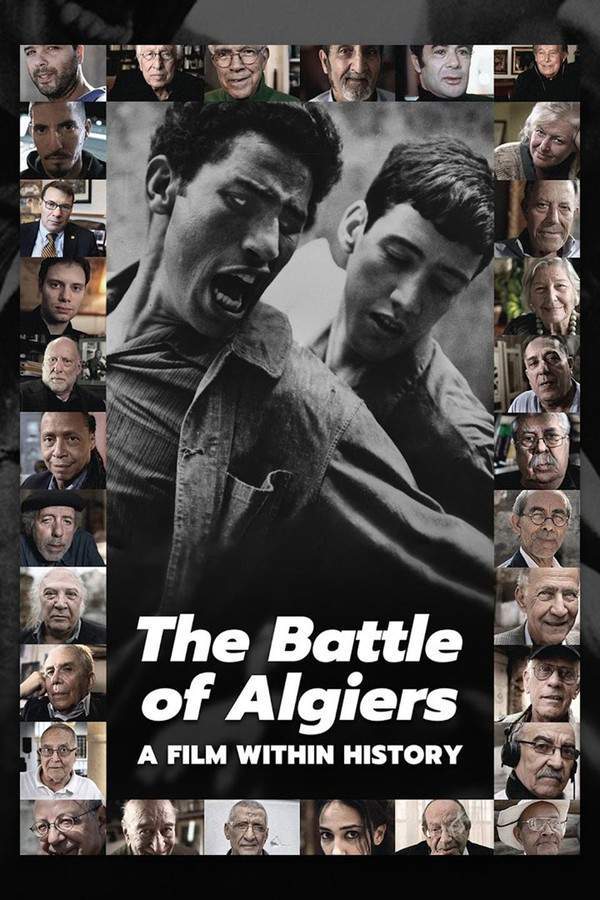
The Battle of Algiers (2004) movie poster

Timeline

The Battle of Algiers (2004) Timeline Explained – Every Event in Order

Release, runtime and language
2004 · 2 h 1 m · French
Directed by
Gillo Pontecorvo
Starring
Brahim Hadjadj, Jean Martin, Yacef Saadi, Samia Kerbash, Ugo Paletti, Fusia El Kader

In 1954 Algiers, a violent struggle for independence from French rule erupts. As the Algerian National Liberation Front wages a guerrilla war, children become armed insurgents and ordinary citizens are drawn into the conflict. French paratroopers respond with increasingly harsh measures to suppress the rebellion, leading to a brutal and desperate fight for control of the city. The escalating tensions and bloodshed test the humanity of those caught in the crossfire, as both sides face devastating losses.

On this page (4)
  1. 1 Events in order (13)
  2. 2 Timeline questions answered
  3. 3 Movie threads
  4. 4 Every angle

13 events in order · contains spoilers

The Battle of Algiers Timeline: Events in Chronological Order

Every key event of The Battle of Algiers (2004) in order, scene by scene, with when and where it takes place. Use it to untangle flashbacks, time jumps and parallel storylines, to refresh your memory before the sequel or to find the exact scene you are thinking of.

  1. 1957 raid exposes Ali's sanctuary

    During a tense raid in 1957, Ali la Pointe's hidden sanctuary is exposed to the French Army after a brutal round of torture. A fellow fighter reveals the location, and the authorities broadcast that the FLN organization has been cornered. The moment underscores the brutal realities of counterinsurgency and foreshadows a wider crackdown.

    When
    1957
    Where
    Algiers Casbah
  2. November 1954 marks the start of the Algerian War in the Casbah

    The film rewinds to November 1954, opening the chronicle of the conflict in Algiers and the Casbah. The city is torn by violence as revolutionary cells begin to form and the security forces clamp down on dissent. The stage is set for years of urban warfare and political struggle.

    When
    November 1954
    Where
    Algiers Casbah
  3. Ali la Pointe recruited into the FLN

    Ali la Pointe, a petty criminal, is radicalized through prison experience and recruited into the FLN by commander El-hadi Jafar. He becomes a central organizer within the Casbah’s insurgent network. His path anchors the human story of the uprising.

    When
    Mid-1950s
    Where
    Casbah, Algiers
  4. Larbi Ben M'hidi articulates resistance

    Larbi Ben M'hidi emerges as a key FLN leader, providing the political rationale for resisting colonial rule. He helps mobilize fighters and frames the struggle in terms of national dignity and independence. His leadership voice legitimizes the insurgency among urban cadres.

    When
    1955
    Where
    Casbah, Algiers
  5. Rise of urban revolutionary cells

    Revolutionary cells proliferate across the city, coordinating attacks and expanding the campaign beyond countryside battles. The Casbah becomes a hub where clandestine networks plan operations against colonial authorities. The campaign begins to feel like a nationwide urban insurgency.

    When
    1954-1955
    Where
    Casbah, Algiers
  6. Milk Bar Café bombing

    The Milk Bar Café bombing is carried out by FLN militants to pressure the colonial authorities. The attack demonstrates the insurgency's willingness to strike symbolic targets in the heart of the city. In response, security forces tighten their control and pursue suspects with renewed zeal.

    When
    1956
    Where
    Milk Bar Café, Algiers
  7. Djamila, Zohra, and Hassiba strike

    Three urban guerrilla fighters—Djamila, Zohra, and Hassiba—undertake a bold terrorist attack that expands the campaign's reach. Their action illustrates the FLN's strategy to apply pressure through high-profile acts within the Casbah. It elevates the perception of risk for both civilians and authorities.

    When
    1956
    Where
    Algiers Casbah
  8. Paratroopers deployed to dismantle the FLN

    France commits paratroopers to dismantle the FLN, shifting to a hard counterinsurgency approach. The troops conduct swift strikes, arrests, and targeted killings aimed at breaking the FLN leadership. The Casbah becomes the primary arena for this intensified military effort.

    When
    1955-1956
    Where
    Algiers
  9. Crackdown in the Casbah intensifies

    Security forces employ coercion and intimidation as they press to suppress the uprising in the Casbah. Killings and indiscriminate violence target those suspected of aiding the insurgents. The population endures a brutal cycle of retaliation on both sides.

    When
    1956-1957
    Where
    Casbah, Algiers
  10. FLN executes collaborators

    In retaliation against colonial measures, the FLN tightens its grip by executing suspected criminals and collaborators. This escalation demonstrates the insurgency's willingness to use swift, punitive measures to deter cooperation with the authorities. The street-level violence heightens fear throughout the Casbah.

    When
    1956-1957
    Where
    Casbah, Algiers
  11. Paratroopers target FLN leadership

    Paratroopers press on with leadership-targeted strikes, assassinations, and arrests that aim to dismantle the FLN command. The campaign reveals the military side of counterinsurgency and how it can undermine clandestine networks. Yet it also illustrates the resilience of the FLN’s urban organization.

    When
    1957
    Where
    Algiers
  12. Nationalist demonstrations signal the war’s paradox

    The film culminates with nationalist demonstrations and riots that suggest a paradox: visible political momentum can appear to favor one side, while the broader war remains unresolved. The crowds reflect a society deeply divided by the conflict and fear. The ending invites reflection on the price of independence.

    When
    December 1957
    Where
    Algiers and across Algeria
  13. Ali la Pointe’s arc closes the story

    The narrative begins and ends with Ali la Pointe, whose trajectory from petty criminal to insurgent frames the Casbah's struggle. His personal path mirrors the larger arc of the city’s resistance and the war’s toll on ordinary people. The closing moments tie his fate to the broader history of the conflict.

    When
    1957
    Where
    Algiers Casbah

Last updated: October 09, 2025 at 17:00

Was this helpful?

Timeline questions answered

The Battle of Algiers Timeline Explained: Your Questions Answered

When does it happen, and why in that order? The questions people ask about the chronology of The Battle of Algiers (2004): time jumps, flashbacks, cause and effect between scenes and the correct order of events, each answered with spoilers.

Q1

Why does Ali la Pointe become an insurgent?

Ali la Pointe is a petty criminal who is radicalized through his prison experience, where he encounters FLN members who expose him to the political cause of Algerian independence. He is recruited by FLN commander El-hadi Jafar, who sees potential in Ali's street knowledge and willingness to fight. His transformation from a small-time criminal to a key organizer within the Casbah's insurgent network reflects how the war draws ordinary people into political violence.

Foreshadowing: Earlier scenes in the Casbah show the growing political consciousness among residents, hinting at the environment that shaped Ali's radicalization.

  • ali la pointe
  • fln recruitment
  • radicalization
  • casbah
  • petty criminal
Q2

How does the French Army find Ali la Pointe's hideout?

During a 1957 raid, a fellow FLN fighter who has been captured and subjected to brutal torture reveals the location of Ali la Pointe's hidden sanctuary to the French Army. After the torture, the authorities broadcast that the FLN organization has been cornered, signaling a major breakthrough in their counterinsurgency operation.

Foreshadowing: The film earlier shows the increasing effectiveness of French intelligence-gathering methods in the Casbah.

  • french army
  • raid
  • ali la pointe
  • torture
  • counterinsurgency
  • casbah
Q3

Why does the FLN bomb the Milk Bar Café?

The FLN carries out the Milk Bar Café bombing in 1956 as a deliberate terrorist attack designed to pressure colonial authorities and demonstrate the insurgency's reach into the heart of Algiers. The bombing is part of a broader strategy to target symbolic locations, forcing the French to respond and thereby exposing their counterinsurgency tactics to international scrutiny.

Foreshadowing: Earlier scenes show FLN leaders discussing the need to escalate attacks to gain political leverage.

  • milk bar café
  • bombing
  • fln
  • terrorist attack
  • 1956
  • algiers
Q4

Why does the FLN execute suspected collaborators?

The FLN executes suspected criminals and collaborators as part of their effort to maintain control over the Casbah and deter cooperation with French authorities. This ruthless tactic serves multiple purposes: eliminating potential informants, punishing those seen as betraying the nationalist cause, and enforcing discipline within the local population through fear.

Foreshadowing: Earlier scenes show growing tensions between FLN and residents who cooperate with French forces.

  • fln
  • executions
  • collaborators
  • casbah
  • punishment
  • terror tactics
Q5

What methods do French paratroopers use against the FLN?

France deploys paratroopers who employ swift strikes, targeted assassinations, and mass arrests to dismantle FLN leadership. Their counterinsurgency approach includes coercion, intimidation, and severe violence against anyone suspected of aiding the insurgents. The paratroopers operate under Lieutenant-Colonel Mathieu, focusing on eliminating the command structure of the underground network.

Foreshadowing: The film shows the French military's initial deployment and shifting strategy from conventional warfare to urban counterinsurgency.

  • paratroopers
  • counterinsurgency
  • mathieu
  • fln
  • arrests
  • assassinations
Q6

Who are Djamila, Zohra, and Hassiba?

Djamila, Zohra, and Hassiba are three female urban guerrilla fighters who undertake a bold terrorist attack in 1956, expanding the FLN's campaign beyond traditional combat zones. Their involvement highlights how the insurgency mobilizes women fighters and demonstrates the movement's reach into all segments of society within the Casbah.

Foreshadowing: Earlier scenes show the FLN organizing and training fighters from diverse backgrounds.

  • djamila
  • zohra
  • hassiba
  • female fighters
  • guerrilla
  • casbah
  • terrorist attack
Q7

What does the ending mean - did France really win?

The film concludes with nationalist demonstrations and riots in December 1957, presenting a paradox: France appears to win the immediate Battle of Algiers through military superiority, yet the broader Algerian War remains unresolved. The uprising ultimately forces France to grant independence in 1962, suggesting that while the French counterinsurgency succeeded tactically, it failed politically. The ending invites reflection on the human cost and the ultimate futility of colonial control.

Foreshadowing: Throughout the film, FLN leaders articulate that military victory alone cannot suppress the political demand for independence.

  • ending
  • independence
  • france
  • paradox
  • algerian war
  • demonstrations
  • 1962
Q8

How does Ali la Pointe become a key FLN organizer?

Ali la Pointe rises through the FLN ranks to become a central organizer within the Casbah's insurgent network because of his street credibility, organizational skills, and willingness to take risks. His background as a petty criminal gives him the necessary connections and knowledge of the Casbah's layout. FLN commander El-hadi Jafar recognizes these qualities and promotes him to leadership positions in the underground campaign.

Foreshadowing: Early scenes establish Ali's reputation and network within the Casbah's underworld.

  • ali la pointe
  • fln organizer
  • leadership
  • casbah
  • jafar
Q9

What is Larbi Ben M'hidi's role in the FLN?

Larbi Ben M'hidi serves as a key FLN leader who provides the political rationale for resisting colonial rule, framing the struggle in terms of national dignity and independence. His leadership voice legitimizes the insurgency among urban cadres and helps mobilize fighters by articulating the ideological foundations of the nationalist cause.

Foreshadowing: The film opens with the political landscape of 1954, setting the stage for Ben M'hidi's ideological leadership.

  • larbi ben mhidi
  • fln leader
  • political rationale
  • independence
  • mobilization
Q10

Why does the film start in 1957 before rewinding to 1954?

The film opens with the 1957 raid that exposes Ali la Pointe's sanctuary, then deliberately rewinds to November 1954 to chronicle the full arc of the conflict. This narrative structure creates dramatic tension by showing the outcome first, then revealing how events unfolded. It also emphasizes the cyclical nature of violence and the ultimately unresolved nature of the conflict despite French military victories.

  • narrative structure
  • 1957
  • 1954
  • flashback
  • chronology
Q11

What role does Petit Omar play as a messenger?

Petit Omar serves as a young messenger for the FLN, using his age and size to move through the Casbah undetected while carrying communications between insurgent cells. His involvement illustrates how the FLN exploits children as instruments of war, leveraging their innocence and mobility to bypass French surveillance and maintain the underground network's communications.

Foreshadowing: Earlier scenes establish the Casbah's tight spatial constraints where children move more freely than adults.

  • petit omar
  • messenger
  • casbah
  • children
  • fln
  • communication
Q12

Why does the film show atrocities from both the FLN and French forces?

The film presents atrocities from both sides to illustrate the moral complexity of counterinsurgency warfare, where violence becomes a tool for both the colonized seeking independence and the colonial power seeking control. By showing brutal methods employed by the FLN (executions, bombings) alongside French counterinsurgency tactics (torture, indiscriminate violence), the narrative challenges viewers to grapple with the dehumanizing effects of war on all parties involved.

Foreshadowing: The recurring motif of violence against civilians establishes this moral equivalence throughout the narrative.

  • atrocities
  • moral complexity
  • french
  • fln
  • war crimes
  • civilians

Movie threads

More Movies Like The Battle of Algiers, by Mood & Story

Curated lists built around what makes The Battle of Algiers tick: the same mood, the same kind of story or the same emotional payoff. Each list explains why these movies belong together.

Claustrophobic Urban Warfare Movies like The Battle of Algiers

Intense stories of conflict confined within the oppressive streets of a city. If you were gripped by the tense, street-level combat in The Battle of Algiers, explore more movies about urban warfare and city sieges. These films capture the claustrophobic, desperate feel of conflict in crowded streets, often focusing on guerilla tactics and the plight of civilians.

  • tense
  • claustrophobic
  • oppressive
  • urgent
  • gripping
  • desperate
  • Tone: tense, oppressive, desperate
  • Pacing: steady, methodical
Why these movies?

The story pattern: Narratives in this thread often follow a cyclical pattern of attack and reprisal within a confined urban setting. They focus on the strategic cat-and-mouse game between insurgents and occupying forces, where control of the city's geography is paramount. The journey is one of escalating violence and diminishing humanity.

Why they belong together: These movies are grouped together because they share a specific, intense setting and a resulting mood. They all generate a palpable sense of tension and oppression by trapping their characters and viewers within the labyrinthine, dangerous environment of a city at war.
Morally Complex War Movies like The Battle of Algiers

Stories where the lines between right and wrong are blurred by the fog of war. For viewers who appreciated the challenging ethical perspective of The Battle of Algiers, this thread gathers films that explore moral ambiguity in conflict. Find similar movies about war and revolution that present complex, grey characters and avoid clear-cut heroes or villains.

  • morally complex
  • bleak
  • gripping
  • thought-provoking
  • unsettling
  • heavy
  • Tone: morally complex, bleak, tense
  • Pacing: steady, deliberate
Why these movies?

The story pattern: The narrative pattern involves a gradual erosion of moral certainty as violence escalates. Characters on all sides are forced to make compromises, commit brutal acts for their cause, and face the psychological consequences. The structure often balances perspectives to show the human cost and strategic reasoning behind every action.

Why they belong together: This thread unites films based on their shared commitment to exploring the difficult, grey areas of morality within intense conflict. They prioritize intellectual and emotional engagement over clear moral resolution, creating a heavy, thought-provoking viewing experience.

Every angle

The Battle of Algiers (2004) Explained: Plot, Timeline & Characters

Everything about The Battle of Algiers in one place: what happens in the plot summary, the timeline in chronological order, the characters and meaning and a spoiler-free summary. What's After the Movie adds the cast, box office and post-credit scenes.

Coming soon on iOS and Android

The Plot Explained Movie Summary App

Plot summaries, endings explained and timelines on your phone. Catch up on any movie in minutes, save your favorites and never miss a twist again.

Be the first to know when we launch. Your email stays private, always.

Learn more about the app