






















Plot Explained Spoilers guaranteed!
Plot Explained

Browse by genre

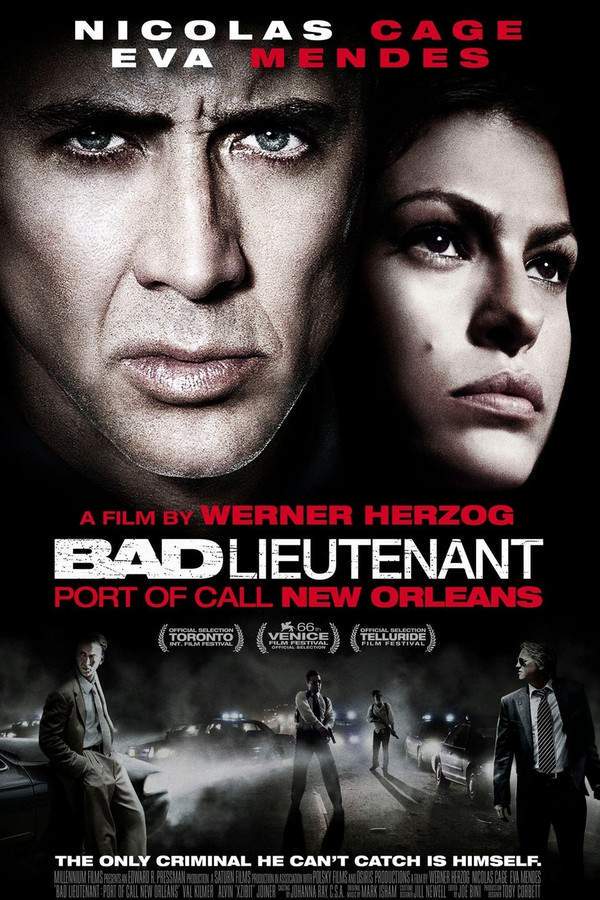
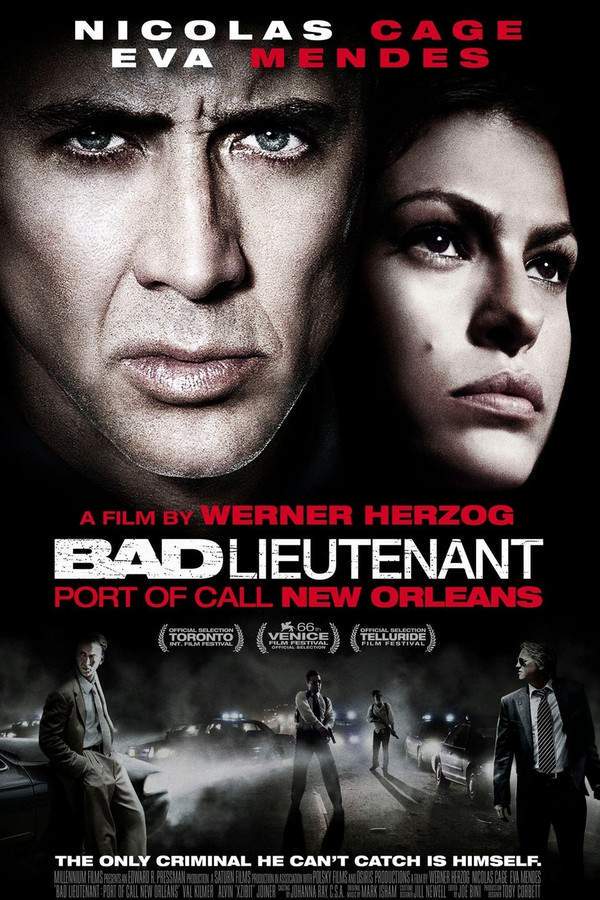
The Bad Lieutenant: Port of Call - New Orleans (2009) movie poster

Timeline

The Bad Lieutenant: Port of Call - New Orleans (2009) Timeline Explained – Every Event in Order

Release, runtime and language
2009 · 122 min · English
JustWatch #2,249 15
Directed by
Werner Herzog
Starring
Nicolas Cage, Eva Mendes
Budget
$25M

In this gritty drama, Nicolas Cage portrays a detective spiraling out of control in post-Katrina New Orleans. He’s addicted to both the pursuit of justice and drugs, using his authority for personal gain. His obsessive dedication to solving crimes is intertwined with a destructive lifestyle and a complicated relationship with a prostitute, leading him on a path of desire and self-destruction.

On this page (6)
  1. 1 Where to watch
  2. 2 Events in order (14)
  3. 3 Timeline questions answered
  4. 4 Movie threads
  5. 5 Movies like The Bad Lieutenant: Port of Call - New Orleans
  6. 6 Every angle

Where to watch

Where to Watch The Bad Lieutenant: Port of Call - New Orleans (2009)

Where can you watch The Bad Lieutenant: Port of Call - New Orleans? Stream, rent or buy it in the US, including on Amazon Prime Video, fuboTV and Fawesome: current JustWatch availability with up-to-date prices.

Streaming availability powered by JustWatch

14 events in order · contains spoilers

The Bad Lieutenant: Port of Call - New Orleans Timeline: Events in Chronological Order

Every key event of The Bad Lieutenant: Port of Call - New Orleans (2009) in order, scene by scene, with when and where it takes place. Use it to untangle flashbacks, time jumps and parallel storylines, to refresh your memory before the sequel or to find the exact scene you are thinking of.

  1. Hurricane Katrina Rescue

    In August 2005, New Orleans Police Sergeant Terrence McDonagh, played by Nicolas Cage, discovers a prisoner near drowning in his cell amidst the chaos left by Hurricane Katrina. Instead of ignoring the plight, he dives in to save the man, showcasing both bravery and a cruel sense of humor.

    When
    August 2005
    Where
    New Orleans
  2. Promotion and Injury

    Following his act of heroism, McDonagh is promoted to Lieutenant and awarded a medal for his bravery. However, the rescue takes a toll, as he suffers a severe back injury that forces him into a lifelong dependency on painkillers like Vicodin.

    Where
    New Orleans
  3. Descent into Addiction

    Six months later, Lt. McDonagh is heavily addicted not only to Vicodin but also to cocaine and marijuana. His destructive relationships, particularly with his girlfriend Frankie, exacerbate his downward spiral as they engage in a toxic lifestyle filled with substance abuse.

    Where
    New Orleans
  4. Exploitation of Others

    Using his position as a police officer, McDonagh begins to intimidate and exploit vulnerable individuals to feed his drug habit. He manipulates a property room employee into smuggling drugs, blurring the lines between law enforcement and criminality.

    Where
    New Orleans
  5. Protective Violence

    After Frankie is assaulted by a client, McDonagh's protective instincts take over, leading him into a violent confrontation with the aggressor. This incident illustrates his deep commitment to Frankie, despite their shared destructive behavior.

    Where
    New Orleans
  6. Murder Investigation

    McDonagh is assigned to investigate a gruesome murder scene where five Senegalese immigrants were killed, possibly linked to drug dealings. During his investigation, he comes across a delivery boy who witnessed the crime, presenting an opportunity to unravel the case.

    Where
    New Orleans
  7. Gang Connections

    The witness leads McDonagh to a local gang, led by Big Fate, who they suspect is connected to the murders. Although McDonagh manages to arrange the arrest of several gang members, the witness mysteriously disappears, complicating the investigation.

    Where
    New Orleans
  8. Nursing Home Confrontation

    In a frantic search for the missing witness, McDonagh visits a nursing home and confronts an elderly woman. Inadvertently causing chaos, she reveals that the witness fled to England to escape Big Fate's dangerous grip, adding another layer of difficulty to McDonagh's case.

    Where
    Nursing Home, New Orleans
  9. Debt and Illicit Collaboration

    Struggling with a $5,000 debt to a bookie, McDonagh makes the reckless decision to form an illicit partnership with Big Fate. This risky arrangement is intended to gather information, but leads to escalating violence and moral conflicts for the Lieutenant.

    Where
    New Orleans
  10. Violence and Betrayal

    After paying off his bookie, violent consequences ensue as figures related to McDonagh's dealings meet grim fates. In a surreal turn of events, McDonagh engages in drug use with Big Fate and even plants incriminating evidence at the murder scene, further complicating his moral standing.

    Where
    New Orleans
  11. Commitment to Duty

    Despite the chaos surrounding him, McDonagh's dedication to his badge remains intact. When his partner attempts to eliminate Big Fate, McDonagh chooses to stand by his principles, asserting his role as a police officer, which ultimately earns him a promotion to Captain.

    Where
    New Orleans
  12. Seemingly Reformed Life

    One year later, Captain McDonagh appears to have turned his life around with a pregnant Frankie by his side and both of his parents embracing sobriety. However, his past addiction lingers as he secretly continues to indulge in cocaine, masking the unresolved issues beneath his surface.

    Where
    New Orleans
  13. Confronting the Past

    In a moment of reflection, McDonagh encounters the prisoner he once rescued, who has also managed to turn his life around. Their conversation brings a glimmer of hope, highlighting the capacity for change while prompting McDonagh to confront his own struggles.

    Where
    Aquarium, New Orleans
  14. Final Reflections

    In the emotional climax of the story, McDonagh and the rescued prisoner ponder profound questions about life and redemption. Their final moments together are set against the contemplative backdrop of an aquarium, symbolizing both reflection and the complexity of their journeys.

    Where
    Aquarium, New Orleans

Last updated: November 03, 2024 at 22:59

Was this helpful?

Timeline questions answered

The Bad Lieutenant: Port of Call - New Orleans Timeline Explained: Your Questions Answered

When does it happen, and why in that order? The questions people ask about the chronology of The Bad Lieutenant: Port of Call - New Orleans (2009): time jumps, flashbacks, cause and effect between scenes and the correct order of events, each answered with spoilers.

Q1

Why does Lieutenant McDonagh team up with Big Fate?

McDonagh forms an illicit partnership with Big Fate because he is desperate to pay off a $5,000 debt to his bookie. After the witness connected to Big Fate's gang disappears and flees to England, McDonagh loses his main lead on the murder case. Desperate for both money and information, he decides to work with the criminal himself, believing he can gather intel while clearing his debts.

Foreshadowing: Earlier, McDonagh's pattern of using his badge for personal gain sets the stage for this morally compromises decision.

  • big fate
  • partnership
  • bookie debt
  • corruption
  • deal
Q2

Why does McDonagh stop his partner from killing Big Fate?

Despite his corruption, McDonagh still values his badge and role as a police officer. When his partner tries to eliminate Big Fate to strengthen their case, McDonagh intervenes because he believes in doing things 'the right way' through the justice system. This moment reveals the internal conflict in McDonagh, he is corrupt but still has lines he won't cross, which ultimately leads to his promotion to Captain.

Foreshadowing: This loyalty to his badge is established early when he dives in to rescue the prisoner, showing he does take his duty seriously despite his flaws.

  • big fate
  • partner
  • murder attempt
  • police duty
  • promotion
Q3

Why does McDonagh plant evidence at the murder scene?

After partnering with Big Fate and using cocaine with him, McDonagh decides to help the gangster by planting incriminating evidence at the murder scene. This act represents his complete moral collapse, he is now actively framing an innocent man (or at least protecting a guilty one) rather than simply being a corrupt cop who looks the other way. It demonstrates how his addiction and alliances have completely eroded his integrity.

Foreshadowing: His earlier exploitation of vulnerable people for drugs already established his willingness to abuse his position.

  • planting evidence
  • big fate
  • frame
  • moral collapse
  • corruption
Q4

Why is McDonagh still using cocaine at the end of the movie?

The ending reveals that McDonagh's apparent reform is superficial, he has only managed to hide his cocaine use from his family and colleagues. His continued secret drug use demonstrates that his addiction is never truly conquered; he has merely become better at concealing it. This ambiguity leaves viewers uncertain about whether he will ever actually change, fitting the film's dark and unresolved tone.

Foreshadowing: The earlier scene where his father, a recovering alcoholic, warns about the disease of addiction foreshadows that McDonagh's struggle will be lifelong.

  • cocaine
  • addiction
  • ending
  • relapse
  • hidden use
Q5

Why does McDonagh violently confront the man who assaulted Frankie?

When Frankie is assaulted by one of her clients, McDonagh's protective instincts override his normally calculating nature. He tracks down the aggressor and threatens him with dire consequences, showing that despite their toxic and co-dependent relationship, he genuinely cares about her safety. This violent outburst reveals the depth of his attachment to Frankie, even as their relationship destroys them both.

Foreshadowing: His earlier pattern of using violence to get what he wants establishes this as his default response to threats.

  • frankie
  • assault
  • violence
  • protection
  • client
Q6

Why does McDonagh get promoted to Captain after all his crimes?

McDonagh receives a promotion because he technically solved the murder case and demonstrated loyalty to his badge by preventing his partner from illegally killing Big Fate. The police department either doesn't know about his corruption or chooses to overlook it. The film uses this promotion as dark irony, McDonagh is rewarded for solving the case while simultaneously committing multiple crimes, highlighting the flawed nature of the justice system.

Foreshadowing: His earlier promotion to Lieutenant after rescuing the prisoner already set up the pattern of being rewarded for heroic acts despite his personal failings.

  • promotion
  • captain
  • corruption
  • iron
  • solved case
Q7

What happened to the witness in the murder case?

The witness who could identify Big Fate's gang members as the killers disappeared during the investigation. McDonagh eventually discovers from an elderly woman at a nursing home that the witness fled to England to escape Big Fate's reach. This forces McDonagh to resort to directly partnering with Big Fate, since he can no longer rely on traditional investigative methods.

Foreshadowing: The earlier mention of Big Fate's dangerous reach and willingness to kill establishes why the witness would be terrified enough to flee the country.

  • witness
  • england
  • fled
  • big fate
  • disappear
Q8

Why does McDonagh become addicted to drugs after the hurricane?

McDonagh's addiction stems from the severe back injury he sustained while rescuing the prisoner during Hurricane Katrina. The injury requires lifelong Vicodin use, but he escalates to harder drugs like cocaine and marijuana. His position as a police officer gives him access to drugs through the evidence locker, which he smuggles out via a manipulated property room employee. His toxic relationship with Frankie, who also uses cocaine, accelerates his descent.

Foreshadowing: The film explicitly connects his injury to the beginning of his addiction, establishing causality.

  • addiction
  • vicodin
  • cocaine
  • injury
  • hurricane katrina
Q9

What is the significance of McDonagh meeting the prisoner he rescued?

In the final scene, McDonagh encounters the prisoner he saved during Hurricane Katrina, now a free man who has turned his life around and offers to help McDonagh. This meeting represents a glimmer of hope and redemption, contrasting with McDonagh's own continued struggles. The prisoner serves as a mirror showing that change is possible, even for someone who seemed beyond saving. Their philosophical conversation about life, set against the aquarium, provides closure while maintaining the film's ambiguous tone about whether McDonagh will actually seek help.

Foreshadowing: The rescue scene establishes the prisoner as a character worth remembering, making his reappearance meaningful.

  • prisoner
  • rescue
  • redemption
  • aquarium
  • final scene
Q10

Why does McDonagh mock the prisoner before rescuing him?

When McDonagh finds the prisoner drowning, he exhibits 'a cruel sense of humor' by mocking the man before diving in to save him. This reveals McDonagh's character, a man capable of both heroism and cruelty. The moment establishes his moral complexity from the very beginning, showing he is not a simple hero but someone with deeply contradictory impulses that will define his entire journey.

Foreshadowing: This early contradiction between heroism and cruelty foreshadows his entire arc of doing both noble and corrupt things.

  • prisoner
  • drowning
  • mock
  • rescue
  • cruelty

Movie threads

More Movies Like The Bad Lieutenant: Port of Call - New Orleans, by Mood & Story

Curated lists built around what makes The Bad Lieutenant: Port of Call - New Orleans tick: the same mood, the same kind of story or the same emotional payoff. Each list explains why these movies belong together.

Corrupt cop movies like The Bad Lieutenant: Port of Call - New Orleans

Stories where law enforcers blur the line between investigator and criminal. If you liked the dark, character-driven spiral of 'The Bad Lieutenant: Port of Call - New Orleans', explore other movies featuring morally bankrupt detectives and unhinged cops. These films share a gritty tone, heavy emotional weight, and a focus on the psychological unraveling of those sworn to uphold the law.

  • gritty
  • unsettling
  • corrupt
  • desperate
  • tense
  • morally bleak
  • Tone: dark, gritty, unsettling
  • Pacing: steady, character-driven
Why these movies?

The story pattern: These narratives typically follow a central law enforcement figure as they descend into a personal abyss, often driven by addiction, greed, or trauma. The plot intertwines a professional investigation with their self-destructive behavior, creating a collision course where their pursuit of justice is undermined by their own corruption.

Why they belong together: Movies are grouped here for their shared focus on a specific character archetype: the deeply flawed, often addicted law officer. They share a dark, gritty tone, a steady or methodical pacing that charts the character's downfall, and a high intensity born from moral decay and imminent consequences.
Movies about self-destruction and moral decay like The Bad Lieutenant: Port of Call - New Orleans

Intense journeys following characters as they willingly embrace their worse instincts. For viewers who appreciated the intense, chaotic spiral in 'The Bad Lieutenant: Port of Call - New Orleans', this list features similar stories of self-destruction. These movies share a dark tone, heavy emotional weight, and a steady pacing that meticulously charts a character's descent into their personal abyss.

  • grim
  • chaotic
  • desperate
  • self-destructive
  • unsettling
  • morally complex
  • Tone: dark, grim, chaotic
  • Pacing: steady, methodical downward spiral
Why these movies?

The story pattern: The narrative pattern is a linear or focused descent. A character, often flawed from the outset, makes a series of escalating bad choices, driven by addiction, obsession, or nihilism. The story is less about redemption and more about the grim, inevitable consequences of their actions, frequently culminating in an ambiguous or bleak ending.

Why they belong together: These films are united by their core thematic focus on moral collapse and self-destruction. They share a consistently dark tone, a steady pacing that builds dread, and a high intensity derived from watching a character's life unravel. The emotional weight is heavy, and the atmosphere is often gritty and paranoid.

If you liked this

Movies Like The Bad Lieutenant: Port of Call - New Orleans

Similar movies to The Bad Lieutenant: Port of Call - New Orleans: the same genre, themes or kind of story. Each one comes with its own plot summary, timeline and ending explained.

Browse all movie summaries

Every angle

The Bad Lieutenant: Port of Call - New Orleans (2009) Explained: Plot, Timeline & Characters

Everything about The Bad Lieutenant: Port of Call - New Orleans in one place: what happens in the plot summary, the timeline in chronological order, the characters and meaning and a spoiler-free summary. What's After the Movie adds the cast, box office and post-credit scenes.

Coming soon on iOS and Android

The Plot Explained Movie Summary App

Plot summaries, endings explained and timelines on your phone. Catch up on any movie in minutes, save your favorites and never miss a twist again.

Be the first to know when we launch. Your email stays private, always.

Learn more about the app