Plot Explained Spoilers guaranteed!
Plot Explained

Browse by genre

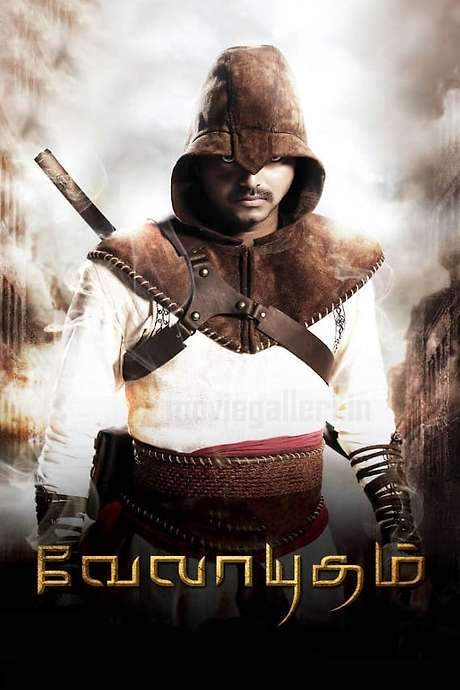
Thalaivaa (2013) movie poster

Plot Summary

Thalaivaa (2013) Plot Summary Explained

Release, runtime and language
2013 · 182 mins · Tamil
Loading streaming availability…
Directed by
A. L. Vijay
Starring
Sam Anderson, Abhimanyu Singh, Stunt Silva, Dinesh, Nassar, Manobala

A powerful mafia boss sends his son abroad to protect him from the dangerous life he leads. Fate intervenes when the son returns to Mumbai for a visit, unexpectedly stepping into his father’s influential position and embracing a similar path. He must now navigate the complexities of organized crime and the challenges that come with inheriting such a legacy.

On this page (5)
  1. 1 Where to watch
  2. 2 What happens: full plot
  3. 3 Plot questions answered
  4. 4 Movie threads
  5. 5 Every angle
Loading streaming availability…

Full plot summary · contains spoilers

What Happens in Thalaivaa: Full Plot Summary

The whole story of Thalaivaa (2013) explained, from the opening scene to the final frame: every key event, every twist and what it all adds up to. Read it as a quick recap before the sequel, to check a scene you missed, or to finally understand what really happened.

In a volatile riot that erupts in a Mumbai village, Ramadurai, Sathyaraj, a Tamil don and activist, leads a small cadre determined to shield Tamil civilians from escalating ethnic violence. He fights to protect his close ally Ratnam, Nassar, and his son Logu, Santhanam, as rival gangs tighten their grip on the area. When Ramadurai’s power is challenged by the ruthless Badhra, his people urge him to take refuge in Chennai. He initially refuses, driven by a stubborn resolve to stay and defend his community. Yet that night, Badhra’s men strike, and Ramadurai is saved only when his wife Ganga, Rekha, bravely takes a bullet for him. Enraged, Ramadurai storms Badhra’s fortress, wiping out his men and ultimately killing Badhra in front of his teenage son Bhima, Abhimanyu Singh. Before the chaos, he entrusts his young son Vishwa to Ratnam, asking him to promise protection because Ramadurai’s life will always be in danger.

Years roll by, and Ramadurai emerges as a vigilante who wields violence in the name of justice. He learns of a powerful actor who sexually assaults a young maid but uses wealth to bury the truth, and he decides to act. Ramadurai has his men disguise themselves as movie crew members and stab the actor during a real duel scene, a shocking move that unsettles the film world but serves his cause. He also declines a developer’s proposal to turn a neighborhood into apartments, preferring to invest his resources in something he believes will benefit the people—port development that could empower their community. He reaches out to Vishwa, now grown and living in Sydney as the leader of a dancing troupe called Tamil Pasanga, to guide him on leadership and doing right by the people. Vishwa reconnects with Logu, his long-time ally, and together they keep the city’s water-delivery venture afloat even as they juggle performances that win public favor.

Meanwhile, Meera Narayanan, Amala Paul, runs a local restaurant with her father, a man who manages the kitchen and the bills. The troupe forms a bridge to her world, and she invites them to sample the restaurant’s fare, even as she grows close with the performers. Meera’s personal life becomes a tangled joke when she reveals she is married to a famous singer, Sam Anderson Sam Anderson—a claim that turns out to be a ruse to deter persistent suitors, though Sam himself later makes a cameo that confirms the stunt. The pair—Vishwa and Meera—begin to develop real feelings for each other, and what starts as a playful flirtation soon deepens into something more meaningful.

The group travels to Mumbai to see Ramadurai and quietly test the ground of his crusade. They are ushered into a hidden part of Ramadurai’s life, where he explains his mission: to shield Tamil residents from hate and to keep a sphere of safety for those who are most vulnerable. But Bhima’s ascent has corrupted the family’s legacy. Bhima, who wields political influence, uses his power to extort wealthy landowners and extend his control. The law, bent by his clout, becomes a tool for his aims, while Ramadurai becomes a fugitive who must choose between surrender and continuing the fight from the shadows.

Ranga, Ramadurai’s ally turned foe, is a complicated figure: Ponvannan’s character, Bhima’s uncle, harbors a deep-seated resentment toward both gangs and schemes to seize control for himself. He stages a brutal turn of events by luring Vishwa and Ramadurai into close danger, a plan that ends with a devastating explosion that claims Ranga’s life in a tanker truck collision. The public narrative shifts as Bhima’s men brutally destroy Ramadurai’s circle, and the lines between justice and vengeance blur beyond recognition.

As the conflict escalates, Vishwa—now a fighter and leader in his own right—puts distance aside to confront Bhima directly. He survives a brutal ambush and, with Meera’s reluctant but decisive help, fights back against the insidious schemes that aim to drag him down. A crucial undercover operation—captured by a cameraman who overhears Bhima’s riot plans—brings the truth to light, exposing Bhima’s manipulation of a large crowd to incite chaos. Logu and Vishwa join forces to thwart the plan, and Bhima’s grip on the city begins to loosen.

In the final confrontation, Vishwa’s resolve hardens. He confronts Bhima in a dangerous showdown, and after a suspenseful duel, he defeats Bhima by hitting a fatal thrust to the neck with Bhima’s own blade. Meera arrives at the scene and stabilizes the outcome by presenting a self-defense claim that helps Vishwa avoid murder charges. The city’s wounds begin to heal as Ramadurai’s legacy—built on protection and courage—resonates with the people who once feared him. In the closing moments, Mumbai’s balance shifts toward peace: Vishwa and Meera, now united, oversee a city that learns to live with the scars of its past but strides into a hopeful future, ruling not through fear but through justice and a shared commitment to the people they protect.

Last updated: October 01, 2025 at 10:23

Was this helpful?

Plot questions answered

Thalaivaa Plot Explained: Your Questions Answered

The questions people ask most about Thalaivaa (2013): what happens in the confusing scenes, why the characters do what they do, the twists, hidden details and what the ending means. Each answer contains spoilers.

Q1

Why does Ramadurai kill Badhra in front of his teenage son Bhima?

Ramadurai kills Badhra as revenge for the assassination attempt on his own life. Badhra's men had attacked Ramadurai that night, and his wife Ganga was forced to take a bullet to save him. Enraged by this betrayal and the threat to his family, Ramadurai storms Badhra's fortress and eliminates his entire faction. The killing happens in front of Bhima because Ramadurai acts quickly and decisively in the heat of the moment, not considering the psychological impact it would have on the young boy who would grow up seeking vengeance.

Foreshadowing: Earlier in the riot, Badhra openly challenges Ramadurai's power, setting the stage for this violent confrontation.

  • ramadurai
  • badhra
  • bhima
  • killing
  • revenge
  • assassination
Q2

Why does Ramadurai send his son Vishwa to Sydney?

Ramadurai sends young Vishwa to Sydney with Ratnam because he knows his life will always be dangerous as a mafia don and activist protecting Tamil civilians. After defeating Badhra and killing him, Ramadurai realizes his enemies will never stop coming for him and by extension his family. He entrusts Vishwa to Ratnam, asking for a promise to protect the boy, hoping that distance from Mumbai's violence will give Vishwa a safer life away from the gang wars.

Foreshadowing: Ramadurai's own statement that his life will always be in danger foreshadows why he makes this difficult decision.

  • vishwa
  • sydney
  • ratnam
  • protection
  • ramadurai
  • son
Q3

How does Vishwa go from being a dancer in Sydney to becoming a gang leader in Mumbai?

Vishwa grows up in Sydney as the leader of a dance troupe called Tamil Pasanga, completely removed from his father's criminal world. When he travels to Mumbai to meet Ramadurai, he witnesses his father's vigilante crusade and the betrayal that leads to Ramadurai's death. After Ramadurai is killed in the explosion, Vishwa is jailed but later released through Meera's help. He then deliberately chooses to take over his father's gang to continue fighting crime and protect the city, transforming from an innocent dancer into a violent protector.

Foreshadowing: Ramadurai reaches out to Vishwa in Sydney to guide him on leadership and doing right by the people, hinting at Vishwa's future role.

  • vishwa
  • dancer
  • sydney
  • tamil pasanga
  • gang leader
  • transformation
Q4

What happens to Ramadurai in the explosion during the visit?

Ramadurai dies in a bomb explosion that occurs during Vishwa, Meera, and her father's visit to Mumbai. The bomb was planted in a van and was part of a trap orchestrated by Bhima, who is manipulating events from the shadows. Meera's father and the others who accompanied them were actually police operatives working to capture Ramadurai. The explosion kills Ramadurai and creates chaos, allowing Bhima to consolidate his power in the city after Ramadurai's death.

Foreshadowing: Ranga's betrayal and scheme to lure Vishwa and Ramadurai into danger leads directly to this deadly explosion.

  • ramadurai
  • explosion
  • death
  • bhima
  • police
  • trap
Q5

Why does Meera's father betray Vishwa and Ramadurai?

Meera's father is revealed to be a police operative, not a genuine restaurant owner. He and others infiltrated Vishwa's circle to get close to Ramadurai, who is a wanted vigilante. The betrayal is a calculated police operation to capture or eliminate Ramadurai, who has been operating outside the law. The bomb explosion that kills Ramadurai was the culmination of this coordinated police raid, though it also results in Ranga's death when the tanker truck collides.

Foreshadowing: Meera's odd claim that she is married to singer Sam Anderson, which turns out to be a ruse to deter suitors, establishes the theme of deception in the romantic subplot.

  • meera father
  • police
  • betrayal
  • ramadurai
  • operation
Q6

Why does Ramadurai reject the developer's apartment proposal in favor of the port?

Ramadurai declines a developer's proposal to transform a neighborhood into apartment complexes because he believes it would only benefit wealthy developers while displacing the local community. Instead, he chooses to invest his resources in buying a port, which would provide long-term economic empowerment and leverage for the Tamil community. This decision reflects his character as someone who prioritizes community welfare over personal wealth accumulation.

Foreshadowing: Ramadurai's earlier actions protecting Tamil civilians from ethnic violence establish his motivation for community-focused investments.

  • ramadurai
  • port
  • apartments
  • developer
  • investment
  • community
Q7

How does Vishwa expose Bhima's plan to trap him in a riot?

A cameraman named Kumar overhears Bhima's plan to stage a Maharashtran protest riot as a trap to eliminate Vishwa. Kumar records the conversation as evidence and tries to escape, but Bhima's loyalists pursue him. The footage captures Bhima's manipulation of the crowd to incite chaos. Logu and Vishwa use this evidence to thwart the plan, exposing Bhima's criminal schemes and weakening his political grip on the city.

Foreshadowing: Earlier, Bhima uses his political influence to extort landowners and manipulate the law, establishing his willingness to orchestrate large-scale chaos.

  • bhima
  • riot
  • trap
  • cameraman
  • kumar
  • exposed
  • footage
Q8

Why does Bhima become so corrupted with power after growing up?

Bhima witnesses his father Badhra being killed by Ramadurai as a teenager, which creates deep trauma and a desire for revenge. After Ramadurai's death, Bhima inherits his family's criminal empire and uses his political influence to extort wealthy landowners and expand his control. Rather than following his father's protective path like Ramadurai did for Tamils, Bhima exploits the power vacuum for personal gain, becoming the very kind of oppressive force he once suffered from.

Foreshadowing: The brutal act of killing Badhra in front of Bhima plants the seeds for his corruption and future vengeance.

  • bhima
  • corruption
  • power
  • revenge
  • badhra
  • father
Q9

How does Vishwa defeat Bhima in the final confrontation?

Vishwa tracks Bhima to an abandoned building where the two engage in a brutal duel. After a suspenseful fight, Vishwa defeats Bhima by striking a fatal thrust to the neck using Bhima's own blade. This poetic justice echoes how Ramadurai killed Badhra years earlier. Meera arrives at the scene and helps Vishwa avoid murder charges by presenting the killing as self-defense, allowing Vishwa to walk free and eventually rule Mumbai alongside her.

Foreshadowing: The earlier confrontation where Ramadurai kills Badhra with his own men establishes the pattern of violent retribution that culminates in this final duel.

  • vishwa
  • bhima
  • duel
  • defeat
  • blade
  • self defense
Q10

What is Ranga's role in the betrayal that leads to Ramadurai's death?

Ranga, who is Ponvannan's character and Bhima's uncle, harbors deep resentment toward both rival gangs and schemes to seize control for himself. He stages a brutal turn by luring Vishwa and Ramadurai into close danger, setting up the trap that leads to the deadly explosion. However, his plan backfires when he is killed in the tanker truck collision during the chaos. His betrayal demonstrates how multiple factions are maneuvering for power during the conflict.

Foreshadowing: Ranga's complicated position as Ramadurai's ally turned foe hints at his ultimate betrayal.

  • ranga
  • betrayal
  • explosion
  • bhima
  • uncle
  • power
Q11

Why does Meera claim to be married to singer Sam Anderson?

Meera invents the claim that she is married to famous singer Sam Anderson as a ruse to deter persistent suitors who pursue her at her restaurant. When Vishwa and his troupe arrive, the romantic situation becomes complicated enough that Meera actually brings in the real Sam Anderson for a cameo, confirming the stunt was a lie all along. This comedic subplot adds lightness to the film while also establishing Meera's playful approach to romance before her genuine feelings for Vishwa develop.

Foreshadowing: The deception in the romance mirrors the larger betrayals in the main plot.

  • meera
  • sam anderson
  • marriage
  • ruise
  • deception
  • romance
Q12

Why does Vishwa choose to take over his father's gang after being released from jail?

After Ramadurai's death, Vishwa is arrested and jailed but eventually released when Meera helps him escape police custody. Rather than returning to his peaceful life in Sydney, Vishwa chooses to take leadership of his father's gang because he sees the city overrun by criminals and corrupt politicians following Bhima's rise. He uses violent methods to eliminate crime and restore order, which quickly wins public support as people see him as a decisive protector, albeit a brutal one.

Foreshadowing: Vishwa's earlier decision to travel to Mumbai and witness his father's crusade shows his willingness to embrace his heritage.

  • vishwa
  • gang
  • jail
  • release
  • leadership
  • crime fighting

Movie threads

More Movies Like Thalaivaa, by Mood & Story

Curated lists built around what makes Thalaivaa tick: the same mood, the same kind of story or the same emotional payoff. Each list explains why these movies belong together.

Movies about reluctant crime heirs like Thalaivaa

A sheltered protagonist must embrace a violent inheritance they never wanted. If you liked the storyline in Thalaivaa where a son inherits his father's criminal empire, you'll enjoy these similar movies. This section features action dramas and thrillers about characters unexpectedly taking over a violent family legacy, fighting for justice, and navigating the complex world of organized crime.

  • dramatic
  • tense
  • action-packed
  • determined
  • gritty
  • familial duty
  • Tone: tense, dramatic
  • Pacing: variable, building to climax
Why these movies?

The story pattern: These narratives typically begin with a protagonist living a life separate from their family's violent business. A crisis—often the death or incapacitation of a parent—forces them to return and claim a position of power they are initially unprepared for. The journey involves mastering the rules of this dangerous world, confronting rivals, and ultimately redefining the legacy on their own terms, often with a goal of cleansing corruption.

Why they belong together: Movies are grouped here based on the central plot archetype of an unwilling heir ascending to a position of power within a criminal organization. They share a focus on family duty, moral ambiguity, intense action, and a character arc from reluctance to determined leadership.

Gritty vigilante justice movies similar to Thalaivaa

Heroic figures use underworld methods to fight systemic corruption and protect the innocent. Fans of Thalaivaa's theme of a hero using criminal methods for righteous goals will find more to love here. This collection features tense, action-packed thrillers and dramas about vigilantes battling corruption, seeking revenge, and becoming protectors of their communities against oppressive forces.

  • gritty
  • tense
  • action-packed
  • vigilante justice
  • hopeful
  • corruption
  • Tone: tense, gritty, hopeful
  • Pacing: variable, action-packed
Why these movies?

The story pattern: The narrative follows a protagonist, often with a personal vendetta or a strong sense of community duty, who takes on a powerful, corrupt entity. The conflict escalates through strategic attacks, brutal confrontations, and moral challenges. While the path is violent and costly, these stories typically build towards a cathartic, hopeful resolution where order is restored through the hero's sacrifices.

Why they belong together: This thread groups movies that share a specific vibe: the combination of gritty, high-intensity action with the heavy emotional theme of vigilante justice. They feature determined protagonists, tense atmospheres, and a satisfying, albeit violent, conclusion to a central conflict against corruption.

Every angle

Thalaivaa (2013) Explained: Plot, Timeline & Characters

Everything about Thalaivaa in one place: what happens in the plot summary, the timeline in chronological order, the characters and meaning and a spoiler-free summary. What's After the Movie adds the cast, box office and post-credit scenes.

Coming soon on iOS and Android

The Plot Explained Movie Summary App

Plot summaries, endings explained and timelines on your phone. Catch up on any movie in minutes, save your favorites and never miss a twist again.

Be the first to know when we launch. Your email stays private, always.

Learn more about the app