Plot Explained Spoilers guaranteed!
Plot Explained

Browse by genre

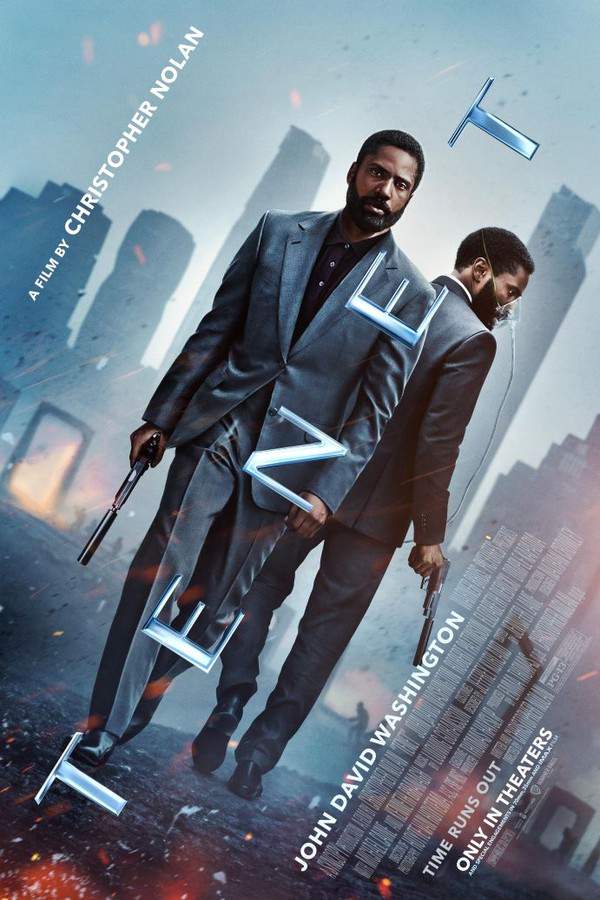
Tenet (2020) movie poster

Plot Summary

Tenet (2020) Plot Summary & Ending Explained

Release, runtime and language
2020 · 150 min · English
Echo score 75
Starring
Elizabeth Debicki, Aaron Taylor-Johnson, Andrew Howard, Carina Velva, Clémence Poésy, Denzil Smith
Budget
$205M

Amidst rising international tensions, a skilled operative is tasked with a clandestine mission that bends the rules of time. He must journey through inverted realities to understand and thwart a dangerous scheme with the potential to trigger global conflict. Facing an unseen enemy and manipulating the flow of time, he races to prevent a devastating future and safeguard the world.

On this page (7)
  1. 1 Where to watch
  2. 2 What happens: full plot
  3. 3 Plot questions answered
  4. 4 How it ends
  5. 5 Movie threads
  6. 6 Movies like Tenet
  7. 7 Every angle

Where to watch

Where to Watch Tenet (2020)

Where can you watch Tenet? Stream, rent or buy it in the US, including on Amazon Video, Apple TV Store and Fandango At Home: current JustWatch availability with up-to-date prices.

Streaming availability powered by JustWatch

Full plot summary · contains spoilers

What Happens in Tenet: Full Plot Summary

The whole story of Tenet (2020) explained, from the opening scene to the final frame: every key event, every twist and what it all adds up to. Read it as a quick recap before the sequel, to check a scene you missed, or to finally understand what really happened.

A CIA agent, referred to as the "Protagonist" (John David Washington), is drawn into a perilous extraction mission at a Kyiv opera house. The operation quickly escalates as Ukrainian forces have taken control, staging a hostage situation aimed at eliminating the operative. Under duress, the Protagonist receives orders to either extract the operative or eliminate him. As chaos unfolds, a mysterious masked soldier with a red trinket unexpectedly saves his life by executing the seemingly impossible act of "un-firing" a bullet through a gunman’s weapon.

However, the Protagonist's luck swiftly diminishes as he finds himself in the clutches of mercenaries, where he endures brutal torture and ingests cyanide. Awakening later, he realizes the cyanide was merely a test of loyalty; his team has perished, and the valuable artifact has vanished. In his search for answers, he is recruited by a shadowy organization named Tenet. His CIA superior, Fay (Martin Donovan), introduces him to the enigmatic scientist Barbara (Clémence Poesy), who enlightens him about bullets that exist with "inverted" entropy, implying they travel backward in time. Barbara’s research indicates these aberrant items may originate from a war yet to unfold, hinting at a dire future conspiracy unbeknownst to the present.

In his quest for truth, the Protagonist partners with Neil ([Robert Pattinson]), whom he meets through a CIA informant. Together, they trace the inverted bullets to Priya Singh ([Dimple Kapadia]), an arms dealer in Mumbai. They discover she plays a role within Tenet and her ammunition has been altered by the notorious Russian oligarch, Andrei Sator ([Kenneth Branagh]). Intriguingly, Priya mentions that she sold Sator standard cartridges but is baffled by how they’ve been inverted, suggesting that Sator serves as a bridge between their time and an unfathomable future.

Priya then connects the Protagonist with Sir Michael Crosby ([Michael Caine]), a British intelligence officer who provides further insight into Sator’s background. He recounts Sator's origins in a covert Soviet city, Stalsk-12, which was home to 200,000 people before a mysterious accident led to its abandonment. This location had been the site of underground tests, coinciding eerily with the day of the Kyiv siege.

Meanwhile, the estranged relationship between Sator and his wife, Kat (Elizabeth Debicki), complicates matters. She confides that Sator leveraged a forged Goya painting as blackmail against her, leaving her bound to him until the artwork is recovered. The Protagonist makes a bold offer to retrieve the painting to secure a meeting with Sator.

The Protagonist and Neil orchestrate a daring heist to steal the drawing from a secure storage facility in Oslo. Employing a strategy that involves crashing a plane into the vault's wall, they face off against two masked men who seem to be the same person existing in two different timelines. This marks their first encounter with the turnstile—a machine that can reverse the entropy of objects and individuals, one that Sator has, the purpose of which remains shrouded in mystery.

During an encounter on the Amalfi Coast in Italy, the Protagonist meets Sator and discovers the drawing is still safe, as Sator had it removed prior to the heist. Although Sator initially plots to eliminate the Protagonist, an unexpected turn of events allows the Protagonist to save Sator's life during an altercation instigated by Kat. In a twist of fate, Sator and the Protagonist form a tentative alliance to recover a case purported to contain plutonium-241, which was also the goal during the Kyiv operation.

The Protagonist continues to shadow Sator, observing the logistics behind his retrieval missions. His determination culminates in a violent confrontation in Tallinn, where the Protagonist and Neil manage to steal a case, discovering it actually contains the artifact lost in Kyiv. However, their victory is short-lived as an inverted Sator appears, holding Kat captive, thus leading to a reckless gambit.

In a culminating showdown, Sator's men and Tenet operatives collide in a chaotic battle, twisting through time and fate. Following a fierce struggle, the Protagonist and Kat are inadvertently drawn into one of Sator's machinations involving the turnstile. Desperate to escape, they are propelled back in time, facing off against their past selves while navigating the complex web of time inversion.

Further unraveling the plot reveals Sator's grand ambition to piece together an algorithm capable of globally reversing mankind's entropy—a catastrophic plan that could obliterate all of humanity's history. As Kat unveils that Sator is terminally ill, the stakes heighten. With Sator poised to unleash destruction during a planned vacation in Vietnam, the Protagonist and his team endeavor to thwart his plans.

In a suspenseful climax, a synchronized assault utilizes both inverted and non-inverted teams to confront Sator's defenses. Amid the chaos, Kat seizes the opportunity to eliminate Sator, just as the Protagonist secures the algorithm for Tenet.

In the aftermath, as the Protagonist begins to dismantle the algorithm, he realizes the intricate connections that ultimately led to him becoming the architect of Tenet. With layers of deception and loyalty intertwined, the Protagonist's journey has revealed both friend and foe, resulting in an epic tale that wrestles with the concepts of time, morality, and the consequences of our actions.

As the Protagonist reflects on the paradoxical nature of his mission, he contemplates the complex interplay of fate and free will while knowing the possibility of altering time hangs precariously in the balance.

Last updated: November 16, 2024 at 16:32

Was this helpful?

Plot questions answered

Tenet Plot Explained: Your Questions Answered

The questions people ask most about Tenet (2020): what happens in the confusing scenes, why the characters do what they do, the twists, hidden details and what the ending means. Each answer contains spoilers.

Q1

Why does the masked soldier save the Protagonist at the Kyiv opera house?

The masked soldier is actually Neil, who has traveled backward in time to save the Protagonist. This is Neil's first act of protecting the man who will eventually become his friend and boss. Neil wears a red tracer on his wrist, which is the same object the Protagonist later gives to Neil as a token of their future partnership. This moment establishes that their relationship extends across time, with Neil already knowing the Protagonist from his future.

Foreshadowing: The red tracer appears again much later when the Protagonist gives it to Neil, confirming their future connection.

  • neil
  • opera house
  • masked soldier
  • time inversion
  • red tracer
Q2

How does time inversion work in Tenet?

Time inversion is a technology that reverses the entropy of an object or person, causing them to move backward through time. Inverted objects appear to heal (like a bullet returning to a gun), and inverted people experience time in reverse while appearing to remember the future. Barbara explains that inverted items originate from a future war, meaning they haven't happened yet from the present perspective. The turnstile is a machine that can invert or uninvert objects and people, allowing them to interact across different temporal directions.

Foreshadowing: The inverted bullets found throughout the story are the first evidence that a future conflict is already affecting the past.

  • time inversion
  • entropy
  • inverted bullets
  • turnstile
  • barbara
Q3

Why does the Protagonist form an alliance with Sator in Italy?

After Kat nearly kills Sator during their Amalfi Coast meeting, the Protagonist saves Sator's life and they form a temporary truce. The Protagonist needs Sator's access to locate the algorithm and the case containing the missing artifact. Sator also needs the Protagonist to retrieve the plutonium case from Tallinn. This uneasy partnership allows the Protagonist to get closer to Sator's operation while understanding the full scope of his plans for the algorithm.

Foreshadowing: This alliance is part of a larger temporal loop, as the Protagonist's actions with Sator are predestined.

  • sator
  • amalfi coast
  • alliance
  • plutonium
  • kat
Q4

What is the algorithm Sator is trying to assemble?

The algorithm is a device composed of nine pieces that, when combined, can reverse the entropy of the entire planet, effectively erasing all of human history. This catastrophic weapon was developed by scientists in the future who wanted to undo humanity's impact on Earth by returning the world to a pre-industrial state. Sator, who is dying of cancer, is the only one who knows how to piece the algorithm together and trigger it. He plans to activate it during a family vacation in Vietnam.

Foreshadowing: Sator's obsession with controlling time stems from his terminal diagnosis, giving him nothing to lose.

  • algorithm
  • entropy
  • global reversal
  • sator
  • future war
Q5

Why does Kat kill Sator in the final confrontation?

Kat kills Sator because he has been emotionally and legally controlling her life through a forged Goya painting he used as blackmail. Even after she helps the Protagonist, Sator promises to let her go but continues his manipulations. When given the opportunity during the synchronized assault, Kat shoots Sator to finally free herself from his control and to prevent him from activating the algorithm. Her action also ensures the algorithm falls into Tenet's hands rather than Sator's.

Foreshadowing: Kat's resentment toward Sator has been building throughout the film, with her repeatedly expressing desire to be free of him.

  • kat
  • sator
  • forged goya
  • kill
  • 算法
Q6

How did the Protagonist become the founder of Tenet?

The Protagonist realizes he is the creator of Tenet through a temporal loop. He travels backward in time to orchestrate events that will lead to his own recruitment and the formation of the organization. At the end, he gives his younger self the mission parameters, essentially recruiting himself. This creates a closed loop where the Protagonist is both the founder and the operative, explaining why he has such deep knowledge and commitment to the organization.

Foreshadowing: The Protagonist's strong sense of loyalty and the mysterious guidance he receives throughout the film hint at his future role.

  • protagonist
  • tenet
  • founder
  • future
  • past
  • loop
Q7

What is the turnstile and how does it work?

The turnstile is a large machine that can reverse the entropy of objects and people, sending them backward through time. Sator possesses a turnstile that he uses to travel inverted. The machine requires a significant power source to operate and appears to be rare technology. The Oslo freeport contains a turnstile that the Protagonist and Neil discover during their heist. Objects or people can be inverted multiple times, allowing them to move freely between temporal directions.

Foreshadowing: The turnstiles are the key to understanding how characters can interact with their past or future selves.

  • turnstile
  • invert
  • time machine
  • entropy
  • oslo freeport
Q8

Why is Sator dying and how does this affect his plan?

Sator is dying of pancreatic cancer, which gives him a terminal diagnosis with little time remaining. This terminal condition is what drives his extreme motivation to activate the algorithm. Knowing he will die soon, Sator sees the global reversal as a way to end his own suffering while simultaneously resetting civilization. His illness makes him reckless and willing to threaten world annihilation, as he has nothing to lose and sees death as inevitable regardless.

Foreshadowing: Kat mentions Sator's illness early in the film, explaining his erratic and desperate behavior.

  • sator
  • cancer
  • terminal illness
  • algorithm
  • dying
Q9

How is an inverted version of Sator able to capture Kat in Tallinn?

In Tallinn, an inverted Sator appears holding Kat hostage because Sator has been traveling backward through time to intercept the Protagonist's team. After their earlier confrontation, Sator inverted himself to get ahead of their operations and use Kat as leverage. This inverted Sator knows their movements because he has already experienced the timeline from his perspective. The temporal confusion allows Sator to anticipate their actions and capture Kat before the Protagonist can secure the algorithm pieces.

Foreshadowing: The Tallinn scene demonstrates that Sator has been using inversion strategically to gain advantages.

  • inverted sator
  • tallinn
  • kat
  • hostage
  • time travel
Q10

Why did the Protagonist undergo the cyanide test?

The cyanide was a loyalty test administered by Tenet to verify the Protagonist's commitment. After being captured by mercenaries and seemingly betraying his team by swallowing the cyanide capsule, the Protagonist passed the test. His willingness to die rather than reveal information confirmed his loyalty, allowing Tenet to recruit him. This was not actually poison but a simulated scenario designed to test his resolve.

Foreshadowing: This test establishes the Protagonist's character as someone who values mission and loyalty above personal survival.

  • cyanide
  • test
  • loyalty
  • tenet
  • protagonist
Q11

Who is Neil and what is his connection to the Protagonist?

Neil is a British operative who becomes the Protagonist's primary ally throughout the mission. Through their journey, it becomes clear that Neil knows the Protagonist from a future timeline, having worked with him for years. Neil is the masked soldier who saved the Protagonist at the Kyiv opera house. At the end, Neil sacrifices himself by driving a truck into an inverted portal, knowing this is necessary to ensure the mission's success. His loyalty and knowledge suggest he has been working with the Protagonist for a long time from the Protagonist's future perspective.

Foreshadowing: Neil's mysterious knowledge and the red tracer he wears connect him directly to the Protagonist's future.

  • neil
  • protagonist
  • soldier
  • sacrifice
  • future
Q12

What was the original goal of the Kyiv opera house mission?

The Kyiv mission was a CIA extraction operation to retrieve a specially designed case containing a section of the algorithm. Ukrainian forces had taken control of the opera house and were using hostages as leverage. The Protagonist was sent to either extract the operative with the case or eliminate him to prevent the algorithm from falling into enemy hands. Though the mission appeared to fail with the case lost, it was actually part of a larger temporal operation that would allow Tenet to secure the full algorithm later.

Foreshadowing: The case lost in Kyiv is the same one recovered in Tallinn, connecting the two operations temporally.

  • kyiv
  • opera house
  • algorithm
  • case
  • extraction

Ending explained

What Happens at the End of Tenet?

How Tenet (2020) ends, in short: the final scene, the last twist and what it means for the characters. The full ending explained, with every spoiler, lives on its own page.

Read the full ending explained

Tenet’s ending reveals that the entire operation was ultimately about creating a paradox that confounds even those trying to prevent it. Throughout the film, the protagonist and his team pursue the fragments of the Algorithm—an incredibly destructive set of data with the potential to annihilate the world—while trying to stop Sator, who seeks to use the Algorithm for his own gains. In the final stages, it becomes clear that the protagonist’s mission was never about winning in a traditional sense but rather about ensuring that Sator thinks he has won, while in reality, the real victory lies in their ability to prevent the catastrophe altogether.

The climax features a tense, complex operation called the "Temporal Pincer Movement," where two teams work in sync—one moving forward through time and the other backwards. Neil’s sacrifice during this operation is a pivotal moment, as it reveals the layered nature of time—Neil, who appears to be a friend working in the present, is actually an inverted future version of himself who has been there all along, guiding the protagonist. The final moments show that Sator’s death on the cruise ship was orchestrated by the protagonist’s plan to make Sator believe he won, but the hero quietly ensures the Algorithm remains hidden and safe.

Continue reading the ending (1 more paragraphs)

In essence, the film’s message is that Tenet never really won or lost; it’s a story about the importance of maintaining a delicate balance—where victory is not about conquering the enemy but about subtly outmaneuvering him and safeguarding the future. The apparent victory is a carefully staged paradox where the real triumph is in saving the world from destruction through intricate manipulation of time. It leaves viewers pondering whether we are truly in control or merely part of a larger, interconnected loop where the outcome is already determined—highlighting Nolan's fascination with the ambiguities of time and fate.

Tenet ending explained in full

Movie threads

More Movies Like Tenet, by Mood & Story

Curated lists built around what makes Tenet tick: the same mood, the same kind of story or the same emotional payoff. Each list explains why these movies belong together.

Complex puzzle thrillers like Tenet

Dense, cerebral plots where solving the puzzle is as important as the action. If you enjoyed the intricate, brain-twisting plot of Tenet, explore more movies like it. This list features complex sci-fi and action thrillers where unraveling the narrative's puzzle is a core part of the high-stakes experience.

  • mind-bending
  • cerebral
  • intricate
  • puzzling
  • high-stakes
  • methodical
  • Tone: tense, cerebral, mysterious
  • Pacing: fast, dense
Why these movies?

The story pattern: These stories often present a high-concept premise with its own set of rules that the protagonist—and the viewer—must learn and master under pressure. The plot structure is frequently non-linear or layered with reveals that reframe previous events, demanding close attention and rewarding multiple viewings.

Why they belong together: They are grouped by their shared focus on narrative complexity as a source of tension and engagement. The primary satisfaction comes from the intellectual challenge of a meticulously constructed plot that keeps you guessing until the end.

Epic spy missions similar to Tenet

Global espionage missions with a cold, methodical tone and epic scale. For viewers who liked the high-stakes, globe-trotting espionage and cool professional tone of Tenet. Discover similar movies featuring operatic missions, elaborate set-pieces, and stories where saving the world is a complicated, methodical job.

  • operatic
  • high-stakes
  • urgent
  • methodical
  • cold
  • paranoid
  • Tone: tense, cold, urgent
  • Pacing: fast, urgent
Why these movies?

The story pattern: The narrative follows highly skilled operatives navigating a web of international intrigue to prevent a catastrophic event. Character arcs are often secondary to the mission's execution, emphasizing teamwork, sacrifice, and the procedural details of a high-pressure operation against an unseen enemy.

Why they belong together: They share a specific vibe of large-scale, visually stunning espionage that feels both urgent and dispassionately professional. The similarity lies in the blend of cold, methodical action with a paranoid, high-stakes atmosphere.

If you liked this

Movies Like Tenet

Similar movies to Tenet: the same genre, themes or kind of story. Each one comes with its own plot summary, timeline and ending explained.

Browse all movie summaries

Every angle

Tenet (2020) Explained: Plot, Ending, Timeline & Characters

Everything about Tenet in one place: what happens in the plot summary, the timeline in chronological order, the characters and meaning, the ending explained and a spoiler-free summary. What's After the Movie adds the cast, box office and post-credit scenes.

Coming soon on iOS and Android

The Plot Explained Movie Summary App

Plot summaries, endings explained and timelines on your phone. Catch up on any movie in minutes, save your favorites and never miss a twist again.

Be the first to know when we launch. Your email stays private, always.

Learn more about the app