Plot Explained Spoilers guaranteed!
Plot Explained

Browse by genre

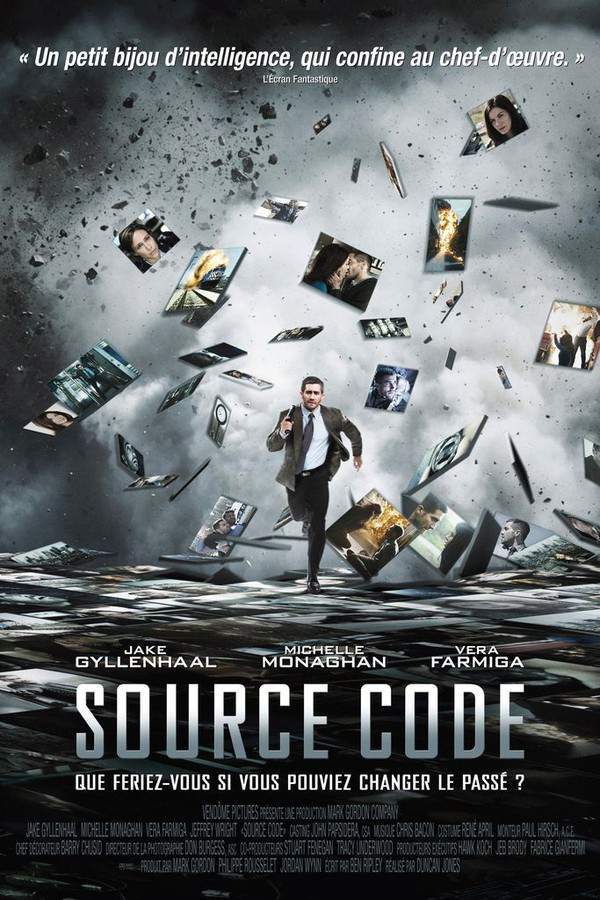
Source Code (2011) movie poster

Plot Summary

Source Code (2011) Plot Summary Explained

Release, runtime and language
2011 · 93 min · English
JustWatch #1,058 16
Directed by
Duncan Jones
Starring
Vera Farmiga, Jake Gyllenhaal, Michelle Monaghan
Budget
$32M

Captain Colter Stevens, a decorated soldier, finds himself unexpectedly reliving the last eight minutes of a stranger’s life. He's drawn into a top-secret government program called "Source Code," a mission to identify a bomber on a commuter train. Forced to repeatedly experience these final moments, Colter must gather clues and unravel the mystery to prevent a devastating attack that could impact millions of lives. Each loop brings him closer to understanding the bomber's identity and stopping the impending disaster.

On this page (6)
  1. 1 Where to watch
  2. 2 What happens: full plot
  3. 3 Plot questions answered
  4. 4 Movie threads
  5. 5 Movies like Source Code
  6. 6 Every angle

Where to watch

Where to Watch Source Code (2011)

Where can you watch Source Code? Stream, rent or buy it in the US, including on Fawesome, Kanopy and Tubi TV: current JustWatch availability with up-to-date prices.

Streaming availability powered by JustWatch

Full plot summary · contains spoilers

What Happens in Source Code: Full Plot Summary

The whole story of Source Code (2011) explained, from the opening scene to the final frame: every key event, every twist and what it all adds up to. Read it as a quick recap before the sequel, to check a scene you missed, or to finally understand what really happened.

A man, portrayed by Jake Gyllenhaal, suddenly finds himself awake on a train, facing a woman named Christina Warren, played by Michelle Monaghan. Struggling with his identity, he learns that he is called Sean Fentress, but he has no recollection of who she is. Just eight minutes into this bewildering experience, a catastrophic explosion rocks the train, jolting him back to reality, where he finds himself confined within a small, high-tech dome. Here, he is confronted by Air Force Capt. Colleen Goodwin, who communicates through a computer screen. She reveals to him that he is actually Colter Stevens, a highly decorated helicopter pilot, trapped in a critical mission to track down the creator of the bomb that caused chaos on the train bound for Chicago.

Utilizing an advanced program known as Source Code, Stevens must inhabit the last moments of a train passenger, reliving their last eight minutes to both identify the bomb's location and the perpetrator behind the attack. With his only memory recalling a harrowing mission in Afghanistan, he embarks on a daunting quest where he learns that he can’t change the past but can gather essential information to protect the future from a potentially catastrophic event—a larger nuclear bomb set to devastate downtown Chicago.

As Stevens navigates through these time loops, every attempt reveals new details, intensifying his mission. He grows closer to Christina, developing a deeper understanding of the human connections he desperately wants to preserve, especially as he faces the inevitable moment of destruction. Despite the insistence from Goodwin and Dr. Rutledge—the mastermind behind Source Code—that he must focus solely on the bomber, he refuses to abandon his desire to save Christina and the other innocents on board.

Through a series of harrowing revelations, Stevens discovers that he is, in fact, deceased. His body was repurposed by the military for the Source Code project after an unfortunate incident in war. This realization drives him to confront Goodwin about his freedom and independence post-mission. Eventually, he identifies the bomber as Derek Frost, leading to the capture that averts disaster in Chicago.

After successfully completing his mission, Rutledge manages to erase Stevens's memories, rendering him a mere tool for future operations. However, Stevens persuades Goodwin to allow him one final opportunity to prevent the train disaster. With the accumulated knowledge from his previous journeys within the Source Code, he successfully disarms the bomb and incapacitates Frost just in time.

In a heart-wrenching yet powerful moment, Stevens shares a kiss with Christina just seconds before the pivotal eight minutes expire. To his astonishment, even after Goodwin complies with his wish to shut down his life support machine, he remains alive within Fentress’s body, enabling him to escape and save the remaining train passengers. In this alternate reality, Stevens manages to write to an alternate version of Goodwin, informing her of his experiences and emphasizing that the Source Code can impact alternate realities. The film closes with Stevens embracing his new life, promising to convey the same comforting message of assurance that Goodwin once offered him: "everything will be OK."
Last updated: November 04, 2024 at 06:53

Was this helpful?

Plot questions answered

Source Code Plot Explained: Your Questions Answered

The questions people ask most about Source Code (2011): what happens in the confusing scenes, why the characters do what they do, the twists, hidden details and what the ending means. Each answer contains spoilers.

Q1

Why is Colter Stevens inside Sean Fentress on the train?

Colter Stevens is actually a deceased helicopter pilot whose body was repurposed by the military for the Source Code project. After dying in Afghanistan, his brain was used as the interface for the program. The train passenger named Sean Fentress is the host body that Stevens' consciousness occupies during each 8-minute loop, allowing him to experience the final moments of a commuter who was killed in the train bombing.

  • colter stevens
  • sean fentress
  • source code
  • consciousness transfer
  • body host
Q2

How does the Source Code program work?

Source Code is a government program that allows a user's consciousness to inhabit the last eight minutes of a deceased person's memories. It projects the user into a simulation of these final moments, where they can interact with the environment and gather information. The program cannot change what already happened, the past is fixed, but it allows the user to gather intelligence to prevent future terrorist attacks.

  • source code
  • time loop
  • simulation
  • eight minutes
  • consciousness
Q3

Who is the bomber on the train?

The bomber is identified as Derek Frost, a passenger on the train. Throughout his repeated loops, Colter Stevens gathers clues about Frost's behavior, including his nervous mannerisms and the suspicious package he carries. Stevens successfully identifies Frost and provides this information to the team, leading to Frost's capture before he can detonate the larger nuclear device intended for Chicago.

Foreshadowing: Early in the film, Stevens notices a nervous-looking passenger who keeps checking his bag, hinting at the bomber's identity.

  • derek frost
  • bomber
  • train bombing
  • chicago attack
  • terrorist
Q4

Why does Colter keep trying to save Christina if he can't change the past?

Although Source Code operators are told they cannot change the past, Colter gradually believes he can save Christina and the other passengers. His motivation stems from wanting to preserve the human connections he forms during each loop. Even though Goodwin and Dr. Rutledge insist the mission is only about identifying the bomber, Colter refuses to accept that Christina's death is inevitable, eventually finding a way to save her and the train.

  • christina warren
  • save passengers
  • human connection
  • colter motivation
Q5

How does Colter survive at the end of the movie?

After successfully disarming the bomb and stopping Derek Frost, Colter makes a final plea to Goodwin to let him return one more time to save the passengers. When Goodwin agrees to shut down his life support back in the lab, Colter unexpectedly remains alive within Sean Fentress's body on the train. This suggests that by changing events in the Source Code simulation, he has created an alternate reality where he continues to exist as Fentress, allowing him to escape and live a new life.

  • colter survival
  • alternate reality
  • new life
  • sean fentress body
  • happy ending
Q6

What is the eight-minute limit in Source Code?

The eight-minute limit represents the duration of the train passenger's life from when the bomb is planted to the explosion. Source Code can only project Stevens into the last eight minutes of the victim's memories because the program relies on the neural imprints left in the brain during those final moments. After eight minutes, the simulation ends and Stevens is pulled back to the lab, forcing him to restart the loop to gather more information.

  • eight minutes
  • time limit
  • train explosion
  • loop reset
  • simulation duration
Q7

Why is Colter Stevens actually dead?

Colter Stevens was a decorated helicopter pilot who was killed in action during a mission in Afghanistan. The military, through Dr. Rutledge's Source Code project, repurposed his body for the program by preserving his brain function and using it as the interface for the consciousness projection system. Stevens only learns about his own death partway through the film when he discovers that his body in the lab is severely burned and hooked up to machines.

Foreshadowing: Stevens experiences fragmented memories of Afghanistan throughout the film, hinting at his military past.

  • colter death
  • afghanistan
  • military
  • killed in action
  • body repurposed
Q8

Can Source Code create alternate realities?

The film suggests that Source Code does create alternate realities. At the end, Colter writes a message to an alternate version of Goodwin, explaining that the program can affect other realities. By successfully disarming the bomb and saving the passengers in the simulation, Colter appears to have created a branching timeline where the train bombing never occurs, and he continues living in Sean Fentress's body.

  • alternate reality
  • multiverse
  • timeline
  • source code discovery
  • 平行世界
Q9

Why does Capt. Goodwin help Colter at the end?

Goodwin initially follows orders to treat Colter as a tool for the Source Code project, but she grows sympathetic to his cause over time. At the end, she grants his final request to return to the train and save the passengers, and then agrees to shut down his life support when the mission is complete. Her change of heart seems driven by Colter's persistence and the realization that he has earned the chance to live, even if it means going against Rutledge's directives.

  • goodwin
  • colonel rutledge
  • source code program
  • insubordination
  • moral dilemma
Q10

Why is there a nuclear bomb threat in Chicago?

Derek Frost planted two bombs on the train, a conventional bomb that explodes during each loop, and a much larger nuclear device intended for downtown Chicago. The train bombing was only the first attack; the nuclear bomb was set to detonate in Chicago, which would have killed millions of people. Colter's mission is to identify the bomber so authorities can prevent this catastrophic attack.

  • nuclear bomb
  • chicago
  • terrorist attack
  • mass casualties
  • derek frost plan
Q11

What happens when Colter's life support is turned off?

When Goodwin turns off Colter's life support in the lab, his physical body dies. However, Stevens unexpectedly remains conscious within Sean Fentress's body on the train. This suggests that his consciousness has become permanently integrated with Fentress's brain, allowing him to survive as a different person. In the alternate reality created by his successful intervention, he wakes up alive on the moving train with the ability to save the remaining passengers.

  • life support
  • death
  • consciousness transfer
  • survival
  • new body

Movie threads

More Movies Like Source Code, by Mood & Story

Curated lists built around what makes Source Code tick: the same mood, the same kind of story or the same emotional payoff. Each list explains why these movies belong together.

Tense Time Loop Movies like Source Code

Protagonists trapped in repeating moments to avert a looming catastrophe. If you enjoyed the high-pressure, puzzle-solving structure of Source Code, you'll find similar thrills here. This section features movies like Source Code that use a time loop mechanic not for comedy, but for tense, high-stakes problem-solving and averting disaster, blending sci-fi concepts with thriller pacing.

  • suspenseful
  • urgent
  • disorienting
  • thrilling
  • anxious
  • puzzle-solving
  • Tone: tense, urgent, mysterious
  • Pacing: fast, cyclical, relentless
Why these movies?

The story pattern: Stories in this thread are defined by a cyclical narrative structure. A protagonist is trapped reliving a finite time segment, often with a dire consequence impending. The plot progresses not linearly, but through accumulated knowledge and failed attempts across loops, building towards a final, successful resolution of the central crisis.

Why they belong together: These films are grouped by their shared use of a time loop as a core narrative engine for suspense. They prioritize tension, mystery, and intellectual challenge over pure action or humor, creating a uniquely disorienting and urgent viewing experience centered on a race against a recurring doom.

Philosophical Sci-Fi Movies with Bittersweet Endings like Source Code

Mind-bending concepts that explore identity, sacrifice, and what it means to be human. For viewers who appreciated the heavy emotional weight and existential themes of Source Code. This collection gathers sci-fi movies like Source Code that grapple with deep questions about memory, identity, and sacrifice, often culminating in a bittersweet or melancholic resolution that lingers long after the credits.

  • thoughtful
  • melancholic
  • mind-bending
  • existential
  • heavy
  • sacrificial
  • Tone: thoughtful, melancholic, bittersweet
  • Pacing: steady, with intense peaks
Why these movies?

The story pattern: The narrative journey in these films centers on a protagonist confronting a reality-altering scientific concept. This confrontation forces a re-evaluation of their own identity, memories, or place in the world. The conflict is often internal and philosophical, leading to an ending that involves significant personal sacrifice or an existential compromise for a greater good.

Why they belong together: This thread connects films that share a contemplative and emotionally heavy tone within a sci-fi framework. They are united by a focus on the human cost of technology and exploration of consciousness, resulting in stories that are intellectually stimulating and deeply moving, with endings that balance hope with loss.

If you liked this

Movies Like Source Code

Similar movies to Source Code: the same genre, themes or kind of story. Each one comes with its own plot summary, timeline and ending explained.

Browse all movie summaries

Every angle

Source Code (2011) Explained: Plot, Timeline & Characters

Everything about Source Code in one place: what happens in the plot summary, the timeline in chronological order, the characters and meaning and a spoiler-free summary. What's After the Movie adds the cast, box office and post-credit scenes.

Coming soon on iOS and Android

The Plot Explained Movie Summary App

Plot summaries, endings explained and timelines on your phone. Catch up on any movie in minutes, save your favorites and never miss a twist again.

Be the first to know when we launch. Your email stays private, always.

Learn more about the app