






Plot Explained Spoilers guaranteed!
Plot Explained

Browse by genre

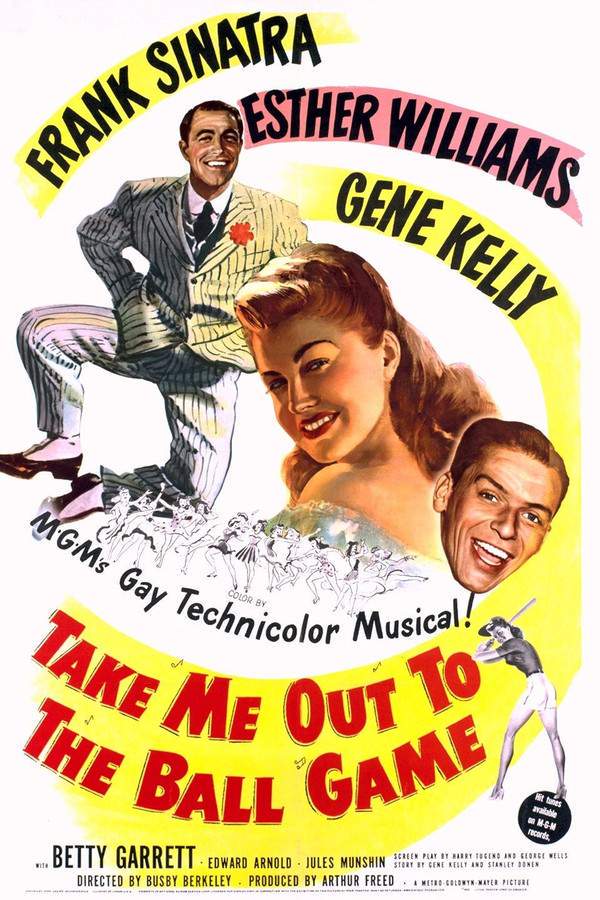
Take Me Out to the Ball Game (1949) movie poster

Characters & Themes

Take Me Out to the Ball Game (1949) Characters, Setting & Themes Explained

Release, runtime and language
1949 · 93 min · English
Directed by
Busby Berkeley
Starring
Frank Sinatra, Tom Dugan, Dorothy Abbott, Gene Kelly, Betty Garrett, Jules Munshin

Two baseball players, Dennis Ryan and Eddie O'Brien, find their careers intertwined with the allure of Broadway when a gambler proposes a starring role for Eddie in a new show. Balancing their love for vaudeville with the demands of the game, the friends must navigate the pressures of performance and their commitments to their team and their friendship. The film is a lighthearted and entertaining look at ambition and camaraderie.

On this page (8)
  1. 1 Where to watch
  2. 2 Characters explained (7)
  3. 3 Where & when it takes place
  4. 4 Themes & meaning (3)
  5. 5 Character & meaning questions
  6. 6 Movie threads
  7. 7 Movies like Take Me Out to the Ball Game
  8. 8 Every angle

Where to watch

Where to Watch Take Me Out to the Ball Game (1949)

Where can you watch Take Me Out to the Ball Game? Stream, rent or buy it in the US, including on Hoopla, Amazon Video and Apple TV Store: current JustWatch availability with up-to-date prices.

Streaming availability powered by JustWatch

7 main characters · contains spoilers

Take Me Out to the Ball Game Characters Explained: Who Is Who

The main characters of Take Me Out to the Ball Game (1949), heroes and villains: what drives them, how they change over the course of the story and what each of them reveals about the film's bigger ideas.

  • Dennis Ryan (Frank Sinatra)

    A talented yet romantic punch of energy, Dennis longs to return to baseball even as his vaudeville charm draws attention. He is competitive and loyal, capable of both sharp wit and big swings at the plate. His arc centers on balancing ambition with friendship and finding his place on the Wolves.

    • ⚾️ Baseball star
    • 🎤 Vaudeville performer
  • Eddie O’Brien (Gene Kelly)

    Eddie is a showman with a talent for entertaining crowds, sometimes at the expense of steady performance. He is ambitious, charming, and at times arrogant, but his love of baseball remains evident as he wrestles with commitments to the team and to his nightlife.

    • ⚾️ Entertainer
    • 🎭 Performer
  • Katherine Higgins (Dorothy Abbott)

    Katherine is a capable, level-headed team owner who commands respect with knowledge of the game. She values discipline and strategy, and her evolving relationship with Eddie and Dennis tests both personal and professional boundaries.

    • 👩‍💼 Team owner
    • 🧭 Strategist
  • Nat Goldberg (Jules Munshin)

    Nat is a supportive teammate and comic foil who helps keep morale high. He is loyal and quick-witted, often bringing lightness to tense moments while staying focused on the Wolves’ success.

    • 🏃‍♂️ Athlete
    • 😂 Comedic relief
  • Shirley (Esther Williams)

    Shirley is a passionate fan who becomes the object of Dennis’ and Katherine’s affections. She embodies enthusiasm and romantic pursuit, driving some of the film’s misunderstandings and reconciliations.

    • 🎀 Fan
    • 🕺 Dancer
  • Joe Morgan (Edward Arnold)

    A mob-connected gambler who bets against the Wolves and schemes to sideline Eddie. His interference creates high-stakes tension and forces the team to rally despite organized crime pressure.

    • 🕵️ Gangster
    • 💼 Underworld
  • Mike Gilhuly (Tom Dugan)

    The Wolves’ manager who misreads personal drama as performance issues, pushing the team toward unity and resilience. He is pragmatic and often the catalyst for action that helps drive the pennant victory.

    • 👔 Manager
    • 🗣️ Strategist

Last updated: October 01, 2025 at 12:15

Was this helpful?

Setting

Where and When Does Take Me Out to the Ball Game Take Place?

The setting of Take Me Out to the Ball Game (1949): the year and time period, the places and locations, and how they shape the characters, the mood and the tension of the story.

Time period

Early 1900s

The story unfolds in the early 20th century, a time when baseball was crystallizing its star power and communities followed teams through seasonal battles. Players juggle athletic competition with entertainment careers, reflecting the era's vaudeville culture. The plot tracks the Wolves through training, late-night rehearsals, and a pennant chase.

Location

Sarasota, Florida

The Wolves travel to Sarasota for spring training, setting their base in a warm coastal town that hosts teams preparing for the season. The setting centers around the outdoor ballpark and the festive, fan-filled atmosphere of a major league-style camp. The town's environment contrasts the competitive pennant race with lighthearted vaudeville interludes that echo the players’ off-field lives.

  • ⚾️ Baseball town
  • 🏖️ Coastal training locale
  • 🏟️ Spring training site

Last updated: October 01, 2025 at 12:15

Was this helpful?

3 major themes

Take Me Out to the Ball Game Meaning: Themes & Message Explained

What is Take Me Out to the Ball Game (1949) really about? The emotional, social and philosophical themes the film keeps returning to, its symbolism and the message beneath the surface.

  • Baseball and Showmanship

    The Wolves blend athletic competition with vaudeville-style entertainment, illustrating how sport and performance intertwine. The film uses on-field antics, crowd engagement, and choreographed routines to heighten dramatic stakes. This dual focus drives character arcs and dramatic tension as players juggle fame, duty, and rivalry.

  • Gender and Ownership

    Katherine Higgins inherits the team and leads with baseball knowledge in a male-dominated era. Her decisions—curfews, scouting, and on-field leadership—challenge stereotypes and redefine what authority looks like in the clubhouse. The dynamic explores respect, romance, and professional competence.

  • Loyalty and Rivalry

    Friendships among Dennis, Eddie, Nat, and Katherine propel the plot, testing loyalties between love, sport, and the pursuit of the pennant. Outside interference from mobsters introduces danger that jeopardizes the team and their camaraderie. The resolution hinges on trust, teamwork, and a dramatic comeback.

Last updated: October 01, 2025 at 12:15

Was this helpful?

Character & theme questions

Take Me Out to the Ball Game Characters & Meaning: Your Questions Answered

The questions people ask about Take Me Out to the Ball Game (1949): who the characters really are, their relationships, what the symbols mean, where it takes place and what the movie is really about. Each answer contains spoilers.

Q1

Where does the movie take place?

The film is set primarily in Sarasota, Florida, where the Wolves baseball team holds its spring training. The warm coastal town serves as the base for the team as they prepare for the season, with the story centering around the outdoor ballpark and the festive atmosphere of spring training camp.

  • sarasota florida
  • spring training
  • baseball setting
  • wolves team
Q2

What time period is the film set in?

The movie takes place in the early 1900s, during baseball's formative years when the sport was developing its star power and communities followed teams through seasonal pennant races. This era was also height of vaudeville culture, which directly influences the film's blend of athletic competition and entertainment.

  • early 1900s
  • vaudeville era
  • baseball history
  • time period
Q3

What is the baseball and showmanship theme about?

The film blends athletic competition with vaudeville-style entertainment, showing how sport and performance intertwine. The Wolves players juggle their baseball careers with entertainment pursuits, using on-field antics, crowd engagement, and choreographed routines to heighten dramatic stakes while balancing fame, duty, and rivalry.

  • baseball
  • showmanship
  • vaudeville
  • entertainment
  • sport
Q4

Who is Katherine Higgins and what is her role?

Katherine Higgins is the owner of the Wolves baseball team, inheriting the team and leading with baseball knowledge in a male-dominated era. She makes decisions about curfews, scouting, and on-field leadership that challenge stereotypes and redefine what authority looks like in the clubhouse. Her relationship with Eddie and Dennis tests both personal and professional boundaries.

  • katherine higgins
  • team owner
  • female owner
  • baseball authority
  • gender roles
Q5

Who is Dennis Ryan in the movie?

Dennis Ryan is portrayed by Frank Sinatra as a talented yet romantic player who longs to return to baseball even as his vaudeville charm draws attention. He is competitive and loyal, capable of both sharp wit and powerful hitting. His arc centers on balancing ambition with friendship and finding his place on the Wolves team.

  • dennis ryan
  • frank sinatra
  • baseball player
  • vaudeville
  • loyalty
Q6

Who is Eddie O'Brien in the movie?

Eddie O'Brien is portrayed by Gene Kelly as a showman with a talent for entertaining crowds, sometimes at the expense of steady performance. He is ambitious, charming, and at times arrogant, but his love of baseball remains evident as he wrestles with commitments to the team and to his nightlife entertainment career.

  • eddie obrien
  • gene kelly
  • showman
  • baseball player
  • ambition
Q7

Who is Joe Morgan in the film?

Joe Morgan is a mob-connected gambler played by Edward Arnold who bets against the Wolves and schemes to sideline Eddie O'Brien. His interference creates high-stakes tension and forces the team to rally despite organized crime pressure, adding a thriller subplot to the musical comedy.

  • joe morgan
  • gambler
  • mob
  • antagonist
  • organized crime
Q8

Who is Mike Gilhuly in the movie?

Mike Gilhuly is the Wolves' team manager played by Tom Dugan. He sometimes misreads personal drama as performance issues, pushing the team toward unity and resilience. He is pragmatic and often acts as the catalyst for action that helps drive the team toward their pennant victory.

  • mike gilhuly
  • manager
  • team manager
  • coach
  • wolves
Q9

What is the loyalty and rivalry theme about?

Friendships among Dennis, Eddie, Nat, and Katherine propel the plot, testing loyalties between love, sport, and the pursuit of the pennant. Outside interference from mobster Joe Morgan introduces danger that jeopardizes the team and their camaraderie. The resolution hinges on trust, teamwork, and a dramatic comeback.

  • loyalty
  • rivalry
  • teamwork
  • friendship
  • pennant race
Q10

What genre and tone does the movie have?

Take Me Out to the Ball Game is a sport, comedy, romance, and musical film with a definitively light tone. The movie features playful character interactions, musical numbers, and a predictable happy ending. While there is suspense through baseball rivalries and a mild gangster subplot, these elements are consistently undercut by humor.

  • musical comedy
  • sport film
  • 1949 movie
  • genre
  • light tone
Q11

What is the gender and ownership theme about?

The film explores Katherine Higgins inheriting the Wolves baseball team and leading with baseball knowledge in a male-dominated era. Her decisions about curfews, scouting, and on-field leadership challenge gender stereotypes and explore themes of respect, romance, and professional competence in early 1900s baseball.

  • gender roles
  • female ownership
  • clubhouse
  • respect
  • professional baseball

Movie threads

More Movies Like Take Me Out to the Ball Game, by Mood & Story

Curated lists built around what makes Take Me Out to the Ball Game tick: the same mood, the same kind of story or the same emotional payoff. Each list explains why these movies belong together.

Showbiz and Sports Mashups like Take Me Out to the Ball Game

Stories where the worlds of sports and entertainment collide with ambition and spectacle. Explore movies like Take Me Out to the Ball Game where the worlds of sports and show business collide. If you enjoyed the blend of baseball and Broadway, these stories feature similar themes of ambition, performance, and playful competition in a lighthearted, energetic package.

  • energetic
  • celebratory
  • mischievous
  • optimistic
  • spectacular
  • competitive
  • Tone: light, celebratory, mischievous
  • Pacing: fast, energetic
Why these movies?

The story pattern: Stories typically follow a group of friends or colleagues as they balance their primary passion (like a sport) with the allure of a new, glamorous opportunity (like show business). This creates a central conflict between loyalty, ambition, and personal dreams, leading to misunderstandings and comedic situations that are ultimately resolved in a triumphant victory on both fronts.

Why they belong together: These films are grouped by their unique hybrid setting, high-energy pacing, and focus on the spectacle of performance. They share a light tone where conflicts are more mischievous than menacing, and the journey is about celebrating talent and camaraderie through song, dance, and athletic prowess.

Playful Golden Age Musicals like Take Me Out to the Ball Game

Fast-paced, song-filled comedies driven by friendly schemes and romantic entanglements. Discover upbeat musical comedies similar to Take Me Out to the Ball Game. If you liked its fast pace, mischievous characters, and blend of romantic misunderstandings with spectacular numbers, these films offer the same lighthearted, optimistic, and energetically fun experience.

  • whimsical
  • mischievous
  • energetic
  • optimistic
  • romantic
  • celebratory
  • Tone: light, whimsical, humorous
  • Pacing: fast, rhythmic
Why these movies?

The story pattern: The narrative pattern involves a central duo or group whose well-intentioned but misguided schemes create a series of comedic complications, often involving a romantic interest. These misunderstandings are interspersed with musical numbers that express character emotions or advance the plot. The conflicts are rarely serious and are resolved harmoniously, reinforcing themes of friendship and love.

Why they belong together: Movies in this thread share a dominant LIGHT tone, FAST pacing driven by musical numbers, and a focus on humorous character interactions over deep drama. They are united by their high humor score, low emotional weight, and a consistent feel of optimistic, energetic fun.

If you liked this

Movies Like Take Me Out to the Ball Game

Similar movies to Take Me Out to the Ball Game: the same genre, themes or kind of story. Each one comes with its own plot summary, timeline and ending explained.

Browse all movie summaries

Every angle

Take Me Out to the Ball Game (1949) Explained: Plot, Timeline & Characters

Everything about Take Me Out to the Ball Game in one place: what happens in the plot summary, the timeline in chronological order, the characters and meaning and a spoiler-free summary. What's After the Movie adds the cast, box office and post-credit scenes.

Coming soon on iOS and Android

The Plot Explained Movie Summary App

Plot summaries, endings explained and timelines on your phone. Catch up on any movie in minutes, save your favorites and never miss a twist again.

Be the first to know when we launch. Your email stays private, always.

Learn more about the app