Plot Explained Spoilers guaranteed!
Plot Explained

Browse by genre

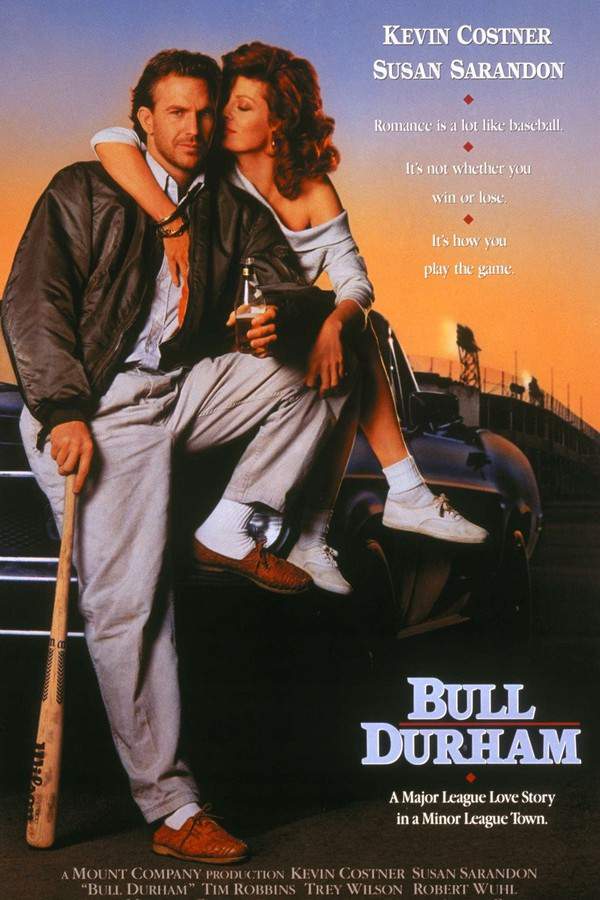
Bull Durham (1988) movie poster

Plot Summary

Bull Durham (1988) Plot Summary Explained

Release, runtime and language
1988 · 108 min · English
JustWatch #941 3
Directed by
Ron Shelton
Starring
Tim Robbins, Susan Sarandon, Kevin Costner

In Durham, North Carolina, the Durham Bulls minor league baseball team has a unique connection with Annie Savoy, a charismatic woman who studies poetry and develops relationships with players. As the season progresses, Annie selects the enthusiastic but undisciplined Ebby Calvin "Nuke" Laloosh as her protégé, hoping to guide him towards a deeper understanding of baseball. Veteran catcher Crash Davis is tasked with mentoring Nuke, helping him control his wild pitches and learn the importance of teamwork and experience.

On this page (6)
  1. 1 Where to watch
  2. 2 What happens: full plot
  3. 3 Plot questions answered
  4. 4 Movie threads
  5. 5 Movies like Bull Durham
  6. 6 Every angle

Where to watch

Where to Watch Bull Durham (1988)

Where can you watch Bull Durham? Stream, rent or buy it in the US, including on TBS, TNT and tru TV: current JustWatch availability with up-to-date prices.

Streaming availability powered by JustWatch

Full plot summary · contains spoilers

What Happens in Bull Durham: Full Plot Summary

The whole story of Bull Durham (1988) explained, from the opening scene to the final frame: every key event, every twist and what it all adds up to. Read it as a quick recap before the sequel, to check a scene you missed, or to finally understand what really happened.

"Crash" Davis, played by Kevin Costner, is a seasoned minor league baseball player with a career spanning over 12 years. He finds himself sent down to the single-A Durham Bulls with a clear mission: to mentor the promising but reckless rookie pitcher, Ebby LaLoosh, portrayed by Tim Robbins, who is based loosely on the life of Steve Dalkowski. Right from the start, Crash's rocky relationship with Ebby takes shape as he degrades him with the nickname "Meat."

The narrative thickens with the introduction of Annie, a character brought to life by Susan Sarandon, who is on a quest for spiritual fulfillment through her 'Church of Baseball.' Every year, she chooses a player from the Bulls to be both her lover and disciple. As the story unfolds, she finds herself flirting with both Crash and Ebby. However, Crash reveals his disinterest, claiming he has outgrown the need to "try out" for love. Before exiting, he leaves Annie intrigued with an unforgettable declaration of his beliefs, concluding with the alluring line, > "I believe in long, slow, soft, deep wet kisses that last three days... Good night."

Despite the initial friction, both Crash and Annie attempt to guide Ebby into becoming a major-league pitcher. Annie engages in light-hearted bondage games, reads him poetry, and encourages him to change his mindset, coining him the endearing name "Nuke." Meanwhile, Crash adopts an unconventional approach by insisting Nuke should refrain from overthinking, allowing the catcher to decide the pitches and even openly revealing them to batters when Nuke resists his advice. He emphasizes the importance of being mentally prepared for the formidable major league hitters, delivering insights about the pressures of the spotlight—a world he briefly inhabited during what he fondly describes as "the 21 greatest days of my life."

As the season progresses, Nuke matures and his relationship with both Annie and Crash deepens, yet it becomes clear that Annie and Crash share a more fitting bond, complicated by her romantic ties with Nuke. Following a shaky start, Nuke eventually proves himself as a standout pitcher. By the film’s conclusion, he is called to the majors, causing the Bulls to release Crash due to his diminished value. This decision triggers a bout of jealousy within Crash, who feels hurt by Nuke's lack of appreciation for the gifts he possesses. As Nuke moves on to pursue his dreams, he ends his relationship with Annie, and Crash, despite his grievances, offers parting wisdom to his mentee.

Transitioning to a new chapter, Crash joins the Asheville Tourists, where he shatters the minor league record for career home runs. In a final scene, we see Nuke, now a major leaguer, being interviewed by reporters while echoing the cliché lines Crash instilled in him. Ultimately, Crash retires as a player and returns to Durham to find Annie, who shares her intent to cease her yearly affairs. Crash reveals his aspirations to manage a minor league team in Visalia, marking a fresh start for both. As they embrace this new phase, the duo is seen dancing in her candle-lit living room, symbolizing hope and new beginnings.
Last updated: November 03, 2024 at 13:58

Was this helpful?

Plot questions answered

Bull Durham Plot Explained: Your Questions Answered

The questions people ask most about Bull Durham (1988): what happens in the confusing scenes, why the characters do what they do, the twists, hidden details and what the ending means. Each answer contains spoilers.

Q1

Why does Crash reject Annie at first?

Crash rejects Annie because he claims he's outgrown the need to "try out" for love. After 12 years in minor league baseball, he feels he's moved past the stage of proving himself to anyone, including romantically. His memorable line about believing in "long, slow, soft, deep wet kisses that last three days" signals he's looking for something more meaningful than his previous lifestyle.

Foreshadowing: Earlier, Crash mentions his brief major league experience as "the 21 greatest days of my life," hinting at someone who has already had his moments of glory and now seeks different fulfillment.

  • crash davis
  • annie Savoy
  • rejection
  • love
  • church of baseball
Q2

Why does Annie choose Nuke over Crash?

Annie initially chooses Nuke because he's the new player she can mold according to her "Church of Baseball" philosophy. She sees potential in raw talent and wants to guide a promising rookie toward both baseball success and spiritual fulfillment. Crash, having already experienced major leagues and being sent back down, represents someone who has already been shaped.

Foreshadowing: Annie's annual tradition of selecting a player to be her "disciple" establishes her preference for undeveloped talent she can influence.

  • annie Savoy
  • nuke laloosh
  • church of baseball
  • mentorship
  • selection
Q3

Why does Crash tell Nuke to stop overthinking and just pitch?

Crash insists Nuke stop overthinking because he believes excessive analysis creates hesitation, which defeats a pitcher's natural instincts. Crash knows major league hitters can exploit any uncertainty, and he wants Nuke to trust his catcher and his own physical abilities rather than trying to outthink batters. This approach contrasts with traditional coaching methods.

Foreshadowing: Crash's own brief major league experience taught him about the overwhelming pressure of facing professional hitters, making him emphasize mental simplicity.

  • crash davis
  • nuke laloosh
  • pitching
  • mentorship
  • overthinking
  • baseball strategy
Q4

Why do the Durham Bulls release Crash when Nuke gets called up?

The Bulls release Crash because once Nuke advances to the majors, Crash's value to the team diminishes significantly. As a veteran catcher with limited upside, he's become replaceable, while Nuke represents the investment that paid off. The team chooses to focus on younger talent rather than keep an aging player who served primarily as a mentor.

Foreshadowing: Earlier, the team explicitly sent Crash to Durham to mentor Nuke, making his role temporary by design.

  • crash davis
  • durham bulls
  • release
  • nuke laloosh
  • minor league
  • transaction
Q5

Why does Crash feel jealous when Nuke gets called up?

Crash feels jealous because despite his years of experience and guidance, he's being cast aside while Nuke receives all the rewards. He's hurt that Nuke doesn't fully appreciate the wisdom Crash imparted, the clichés and life lessons that helped him succeed. It represents a painful reality where the mentor gets discarded once his usefulness is complete.

Foreshadowing: Crash's earlier mention of his 21 greatest days in the majors establishes his unspoken longing for that success to return, making Nuke's achievement sting harder.

  • crash davis
  • jealousy
  • nuke laloosh
  • emotions
  • mentorship
  • professional baseball
Q6

Why does Nuke end his relationship with Annie?

Nuke ends his relationship with Annie because his call-up to the majors represents a new chapter that demands total focus on his career. He's heading into the spotlight of professional baseball, and the distractions of his past, including his romance with Annie, need to be left behind. This shows his growth as someone now prioritizing his professional ambitions.

Foreshadowing: Throughout the film, Nuke's transformation from reckless rookie to professional athlete is marked by increasingly serious attitudes toward baseball.

  • nuke laloosh
  • annie Savoy
  • break up
  • major leagues
  • career
  • baseball
Q7

What is Annie's Church of Baseball?

The Church of Baseball is Annie's personal philosophy treating baseball as a spiritual pursuit. Each year, she selects a Durham Bulls player to be both her lover and disciple, believing she can achieve spiritual fulfillment through mentoring players and experiencing the game's magic. It's her way of finding meaning through the sport's rituals and relationships.

Foreshadowing: Annie's introduction establishes her as someone who studies poetry and seeks deeper meaning beyond ordinary life.

  • church of baseball
  • annie Savoy
  • spirituality
  • philosophy
  • tradition
Q8

Why does Nuke echo Crash's cliché lines in his major league interview?

Nuke echoes Crash's cliché lines during his interview because those teachings became embedded in his playing philosophy. Even though the lines are corny, they represent the wisdom Crash shared about handling pressure and success. Using them shows how deeply Crash's mentorship influenced Nuke's approach to the game.

Foreshadowing: Throughout the film, Crash repeatedly delivers these clichés to Nuke as part of his mentoring style.

  • nuke laloosh
  • crash davis
  • interview
  • major leagues
  • clichés
  • mentorship
Q9

Why does Annie decide to stop her yearly affairs?

Annie decides to stop her yearly tradition because she's found something more meaningful with Crash. Their connection, built on mutual respect, shared love of baseball, and genuine emotional depth, represents the fulfillment she was always seeking through her Church of Baseball. She's ready for a committed relationship rather than annual conquests.

Foreshadowing: The romantic tension between Crash and Annie develops throughout the season, culminating in their emotional reunion.

  • annie Savoy
  • crash davis
  • tradition
  • commitment
  • relationship
  • church of baseball
Q10

Why does Crash return to Durham after retiring?

Crash returns to Durham to pursue Annie and start fresh. Having retired from playing, he wants to manage a minor league team in Visalia and begin a new chapter. More importantly, he seeks the stable relationship with Annie that he previously rejected, believing they've both grown enough to make it work.

Foreshadowing: Crash's initial rejection of Annie sets up his eventual return as a form of coming full circle in their relationship.

  • crash davis
  • retirement
  • durham
  • annie Savoy
  • new beginning
  • management
Q11

Why does Crash break the minor league home run record in Asheville?

Crash breaks the home run record in Asheville because he's finally playing with renewed purpose and freedom. Released from Durham and no longer weighed down by mentoring duties, he can focus entirely on his own game. The record represents his enduring talent and provides emotional redemption after being discarded by the Bulls.

Foreshadowing: Crash's earlier jealously over Nuke's success transforms into motivation to prove his own worth.

  • crash davis
  • asheville tourists
  • home run record
  • minor league
  • redemption
  • success

Movie threads

More Movies Like Bull Durham, by Mood & Story

Curated lists built around what makes Bull Durham tick: the same mood, the same kind of story or the same emotional payoff. Each list explains why these movies belong together.

Movies with Expert-Novice Romance like Bull Durham

Mentorship and romance flourish in specialized, insular worlds. Discover movies like Bull Durham where seasoned professionals and charismatic figures navigate a love triangle while mentoring a promising newcomer. These similar romantic comedies and dramas are set in specific worlds like sports or arts, focusing on personal growth, witty banter, and the unique tension between experience and raw talent.

  • witty
  • romantic
  • mentorship
  • charming
  • playful
  • reflective
  • Tone: witty, charming, romantic
  • Pacing: steady, character-driven
Why these movies?

The story pattern: The narrative typically centers on a love triangle within a specialized setting, where the mentor's pragmatic wisdom clashes with the novice's raw energy. The story arc focuses on the novice's journey to maturity, guided by both the mentor's tough love and the romantic interest's inspiration, ultimately leading to a resolution that often sees the mentor finding a new purpose in their own life.

Why they belong together: These movies are grouped together because they share a core dynamic of mentorship intertwined with romance, set against the backdrop of a specific, immersive world. They balance witty, character-driven humor with a steady, reflective pace and a light-to-medium emotional weight, resulting in a charming and satisfying viewing experience.

Witty Character Comedies like Bull Durham

Stories where sharp wit and social dynamics drive the humor. If you liked the sharp banter and charming characters in Bull Durham, explore these witty comedies of manners. Find similar movies with playful dialogue, romantic tension, and a reflective mood, where the humor comes from character interactions and the specific culture of a community or workplace.

  • witty
  • charming
  • playful
  • character-driven
  • dialogue-heavy
  • romantic
  • Tone: light, witty, playful
  • Pacing: steady, reflective
Why these movies?

The story pattern: The plot is often secondary to the exploration of character relationships. Conflicts arise from clashing egos, differing worldviews, and romantic entanglements, all navigated through intelligent and playful dialogue. The story progresses steadily, allowing the audience to savor the character development and the evolving dynamics within a well-defined group or setting.

Why they belong together: Movies in this thread are connected by their primary reliance on witty, character-based humor and a light, charming tone. They share a steady pacing that allows for reflective moments and a medium intensity focused on social and relational tensions, making them feel sophisticated and deeply engaging.

If you liked this

Movies Like Bull Durham

Similar movies to Bull Durham: the same genre, themes or kind of story. Each one comes with its own plot summary, timeline and ending explained.

Browse all movie summaries

Every angle

Bull Durham (1988) Explained: Plot, Timeline & Characters

Everything about Bull Durham in one place: what happens in the plot summary, the timeline in chronological order, the characters and meaning and a spoiler-free summary. What's After the Movie adds the cast, box office and post-credit scenes.

Coming soon on iOS and Android

The Plot Explained Movie Summary App

Plot summaries, endings explained and timelines on your phone. Catch up on any movie in minutes, save your favorites and never miss a twist again.

Be the first to know when we launch. Your email stays private, always.

Learn more about the app