Plot Explained Spoilers guaranteed!
Plot Explained

Browse by genre

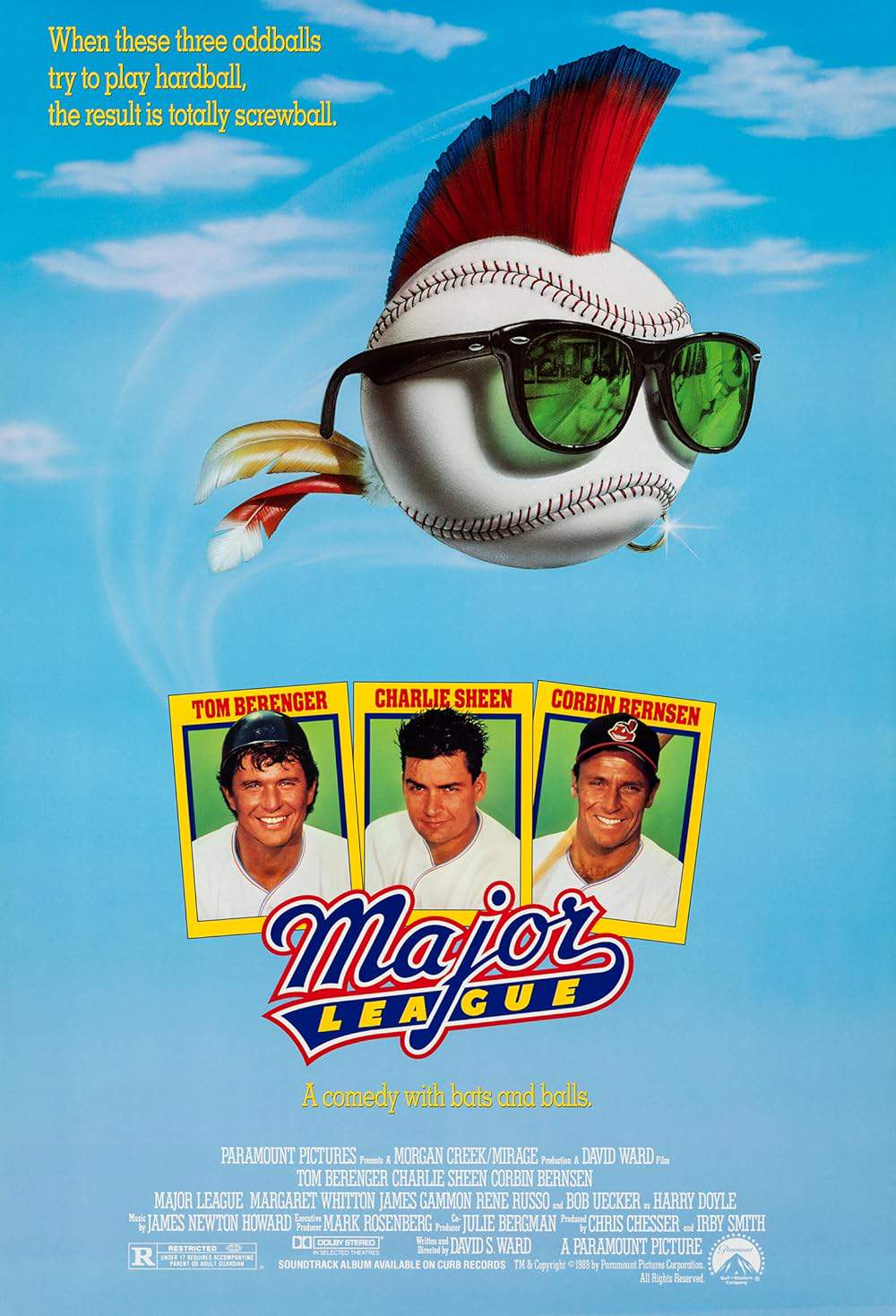
Major League (1989) movie poster

Plot Summary

Major League (1989) Plot Summary Explained

Release, runtime and language
1989 · 107 min
JustWatch #2,656 16
Directed by
David S. Ward
Starring
Tom Berenger, Charlie Sheen

Rachel Phelps, the new owner of the Cleveland Indians, devises a plan to drive away fans and move the team. She assembles a group of undesirable players, expecting them to perform poorly and guarantee a losing season. However, this unlikely team of misfits begins to find strength and camaraderie, unexpectedly challenging the owner’s scheme with their surprising determination and resilience.

On this page (7)
  1. 1 Where to watch
  2. 2 What happens: full plot
  3. 3 Plot questions answered
  4. 4 Movie threads
  5. 5 Movies like Major League
  6. 6 Categories
  7. 7 Every angle

Where to watch

Where to Watch Major League (1989)

Where can you watch Major League? Stream, rent or buy it in the US, including on YouTube TV, YouTube Free and Amazon Video: current JustWatch availability with up-to-date prices.

Streaming availability powered by JustWatch

Full plot summary · contains spoilers

What Happens in Major League: Full Plot Summary

The whole story of Major League (1989) explained, from the opening scene to the final frame: every key event, every twist and what it all adds up to. Read it as a quick recap before the sequel, to check a scene you missed, or to finally understand what really happened.

As the new baseball season begins, the Cleveland Indians are dealing with the repercussions of their prior triumph. Star pitcher Rick "Wild Thing" Vaughn (Tom Berenger) is becoming increasingly engrossed in the fame that comes with his celebrity status, which is taking a toll on his pitching finesse. Meanwhile, home run slugger Pedro Cerrano has undergone a significant change; he has swapped his fierce batting attitude for a calmer, Zen-like posture influenced by his recent foray into Buddhism. In the meantime, center fielder Willie Mays Hayes has opted to pursue a career in Hollywood, exchanging his baseball glove for a script, all while masking his ongoing injuries with an undeniable swagger.

Behind the scenes, team owner Rachel Phelps has shifted the franchise to Roger Dorn, a former player who has stepped away from the diamond to tackle the challenges of ownership. One of Dorn's initial moves is to recruit the egotistical Jack Parkman, a star catcher from the Oakland Athletics, which forces the aging team leader Jake Taylor (Charlie Sheen) to come to terms with the fierce competition for his old position. To worsen the situation, minor-league catcher Rube Baker finds himself invited to spring training despite his notorious inability to throw the ball effectively back to the pitcher.

As the Indians stumble through the beginnings of the season, Parkman’s arrogant demeanor begins to cast a dark shadow over the clubhouse, prompting manager Lou Brown to issue an indefinite suspension. However, Parkman soon gets traded to the Chicago White Sox, allowing Isuro Kamikaze Tanaka to join the team as a talented left fielder known for his dramatic outfield crashes.

While the team’s fortune continues to decline, Phelps capitalizes on the situation by selling the Indians back to Dorn, who decides to suit up again as a player while still managing the team. Following Lou Brown's heart attack, resulting from his frustrations with the team’s lackluster performance, Jake Taylor is faced with leading the team as the new manager, taking on the daunting challenge of restoring the team’s pride and performance.

Amidst the chaos, Rube’s misadventure with a Boston Red Sox fastball ignites tensions among the Indians. Hayes’ hesitation to take the field as a pinch-runner for his injured teammate sparks a heated confrontation between Vaughn and the other players, leading to an explosive team brawl that ends with their ejection. Rube's post-game outburst regarding their lack of enthusiasm serves as a wake-up call, pushing Hayes to step up for pinch-running duties in the next game. This moment inspires a stunning series of stolen bases that results in Cerrano delivering a game-winning home run, setting the Indians on a winning streak that secures them a second consecutive division title.

As the competition intensifies in the ALCS against the White Sox, Phelps’ insincere pep talk before Game 4 serves as a strategic maneuver to rattle the Indians. Cleveland manages to win the first three matches, but the White Sox launch a remarkable comeback that leads to a critical Game 7 in Cleveland. The night before this pivotal clash, Jake confronts Vaughn about his preparedness for relief pitching, only to be met with Vaughn’s laid-back response, inflaming Jake's frustrations regarding his performance.

When Game 7 begins, the White Sox initially take a 2-1 lead, but the Indians fight back to grab the advantage. With two outs in the top of the ninth and the go-ahead runners on base, Jake’s urgent call for Vaughn to secure the final out thus ensures a dramatic unraveling of events. In a strategic move, Vaughn chooses to walk the current batter, setting the stage for an iconic showdown against Parkman. With the fate of the game—and season—at stake, Vaughn rises to the occasion, striking out Parkman and propelling the Indians toward the World Series with a breathtaking victory.
Last updated: November 22, 2024 at 14:50

Was this helpful?

Plot questions answered

Major League Plot Explained: Your Questions Answered

The questions people ask most about Major League (1989): what happens in the confusing scenes, why the characters do what they do, the twists, hidden details and what the ending means. Each answer contains spoilers.

Q1

Why does Rachel Phelps want the Cleveland Indians to lose?

Rachel Phelps is the new team owner who deliberately tries to make the Cleveland Indians lose so she can relocate the franchise to Miami. She purposefully assembles a roster of undesirable players, believing this will drive away fans and justify moving the team to a new city.

  • rachel phelps
  • owner
  • relocate team
  • miami
  • sabotage
Q2

Why does Jake Taylor become the manager after Lou Brown?

Jake Taylor becomes the manager after Lou Brown suffers a heart attack due to the stress of managing the struggling team. Taylor, who was originally a player and team leader, steps up to fill the leadership void and guide the Indians through the remainder of the season.

  • jake taylor
  • manager
  • lou brown
  • heart attack
  • replacement
Q3

What triggers the Cleveland Indians' winning streak?

The winning streak begins after Rube Baker's post-game outburst criticizing the team's lack of enthusiasm. This prompts Willie Mays Hayes to step up as a pinch-runner, leading to a series of stolen bases that culminate in Pedro Cerrano hitting a game-winning home run.

Foreshadowing: Earlier in the season, Hayes hesitates to take the field as a pinch-runner, which creates tension with Vaughn and the other players.

  • winning streak
  • rube baker
  • hayes
  • cerrano
  • home run
Q4

Why does Rick Vaughn walk the batter in Game 7 before facing Jack Parkman?

In Game 7 of the ALCS, with the go-ahead runners on base and two outs, Jake Taylor calls for Vaughn to intentionally walk the current batter. This strategic move sets up the dramatic showdown between Vaughn and Parkman, allowing Vaughn to face the former Indian catcher for the final out.

  • game 7
  • vaughn
  • walk batter
  • parkman
  • alcs
Q5

Why does Pedro Cerrano change his batting approach?

Pedro Cerrano trades his aggressive batting style for a calmer, Zen-like posture after exploring Buddhism. This personal transformation raises concerns about his competitiveness, though he ultimately returns to his power-hitting form when the team needs him most during the winning streak.

  • pedro cerrano
  • zen
  • buddhism
  • batting
  • transformation
Q6

Why is Jack Parkman traded to the Chicago White Sox?

Jack Parkman is traded to the Chicago White Sox after manager Lou Brown suspends him indefinitely due to his arrogant and disruptive behavior in the clubhouse. His departure opens a roster spot for Isuro Kamikaze Tanaka to join the team.

  • jack parkman
  • trade
  • white sox
  • suspension
  • behavior
Q7

Why does Willie Mays Hayes leave baseball for Hollywood?

Willie Mays Hayes quits baseball to pursue an acting career in Hollywood, using his swagger to mask the injuries he sustained during his baseball career. His decision to pursue entertainment represents a shift away from his athletic career.

  • willie mays hayes
  • hollywood
  • acting
  • injuries
  • baseball
Q8

Why does Roger Dorn rejoin the Indians as a player?

Roger Dorn, who took over ownership from Rachel Phelps, decides to return to playing while simultaneously managing the team. This unusual dual role comes after Phelps sells the team back to him and he chooses to put on the uniform again despite his previous retirement from playing.

  • roger dorn
  • player
  • owner
  • management
  • return
Q9

How do the Indians reach the World Series?

The Indians secure their spot in the World Series by defeating the Chicago White Sox in Game 7 of the ALCS. Rick Vaughn strikes out Jack Parkman for the final out, completing a dramatic comeback and sending Cleveland to the championship.

  • world series
  • alcs
  • white sox
  • game 7
  • vaughn strikeout
Q10

Why does Rachel Phelps sell the team back to Roger Dorn?

Rachel Phelps sells the team back to Roger Dorn as the Indians' unexpected winning streak gains momentum. When the team begins performing better than anticipated, Phelps sees an opportunity to exit the situation by selling the franchise back to Dorn.

  • rachel phelps
  • roger dorn
  • sell team
  • ownership
  • trade
Q11

Why does Rick Vaughn's performance decline early in the season?

Rick Vaughn becomes distracted by his newfound celebrity status as 'Wild Thing,' which takes a toll on his pitching abilities. His focus shifts from baseball to enjoying fame, leading to concerns about his effectiveness on the mound.

  • rick vaughn
  • wild thing
  • celebrity
  • pitching
  • performance decline
Q12

Why does Lou Brown have a heart attack?

Manager Lou Brown suffers a heart attack due to the extreme stress of managing a struggling team that refuses to perform well despite his efforts. The frustration of dealing with the team's poor performance and internal conflicts leads to his collapse.

  • lou brown
  • heart attack
  • stress
  • manager
  • health

Movie threads

More Movies Like Major League, by Mood & Story

Curated lists built around what makes Major League tick: the same mood, the same kind of story or the same emotional payoff. Each list explains why these movies belong together.

Misfit Team Triumph Movies like Major League

Quirky individuals unite to overcome a shared challenge and prove their worth. If you enjoyed the underdog spirit of Major League, explore more movies where a team of lovable misfits bands together against the odds. These stories feature quirky characters, humorous bonding, and a triumphant, feel-good conclusion that celebrates teamwork and resilience.

  • triumphant
  • uplifting
  • comedic
  • energetic
  • hopeful
  • irreverent
  • Tone: light, uplifting, irreverent
  • Pacing: steady, building momentum
Why these movies?

The story pattern: Stories in this thread typically begin with a group of individuals who are initially written off or brought together under dubious circumstances. Through a series of challenges, they evolve from a collection of egos into a cohesive unit, culminating in a climactic success that validates their journey and solidifies their bond.

Why they belong together: These movies are grouped by their shared focus on the transformative power of teamwork among underdogs. They blend lighthearted humor with an uplifting, triumphant spirit, creating a consistently satisfying and energetic viewing experience centered on collective achievement.

Irreverent but Hopeful Comedies like Major League

Stories that balance witty, sometimes edgy humor with a genuinely optimistic core. Looking for more movies with the specific comedic tone of Major League? This list features films that mix witty, slightly irreverent humor with a fundamentally optimistic and uplifting story. If you liked the balance of jokes and heart, you'll find similar vibes here.

  • irreverent
  • comedic
  • hopeful
  • uplifting
  • energetic
  • witty
  • Tone: light, irreverent, hopeful
  • Pacing: steady
Why these movies?

The story pattern: The narrative pattern involves characters navigating a ridiculous or challenging situation with a sarcastic or laid-back attitude. While the tone is often humorous and slightly cynical, the underlying journey is one of growth and connection, leading to an ending that affirms positive values without becoming overly sentimental.

Why they belong together: These films are united by their unique tonal blend: the sharp, character-driven humor never undermines the story's genuine emotional warmth. The pacing is steady, allowing jokes and character development to coexist, resulting in a consistently entertaining yet heartening experience.

If you liked this

Movies Like Major League

Similar movies to Major League: the same genre, themes or kind of story. Each one comes with its own plot summary, timeline and ending explained.

Browse all movie summaries

Categories

Movie Lists Featuring Major League

Major League appears in these hand-built movie categories. Each one groups movies by a specific mood, theme or story type, with their plot summaries and endings explained.

View all movie categories

Every angle

Major League (1989) Explained: Plot, Timeline & Characters

Everything about Major League in one place: what happens in the plot summary, the timeline in chronological order, the characters and meaning and a spoiler-free summary. What's After the Movie adds the cast, box office and post-credit scenes.

Coming soon on iOS and Android

The Plot Explained Movie Summary App

Plot summaries, endings explained and timelines on your phone. Catch up on any movie in minutes, save your favorites and never miss a twist again.

Be the first to know when we launch. Your email stays private, always.

Learn more about the app