Plot Explained Spoilers guaranteed!
Plot Explained

Browse by genre

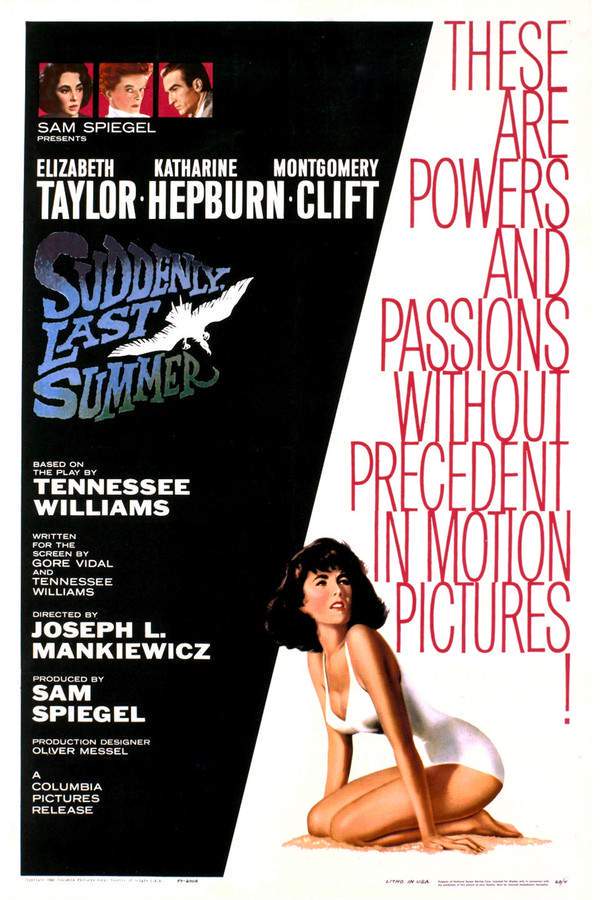
Suddenly, Last Summer (1960) movie poster

Characters & Themes

Suddenly, Last Summer (1960) Characters, Setting & Themes Explained

Release, runtime and language
1960 · 114 min · English
Loading streaming availability…
Directed by
Joseph L. Mankiewicz
Starring
Katharine Hepburn, Montgomery Clift, Mercedes McCambridge, Gary Raymond, Elizabeth Taylor, Albert Dekker

Following a disturbing family event in Europe, Catherine Holly suffers a psychological breakdown and is institutionalized. Her wealthy and controlling aunt, Violet Venable, attempts to bury the horrifying truth behind the incident, resorting to bribery and manipulation to control the narrative and silence those who might expose her secrets. As psychiatrist Dr. John Cukrowicz investigates Catherine's trauma, he uncovers a disturbing history and a shocking revelation that threatens to consume them all.

On this page (9)
  1. 1 Where to watch
  2. 2 Characters explained (3)
  3. 3 Where & when it takes place
  4. 4 Themes & meaning (3)
  5. 5 Character & meaning questions
  6. 6 The book behind the movie
  7. 7 Movie threads
  8. 8 Movies like Suddenly, Last Summer
  9. 9 Every angle
Loading streaming availability…

3 main characters · contains spoilers

Suddenly, Last Summer Characters Explained: Who Is Who

The main characters of Suddenly, Last Summer (1960), heroes and villains: what drives them, how they change over the course of the story and what each of them reveals about the film's bigger ideas.

  • Catherine Holly

    played by Elizabeth Taylor

    Catherine Holly, portrayed by Elizabeth Taylor, is a deeply troubled young woman whose emotional breakdown stems from the traumatic death of her cousin. Throughout the film, she displays both vulnerability and fierce defiance, reflecting her struggle for autonomy. Her character encapsulates the theme of mental instability while showcasing her journey from despair to empowerment as she confronts tragic truths.

    • 👩‍⚕️ Protagonist
    • ⚖️ Trauma
    • 🧠 Mental Health
  • Violet Venable

    played by Katharine Hepburn

    Violet Venable, played by Katharine Hepburn, is a wealthy and manipulative mother determined to control the narrative surrounding her son's death. Her character is characterized by a desperate need to maintain appearances and suppress the truth, revealing the lengths a parent might go to protect their image. This obsessive denial and twisted affection highlight her profound psychological complexities.

    • 👩‍👦 Mother
    • 🔒 Secrets
    • 😨 Manipulation
  • Dr. John Cukrowicz

    played by Montgomery Clift

    Dr. John Cukrowicz, portrayed by Montgomery Clift, is a young and idealistic surgeon torn between his professional ethics and the influence of Mrs. Venable. His character embodies a moral struggle as he wrestles with the implications of Catherine's lobotomy. Cukrowicz’s compassion and determination to uncover the truth drive the narrative forward, making him a pivotal figure in Catherine's journey.

    • 👨‍⚕️ Doctor
    • ⚖️ Ethics
    • 😔 Compassion

Last updated: October 22, 2024 at 19:28

Was this helpful?

Setting

Where and When Does Suddenly, Last Summer Take Place?

The setting of Suddenly, Last Summer (1960): the year and time period, the places and locations, and how they shape the characters, the mood and the tension of the story.

Time period

1937

The story is set in 1937, a time marked by significant social and political changes, including the aftermath of the Great Depression. This era often saw struggles related to mental health and societal pressures, particularly surrounding issues of class and sexuality, which are central themes in the film. The context amplifies the characters' emotional turmoil as they navigate their personal crises.

Location

New Orleans, Cabeza de Lobo, Spain

The film primarily takes place in New Orleans, a vibrant city known for its rich culture, historic architecture, and as a hub for jazz music. Cabeza de Lobo, a picturesque location in Spain, serves as the backdrop for the tragic events that unfold during Catherine and Sebastian's holiday. Both settings highlight the stark contrast between opulence and the darkness that resides within the human psyche.

  • 🏙️ New Orleans
  • ⛰️ Cabeza de Lobo
  • 🌍 Spain

Last updated: October 22, 2024 at 19:28

Was this helpful?

3 major themes

Suddenly, Last Summer Meaning: Themes & Message Explained

What is Suddenly, Last Summer (1960) really about? The emotional, social and philosophical themes the film keeps returning to, its symbolism and the message beneath the surface.

  • Mental Instability

    The theme of mental instability is prevalent throughout the narrative, as Catherine grapples with the trauma of her cousin's death. Her emotional breakdown leads to her confinement in a mental institution, showcasing the struggles faced by those who are misunderstood and marginalized in society. This exploration of mental health raises questions about societal perceptions and the treatment of individuals facing such crises.

  • Secrets and Deception

    The film delves into the theme of secrets and deception, particularly through Mrs. Venable's desperate attempts to hide the truth about Sebastian's death. The lengths to which she goes to maintain her illusion reveal the destructive power of denial. This theme underscores the consequences of concealing painful realities and the eventual need for truth to emerge.

  • Trauma and Recovery

    Trauma and recovery are central to Catherine's journey, as she confronts her horrifying memories that led to her breakdown. The process of unearthing the truth becomes a pathway to healing, illustrating how facing one's pain can lead to liberation. This theme emphasizes the resilience of the human spirit in the aftermath of unimaginable loss.

Last updated: October 22, 2024 at 19:28

Was this helpful?

Character & theme questions

Suddenly, Last Summer Characters & Meaning: Your Questions Answered

The questions people ask about Suddenly, Last Summer (1960): who the characters really are, their relationships, what the symbols mean, where it takes place and what the movie is really about. Each answer contains spoilers.

Q1

Where does the movie take place?

The film primarily takes place in New Orleans, known for its rich culture and historic architecture. The tragic events involving Catherine and Sebastian occur in Cabeza de Lobo, a seaside location in Spain. These contrasting settings emphasize the stark difference between opulence and the darkness within human psychology.

  • new orleans
  • cabeza de lobo
  • spain
  • setting
  • locations
Q2

What time period is the story set in?

The story is set in 1937, during the aftermath of the Great Depression. This era was marked by significant social and political changes, including struggles related to mental health and societal pressures surrounding class and sexuality, which are central themes in the film.

  • 1937
  • time period
  • 1930s
  • historical context
  • great depression
Q3

What are the main themes explored in the film?

The film explores three primary themes: mental instability, as Catherine grapples with trauma leading to her institutionalization; secrets and deception, shown through Mrs. Venable's desperate attempts to hide the truth about Sebastian's death; and trauma and recovery, as Catherine confronts her horrifying memories as a pathway to healing.

  • themes
  • mental instability
  • secrets
  • deception
  • trauma
  • recovery
  • mental health
Q4

Who is Violet Venable and what is her role?

Violet Venable is a wealthy and manipulative mother played by Katharine Hepburn. She is determined to control the narrative surrounding her son Sebastian's death, going to extreme lengths to maintain her social image and suppress the truth. Her obsessive denial and twisted affection reveal profound psychological complexity.

  • violet venable
  • character
  • mother
  • manipulation
  • secrets
  • Katharine Hepburn
Q5

Who is Catherine Holly and why is she significant?

Catherine Holly, portrayed by Elizabeth Taylor, is a deeply troubled young woman whose emotional breakdown stems from witnessing her cousin Sebastian's traumatic death. Her character represents the theme of mental instability while showcasing her journey from despair to empowerment as she confronts tragic truths.

  • catherine holly
  • character
  • elizabeth Taylor
  • trauma
  • mental instability
  • protagonist
Q6

Who is Dr. John Cukrowicz?

Dr. John Cukrowicz, played by Montgomery Clift, is a young and idealistic surgeon who investigates Catherine's trauma. He embodies a moral struggle between professional ethics and Mrs. Venable's influence, particularly regarding the threat of a lobotomy. His compassion drives the narrative forward as he works to uncover the truth.

  • dr john cukrowicz
  • montgomery clift
  • psychiatrist
  • surgeon
  • moral conflict
Q7

How does the film address mental health?

The film explores mental instability through Catherine's institutionalization following her emotional breakdown. It showcases the struggles faced by those misunderstood and marginalized in society, raising questions about how mental health was perceived and treated in the 1930s era.

  • mental health
  • mental illness
  • institutionalization
  • lobotomy
  • psychology
  • 1930s attitudes
Q8

What secrets is Mrs. Venable trying to hide?

Mrs. Venable is trying to bury the truth about how her son Sebastian died. Her desperate attempts to maintain her illusion reveal the destructive power of denial and the consequences of concealing painful realities, ultimately leading to the emergence of suppressed truth.

  • secrets
  • truth
  • cover-up
  • sebastian
  • denial
  • mrs venable
  • family secrets
Q9

What does the title "Suddenly, Last Summer" mean?

The title refers to the traumatic summer when Catherine witnessed Sebastian's death in Cabeza de Lobo. 'Suddenly' emphasizes the abrupt, shocking nature of the event that transformed Catherine's life and triggered the family's descent into deception and psychological turmoil.

  • title meaning
  • sebastian
  • summer
  • cabeza de lobo
  • trauma
  • symbolism
Q10

Why is New Orleans an important setting?

New Orleans serves as a vibrant backdrop that contrasts with the dark psychological events of the story. Its historic atmosphere and cultural richness create an oppressive, claustrophobic environment that reflects the characters' entrapment within societal expectations and their web of lies.

  • new orleans
  • setting
  • atmosphere
  • mood
  • contrast
  • southern gothic
Q11

What is the tone and mood of the film?

The film has a dark, oppressive tone rooted in themes of exploitation, denial, and severe trauma. The mood is overwhelmingly claustrophobic, with steady pacing through conversations and recollections that gradually reveal layers of mystery while maintaining psychological pressure.

  • tone
  • mood
  • atmosphere
  • darkness
  • psychological
  • oppressive
  • thriller
Q12

How does the film portray trauma and recovery?

Trauma and recovery are central to Catherine's journey as she confronts her horrifying memories that led to her breakdown. The process of unearthing the truth becomes a pathway to healing, illustrating how facing one's pain can lead to liberation, despite the heavy emotional cost.

  • trauma
  • recovery
  • healing
  • catherine
  • truth
  • confrontation
  • liberation

Movie threads

More Movies Like Suddenly, Last Summer, by Mood & Story

Curated lists built around what makes Suddenly, Last Summer tick: the same mood, the same kind of story or the same emotional payoff. Each list explains why these movies belong together.

Psychological thrillers about uncovering trauma like in Suddenly, Last Summer

Stories where characters must excavate traumatic memories to uncover a disturbing reality. If you liked the investigative tension and psychological manipulation in Suddenly, Last Summer, you'll find similar stories here. These movies focus on characters grappling with repressed memories and dark secrets, often within oppressive settings like mental institutions or gothic family homes, delivering a similarly intense and disturbing viewing experience.

  • psychologically intense
  • suspenseful
  • unsettling
  • claustrophobic
  • melancholic
  • disturbing
  • Tone: dark, psychologically intense
  • Pacing: steady, conversational
Why these movies?

The story pattern: The narrative follows an investigative structure, typically involving a professional or determined individual who interviews a traumatized subject. Through a series of tense conversations and flashbacks, a horrifying secret is slowly revealed, challenging the official narrative and confronting a corrupting influence. The climax is often the cathartic, yet devastating, verbalization of the repressed truth.

Why they belong together: These films are grouped by their shared focus on psychological mystery, the power dynamics between investigator, patient, and antagonist, and the slow-burn revelation of a deeply disturbing core truth. They create a similar feeling of oppressive suspense and psychological intensity.

Gothic family horror dramas like in Suddenly, Last Summer

Decadent, decaying families haunted by unspeakable secrets and psychological decay. Fans of the oppressive atmosphere and dark family dynamics in Suddenly, Last Summer will appreciate these movies. They explore similar themes of inheritance, repression, and grotesque secrets hidden within wealthy, decaying households, often with a melodramatic flair and a psychologically intense vibe.

  • oppressive
  • gothic
  • melodramatic
  • decadent
  • decaying
  • claustrophobic
  • Tone: dark, oppressive, melodramatic
  • Pacing: steady, atmospheric
Why these movies?

The story pattern: The plot revolves around the intrusion of an outsider or the rebellion of a family member, which threatens to expose a long-buried, often horrific, family secret. The setting itself—a mansion, an estate—becomes a character, reflecting the family's internal decay. The narrative builds towards a shocking revelation that symbolically or literally consumes the characters.

Why they belong together: These movies share a specific vibe: a blend of Southern Gothic or classic Gothic sensibilities with psychological horror. The similarity lies in the oppressive mood, the focus on a corrupt patriarchal/matriarchal figure, the theme of exploitation, and the use of shocking, symbolic secrets.

If you liked this

Movies Like Suddenly, Last Summer

Similar movies to Suddenly, Last Summer: the same genre, themes or kind of story. Each one comes with its own plot summary, timeline and ending explained.

Browse all movie summaries

Every angle

Suddenly, Last Summer (1960) Explained: Plot, Timeline & Characters

Everything about Suddenly, Last Summer in one place: what happens in the plot summary, the timeline in chronological order, the characters and meaning and a spoiler-free summary. What's After the Movie adds the cast, box office and post-credit scenes.

Coming soon on iOS and Android

The Plot Explained Movie Summary App

Plot summaries, endings explained and timelines on your phone. Catch up on any movie in minutes, save your favorites and never miss a twist again.

Be the first to know when we launch. Your email stays private, always.

Learn more about the app