











Plot Explained Spoilers guaranteed!
Plot Explained

Browse by genre

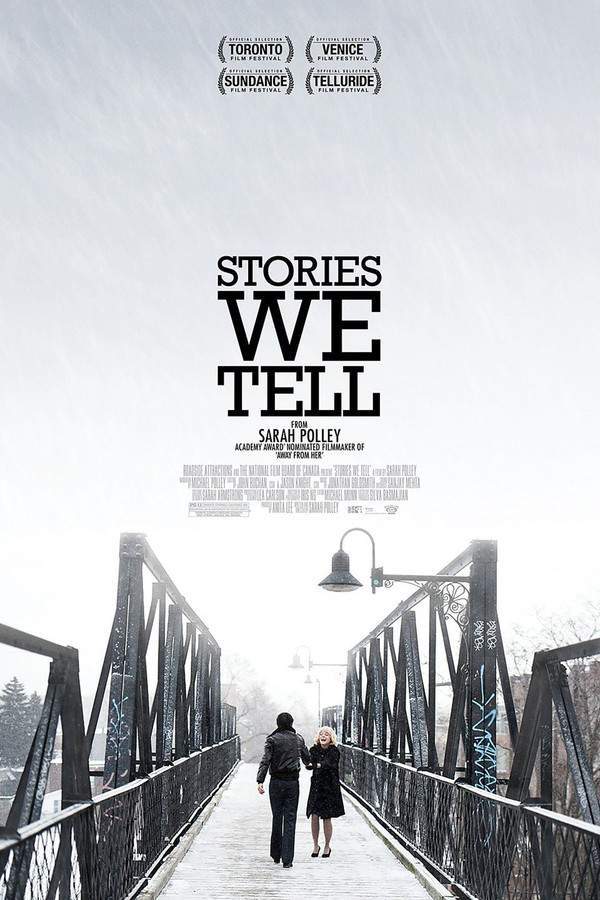
Stories We Tell (2013) movie poster

Spoiler-Free Summary

Stories We Tell (2013) Spoiler-Free Summary – What It's About

Release, runtime and language
2013 · 108 min · English
JustWatch #2,902 24
Starring
Harry Gulkin, John Buchan, Susy Buchan

Filmmaker Sarah Polley explores her family's past, uncovering long-held secrets and challenging her understanding of love, memory, and identity. Through interviews with relatives and archival footage, she pieces together a complex narrative that reveals surprising truths and redefines her perception of her own history. The film is a deeply personal and moving exploration of family dynamics and the power of storytelling.

On this page (7)
  1. 1 Where to watch
  2. 2 What it is about
  3. 3 Is it worth watching?
  4. 4 After you watch
  5. 5 Movie threads
  6. 6 Movies like Stories We Tell
  7. 7 Every angle

Where to watch

Where to Watch Stories We Tell (2013)

Where can you watch Stories We Tell? Stream, rent or buy it in the US, including on Lionsgate+ Amazon Channels, Hoopla and Kanopy: current JustWatch availability with up-to-date prices.

Streaming availability powered by JustWatch

Spoiler-free summary · safe to read

What Is Stories We Tell About? (No Spoilers)

The plot of Stories We Tell (2013) without spoilers: what it is about, who it follows and where it takes place, told without the twists or the ending. Enough to decide whether it is your next watch, not enough to ruin it.

In a quiet, sun‑dappled suburb where family photographs line the walls and home movies flicker on aging projectors, Sarah Polley turns the camera toward the people who shaped her earliest world. As a filmmaker, she steps back from the role of observer to become a participant, inviting relatives to sit across from her in living rooms that still echo with laughter and half‑remembered stories. The film’s structure feels like a collage of conversations, each fragment a thread that, when woven together, suggests a richer tapestry of love, loss, and the ways memory reshapes truth.

At the heart of this intimate portrait are the two pillars of her childhood: Michael Polley, a quiet, reflective presence whose voice carries the cadence of a memoir, and Diane Polley, a vibrant, nurturing figure whose warmth permeates the recollections of those around her. Their differing perspectives create a gentle tension, inviting the audience to wonder how separate experiences can coexist within a single family narrative. The documentary’s tone remains contemplative rather than investigative, emphasizing the act of listening as much as the act of filming.

The aesthetic leans heavily on nostalgia: Super‑8 grain, the soft glow of old slide projections, and the occasional pause as a relative searches for the right words. These visual choices lend the story a dream‑like quality, suggesting that every reclaimed memory is both a resurrection and an interpretation. The film’s rhythm is unhurried, allowing moments of silence to breathe, reflecting the real‑time process of piecing together a personal history that has long been held close.

Through careful pacing and a reverent approach to storytelling, the work invites viewers into a space where the ordinary becomes extraordinary. It poses subtle questions about whose voice gets heard, how stories evolve across generations, and what it means to confront the past with both curiosity and compassion.

Last updated: August 10, 2025 at 06:30

Was this helpful?

What to expect

Is Stories We Tell Worth Watching? What It Feels Like

Is it dark, sad, slow, intense or confusing? The mood of Stories We Tell (2013) in a few tags, without a word about how it ends. Each tag opens a list of movies that feel the same.

After you watch

Seen Stories We Tell? Now Read the Spoilers

Once you have watched Stories We Tell (2013), come back for the full story: the plot summary with spoilers, the timeline in chronological order, the characters and meaning.

Movie threads

More Movies Like Stories We Tell, by Mood & Story

Curated lists built around what makes Stories We Tell tick: the same mood, the same kind of story or the same emotional payoff. Each list explains why these movies belong together.

Movies about uncovering family secrets like Stories We Tell

Personal journeys of uncovering long-buried family secrets and redefining identity. If you were captivated by the investigative journey in Stories We Tell, you'll find similar themes in these films. This section features movies like Stories We Tell, where characters delve into personal histories, uncovering secrets that reshape their understanding of family and identity through documentary-style inquiry or narrative mystery.

  • investigative
  • revelatory
  • introspective
  • emotional
  • nostalgic
  • unsettling
  • Tone: melancholic, revelatory
  • Pacing: steady, methodical
Why these movies?

The story pattern: Narratives in this thread are structured as investigations, often non-linear, built from interviews, archival material, and personal testimony. The central conflict is the tension between remembered history and uncovered truth, leading to a climax of revelation that forces a reevaluation of the protagonist's entire world.

Why they belong together: These movies are grouped by their shared focus on a personal, emotional investigation. They blend documentary techniques or a journalistic approach with deeply human stories, creating a specific mood of introspective discovery where the past actively reshapes the present.

Movies about memory and subjective truth like Stories We Tell

Explorations of how personal stories and memories shape our fragile realities. For viewers who appreciated the layered storytelling of Stories We Tell, this section collects similar movies about memory and subjective truth. Discover films like Stories We Tell that explore how personal narratives are woven from fragile memories, creating ambiguous and emotionally heavy dramas about the stories we tell ourselves.

  • introspective
  • contemplative
  • complex
  • melancholic
  • ambiguous
  • thought-provoking
  • Tone: melancholic, ambiguous
  • Pacing: steady, contemplative
Why these movies?

The story pattern: The narrative pattern involves presenting a central event or history through multiple points of view, deliberately creating a fractured or layered story. The journey is less about finding one objective truth and more about understanding the power and fallibility of memory, often leading to an ambiguous or bittersweet conclusion.

Why they belong together: These films are connected by their philosophical inquiry into storytelling itself. They share a melancholic mood and a deliberate pacing that allows the audience to sit with the complexity of human recollection, making the act of remembering a central theme.

If you liked this

Movies Like Stories We Tell

Similar movies to Stories We Tell: the same genre, themes or kind of story. Each one comes with its own plot summary, timeline and ending explained.

Browse all movie summaries

Every angle

Stories We Tell (2013) Explained: Plot, Timeline & Characters

Everything about Stories We Tell in one place: what happens in the plot summary, the timeline in chronological order, the characters and meaning and a spoiler-free summary. What's After the Movie adds the cast, box office and post-credit scenes.

Coming soon on iOS and Android

The Plot Explained Movie Summary App

Plot summaries, endings explained and timelines on your phone. Catch up on any movie in minutes, save your favorites and never miss a twist again.

Be the first to know when we launch. Your email stays private, always.

Learn more about the app