Plot Explained Spoilers guaranteed!
Plot Explained

Browse by genre

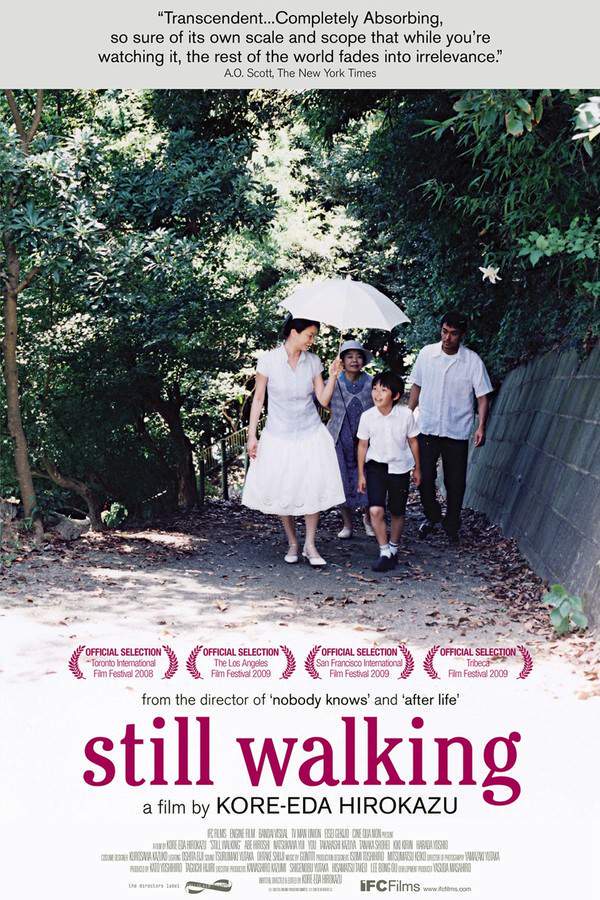
Still Walking (2009) movie poster

Timeline

Still Walking (2009) Timeline Explained – Every Event in Order

Release, runtime and language
2009 · 114 min · Japanese
Loading streaming availability…
Directed by
Hirokazu Koreeda

Fifteen years after the tragic drowning of their son Junpei, the Yokoyama family comes together to commemorate the anniversary of his death. As the siblings reunite with their spouses and children, long-buried grief and unresolved emotions come to the surface. Over the course of a single day filled with shared meals and storytelling, they confront their lingering pain, rediscover family bonds, and find solace in remembering the boy they lost.

On this page (5)
  1. 1 Where to watch
  2. 2 Events in order (15)
  3. 3 Timeline questions answered
  4. 4 Movie threads
  5. 5 Every angle
Loading streaming availability…

15 events in order · contains spoilers

Still Walking Timeline: Events in Chronological Order

Every key event of Still Walking (2009) in order, scene by scene, with when and where it takes place. Use it to untangle flashbacks, time jumps and parallel storylines, to refresh your memory before the sequel or to find the exact scene you are thinking of.

  1. Annual Family Reunion

    The Yokoyama family gathers annually to honor Junpei, their eldest son who tragically drowned while saving another boy twelve years ago. This poignant event serves as a bittersweet reminder of their loss and the enduring bonds of family.

  2. Kyohei and Toshiko's Struggles

    Kyohei, Junpei's father and a retired doctor, remains deeply affected by his son's death. His ongoing grief is compounded by resentment towards Ryota, who chose a career in art restoration rather than following in his father's medical footsteps.

  3. Ryota's New Family Dynamics

    As Ryota marries Yukari, a widow, he takes on the role of stepfather to her son Atsushi. This new family dynamic adds another layer of complexity to the already strained relationships among the family members during the reunion.

  4. Tensions with Yukari

    Kyohei and Toshiko initially harbor resentment towards Yukari due to superstitions surrounding their son's marriage to a widow. Over time, however, they begin to recognize her kindness and make efforts to bond with Atsushi.

  5. Family Reminiscing

    Throughout the reunion, the family shares stories about their lives and careers, engaging in both laughter and sorrow. Ryota struggles internally, feeling the weight of expectations and inadequacies in his chosen career path.

  6. Confronting Kyohei

    Tension escalates when Ryota discovers that Kyohei is encouraging Atsushi to pursue a career in medicine. Feeling frustrated and dismissed, Ryota attempts to confront his father about the pressure that comes from his expectations.

  7. Visit from Yoshio

    An unexpected guest arrives: Yoshio, the boy who Junpei saved. The family's reaction is mixed, with many harboring resentment towards him as they grapple with their unresolved feelings about Junpei's death.

  8. Toshiko’s Need for Blame

    Toshiko insists on keeping Yoshio in their lives, believing that blaming him helps her cope with Junpei's loss. Ryota, however, pleads with her to stop this cycle of blame, realizing it only exacerbates the family's sorrow.

  9. Dinner and Resentment

    As Chinami and her family depart, remaining members gather for dinner. During this meal, Yukari's inquiries into Kyohei and Toshiko's marriage reveal long-buried resentments, highlighting the tensions in their relationships.

  10. Sharing a Romantic Song

    In a tender moment, Toshiko shares their romantic song, *Blue Light Yokohama*, which stirs memories of jealousy and vulnerability. This revelation illustrates the depth of their relationship struggles over the years.

  11. Symbolic Butterfly

    That night, a butterfly enters the home and lands on Junpei’s photograph, prompting Toshiko to view it as a symbol of her lost son. Skeptical, Ryota captures and releases the butterfly as a tribute, symbolizing hope and remembrance.

  12. Advice on Starting a Family

    Toshiko encourages Ryota to start a family with Yukari, believing that a child could strengthen their bond and provide solace against possible future divorce. This advice emanates from her desire to see her family thrive despite past tragedies.

  13. Farewell and Reflection

    As Ryota, Yukari, and Atsushi bid farewell the next morning, Kyohei and Toshiko express eagerness to see them again. However, privately, Ryota and Yukari resolve to skip the New Year visit, leaving an air of unresolved tension.

  14. Life After the Reunion

    In a voiceover, Ryota reflects on the loss of Kyohei and Toshiko in the years following the reunion. Their family dynamics shift dramatically without them, as Ryota struggles with the unfulfilled promises he made during this poignant gathering.

  15. Paying Respects

    The film concludes with Ryota's family, now including a young daughter, visiting the Yokoyama family graves. This moment embodies the rituals and traditions he learned from his mother, symbolizing the enduring legacy of their family bonds and memories.

Last updated: November 16, 2024 at 14:41

Was this helpful?

Timeline questions answered

Still Walking Timeline Explained: Your Questions Answered

When does it happen, and why in that order? The questions people ask about the chronology of Still Walking (2009): time jumps, flashbacks, cause and effect between scenes and the correct order of events, each answered with spoilers.

Q1

Why does Ryota feel resentment toward his brother Junpei?

Ryota feels like he lived in Junpei's shadow throughout his childhood. Their parents, especially Kyohei, clearly favored Junpei, his belongings remain untouched as a shrine to his memory, and his death cemented him as the idealized son. Ryota also chose art restoration over medicine, a career path that disappointed his father, making him feel like he could never measure up to his dead brother's legacy.

  • ryota
  • junpei
  • sibling rivalry
  • family favoritism
  • resentment
Q2

Why are Kyohei and Toshiko initially cold toward Yukari?

They hold superstitious beliefs about Ryota marrying a widow. Traditionally in Japanese culture, marrying someone who has been widowed can be seen as bringing bad luck or impropriety into the family. This initial hostility gradually softens as they witness Yukari's genuine kindness and see her care for Atsushi.

  • yukari
  • superstitions
  • widow
  • marriage
  • family acceptance
Q3

What does the butterfly symbolize at the end of Still Walking?

The butterfly that lands on Junpei's photograph is interpreted by Toshiko as a sign that Junpei's spirit has returned to visit them. While Ryota is skeptical of this interpretation, he still captures and releases the butterfly respectfully, a gesture that bridges his rational viewpoint with his mother's need for spiritual comfort and connection to her lost son.

  • butterfly
  • symbolism
  • junpei
  • spirit
  • toshiko
Q4

Why does Toshiko insist on keeping Yoshio in their lives after Junpei's death?

Toshiko believes that holding onto someone to blame helps her cope with the unbearable pain of losing Junpei. She needs a target for her grief, someone to direct her anger toward rather than accepting the random, senseless nature of the drowning. Ryota pleads with her to stop inviting Yoshio, recognizing this cycle of blame only perpetuates the family's collective sorrow.

  • yoshio
  • blame
  • grief
  • toshiko
  • coping
Q5

Why do Ryota and Yukari decide not to visit for New Year after the reunion?

Despite promising Kyohei and Toshiko they would return for New Year, Ryota and Yukari privately decide to skip the visit. This reflects the unresolved tensions between Ryota and his parents, particularly his father's continued disappointment in him and the emotional exhaustion of navigating the family's grief dynamics. It represents Ryota's quiet rebellion and desire to create distance from the painful memories.

  • new year
  • visit
  • family tension
  • ryota
  • goodbye
Q6

Why does Kyohei want Ryota to become a doctor instead of an art restorer?

Kyohei is a retired doctor who represents traditional family values and legacy. He expected at least one son to continue the medical tradition, especially after losing Junpei. Ryota's choice to pursue art restoration instead feels like a rejection of the family path and adds to Kyohe's grief, he not only lost one son to death but feels the other chose to abandon his legacy.

  • kyohei
  • medicine
  • art restoration
  • career
  • father son
Q7

What is the significance of the song Blue Light Yokohama?

Blue Light Yokohama is the romantic song Toshiko shares during dinner, originally sung by Ayumi Ishida. The song carries deep personal meaning because Toshiko once heard Kyohei singing it with another woman, triggering her jealousy. This revelation exposes the hidden strains in their 40-year marriage and shows that even longstanding relationships harbor unresolved wounds.

  • blue light yokoyama
  • song
  • toshiko
  • kyohei
  • jealousy
Q8

How did Junpei die and why did he save Yoshio?

Junpei drowned while rescuing Yoshio, the boy who fell into the water twelve years ago. The exact circumstances aren't detailed, but Junpei, portrayed as the family's golden child, heroically attempted to save the younger boy and tragically died in the process. This act of sacrifice is why the family both mourns him and struggles with complicated feelings toward Yoshio.

  • junpei
  • drowning
  • yoshio
  • rescue
  • death
Q9

Why do Kyohei and Toshiko keep Junpei's belongings untouched?

Junpei's room and belongings remain exactly as he left them, serving as a shrine to his memory. This symbolizes the family's inability to fully process their grief and move forward. It also visually represents Kyohei and Toshiko's continued fixation on their lost eldest son, which contributes to Ryota's feeling of inadequacy and being living in his brother's shadow.

  • junpei
  • belongings
  • room
  • grief
  • memory
Q10

Why does Toshiko tell Ryota to have a child with Yukari?

Toshiko advises Ryota to start a family because she believes a child would strengthen his marriage and protect against divorce. Coming from a mother who lost a child, this advice reflects her fear of loss and her desire to see her surviving son build a stable, connected family unit that won't fall apart, essentially creating bonds that endure despite tragedy.

  • child
  • toshiko
  • advice
  • marriage
  • family
Q11

What happens after the reunion in Still Walking?

In voiceover, Ryota reveals that Kyohei and Toshiko both died a few years after this reunion. Despite the promises made during the gathering, Chinami never moved in and Ryota didn't fulfill certain commitments. The film ends with Ryota's own family, now including a young daughter, visiting the Yokoyama graves, showing that the cycle of family rituals and grief continues across generations.

  • ending
  • graves
  • death
  • ryota family
  • future

Movie threads

More Movies Like Still Walking, by Mood & Story

Curated lists built around what makes Still Walking tick: the same mood, the same kind of story or the same emotional payoff. Each list explains why these movies belong together.

Quiet Family Reunion Dramas like Still Walking

Stories where a family gathering uncovers generations of buried emotions. If you liked the intimate, melancholic portrayal of family in Still Walking, explore more movies like it. These similar family drama stories focus on reunions, subtle tensions, and the heavy emotional weight of shared history, offering a quiet and reflective viewing experience.

  • family dynamics
  • unspoken tension
  • melancholic
  • reflective
  • quiet
  • grieving
  • Tone: melancholic, reflective, tender
  • Pacing: slow, deliberate, observational
Why these movies?

The story pattern: These narratives typically unfold over a short period, often a single day or weekend, centered around a family event or ritual. The plot is driven by conversations and small interactions that gradually reveal the complex web of relationships, old wounds, and the struggle for connection between generations.

Why they belong together: They are grouped together by their shared focus on realistic family dynamics, a melancholic and reflective tone, and a slow, deliberate pacing that allows emotional nuance to emerge naturally from everyday situations.
Slow-Paced Films About Processing Grief like Still Walking

Films that use slow pacing to explore the quiet, lingering nature of loss. Find movies similar to Still Walking that share its contemplative approach to grief and loss. If you appreciated its slow pacing and heavy emotional weight, these films offer a comparable experience of sitting with sadness and finding bittersweet moments of connection.

  • grieving
  • melancholic
  • introspective
  • somber
  • contemplative
  • memory
  • Tone: melancholic, somber, bittersweet
  • Pacing: very slow, contemplative, immersive
Why these movies?

The story pattern: The narrative often avoids large, dramatic events, instead focusing on the interior lives of characters as they navigate the aftermath of a loss. The journey is internal and cyclical, moving through memories, regrets, and small steps toward acceptance, often leading to a bittersweet rather than cathartic conclusion.

Why they belong together: They share a specific combination of a slow, deliberate pace, a heavy emotional weight centered on sadness, and a tone that is deeply melancholic and introspective, creating a meditative space for exploring loss.

Every angle

Still Walking (2009) Explained: Plot, Timeline & Characters

Everything about Still Walking in one place: what happens in the plot summary, the timeline in chronological order, the characters and meaning and a spoiler-free summary. What's After the Movie adds the cast, box office and post-credit scenes.

Coming soon on iOS and Android

The Plot Explained Movie Summary App

Plot summaries, endings explained and timelines on your phone. Catch up on any movie in minutes, save your favorites and never miss a twist again.

Be the first to know when we launch. Your email stays private, always.

Learn more about the app