








Plot Explained Spoilers guaranteed!
Plot Explained

Browse by genre

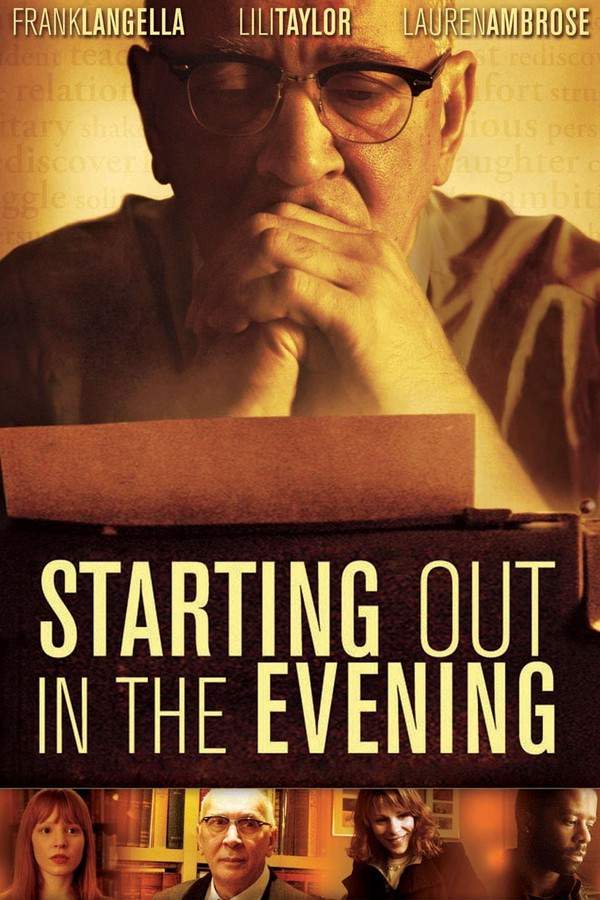
Starting Out in the Evening (2007) movie poster

Timeline

Starting Out in the Evening (2007) Timeline Explained – Every Event in Order

Release, runtime and language
2007 · 111 min · English
JustWatch #17,804 13
Directed by
Andrew Wagner

Leonard Schiller, a novelist facing a stalled career and a decade-long unfinished manuscript, finds comfort in his close relationship with his daughter, Ariel. The arrival of Heather Wolfe, an eager graduate student, offers a chance to restore his literary standing, but also disrupts his quiet life. He must then grapple with his artistic aspirations and the complexities of fame while confronting questions of identity and legacy.

On this page (6)
  1. 1 Where to watch
  2. 2 Events in order (11)
  3. 3 Timeline questions answered
  4. 4 Movie threads
  5. 5 Movies like Starting Out in the Evening
  6. 6 Every angle

Where to watch

Where to Watch Starting Out in the Evening (2007)

Where can you watch Starting Out in the Evening? Stream, rent or buy it in the US, including on Kanopy, Tubi TV and Amazon Video: current JustWatch availability with up-to-date prices.

Streaming availability powered by JustWatch

11 events in order · contains spoilers

Starting Out in the Evening Timeline: Events in Chronological Order

Every key event of Starting Out in the Evening (2007) in order, scene by scene, with when and where it takes place. Use it to untangle flashbacks, time jumps and parallel storylines, to refresh your memory before the sequel or to find the exact scene you are thinking of.

  1. Leonard's Final Novel

    Leonard Schiller, an aging author, is on the verge of completing his final novel. After years of not publishing anything new, he feels the weight of his previous acclaim and the pressure to finish this masterpiece.

  2. Heather's Arrival

    Heather, a vibrant graduate student, enters Leonard's life with the intention of studying his literary contributions for her thesis. Her admiration for Leonard’s works flattens him and sparks a new creative energy he hasn't felt in years.

  3. Growing Affection

    As Leonard grows accustomed to Heather's presence, he realizes that she is not just an admirer of his work but also has romantic feelings towards him. This revelation complicates their intellectual connection and deepens their bond.

  4. Intimate Night

    Heather's flirtations towards Leonard lead to an intimate encounter where they share a bed. This moment opens the door for a deeper emotional connection, and they awaken feeling a new comfort in their relationship.

  5. Confrontation About the Past

    Heather learns from an editor about Leonard's complicated marital history, prompting a confrontation. This confrontation stirs up intense emotions in Leonard, leading to a passionate kiss, which underscores their conflicting emotions.

  6. Thesis Draft Rejection

    After sharing her initial thesis draft with Leonard, Heather feels unsettled by the dynamic shift in their relationship. Despite his constructive feedback, she begins to place emotional distance between them, causing confusion.

  7. Leonard's Stroke

    Tragedy strikes when Leonard suffers a stroke, leading to an emergency hospital visit supported by Heather. This unexpected health crisis forces both Leonard and Heather to reevaluate the depth of their relationship.

    Where
    Hospital
  8. Recovery and Tension

    After a month of recovery, Leonard is overjoyed to see Heather again. However, an emotional incident occurs when he impulsively slaps her during a tender moment, creating an air of confusion and mistrust between them.

  9. Daughter's Support

    In a parallel narrative, Leonard's daughter shows her support by ensuring he attends his doctor's appointments. She navigates her desires and relationship, reflecting the interconnectedness of personal struggles.

  10. Trust in the Boyfriend

    Leonard, recognizing his limitations, entrusts his unfinished manuscript to his daughter’s boyfriend. This action signifies both vulnerability and a bittersweet hope that his legacy may continue through someone else.

  11. Reflections at the Typewriter

    The film concludes with Leonard preparing for bed but finding himself drawn back to his typewriter instead. In a moment of profound reflection, he chooses to write again, symbolizing a renewed commitment to his craft amidst life's chaos.

Last updated: November 04, 2024 at 03:02

Was this helpful?

Timeline questions answered

Starting Out in the Evening Timeline Explained: Your Questions Answered

When does it happen, and why in that order? The questions people ask about the chronology of Starting Out in the Evening (2007): time jumps, flashbacks, cause and effect between scenes and the correct order of events, each answered with spoilers.

Q1

Why does Heather become romantically interested in Leonard?

Heather is drawn to Leonard both intellectually and romantically. As a graduate student studying his work, she genuinely admires his literary achievements and sees him as a significant figure in literature. Her attraction appears to stem from a combination of intellectual admiration, fascination with his artistic legacy, and perhaps a desire to be connected to something meaningful and lasting through their relationship.

Foreshadowing: Early scenes show Heather's intense admiration for Leonard's published works, establishing her deep intellectual attraction.

  • Heather Leonard romance
  • graduate student relationship
  • older author attraction
Q2

Why does Leonard slap Heather after his stroke recovery?

Leonard's slap appears to be an emotional outburst triggered by overwhelming feelings following his health crisis. After experiencing a stroke and during a vulnerable moment of tender connection with Heather, he impulsively reacts with aggression, possibly due to frustration with his own mortality, physical limitations, or confusion about the boundaries of their relationship. The exact reason remains ambiguous, which adds to the emotional complexity of their dynamic.

Foreshadowing: Leonard earlier has an emotional outburst during the confrontation about his marital history, showing he struggles to contain intense feelings.

  • Leonard Heather conflict
  • stroke aftermath
  • emotional outburst
Q3

Why does Heather pull away after kissing Leonard?

After their passionate kiss, Heather becomes unsettled by the shifting dynamic in their relationship. She had initially approached Leonard as a student researching his literary career, but the romantic encounter complicates this professional boundaries. Learning about his complicated marital history and experiencing his emotional outburst likely made her realize the complexity and potential impropriety of their situation, causing her to create emotional distance.

Foreshadowing: Heather's confrontation about Leonard's marital history directly precedes the kiss and reveals she now knows personal details that complicate their relationship.

  • Heather distance
  • relationship boundaries
  • thesis advisor romance
Q4

Why does Leonard give his unfinished manuscript to his daughter's boyfriend?

Leonard entrusts his unfinished manuscript to his daughter's boyfriend as a gesture of trust and hope for his legacy. Recognizing his own mortality after the stroke and knowing he may not complete the work himself, he chooses someone he believes will see the project through to completion. This act represents both vulnerability, admitting he cannot finish alone, and a bittersweet hope that his literary legacy might continue through others.

Foreshadowing: Leonard's stroke forces him to confront his mortality and the possibility he may never finish his final novel.

  • unfinished manuscript
  • Leonard legacy
  • trust in boyfriend
Q5

What causes Leonard's stroke?

Leonard's stroke appears to be related to his age and underlying health issues rather than any single dramatic event. The film presents it as a sudden, unexpected medical crisis that underscores his vulnerability and mortality. It occurs after the emotional confrontation with Heather about his marital history, though the stroke itself is not directly caused by that event but rather represents the cumulative physical and emotional strain in his life.

Foreshadowing: The film establishes Leonard as aging and ailing from the opening scenes, hinting at health vulnerabilities.

  • Leonard health crisis
  • stroke cause
  • aging author
Q6

Why does Leonard return to writing at the end of the film?

After months of recovery and emotional upheaval, Leonard returns to his typewriter as a way to reclaim his identity and purpose. The ending symbolizes his renewed commitment to his craft despite knowing he may never achieve conventional success or complete his masterpiece. Writing represents his connection to meaning and legacy, and choosing to begin again, even facing a blank page, is his quiet personal victory over the despair that gripped him throughout the film.

Foreshadowing: Leonard's decades-long career as a novelist and his struggle to finish his final work establish writing as central to his sense of self.

  • Leonard writing return
  • creative renewal
  • ending symbolism
Q7

What does Heather discover about Leonard's marital history?

Heather learns from an editor about Leonard's complicated marital history, which includes details about his past marriages and relationships that contrast with the image she had formed of him. This revelation shocks her and prompts the confrontation that leads to Leonard's emotional outburst. The specifics are left somewhat vague, but it clearly involves past failures or secrets that challenge Heather's romantic perception of the aging author.

Foreshadowing: The film hints at Leonard's complicated past from the beginning, noting he has gone years without publishing while dealing with personal issues.

  • Leonard marriage history
  • editor revelation
  • past secrets
Q8

Why does Leonard's daughter stay with a boyfriend who doesn't want children?

Leonard's daughter faces a difficult choice between her desire to start a family and her rekindled relationship with an ex-boyfriend who is resolute about not wanting children. The film explores her internal conflict as she navigates this relationship despite fundamentally different life goals. Her choice to stay reflects the complexity of romantic relationships and the difficulty of letting go of someone she clearly still loves, even when their futures seem incompatible.

Foreshadowing: The film establishes early that the daughter desires to start a family, creating tension with her boyfriend's position.

  • daughter relationship
  • wanting children
  • boyfriend commitment issues
Q9

Why does Leonard initially resist working with Heather on her thesis?

Leonard is initially resistant to Heather's persistence because he has withdrawn from public attention after years without publishing. He feels the weight of his past acclaim but also the pressure of his unfinished manuscript and fading relevance. His resistance comes from a mixture of humility about his current creative stagnation and perhaps discomfort with renewed attention to work he fears may never be completed.

Foreshadowing: The opening establishes Leonard as an aging author on the verge of completing his final novel after years without publication.

  • Leonard isolation
  • creative block
  • literary legacy
Q10

Why does Heather stay to help Leonard after his stroke?

Heather remains to support Leonard during his recovery despite the emotional complexity of their relationship. Her decision shows genuine care for his wellbeing beyond any academic or romantic motivations. The stroke creates a vulnerable moment where past conflicts are temporarily set aside, and she steps into a caretaker role, demonstrating that their connection has depth beyond the complicated romantic dynamics.

Foreshadowing: After the slap incident, Heather feels she has crossed some unseen line, suggesting she recognizes her own responsibility in their turbulent dynamic.

  • Heather caretaker
  • stroke recovery
  • relationship depth

Movie threads

More Movies Like Starting Out in the Evening, by Mood & Story

Curated lists built around what makes Starting Out in the Evening tick: the same mood, the same kind of story or the same emotional payoff. Each list explains why these movies belong together.

Movies about aging artists and legacy like Starting Out in the Evening

Stories of aging creators grappling with their relevance and final works. If you liked the reflective journey of the aging writer in Starting Out in the Evening, you'll appreciate these movies about older artists, writers, and creators. This collection features similar character-driven dramas that explore themes of legacy, mortality, and the quiet struggle to find meaning in one's final chapters.

  • reflective
  • melancholic
  • introspective
  • quiet
  • somber
  • thoughtful
  • Tone: melancholic, reflective
  • Pacing: slow, contemplative
Why these movies?

The story pattern: Narratives in this thread typically follow an elderly protagonist, often in the arts or academia, who is prompted by an external event or person to reassess their life's work. The conflict is internal, driven by doubts about their impact and relevance, often leading to a bittersweet conclusion that values personal integrity over public acclaim.

Why they belong together: These films are grouped by their shared focus on the intimate, melancholic experience of aging within a creative or intellectual life. They possess a similar tone of thoughtful resignation, a slow, deliberate pace that allows for deep character study, and a medium emotional weight that deals seriously with themes of time and memory.

Movies with complex intergenerational relationships like Starting Out in the Evening

Where relationships across generations bring both inspiration and complication. Fans of the complicated dynamic between the older writer and younger student in Starting Out in the Evening will find more movies like it here. These films explore similar bittersweet stories of mentorship and connection across age gaps, where relationships challenge identities and lead to profound personal reassessment.

  • bittersweet
  • tender
  • complicated
  • introspective
  • melancholic
  • quiet
  • Tone: bittersweet, tender
  • Pacing: slow, deliberate
Why these movies?

The story pattern: The narrative pattern involves a younger, often idealistic character entering the life of an older, more settled individual. Their interaction disrupts the status quo, creating tension between inspiration and intrusion. The journey explores the complexities of this bond, which is fraught with differing expectations and unspoken desires, ultimately concluding with a realistic, often bittersweet acceptance of the relationship's limits.

Why they belong together: Movies in this thread share a specific emotional mix: a moderate level of romantic or intellectual tension combined with a deep, reflective sadness. They are united by a slow, character-driven pace that allows the relationship to develop subtly, and a tone that balances tender moments with a underlying melancholic reality.

If you liked this

Movies Like Starting Out in the Evening

Similar movies to Starting Out in the Evening: the same genre, themes or kind of story. Each one comes with its own plot summary, timeline and ending explained.

Browse all movie summaries

Every angle

Starting Out in the Evening (2007) Explained: Plot, Timeline & Characters

Everything about Starting Out in the Evening in one place: what happens in the plot summary, the timeline in chronological order, the characters and meaning and a spoiler-free summary. What's After the Movie adds the cast, box office and post-credit scenes.

Coming soon on iOS and Android

The Plot Explained Movie Summary App

Plot summaries, endings explained and timelines on your phone. Catch up on any movie in minutes, save your favorites and never miss a twist again.

Be the first to know when we launch. Your email stays private, always.

Learn more about the app