Year: 2010
Runtime: 77 mins
Language: English
Director: Martin Kemp
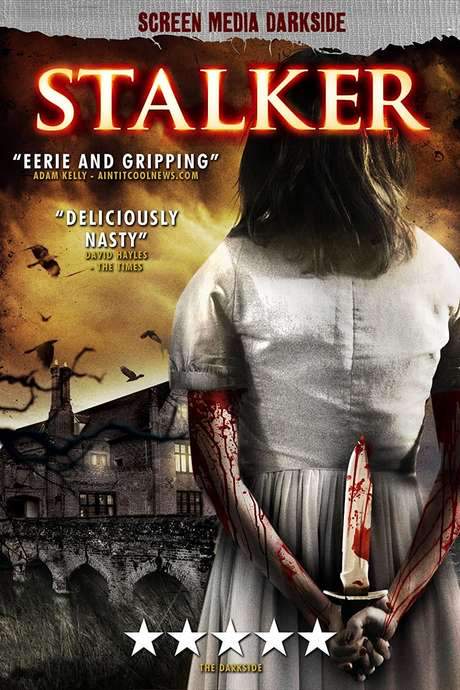
After a disturbing awakening, novelist Paula Martin retreats to the isolated family estate, Crows Hall, hoping the solitude will clear her mind and inspire her new book. She brings her assistant, Linda, to ease the pressure, but a series of murders soon erupts. As the bodies pile up, the once‑peaceful manor becomes a claustrophobic trap, forcing Paula to confront a relentless nightmare of horror and madness.
Get a spoiler-free look at Stalker (2010) with a clear plot overview that covers the setting, main characters, and story premise—without revealing key twists or the ending. Perfect for deciding if this film is your next watch.
In the wake of a disquieting awakening, Paula Martin, a celebrated novelist wrestling with a stubborn block, retreats to her family’s remote country estate, Crow’s Hall. The manor’s brooding Gothic architecture and the surrounding moorlands offer the seclusion she craves, promising a quiet space where imagination might finally flow. Yet the house itself seems to hold a memory of its own, its vaulted corridors and shadowed rooms echoing with the lingering weight of generations past.
Seeking both assistance and company, Paula invites her attractive assistant, Linda, to share the workload and the solitude. Their relationship quickly blurs the professional line, as Linda becomes both caretaker and confidante, slipping into Paula’s daily rhythm and even her private spaces. The pair settle into a fragile routine, with Linda’s presence offering comfort while simultaneously stirring unease in the already tense atmosphere of the manor.
As days stretch into nights, the isolation of Crow’s Hall begins to press on the edges of reality. The house’s endless rooms and dimly lit hallways amplify every whispered doubt, and Paula’s lingering nightmares seem to seep into the waking world. The once‑peaceful estate slowly transforms into a labyrinth of suppressed memories and growing psychological pressure, feeding the writer’s internal turmoil.
The film unfolds as a slow‑burning descent into atmospheric horror, where the line between creative inspiration and madness grows ever thinner. With every creak of the old timber and every flicker of candlelight, the audience is invited to feel the claustrophobic tension that grips Paula and Linda, hinting at secrets buried within both the house and the mind of the writer herself.
Last Updated: November 25, 2025 at 14:56
Discover curated groups of movies connected by mood, themes, and story style. Browse collections built around emotion, atmosphere, and narrative focus to easily find films that match what you feel like watching right now.
Psychological horror stories set in isolated, opulent estates that become inescapable traps.If you liked the oppressive, isolated setting of Stalker, you'll find more movies like it here. This list features psychological horror and thriller movies where an isolated estate or manor becomes a claustrophobic trap, intensifying the dread and psychological unraveling of the characters.
Stories in this thread typically involve a protagonist seeking solitude or safety in a remote, often luxurious, location, only to find that the setting itself facilitates their entrapment. The narrative unfolds as the environment becomes increasingly hostile, forcing a confrontation with a psychological or physical threat that was hidden in plain sight.
These movies are grouped by their shared use of a confined, opulent setting to generate tension and dread. The similarity in atmosphere—combining isolation with a gothic or modern-gothic sensibility—creates a coherent viewing experience focused on environmental horror and psychological suffocation.
Stories where a protagonist's reality disintegrates under the weight of trauma and manipulation.For viewers who enjoyed the psychological breakdown and identity crisis in Stalker, this section features similar movies about fractured psyches. Discover thrillers and horror films where characters grapple with dissociative disorders, gaslighting, and the terrifying blurring of reality.
The narrative pattern follows a character, often an artist or someone already vulnerable, whose sense of self is systematically dismantled. The story reveals layers of trauma or deception, leading to a climax where their identity is fundamentally challenged, often resulting in a bleak or tragic outcome.
These films share a deep focus on the internal landscape of a character breaking down. The similarity lies in the heavy emotional weight, the exploration of trauma, and the use of narrative twists that question the protagonist's—and the viewer's—understanding of what is real.
Don't stop at just watching — explore Stalker in full detail. From the complete plot summary and scene-by-scene timeline to character breakdowns, thematic analysis, and a deep dive into the ending — every page helps you truly understand what Stalker is all about. Plus, discover what's next after the movie.
Read a complete plot summary of Stalker, including all key story points, character arcs, and turning points. This in-depth recap is ideal for understanding the narrative structure or reviewing what happened in the movie.
Track the full timeline of Stalker with every major event arranged chronologically. Perfect for decoding non-linear storytelling, flashbacks, or parallel narratives with a clear scene-by-scene breakdown.
Discover the characters, locations, and core themes that shape Stalker. Get insights into symbolic elements, setting significance, and deeper narrative meaning — ideal for thematic analysis and movie breakdowns.
Visit What's After the Movie to explore more about Stalker: box office results, cast and crew info, production details, post-credit scenes, and external links — all in one place for movie fans and researchers.