Plot Explained Spoilers guaranteed!
Plot Explained

Browse by genre

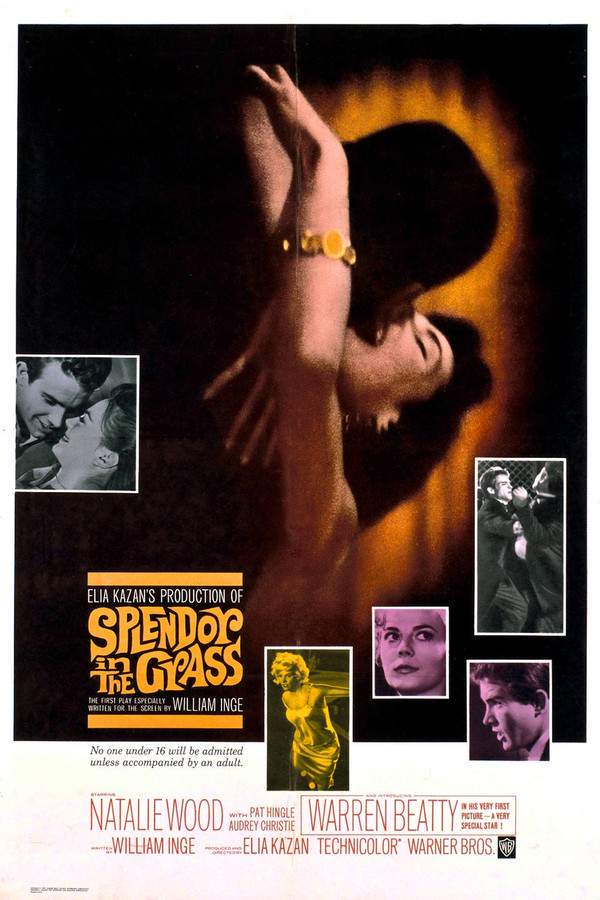
Splendor in the Grass (1981) movie poster

Timeline

Splendor in the Grass (1981) Timeline Explained – Every Event in Order

Release, runtime and language
1981 · 100 mins · English
Directed by
Richard C. Sarafian
Starring
Michelle Pfeiffer, Macon McCalman, Eva Marie Saint, Ned Beatty, David Carroll, Ally Sheedy

Two teenagers, in love in pre-Depression Kansas, cope with parental pressure and the strict sexual mores of the day.

On this page (5)
  1. 1 Events in order (14)
  2. 2 Timeline questions answered
  3. 3 Movie threads
  4. 4 Movies like Splendor in the Grass
  5. 5 Every angle

14 events in order · contains spoilers

Splendor in the Grass Timeline: Events in Chronological Order

Every key event of Splendor in the Grass (1981) in order, scene by scene, with when and where it takes place. Use it to untangle flashbacks, time jumps and parallel storylines, to refresh your memory before the sequel or to find the exact scene you are thinking of.

  1. Oil wealth shapes Kansas life and ambitions

    Set in 1927–1928 Kansas, oil wealth makes landowners and their families wealthy, shaping ambitions and social life. Deanie Loomis and Bud Stamper are a high school couple, each pulling toward different futures. Deanie's mother hovers over her, guiding her to stay 'good' by society's standards.

    When
    1927–1928
    Where
    Kansas
  2. Bud and Deanie's high school romance begins

    Bud is athletic and handsome, Deanie is sweet and idealistic, and they begin dating in school. Their romance is tempered by Bud's struggle to manage his stronger impulses and by the pressure of a wealthy, traditional upbringing. Deanie's mother continues to mold her sense of propriety as their relationship develops.

    When
    late 1927–1928
    Where
    Kansas
  3. New Year's Eve 1928 changes their relationship

    On New Year's Eve 1928, a messy encounter shifts their relationship and plunges Deanie into a deep mental funk. Bud wrestles with family dynamics—his reckless sister and his father's demand that he attend Yale. The incident marks the turning point that will separate their paths.

    When
    New Year's Eve 1928
    Where
    Kansas
  4. Bud contemplates Yale and other romance; Deanie's resistance

    Bud's father pushes him to Yale before marriage, while Deanie resists, hinting that other boys might be available. Bud tells a friend that Deanie is open to dating others. He then has the long-awaited encounter with Juanita, complicating the couple's dynamic.

    When
    early 1929
    Where
    Kansas
  5. Deanie's depression and hospital admission after the dance

    Deanie's struggle with the relationship leads to a dance that triggers a deep depression. She is hospitalized and later institutionalized for treatment. Bud, troubled by her condition, moves toward Yale but feels pulled between duty to his father and his own dreams.

    When
    late 1928–early 1929
    Where
    Kansas
  6. Bud at Yale and a new friendship

    At Yale, Bud fails all his classes and tries to redefine his life away from Kansas expectations. He befriends Angelina, a waitress at an Italian restaurant, and they form a friendship that hints at a new direction. His father remains determined, even visiting the dean to advocate for his son's future.

    When
    late 1929–1930
    Where
    New Haven, Connecticut
  7. Market crash and the father's downfall

    News arrives that the oil market is collapsing, and Bud's father refuses to cut losses. The financial ruin culminates when his father jumps from a hotel window, freeing Bud from his previous influence. Bud's Yale ordeal ends as he returns home.

    When
    1929–1930
    Where
    New Haven, Connecticut
  8. Bud returns home to Kansas

    Having escaped his father's control, Bud returns to Kansas. The end of his Yale chapter frees him to pursue a life of his choosing, far from the dean's office. The move marks a pivot toward independence and a redefinition of success.

    When
    1930
    Where
    Kansas
  9. Deanie remains in treatment for years

    Deanie spends more than two years in treatment, wrestling with family issues and her own psyche. Her parents visit, but she insists she needs continued care. While there, she meets a physician who asks for her hand in marriage, highlighting competing visions of love and control.

    When
    1930–1932
    Where
    Treatment facility (Kansas)
  10. Two and a half years later: Deanie returns home

    Two and a half years after entering treatment, Deanie goes home with friends in tow and drives to Bud's ranch despite her mother's wishes. She discovers Bud has started a family with Angelina and a modest life, revealing how much their paths have diverged.

    When
    1932–1933
    Where
    Bud's ranch, Kansas
  11. Bud's life with Angelina and a new family

    Bud has brought Angelina to Kansas and started a family, living a lifestyle far poorer than his youth. He seems content pursuing his own dream rather than returning to the old life with Deanie. The scene establishes the new, tempered reality of his life.

    When
    1932–1933
    Where
    Bud's ranch, Kansas
  12. Deanie accepts divergence and chooses her future

    Deanie meets Bud's family and accepts that their paths have diverged since high school. She tells Bud she will marry the man she met in treatment—the physician—emphasizing a future she has chosen.

    When
    1933
    Where
    Bud's ranch, Kansas
  13. Bud content with his chosen path

    Bud appears content with living his long-held dream, detached from the old life with Deanie. He accepts the new, simpler life, having achieved independence from his father's ambitions.

    When
    1933
    Where
    Kansas
  14. Closing theme: coming of age and Ode reference

    The film frames the lovers' journeys as a coming-of-age story and parallels Wordsworth's Ode: Intimations of Immortality from Recollections of Early Childhood. The parallel adds a reflective layer to the narrative.

Last updated: October 09, 2025 at 14:50

Was this helpful?

Timeline questions answered

Splendor in the Grass Timeline Explained: Your Questions Answered

When does it happen, and why in that order? The questions people ask about the chronology of Splendor in the Grass (1981): time jumps, flashbacks, cause and effect between scenes and the correct order of events, each answered with spoilers.

Q1

What happened on New Year's Eve 1928 that changed Deanie and Bud's relationship?

On New Year's Eve 1928, Bud and Deanie had a messy, impulsive encounter that shattered Deanie's sense of security. The exact details aren't shown, but the incident triggers Deane's descent into deep depression and fundamentally breaks the trust between them. Bud interprets the incident as a sign that Deanie might be open to dating others, which accelerates their separation.

Foreshadowing: Earlier scenes establish Bud's struggle with his impulses and Deanie's mother's intense focus on her daughter's 'good' behavior, setting up the collision that occurs that night.

  • New Year's Eve
  • Deanie
  • Bud
  • breakup
  • incident
Q2

Why was Deanie hospitalized and institutionalized after the dance?

Deanie's mental breakdown stems from the emotional devastation of the New Year's Eve incident and the subsequent realization that Bud told friends she was 'open to dating others.' The combination of lost innocence, betrayal, and her mother's strict expectations proved overwhelming. She was first hospitalized and then spent over two years in a treatment facility recovering.

Foreshadowing: Deanie's fragile emotional state and her mother's constant pressure to be 'good' foreshadow her inability to cope with the relational crisis.

  • Deanie
  • depression
  • hospitalization
  • mental health
  • institution
Q3

Why did Bud fail all his classes at Yale?

Bud didn't fail due to lack of intelligence. He failed because he was fundamentally disconnected from the academic path his father forced him onto. Yale represented his father's ambition for prestige, not Bud's own dreams. Without purpose or genuine investment in the curriculum, Bud simply stopped engaging, revealing his deeper struggle with identity and independence rather than academic ability.

Foreshadowing: From the start, Bud wrestles with his father's expectations versus his own impulses, suggesting the Yale path was never truly his choice.

  • Bud
  • Yale
  • failing classes
  • father
  • independence
Q4

Why did Bud's father jump from the hotel window?

Bud's father was financially ruined during the 1929 market crash. He refused to cut losses from his oil investments despite the collapse, and when the full extent of the financial disaster became clear, he took his own life. The pressure of losing his fortune, his son's failure at Yale, and his inability to control circumstances proved unbearable. His death freed Bud from his father's control but came at tremendous personal cost.

Foreshadowing: Earlier scenes show his father's stubbornness and insistence on controlling Bud's future, hinting at the rigidity that would lead to his ruin.

  • Bud's father
  • suicide
  • market crash
  • oil wealth
  • financial ruin
Q5

Why did Bud choose Angelina over waiting for Deanie?

By the time Bud returns home after his father's death, years have passed. Deanie remains in treatment, and Bud has had time to grow beyond his teenage dreams. Angelina represented a connection based on genuine equality and shared simplicity, contrasting with the pressurized expectations of his former life. When Deanie finally returns, Bud has already built a new life and family with Angelina, choosing contentment over the romantic ideal of his youth.

Foreshadowing: Bud's earlier struggle between desire and duty foreshadows his eventual choice to pursue a life true to himself rather than a romantic ideal.

  • Bud
  • Angelina
  • Deanie
  • relationship
  • choice
Q6

Why did Deanie agree to marry Dr. Judd instead of waiting for Bud?

Deanie spent over two years in institutional treatment, during which time Bud's circumstances changed dramatically. By the time she returned home, she discovered Bud had already married Angelina and started a family. Rather than waiting for a romantic理想 that no longer existed, Deanie chose to accept Dr. Judd's proposal, a man she met during treatment, choosing a stable future over clinging to youthful dreams.

Foreshadowing: Deanie's journey through treatment emphasizes her growth and healing, suggesting she had to let go of the past to move forward.

  • Deanie
  • Dr. Judd
  • marriage
  • waiting
  • acceptance
Q7

How did oil wealth shape Deanie and Bud's relationship?

The oil boom created a stark class divide between them, Bud's family gained wealth from oil drilling while Deanie's family ran a modest general store. This economic difference intensified family pressure on both sides: Bud's father pushed him toward prestigious goals like Yale, while Deanie's mother emphasized propriety. The wealth also made Bud's eventual fall more devastating when the market crashed, stripping away his father's power but also his security.

Foreshadowing: The opening scenes establish oil as the defining force shaping ambitions, social standing, and family expectations throughout the story.

  • oil wealth
  • Kansas
  • class difference
  • family pressure
Q8

What does the ending mean for Deanie and Bud's story?

The ending is bittersweet because both characters find contentment, but not with each other. Deanie accepts that her ideal love with Bud belongs to their youth, and she chooses to marry Dr. Judd, a real, achievable future. Bud finds peace living simply with Angelina, freed from his father's ambitions. The film suggests this divergence is not tragedy but growth: both learned to surrender youthful ideals for more honest, grounded lives.

Foreshadowing: The Wordsworth reference to 'Intimations of Immortality' foreshadows the theme of losing youthful beauty to gain adult clarity.

  • ending
  • bittersweet
  • acceptance
  • growth
  • contentment
Q9

What caused Deanie and Bud's paths to diverge so completely?

Their divergence resulted from multiple factors: Deane's mental health crisis required years of treatment, Bud's father forced him to Yale against his nature, the market crash destroyed Bud's family wealth, and time itself pulled them in different directions. Neither chose abandonment, external circumstances and personal growth reshaped their futures. By the time they reunited as adults, they had become different people with different needs.

Foreshadowing: The timeline shows how each major event, New Year's Eve, Yale, the crash, the institutionalization, pushed them further apart.

  • divergence
  • paths
  • growth
  • time
  • circumstances
Q10

What is the significance of the Wordsworth poem in the film?

The film references Wordsworth's 'Ode: Intimations of Immortality' to frame the story as a meditation on losing youthful idealism. The poem explores how childhood brilliance fades as we grow into adult reality, yet adults gain wisdom and perspective. This literary parallel suggests Deanie and Bud's story is not about tragedy but about the natural, bittersweet transition from the radiant dreams of youth to the clearer, more grounded happiness of adulthood.

Foreshadowing: The opening establishes the poetic, reflective tone that aligns with the Wordsworth theme of mature recollection.

  • Wordsworth
  • poem
  • immortality
  • youth
  • idealism

Movie threads

More Movies Like Splendor in the Grass, by Mood & Story

Curated lists built around what makes Splendor in the Grass tick: the same mood, the same kind of story or the same emotional payoff. Each list explains why these movies belong together.

Bittersweet Coming-of-Age Movies like Splendor in the Grass

Stories where youthful idealism is tempered by the realities of adulthood. If you liked the emotional journey in Splendor in the Grass, explore other movies that capture the bittersweet ache of growing up. These films feature deep first loves, societal pressures, and endings that acknowledge the loss of youthful dreams while finding a form of mature contentment.

  • yearning
  • nostalgic
  • melancholic
  • reflective
  • somber
  • patient
  • Tone: bittersweet, melancholic
  • Pacing: slow, patient
Why these movies?

The story pattern: These stories typically follow young protagonists over a significant period, charting their journey from naive idealism to a more complex, often resigned, understanding of the world. The central conflict arises from the clash between personal desire and external limitations, leading to a resolution that accepts life's compromises.

Why they belong together: Movies in this thread share a specific emotional trajectory: they begin with hopeful, intense romanticism and end with a mature, bittersweet realism. The pacing is often deliberate, allowing the emotional weight of time and change to settle, and the tone consistently balances yearning with acceptance.


Patient Dramas of Emotional Resilience like Splendor in the Grass

Character-focused films about enduring heartbreak and finding strength. Viewers who appreciated the patient exploration of mental health and resilience in Splendor in the Grass will find similar movies here. These character-driven dramas deal with heavy themes like emotional trauma but approach them with a reflective, medium-intensity tone.

  • somber
  • patient
  • reflective
  • psychological
  • melancholic
  • resilient
  • Tone: somber, reflective
  • Pacing: slow, character-driven
Why these movies?

The story pattern: The narrative pattern involves a protagonist facing a significant emotional crisis that challenges their sense of self. The story unfolds slowly, prioritizing internal growth over fast-paced plot, and often follows a nonlinear path to recovery, emphasizing the difficult process of building resilience rather than a quick fix.

Why they belong together: These films are grouped by their shared commitment to a slow, reflective pace and a medium emotional weight that allows for deep empathy without being overwhelming. They share a somber, thoughtful mood and a focus on the long-term process of coping with and overcoming psychological pain.

If you liked this

Movies Like Splendor in the Grass

Similar movies to Splendor in the Grass: the same genre, themes or kind of story. Each one comes with its own plot summary, timeline and ending explained.

Browse all movie summaries

Every angle

Splendor in the Grass (1981) Explained: Plot, Timeline & Characters

Everything about Splendor in the Grass in one place: what happens in the plot summary, the timeline in chronological order, the characters and meaning and a spoiler-free summary. What's After the Movie adds the cast, box office and post-credit scenes.

Coming soon on iOS and Android

The Plot Explained Movie Summary App

Plot summaries, endings explained and timelines on your phone. Catch up on any movie in minutes, save your favorites and never miss a twist again.

Be the first to know when we launch. Your email stays private, always.

Learn more about the app