Plot Explained Spoilers guaranteed!
Plot Explained

Browse by genre

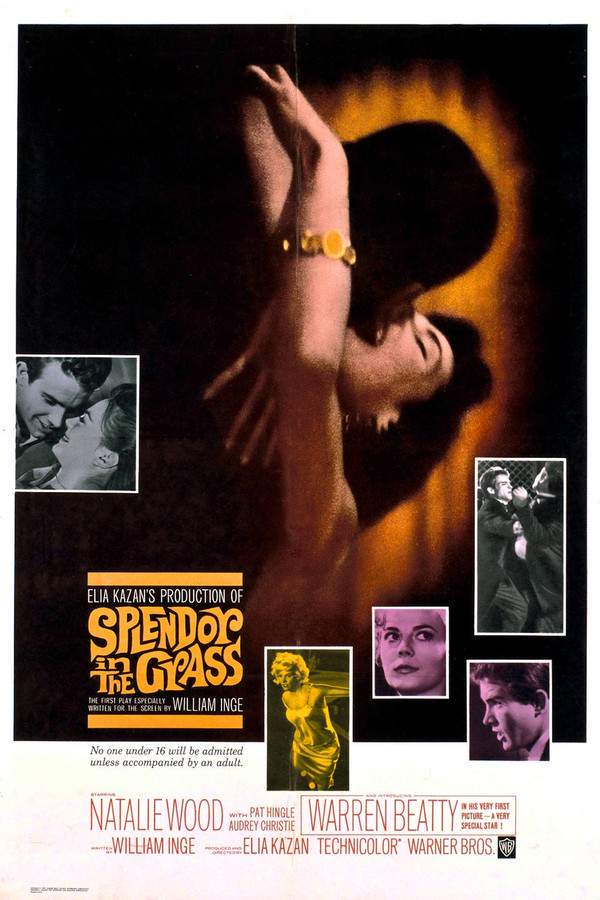
Splendor in the Grass (1961) movie poster

Plot Summary

Splendor in the Grass (1961) Plot Summary Explained

Release, runtime and language
1961 · 124 min · English
JustWatch #30,851
Directed by
Elia Kazan
Starring
Pat Hingle, Warren Beatty, Audrey Christie, Barbara Loden, Fred Stewart, Jan Norris

Set in the 1950s, this story follows Bud and Deanie, young lovers whose passionate relationship faces immense pressure from their families and societal expectations. As they struggle to maintain their bond, they confront the restrictive norms of the era, forcing them to navigate a complex landscape of parental disapproval and the challenges of growing up. Their all-consuming love is tested as they fight to preserve their connection amidst the changing times.

On this page (6)
  1. 1 Where to watch
  2. 2 What happens: full plot
  3. 3 Plot questions answered
  4. 4 Movie threads
  5. 5 Movies like Splendor in the Grass
  6. 6 Every angle

Where to watch

Where to Watch Splendor in the Grass (1961)

Where can you watch Splendor in the Grass? Stream, rent or buy it in the US, including on YouTube TV, Amazon Video and Apple TV Store: current JustWatch availability with up-to-date prices.

Streaming availability powered by JustWatch

Full plot summary · contains spoilers

What Happens in Splendor in the Grass: Full Plot Summary

The whole story of Splendor in the Grass (1961) explained, from the opening scene to the final frame: every key event, every twist and what it all adds up to. Read it as a quick recap before the sequel, to check a scene you missed, or to finally understand what really happened.

In Kansas, 1928, we meet Wilma Dean "Deanie" Loomis (Natalie Wood), a young girl who is navigating the tumultuous waters of adolescence while adhering to her mother’s advice to suppress her urges towards intimacy with her boyfriend, Bud Stamper (Warren Beatty). Bud, on the other hand, is caught in the throes of familial pressure, as his father, Ace (Pat Hingle), discourages him from pursuing Deanie, suggesting instead that he seek out another type of girl to fulfill his desires.

Bud's family is already burdened with shame regarding his older sister, Ginny (Barbara Loden), a lively flapper whose reckless lifestyle, marked by promiscuity and heavy drinking, has led to her recent return from Chicago. Speculation circulates in their small town about her controversial past—a rumored abortion that led to her marriage being annulled, leaving the family in disarray. As a result, Bud bears the brunt of his parents' disappointment and their high hopes for his future, compelling him to enroll at Yale University. The weight of these expectations becomes unbearable, triggering a physical and emotional breakdown that nearly costs him his life.

Seeking solace, Bud turns to another student, Juanita (Jan Norris), who willingly engages in a liaison with him. However, the heartbreak that follows when he ends things with her pushes Deanie into rebelliousness. She starts to mimic her sister's wild ways and even attends a party with another boy, "Toots" Tuttle. Deanie's encounter with Bud outside the party reveals her desperation for connection. When he rebuffs her advances, shocked at her behavior, she seeks comfort in Toots, culminating in a harrowing experience where she narrowly escapes a near-rape situation. In a moment of sheer despair, she attempts to end her life by plunging into a pond but is saved just in time from drowning over the falls.

Her parents, desperate to find a resolution, sell off their stock to pay for her institutionalization, an act that unwittingly brings them financial relief just before the 1929 stock market crash. Inside the institution, Deanie forms a significant bond with fellow patient Johnny Masterson (not included in the actor information), who grapples with his own issues stemming from parental expectations of becoming a surgeon.

Meanwhile, Bud’s time at Yale is fraught with failure, leading him to encounter Angelina (Zohra Lampert), a spirited young woman from an immigrant family who runs a local restaurant. As the world outside crumbles in the wake of the stock market crash, Bud’s father, Ace, succumbs to despair, resulting in a tragic end that forces Bud into the painful role of identifying his father’s body.

By 1931, Deanie's return home marks a bittersweet reunion. The Loomis family has suffered losses—Ace’s fortune has vanished, his wife has left, and Bud's sister has died in a tragic accident. With her mother trying to shield her from further heartache, Deanie is led to believe Bud is unreachable. However, her father’s honest approach reveals the truth: Bud is living on the old family farm now with Angelina and their young son.

During a poignant moment, Deanie and Bud confront the reality of their changed lives. Bud, now burdened with his own family’s responsibilities, shares with Deanie a profound sentiment: > "What's the point? You gotta take what comes." Their reunion underscores the inevitability of their separate paths; now both are resigned to a life where the intense passion of their youth cannot return. As Deanie departs with her friends, they inquire about her lingering feelings for Bud. She realizes a fondness remains, yet acknowledges the fire of their adolescent love has dimmed forever. Unanswered, her voice softly echoes the words from Wordsworth: "Though nothing can bring back the hour of splendor in the grass, glory in the flower, we will grieve not; rather find strength in what remains behind."
Last updated: November 08, 2024 at 00:04

Was this helpful?

Plot questions answered

Splendor in the Grass Plot Explained: Your Questions Answered

The questions people ask most about Splendor in the Grass (1961): what happens in the confusing scenes, why the characters do what they do, the twists, hidden details and what the ending means. Each answer contains spoilers.

Q1

Why did Bud reject Deanie at the party when he still loved her?

Bud was overwhelmed by his family's pressure to succeed and the shame from his sister Ginny's scandal. When he saw Deanie acting rebelliously at the party, he was shocked and felt she had betrayed his image of her. His rejection was actually a reaction to his own inability to protect her from his family's judgment combined with the emotional breakdown he was experiencing from Yale pressure.

Foreshadowing: Earlier, Bud's father Ace had discouraged him from pursuing Deanie, suggesting he find a different type of girl.

  • bud
  • deanie
  • rejection
  • party
  • love
Q2

What led Deanie to attempt suicide after the party?

Deanie was already struggling with suppressed desires and her mother's strict moral expectations. The chain of events, Bud rejecting her, the traumatic near-rape incident with Toots, and feeling completely abandoned, pushed her to desperate action. She ran to the pond and tried to drown herself, unable to cope with the shame and heartbreak.

Foreshadowing: Deanie's mother had warned her to suppress her urges, creating invisible pressure that built throughout the film.

  • deanie
  • suicide
  • attempt
  • pond
  • despair
Q3

Why did Ace Stamper kill himself after the stock market crash?

Ace had built his fortune through investments, and the 1929 crash wiped it out completely. The same man who had pressured Bud to attend Yale and maintain the family's respectability now faced total financial ruin. The shame and hopelessness became unbearable, leading him to take his own life.

Foreshadowing: Ace's entire character was defined by maintaining appearance and status, making his fall more devastating.

  • ace
  • suicide
  • stock market crash
  • financial ruin
Q4

Why did Deanie's parents send her to a mental institution?

After Deanie's suicide attempt, her parents were desperate to help her. They sold their stock holdings to pay for her treatment at an institution, which ironically saved them financially when the market crashed shortly after. The institutionalization was the only option they believed could restore her mental health.

Foreshadowing: The timeline shows the stock sale happened just before the 1929 crash, a coincidence that saved the Loomis family financially.

  • deanie
  • institution
  • mental health
  • parents
  • treatment
Q5

Why did Bud end up marrying Angelina instead of waiting for Deanie?

Bud's time at Yale was marked by emotional breakdown and failure. Angelina, who ran a restaurant, offered him stability and a different kind of life free from his family's expectations. By 1931, when Deanie returned, Bud had already built a life with Angelina and had a young son. Years had passed, and circumstances had permanently separated them.

Foreshadowing: Bud met Angelina during his struggles at Yale, seeking comfort away from his family's pressure.

  • bud
  • angelina
  • marriage
  • yale
  • settling down
Q6

How did Deanie finally learn the truth about Bud's situation?

Deanie's mother initially tried to protect her by saying Bud was unreachable, but her father told her the honest truth: Bud was living on the old family farm with Angelina and their child. This revelation came after Ace's death, the family's financial ruin, and Ginny's accidental death had all changed the Stamper family's circumstances.

Foreshadowing: The timeline shows multiple tragedies befell both families between 1929 and 1931, fundamentally altering everyone's path.

  • deanie
  • bud
  • truth
  • angelina
  • family farm
Q7

How did the timing of the stock market crash affect both families?

The crash devastated Ace Stamper's fortune, leading to his suicide. However, Deanie's parents had already sold their stock to pay for her institutionalization just before the crash. This timing meant the Loomis family was financially saved while the Stampers were destroyed, showing how chance determined each family's fate.

Foreshadowing: The timeline specifically notes the stock sale occurred right before the 1929 crash.

  • stock market crash
  • 1929
  • timing
  • finance
  • families
Q8

What happened to Ginny Stamper after she returned home?

Ginny, Bud's older sister, had returned in disgrace from Chicago with rumors of a controversial past including a rumored abortion and annulled marriage. By 1931, she had died in a tragic accident. Her story represented the family's shame that heavily influenced Bud's decisions and the pressure he faced from his parents.

Foreshadowing: Ginny's return and scandal were introduced early, establishing the family's troubled reputation.

  • ginny
  • death
  • accident
  • stamper family
  • scandal
Q9

What does the ending mean when Deanie says the fire has dimmed?

In their final meeting, Bud tells Deanie they must accept reality and stop chasing the past. When Deanie later tells friends she still has fondness for Bud, she acknowledges that the intense passion of their youth has faded forever. The Wordsworth quote about finding strength in what remains behind represents accepting loss while honoring what once was.

Foreshadowing: The entire film built toward this theme of lost youth and impossible love.

  • ending
  • passion
  • youth
  • acceptance
  • wordsworth
Q10

What caused Bud's breakdown at Yale that nearly killed him?

Bud was crushed by his father's expectations to succeed at Yale and restore family honor after Ginny's scandal. The pressure became so intense that he suffered a physical and emotional breakdown that nearly cost him his life. This crisis was the turning point that set him on a different path from Deanie.

Foreshadowing: The introduction of Bud showed him already under pressure from his father Ace regarding his future.

  • bud
  • yale
  • breakdown
  • pressure
  • father ace
Q11

Why did Deanie's mother try to hide Bud's location from her?

Deanie's mother, having already paid for her daughter's institutionalization and witnessed her suicide attempt, wanted to protect her from further emotional pain. She believed Bud was unreachable and thought keeping this truth would allow Deanie to move on without additional heartbreak.

Foreshadowing: Deanie's mother had spent the entire film trying to guide her daughter toward respectable behavior and away from emotional turmoil.

  • deanie mother
  • protection
  • hide truth
  • heartbreak
Q12

Why did Deanie start behaving rebelliously after Bud ended things?

When Bud broke off their relationship and then rejected her at the party, Deanie felt abandoned and desperate. She began mimicking her sister Kay's wild lifestyle, attending parties and seeking male attention. This rebellion was her way of coping with heartbreak and breaking free from her mother's restrictive rules.

Foreshadowing: Deanie's mother had warned her to suppress her urges, creating tension that exploded when Bud rejected her.

  • deanie
  • rebellion
  • party
  • behavior change
  • desperation

Movie threads

More Movies Like Splendor in the Grass, by Mood & Story

Curated lists built around what makes Splendor in the Grass tick: the same mood, the same kind of story or the same emotional payoff. Each list explains why these movies belong together.

Movies about oppressive melancholy and lost innocence like Splendor in the Grass

Stories where youthful passion is smothered by heavy societal pressures. If you were moved by the heavy emotional weight and melancholic tone of Splendor in the Grass, this collection features similar movies. Discover other powerful dramas where young characters face immense societal or familial pressures, leading to a heartbreaking loss of innocence. These films share a somber, yearning mood and a bittersweet or bleak conclusion.

  • melancholic
  • oppressive
  • somber
  • yearning
  • desperate
  • nostalgic
  • Tone: melancholic, somber, oppressive
  • Pacing: steady, deliberate
Why these movies?

The story pattern: Narratives in this thread typically follow young protagonists whose vibrant dreams and passionate relationships are systematically dismantled by external forces—be it family, social class, or strict moral codes. The journey is one of escalating despair, often involving mental health crises, as characters are forced to sacrifice their true selves for a painful, pragmatic survival.

Why they belong together: Movies are grouped here based on their shared, overwhelming mood of melancholic oppression, their focus on the loss of innocence, and their consistently heavy emotional weight. They all depict a central conflict between individual desire and societal constraint, resulting in a deeply resonant, somber experience.

Bittersweet and heavy coming-of-age stories like Splendor in the Grass

Character-driven stories of growing up that leave deep emotional scars. For viewers who appreciated the complex emotional journey and bittersweet ending of Splendor in the Grass, this section highlights similar coming-of-age movies. Explore films that delve into the darker, more painful side of growing up, dealing with themes like sexual repression, mental health, and the lasting impact of youthful trauma. These stories are character-driven and emotionally resonant.

  • somber
  • yearning
  • desperate
  • psychological
  • tragic
  • nostalgic
  • Tone: bittersweet, somber, yearning
  • Pacing: steady, character-driven
Why these movies?

The story pattern: The narrative pattern involves a protagonist's psychological and emotional development being central to the plot. Their journey is not about simple triumphs but about enduring profound pain, often related to first love or identity, and emerging forever changed. The endings are rarely happy; instead, they offer a complex, bittersweet resolution that acknowledges both survival and irrevocable loss.

Why they belong together: These films are connected by their focus on a painful, consequential coming-of-age arc, a moderate narrative complexity centered on character psychology, and a tone that balances deep sadness with a glimmer of resigned acceptance. The pacing is steady, allowing the audience to fully absorb the characters' heavy emotional burdens.

If you liked this

Movies Like Splendor in the Grass

Similar movies to Splendor in the Grass: the same genre, themes or kind of story. Each one comes with its own plot summary, timeline and ending explained.

Browse all movie summaries

Every angle

Splendor in the Grass (1961) Explained: Plot, Timeline & Characters

Everything about Splendor in the Grass in one place: what happens in the plot summary, the timeline in chronological order, the characters and meaning and a spoiler-free summary. What's After the Movie adds the cast, box office and post-credit scenes.

Coming soon on iOS and Android

The Plot Explained Movie Summary App

Plot summaries, endings explained and timelines on your phone. Catch up on any movie in minutes, save your favorites and never miss a twist again.

Be the first to know when we launch. Your email stays private, always.

Learn more about the app