Plot Explained Spoilers guaranteed!
Plot Explained

Browse by genre

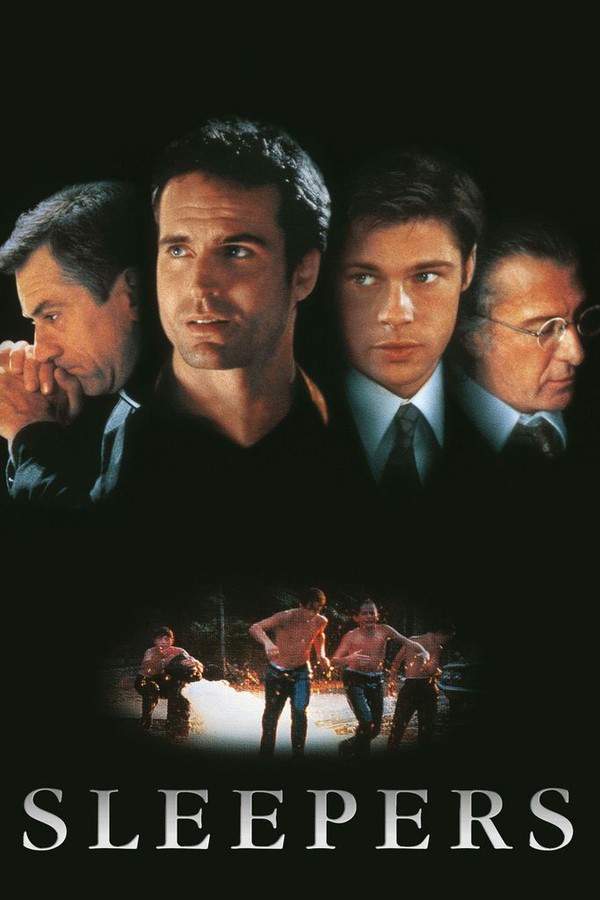
Sleepers (1996) movie poster

Plot Summary

Sleepers (1996) Plot Summary Explained

Release, runtime and language
1996 · 147 min · English
Directed by
Barry Levinson
Starring
Robert De Niro, Brad Pitt, Kevin Bacon, Jason Patric

Growing up together in Hell's Kitchen, four friends experience a traumatic event that leads to their placement in a reform school. There, they endure horrific abuse at the hands of the staff. Years later, two of the former students become dangerous hitmen, driven by a desire for retribution against those who tormented them. As they plot their revenge, an old friend now working as a prosecutor finds himself caught in the crossfire, forcing a reckoning with the past and the pursuit of justice.

On this page (6)
  1. 1 Where to watch
  2. 2 What happens: full plot
  3. 3 Plot questions answered
  4. 4 Movie threads
  5. 5 Movies like Sleepers
  6. 6 Every angle

Where to watch

Where to Watch Sleepers (1996)

Where can you watch Sleepers? Stream, rent or buy it in the US, including on Tubi TV, Amazon Video and Apple TV Store: current JustWatch availability with up-to-date prices.

Streaming availability powered by JustWatch

Full plot summary · contains spoilers

What Happens in Sleepers: Full Plot Summary

The whole story of Sleepers (1996) explained, from the opening scene to the final frame: every key event, every twist and what it all adds up to. Read it as a quick recap before the sequel, to check a scene you missed, or to finally understand what really happened.

Lorenzo "Shakes" Carcaterra, portrayed by Jason Patric, along with his childhood friends Thomas "Tommy" Marcano, played by Brad Pitt, Michael Sullivan, and John Reilly, navigates the gritty landscape of Hell's Kitchen in New York City during the mid-1960s. This neighborhood, a melting pot of immigrants, presents a brutal existence filled with the harshness of daily life, including encounters with domestic violence. However, amidst the chaos, the boys find solace and guidance from the local priest, Father Bobby Carillo, who keeps a watchful eye over them while they serve as altar boys at the church.

As their youth unfolds, the boys begin performing small jobs for a local gangster, King Benny. Their daring spirit leads them to engage in mischievous competitions, often manifesting in lighthearted pranks like sneaking into the priest's confession booth or creating peepholes in the walls of changing rooms. However, one fateful summer day in 1967, their innocent antics spiral out of control when an ill-fated prank involving a hot dog vendor results in grave consequences, injuring an elderly man. The punishment for their actions sends them to the Wilkinson Home for Boys in Upstate New York, where life takes a dark turn. Shakes receives a six-to-twelve-month sentence, while his friends face even longer terms.

The juvenile facility is a harrowing place filled with violent offenders and devoid of any rehabilitation. There, they endure a harrowing cycle of abuse at the hands of guards like Sean Nokes, Henry Addison, Adam Styler, and Ralph Ferguson. These traumatic experiences forge an unbreakable bond among the friends but leave deep scars on their friendship and psyche. Father Bobby does his best to provide comfort during this dark time, yet the fear instilled by Nokes keeps the boys from speaking out.

As they continue to suffer, Shakes demonstrates an aptitude for English, which catches the eye of Mr. Carlson, the teacher at the facility. Meanwhile, guard Marlboro is one of the few individuals attempting to shield the boys from the guards' brutality. Participating in the prison's annual football game becomes a glimmer of hope, but after the boys' success, retaliation follows, leading them into weeks of isolation and even more severe abuse.

In spring 1968, just before Shakes's release, he dares to suggest they report the abuse, but Michael dismisses the idea, fearing disbelief and apathy from the outside world. The night before Shakes is set to leave the facility, Nokes and other guards orchestrate a horrifying "farewell party," inflicting the worst assault on the boys yet.

Fast forward to 1981, the tides have turned. John and Tommy, now entrenched in a life of crime, encounter Sean Nokes in a Hell's Kitchen bar. Igniting a fierce confrontation, they execute revenge by killing him in plain sight. Meanwhile, Michael, now serving as an assistant District Attorney, manipulates the case with the intent to sabotage the prosecution, seeking retribution for their years of suffering.

With calculated precision, Mike and Shakes form a plot to hold accountable all those who wronged them. With the help of lifelong allies and a washed-up attorney named Danny Snyder, they orchestrate a plan that involves strategic legal maneuvers to exonerate John and Tommy and bring the guards to justice.

As the courtroom drama unfolds, characters like Ralph Ferguson become unwitting pawns in their scheme, breaking down under pressure and admitting to their heinous acts. Ultimately, Father Bobby, after much soul-searching, decides to provide a false alibi for John and Tommy, swearing they were with him at a Knicks game when the shooting occurred. This leads to their acquittal; however, the repercussions for the guards are swift and brutal as well.

In the aftermath, Mike resigns from his legal career, seeking peace as a carpenter in the English countryside. Tragically, the impacts of their past loom large, leading John to a premature death fueled by alcohol and Tommy meeting a violent end shortly after their victory in court. The echoes of their shared trauma linger, marking them forever as victims turned avengers.

Last updated: November 03, 2024 at 12:13

Was this helpful?

Plot questions answered

Sleepers Plot Explained: Your Questions Answered

The questions people ask most about Sleepers (1996): what happens in the confusing scenes, why the characters do what they do, the twists, hidden details and what the ending means. Each answer contains spoilers.

Q1

Why were the four friends sent to Wilkinson Home for Boys?

The boys were sent to Wilkinson Home for Boys as punishment for a prank that went wrong in summer 1967. While performing a mischievous stunt involving a hot dog vendor, their ill-fated prank resulted in an elderly man being injured. This incident led to the court sentencing them to the reform school, with Shakes receiving a six-to-twelve-month sentence and his friends receiving even longer terms.

  • hot dog vendor incident
  • 1967
  • sentencing
  • reform school
  • punishment
Q2

Why didn't the boys report the abuse at the reform school when Shakes suggested it?

When Shakes proposed reporting the abuse just before his release in spring 1968, Michael dismissed the idea because he feared the outside world would not believe them. The boys had been conditioned by guard Sean Nokes to remain silent, and Michael believed authorities would view them as troublemakers rather than victims, making their claims easy to dismiss.

Foreshadowing: Earlier in the facility, Nokes had used threats and violence to ensure the boys' silence, creating an environment of terror that continued even after their potential release.

  • reporting abuse
  • Michael Sullivan
  • fear
  • silence
  • Nokes control
Q3

How did Michael become an assistant District Attorney and help the group?

After leaving Wilkinson Home, Michael Sullivan pursued a legal career and eventually became an assistant District Attorney. In 1981, when John and Tommy killed Sean Nokes, Michael used his position to manipulate the case. He strategically sabotaged the prosecution against his childhood friends, working to ensure they would not be convicted for the murder.

  • Michael Sullivan
  • assistant DA
  • legal career
  • case manipulation
  • prosecution
Q4

Why did Father Bobby provide John and Tommy with a false alibi?

Father Bobby Carillo provided a false alibi for John and Tommy because he was consumed by guilt over his failure to protect the boys during their time at Wilkinson Home. After witnessing the horror they endured and being unable to stop it, he felt morally obligated to help them avoid prison time for killing Nokes, even if it meant committing perjury.

Foreshadowing: Throughout their time at the facility, Father Bobby had tried to provide comfort but was powerless to stop the guards' brutality, a helplessness that haunted him.

  • Father Bobby Carillo
  • false alibi
  • Knicks game
  • guilt
  • perjury
  • moral obligation
Q5

What was the 'farewell party' that occurred before Shakes' release?

The farewell party was a horrific retaliation orchestrated by guard Sean Nokes and other staff the night before Shakes was set to leave Wilkinson Home. It was the worst assault the boys endured during their entire time at the facility, a brutal attack that left them deeply scarred and fearful as Shakes prepared to leave.

Foreshadowing: This attack came after the boys had succeeded in the prison's annual football game, which had triggered previous brutal retaliation from the guards.

  • farewell party
  • Sean Nokes
  • night before release
  • brutal assault
  • final attack
Q7

What happened to each of the four friends after the trial?

After their acquittal, the friends' lives took different tragic turns. Michael resigned from his legal career and moved to the English countryside to become a carpenter, seeking peace away from his past. However, John died prematurely from alcoholism, and Tommy was killed in a violent confrontation shortly after their courtroom victory, showing how the trauma from Wilkinson Home continued to consume them.

  • aftermath
  • Michael carpenter
  • John death alcoholism
  • Tommy death
  • tragic endings
Q8

Why did John and Tommy decide to kill Sean Nokes in the bar?

In 1981, John and Tommy encountered Sean Nokes in a Hell's Kitchen bar. Fueled by years of trauma and a burning desire for retribution, they confronted him and killed him in plain sight. This act represented the culmination of their suffering, their need for revenge against the man who had inflicted the worst abuse on them at Wilkinson Home.

Foreshadowing: Nokes had been the primary architect of their suffering, orchestrating the farewell party and ensuring the boys lived in constant fear during their time at the facility.

  • Sean Nokes bar
  • revenge killing
  • 1981
  • Hell's Kitchen
  • retribution
Q9

What triggered the guards' severe retaliation after the football game?

The prison's annual football game provided a rare moment of success and unity for the boys. However, their victory angered the guards, particularly Sean Nokes, who could not tolerate the boys experiencing any form of triumph or happiness. Following their win, the guards unleashed brutal retaliation, subjecting the boys to weeks of isolation and even more severe abuse as punishment for daring to succeed.

  • football game
  • victory
  • retaliation
  • Nokes anger
  • isolation
  • abuse punishment
Q10

What was the boys' relationship with King Benny?

As children in Hell's Kitchen during the mid-1960s, the boys performed small jobs for local gangster King Benny. This early involvement with organized crime exposed them to the underworld and drew them deeper into a life of crime, though their activities remained relatively minor compared to what lay ahead.

  • King Benny
  • Hell's Kitchen
  • childhood jobs
  • gangster
  • early crime involvement
Q11

Why did John and Tommy become dangerous hitmen as adults?

John and Tommy became entangled in a life of crime as adults, eventually becoming dangerous hitmen. Their transformation was directly shaped by the traumatic experiences at Wilkinson Home, where the brutal abuse they suffered forged an unbreakable bond but also left deep psychological scars that drove them toward violence and retribution.

Foreshadowing: The abuse at the facility created unbreakable bonds among the friends while simultaneously warping their paths in life.

  • hitmen
  • John Reilly
  • Tommy Marcano
  • trauma
  • transformation
  • adult crime

Movie threads

More Movies Like Sleepers, by Mood & Story

Curated lists built around what makes Sleepers tick: the same mood, the same kind of story or the same emotional payoff. Each list explains why these movies belong together.

Movies about childhood trauma and revenge like Sleepers

Characters haunted by past abuse methodically seek brutal, morally complex justice. Explore movies like Sleepers where a traumatic past ignites a grim quest for retribution. If you were drawn to the harrowing depiction of abuse and its violent consequences, you'll find similar stories here. These films delve into the psychological scars of trauma and the morally fraught path of vigilante justice, often questioning whether revenge can ever truly heal old wounds.

  • harrowing
  • vengeful
  • traumatic
  • grim
  • tense
  • brutal
  • Tone: dark, grim, vengeful
  • Pacing: steady, methodical
Why these movies?

The story pattern: The narrative typically unfolds in distinct acts: an idyllic or innocent childhood is shattered by a traumatic event, followed by a period of suffering and survival. A significant time jump then reveals the adult characters, whose lives are profoundly shaped by their past. The central plot involves a carefully planned, often legally dubious, scheme for revenge against their tormentors, culminating in a confrontation that tests their morality and sense of justice.

Why they belong together: These films are grouped by their core focus on the cause-and-effect relationship between profound childhood trauma and adult violence. They share a dark, grim tone, high emotional intensity, and a steady pacing that allows the weight of the past to build methodically toward a cathartic, yet often bittersweet, reckoning.

Thrillers about legal corruption and moral compromise like Sleepers

Stories where the legal system is broken, and characters must corrupt it to find a twisted form of justice. Find thrillers and crime dramas similar to Sleepers, where the pursuit of justice requires morally compromising the legal system itself. If you liked the tense courtroom maneuvering and the theme of using the law's flaws against corrupt figures, this thread is for you. These movies explore the murky waters of vigilante justice within a broken system.

  • tense
  • cynical
  • morally ambiguous
  • procedural
  • gritty
  • corrupt
  • Tone: dark, tense, cynical
  • Pacing: steady, procedural
Why these movies?

The story pattern: The plot revolves around a central injustice that the established legal system is unwilling or unable to rectify. A protagonist, sometimes a lawyer or prosecutor, becomes an inside agent who knowingly subverts the law—through fabricated evidence, manipulated testimony, or covert alliances—to engineer a specific outcome. The narrative builds tension around the high-risk deception, culminating in a resolution that provides a form of justice but leaves the characters' integrity in ruins.

Why they belong together: Movies in this thread are united by their exploration of systemic failure and the ethical compromises required to navigate it. They share a tense, cynical atmosphere, a steady pacing that builds towards a legal climax, and a morally complex, often bittersweet, conclusion where the line between hero and villain is blurred.

If you liked this

Movies Like Sleepers

Similar movies to Sleepers: the same genre, themes or kind of story. Each one comes with its own plot summary, timeline and ending explained.

Browse all movie summaries

Every angle

Sleepers (1996) Explained: Plot, Timeline & Characters

Everything about Sleepers in one place: what happens in the plot summary, the timeline in chronological order, the characters and meaning and a spoiler-free summary. What's After the Movie adds the cast, box office and post-credit scenes.

Coming soon on iOS and Android

The Plot Explained Movie Summary App

Plot summaries, endings explained and timelines on your phone. Catch up on any movie in minutes, save your favorites and never miss a twist again.

Be the first to know when we launch. Your email stays private, always.

Learn more about the app