Plot Explained Spoilers guaranteed!
Plot Explained

Browse by genre

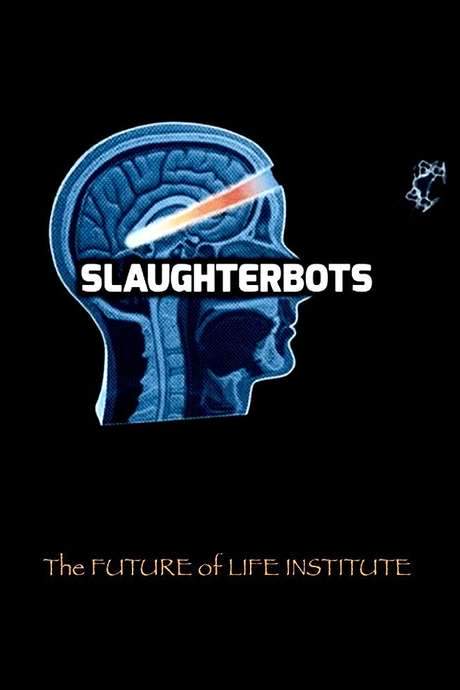
Slaughterbots (2017) movie poster

Timeline

Slaughterbots (2017) Timeline Explained – Every Event in Order

Release, runtime and language
2017 · 8 mins · English
Loading streaming availability…
Directed by
Stewart Sugg
Starring
Tim Ahern, David Alexander, Cristina Dohmen, Leo Flanagan, Bruce Lester-Johnson, Janice Ahern

A computer science professor at UC Berkeley contributed to a concerning video depicting a future where devastating autonomous drones replace nuclear weapons. The video illustrates swarms of tiny, virtually unstoppable drones capable of inflicting massive casualties – potentially wiping out half a city. The professor, Stuart Russell, has stated that this technology is already being developed and presents a significant threat.

On this page (5)
  1. 1 Where to watch
  2. 2 Events in order (14)
  3. 3 Timeline questions answered
  4. 4 Movie threads
  5. 5 Every angle
Loading streaming availability…

14 events in order · contains spoilers

Slaughterbots Timeline: Events in Chronological Order

Every key event of Slaughterbots (2017) in order, scene by scene, with when and where it takes place. Use it to untangle flashbacks, time jumps and parallel storylines, to refresh your memory before the sequel or to find the exact scene you are thinking of.

  1. A Near Future Dystopia Begins

    The film opens in a Black Mirror-style near future, introducing a world where advanced technology has transformed warfare. The setting establishes an atmosphere of tech-driven unease and plausible danger.

    When
    Near future
  2. Palm-Sized Autonomous Drones Introduced

    Tiny palm-sized autonomous drones are revealed as the technology at the center of the story. These compact machines are capable of independent operation, making them cheap and easy to deploy at scale.

  3. Facial Recognition and Shaped Explosives

    The drones are shown to use facial recognition technology combined with shaped explosives. This allows them to identify and precisely eliminate specific targets with lethal accuracy.

  4. Programming Targeted Assassinations

    The drones can be programmed to seek out and eliminate known individuals or entire classes of individuals. One example shown is targeting anyone wearing an enemy military uniform, demonstrating how the technology enables mass discrimination-based killing.

  5. The Tech Executive's Pitch

    A tech executive presents a sales pitch claiming that nuclear weapons are now "obsolete." He argues that a $25 million order of these "unstoppable" drones could kill half a city, framing them as a devastating new standard of warfare.

  6. Comparing Drones to Nuclear Weapons

    The executive's presentation drives home the terrifying scalability of the technology. Where nuclear weapons were once the ultimate threat, swarms of inexpensive autonomous drones are presented as a cheaper and more accessible means of mass destruction.

  7. The Technology Falls Into the Wrong Hands

    As the video unfolds, the drone technology is re-purposed by unknown parties for malicious ends. What was presented as a military product becomes a tool for political violence and assassination.

  8. Assassination of Political Opponents

    The drones begin targeting political opponents, escalating from sitting congressmen to ordinary citizens. The technology enables anyone with a grievance to silently eliminate their enemies.

  9. Student Activists Targeted via Facebook

    Student activists are identified and assassinated through their Facebook profiles. The drones' facial recognition cross-references social media data, showing how publicly available personal information becomes a death sentence.

  10. Swarms Demonstrating Coordination

    In a key scene, the swarming drones coordinate with each other to gain entrance to a building. This demonstrates the collective intelligence and collaborative capability of the autonomous machines.

  11. Blasting an Entry Point

    A larger drone blasts a hole through a wall of the targeted building. The coordinated breach is designed specifically to give the smaller drones access to the interior and their victims inside.

  12. Small Drones Swarm Inside

    Following the breach, the smaller drones stream through the hole in the wall to carry out their mission. The scene illustrates how the swarm operates as a single, relentless unit with no way for the targets to escape.

  13. Russell's Warning Begins

    Following the dramatization, a forty-second entreaty by Russell addresses the audience directly. He states that the short film is more than just speculation, showing the results of integrating and miniaturizing technologies that already exist today.

  14. AI's Enormous Potential and Great Danger

    Russell acknowledges that AI's potential to benefit humanity is enormous, even in the field of defense. However, he warns that allowing machines to choose to kill humans would be devastating to our security and freedom.

Last updated: October 11, 2026 at 16:44

Was this helpful?

Timeline questions answered

Slaughterbots Timeline Explained: Your Questions Answered

When does it happen, and why in that order? The questions people ask about the chronology of Slaughterbots (2017): time jumps, flashbacks, cause and effect between scenes and the correct order of events, each answered with spoilers.

Q1

How do the autonomous drones identify their targets?

In Slaughterbots, the drones use facial recognition technology combined with shaped explosives to identify and eliminate specific individuals. They can be programmed to hunt known people by appearance or to target entire categories based on visible traits, such as anyone wearing an enemy military uniform. Once activated, the swarm operates independently and requires no human operator to confirm a kill.

  • facial recognition
  • autonomous drones
  • target identification
  • shaped explosives
  • programmed targeting
Q2

Why does the executive claim nuclear weapons are obsolete?

The tech executive argues that nuclear weapons are obsolete because a $25 million fleet of palm-sized lethal drones could theoretically kill half the population of a city. He frames the drones as a cheaper, more precise, and more scalable alternative to traditional weapons of mass destruction. The pitch is designed to convince military buyers that autonomous swarms replace the strategic role once held by nuclear arsenals.

  • nuclear weapons obsolete
  • drone warfare
  • autonomous weapons
  • mass destruction
  • military technology
Q3

How are student activists tracked through Facebook?

The film shows the drones cross-referencing facial recognition data against social media profiles, particularly Facebook. By matching a person's face to their publicly available online identity, the system can locate and assassinate activists who never appeared on any traditional target list. The scene demonstrates how ordinary social media activity can become a death sentence once facial recognition is weaponized.

  • facebook assassination
  • social media targeting
  • facial recognition
  • activist drone
  • political killing
Q4

What makes the drone swarms so difficult to stop?

The drones in Slaughterbots are small, cheap, autonomous, and operate in coordinated swarms. Their palm-sized form makes them nearly impossible to detect or shoot down individually, and their collective behavior lets them overwhelm defenses through sheer numbers. Once deployed, there is essentially no way for targets to evade a swarm that can simultaneously identify and strike from multiple angles.

  • unstoppable drones
  • swarm intelligence
  • autonomous weapons
  • drone threat
  • mass casualties
Q5

How do the drones breach a secure building?

The breach is a coordinated swarm operation shown in the film. A larger drone blasts a hole through the building's wall, and the smaller palm-sized drones immediately stream through the opening to reach targets inside. The sequence illustrates how the swarm acts collectively to bypass physical security that would stop a conventional attack.

Foreshadowing: The executive's claim that the drones are 'unstoppable' is demonstrated when they successfully breach a fortified building with no casualties on their side.

  • drone swarm breach
  • coordinated attack
  • building infiltration
  • swarm tactics
  • autonomous assault
Q6

What is Stuart Russell's warning at the end?

After the dramatization, UC Berkeley professor Stuart Russell warns that the scenario shown is not science fiction but a plausible outcome of integrating and miniaturizing technologies that already exist today. He argues that allowing machines to autonomously choose to kill humans would devastate global security and freedom. Russell offers no solution, only a stark call for the audience to take the threat seriously.

  • stuart russell
  • AI warning
  • autonomous weapons
  • machine killing
  • AI danger
Q7

Why does the film show assassinations escalating from politicians to students?

The escalation illustrates how the technology inevitably expands beyond controlled military use. Once the drones can target anyone identifiable through facial recognition and social media data, political cleansing extends from sitting congressmen to ordinary activists who simply hold views someone wants silenced. The progression is meant to show that the technology does not stay confined to its original buyers.

Foreshadowing: The executive's pitch mentions targeting entire 'categories' of people, foreshadowing the indiscriminate political violence that follows.

  • political cleansing
  • target escalation
  • drone assassination
  • activist targeting
  • weapon proliferation
Q8

Who repurposes the military drone technology for political killings?

Slaughterbots leaves the perpetrators intentionally unknown, showing that the technology inevitably falls into the wrong hands after being marketed as a military product. The point is that any actor with access to the swarm, whether political operatives, extremist groups, or rogue governments, can retool it for targeted assassinations. The anonymity of the killers emphasizes that the threat comes from the weapon itself, not any single user.

  • drone proliferation
  • autonomous weapon misuse
  • political assassination
  • rogue actors
  • weapon diversion
Q9

Why is the $25 million price point important in the pitch?

The $25 million figure is used to emphasize accessibility. Compared to the enormous cost of developing and maintaining nuclear arsenals, the executive argues that a relatively small investment gives a buyer the ability to massacre half a city. The number is meant to demonstrate that autonomous swarms democratize mass destruction, putting city-level killing power within reach of far more actors than ever before.

  • drone cost
  • 25 million
  • mass destruction cost
  • weapons accessibility
  • nuclear comparison
Q10

Why can the drones target people based on what they're wearing?

Mentioning uniform-based targeting demonstrates the drones' ability to kill by category rather than by name. This capability shows how the weapons can be programmed for discrimination-based mass killing, enabling atrocities against entire groups identified by appearance alone. It is one of the most disturbing features of the technology because it removes the need for any human judgment about who deserves to die.

  • category targeting
  • uniform-based killing
  • discrimination attacks
  • mass killing capability
  • autonomous targeting

Movie threads

More Movies Like Slaughterbots, by Mood & Story

Curated lists built around what makes Slaughterbots tick: the same mood, the same kind of story or the same emotional payoff. Each list explains why these movies belong together.

Movies about AI and autonomous weapons like Slaughterbots

Films where machines decide who lives or dies and nobody can pull the plug. If Slaughterbots left you disturbed, these science fiction films explore the same near-future anxiety around autonomous weapons, lethal drone swarms, and military artificial intelligence. Expect serious, often documentary-style stories that imagine what happens once software, not soldiers, is making life-or-death decisions. Perfect for fans of techno-thrillers about surveillance, targeted killings, and the political fallout of weaponized AI.

  • dystopian
  • ominous
  • AI dread
  • oppressive
  • unsettling
  • chilling
  • Tone: tense, bleak, clinical
  • Pacing: fast and pressurized
Why these movies?

The story pattern: These narratives usually open with a calm, persuasive voice, a corporate pitch, a tech demo, or a policy briefing, before showing what the technology actually does to people. The escalation is unbroken: a demonstration turns lethal, a defensive tool becomes a mass killing instrument, and by the end the audience is staring at the wreckage. The 'villain' is rarely a person. It is a system, a swarm, or a line of code that humans built and can no longer override, leaving the conclusion to land as both warning and verdict.

Why they belong together: They share a clinical, ominous tone, near-future settings, and a focus on autonomous systems rather than charismatic human antagonists. Pacing tends to stay fast and pressurized because the threat feels built-in and accelerating, not hypothetical. They also share the same emotional core: the slow dread of watching humanity quietly hand over life-and-death decisions to software it barely understands and cannot reliably stop.
Heavy, bleak cautionary films like Slaughterbots

Short, dense stories that show the worst unfolding and refuse to offer comfort. If Slaughterbots was difficult to shake, these films and shorts deliver the same wallop: fast, intensely bleak cautionary stories about technology, politics, or humanity heading somewhere terrible. They are not really made to be enjoyed. They are made to be remembered, and they end with mass casualties, lost control, or the warning that nobody is going to stop what is coming. Great for viewers who want movies like Slaughterbots that prioritize impact over comfort.

  • bleak
  • urgent
  • anxious
  • chilling
  • heavy
  • relentless
  • Tone: bleak, tense, somber
  • Pacing: fast, compressed, relentless
Why these movies?

The story pattern: These narratives open with what looks like a normal pitch, news segment, or training video, and then escalate without pause. A demonstration becomes a massacre, a defense becomes an assassination tool, and the climax is often the moment the system works exactly as designed. There is no third-act rescue because the story is not asking whether things can be stopped, it is showing what happens if they are not. The protagonist, if there is one, is usually a presenter or witness rather than a hero.

Why they belong together: They share an unmistakable emotional signature: high intensity compressed into a tight runtime, unresolved bleak endings, and a refusal to provide comfort. The pacing is deliberately relentless because the filmmakers want the viewer to feel the inevitability of the threat rather than be entertained by it. They are grouped together because they produce the same gut-level reaction: leaving the screening anxious, disturbed, and a little more aware of how fragile the present moment really is.

Every angle

Slaughterbots (2017) Explained: Plot, Timeline & Characters

Everything about Slaughterbots in one place: what happens in the plot summary, the timeline in chronological order, the characters and meaning and a spoiler-free summary. What's After the Movie adds the cast, box office and post-credit scenes.

Coming soon on iOS and Android

The Plot Explained Movie Summary App

Plot summaries, endings explained and timelines on your phone. Catch up on any movie in minutes, save your favorites and never miss a twist again.

Be the first to know when we launch. Your email stays private, always.

Learn more about the app