Plot Explained Spoilers guaranteed!
Plot Explained

Browse by genre

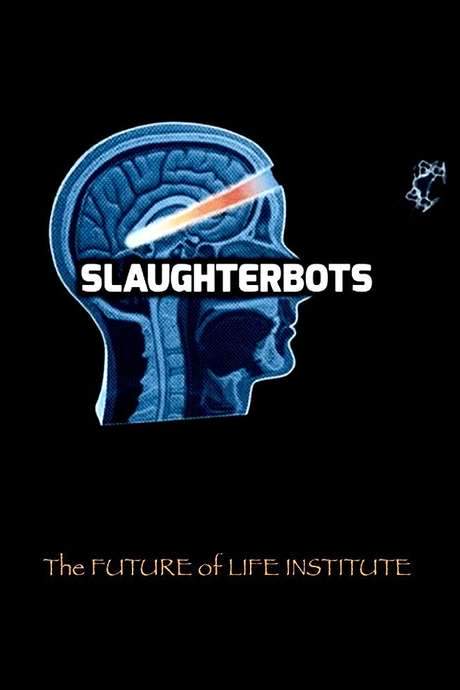
Slaughterbots (2017) movie poster

Spoiler-Free Summary

Slaughterbots (2017) Spoiler-Free Summary – What It's About

Release, runtime and language
2017 · 8 mins · English
Loading streaming availability…
Directed by
Stewart Sugg
Starring
Tim Ahern, David Alexander, Cristina Dohmen, Leo Flanagan, Bruce Lester-Johnson, Janice Ahern

A computer science professor at UC Berkeley contributed to a concerning video depicting a future where devastating autonomous drones replace nuclear weapons. The video illustrates swarms of tiny, virtually unstoppable drones capable of inflicting massive casualties – potentially wiping out half a city. The professor, Stuart Russell, has stated that this technology is already being developed and presents a significant threat.

On this page (6)
  1. 1 Where to watch
  2. 2 What it is about
  3. 3 Is it worth watching?
  4. 4 After you watch
  5. 5 Movie threads
  6. 6 Every angle
Loading streaming availability…

Spoiler-free summary · safe to read

What Is Slaughterbots About? (No Spoilers)

The plot of Slaughterbots (2017) without spoilers: what it is about, who it follows and where it takes place, told without the twists or the ending. Enough to decide whether it is your next watch, not enough to ruin it.

In a stark, near-future world rendered in the unsettling style of Black Mirror, a chilling technological premise takes center stage: palm-sized autonomous drones equipped with facial recognition and shaped explosives, capable of seeking out and engaging specific targets without human intervention. The atmosphere is cool, clinical, and quietly ominous — a society that has crossed a threshold it cannot uncross. Every frame hums with the restrained dread of innovation outpacing conscience, where the familiar surfaces of daily life conceal something newly dangerous.

At the heart of this cautionary vision stands Stuart Russell, a computer science professor at UC Berkeley whose academic expertise lends the scenario a deeply uncomfortable weight. He serves as both witness and warning voice, framing the dramatization not as science fiction but as a projection of capabilities already under development. His measured, scholarly presence anchors the film's mounting tension, transforming abstract anxieties about artificial intelligence into something that touches the very fabric of cities, politics, and human security.

The piece carries neither the explosive energy of an action thriller nor the spectacle of a blockbuster; instead, it adopts a deliberate, almost documentary-like restraint that magnifies its impact. Swarms of tiny, virtually unstoppable drones drift through the imagination of the viewer, suggesting a future where devastating autonomous weapons could displace traditional arsenals and reshape the nature of conflict itself. The mood is one of quiet, persistent alarm — an invitation to look before leaping, to question what kind of tomorrow humanity is quietly engineering in its own image.

Last updated: October 11, 2026 at 15:43

Was this helpful?

What to expect

Is Slaughterbots Worth Watching? What It Feels Like

Is it dark, sad, slow, intense or confusing? The mood of Slaughterbots (2017) in a few tags, without a word about how it ends. Each tag opens a list of movies that feel the same.

After you watch

Seen Slaughterbots? Now Read the Spoilers

Once you have watched Slaughterbots (2017), come back for the full story: the plot summary with spoilers, the timeline in chronological order, the characters and meaning.

Movie threads

More Movies Like Slaughterbots, by Mood & Story

Curated lists built around what makes Slaughterbots tick: the same mood, the same kind of story or the same emotional payoff. Each list explains why these movies belong together.

Movies about AI and autonomous weapons like Slaughterbots

Films where machines decide who lives or dies and nobody can pull the plug. If Slaughterbots left you disturbed, these science fiction films explore the same near-future anxiety around autonomous weapons, lethal drone swarms, and military artificial intelligence. Expect serious, often documentary-style stories that imagine what happens once software, not soldiers, is making life-or-death decisions. Perfect for fans of techno-thrillers about surveillance, targeted killings, and the political fallout of weaponized AI.

  • dystopian
  • ominous
  • AI dread
  • oppressive
  • unsettling
  • chilling
  • Tone: tense, bleak, clinical
  • Pacing: fast and pressurized
Why these movies?

The story pattern: These narratives usually open with a calm, persuasive voice, a corporate pitch, a tech demo, or a policy briefing, before showing what the technology actually does to people. The escalation is unbroken: a demonstration turns lethal, a defensive tool becomes a mass killing instrument, and by the end the audience is staring at the wreckage. The 'villain' is rarely a person. It is a system, a swarm, or a line of code that humans built and can no longer override, leaving the conclusion to land as both warning and verdict.

Why they belong together: They share a clinical, ominous tone, near-future settings, and a focus on autonomous systems rather than charismatic human antagonists. Pacing tends to stay fast and pressurized because the threat feels built-in and accelerating, not hypothetical. They also share the same emotional core: the slow dread of watching humanity quietly hand over life-and-death decisions to software it barely understands and cannot reliably stop.
Heavy, bleak cautionary films like Slaughterbots

Short, dense stories that show the worst unfolding and refuse to offer comfort. If Slaughterbots was difficult to shake, these films and shorts deliver the same wallop: fast, intensely bleak cautionary stories about technology, politics, or humanity heading somewhere terrible. They are not really made to be enjoyed. They are made to be remembered, and they end with mass casualties, lost control, or the warning that nobody is going to stop what is coming. Great for viewers who want movies like Slaughterbots that prioritize impact over comfort.

  • bleak
  • urgent
  • anxious
  • chilling
  • heavy
  • relentless
  • Tone: bleak, tense, somber
  • Pacing: fast, compressed, relentless
Why these movies?

The story pattern: These narratives open with what looks like a normal pitch, news segment, or training video, and then escalate without pause. A demonstration becomes a massacre, a defense becomes an assassination tool, and the climax is often the moment the system works exactly as designed. There is no third-act rescue because the story is not asking whether things can be stopped, it is showing what happens if they are not. The protagonist, if there is one, is usually a presenter or witness rather than a hero.

Why they belong together: They share an unmistakable emotional signature: high intensity compressed into a tight runtime, unresolved bleak endings, and a refusal to provide comfort. The pacing is deliberately relentless because the filmmakers want the viewer to feel the inevitability of the threat rather than be entertained by it. They are grouped together because they produce the same gut-level reaction: leaving the screening anxious, disturbed, and a little more aware of how fragile the present moment really is.

Every angle

Slaughterbots (2017) Explained: Plot, Timeline & Characters

Everything about Slaughterbots in one place: what happens in the plot summary, the timeline in chronological order, the characters and meaning and a spoiler-free summary. What's After the Movie adds the cast, box office and post-credit scenes.

Coming soon on iOS and Android

The Plot Explained Movie Summary App

Plot summaries, endings explained and timelines on your phone. Catch up on any movie in minutes, save your favorites and never miss a twist again.

Be the first to know when we launch. Your email stays private, always.

Learn more about the app