











Plot Explained Spoilers guaranteed!
Plot Explained

Browse by genre

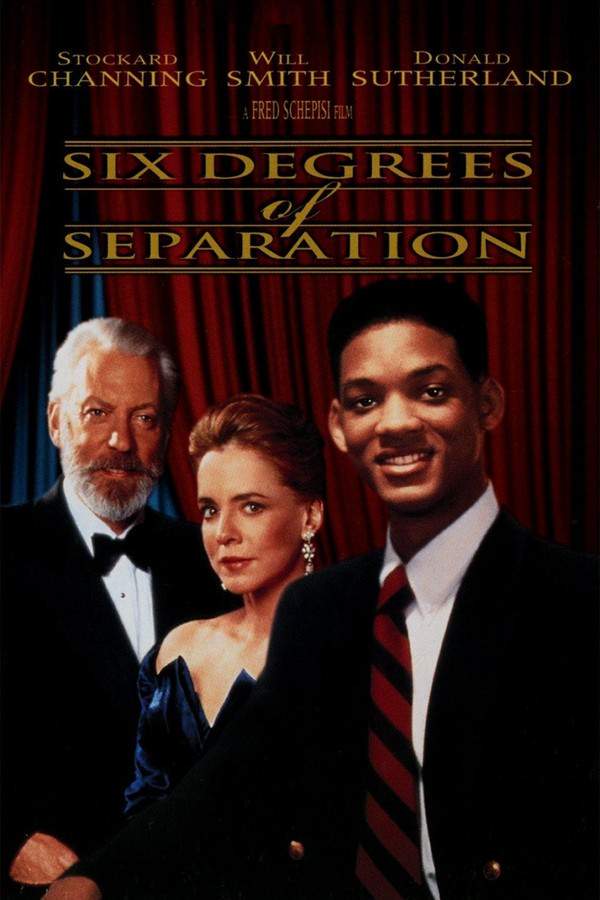
Six Degrees of Separation (1993) movie poster

Timeline

Six Degrees of Separation (1993) Timeline Explained – Every Event in Order

Release, runtime and language
1993 · 112 min · English
Directed by
Fred Schepisi
Starring
Will Smith, Ian McKellen, Donald Sutherland, Richard Masur, Heather Graham, Bruce Davison

The lives of wealthy New York art dealers Flan and Ouisa are thrown into disarray when they encounter a captivating con artist named Paul. He insinuates himself into their social circle, forging deep connections with the couple and their children. As Flan and Ouisa become increasingly invested in Paul, they uncover a surprising and elaborate deception that challenges their perceptions of identity, class, and the intricate relationships that define their world. The revelation sparks a series of unexpected consequences, threatening to unravel their carefully constructed lives.

On this page (7)
  1. 1 Where to watch
  2. 2 Events in order (11)
  3. 3 Timeline questions answered
  4. 4 The book behind the movie
  5. 5 Movie threads
  6. 6 Movies like Six Degrees of Separation
  7. 7 Every angle

Where to watch

Where to Watch Six Degrees of Separation (1993)

Where can you watch Six Degrees of Separation? Stream, rent or buy it in the US, including on Fawesome, Hoopla and Kanopy: current JustWatch availability with up-to-date prices.

Streaming availability powered by JustWatch

11 events in order · contains spoilers

Six Degrees of Separation Timeline: Events in Chronological Order

Every key event of Six Degrees of Separation (1993) in order, scene by scene, with when and where it takes place. Use it to untangle flashbacks, time jumps and parallel storylines, to refresh your memory before the sequel or to find the exact scene you are thinking of.

  1. Introduction to the Kittredges

    Ouisa Kittredge and her husband Flan are portrayed as an affluent couple living in New York City. They enjoy a high-society lifestyle, boasting about their children studying in prestigious institutions.

    Where
    Fifth Avenue, New York City
  2. Paul's Intrusion

    One evening, Paul, a mysterious young man, appears at the Kittredge's doorstep. He presents himself as a close friend of their children, claiming to be the son of the famous Sidney Poitier and arrives injured and bleeding.

    Where
    Kittredge's Home
  3. Welcoming Paul

    Impressed by Paul's charm and sophistication, Ouisa and Flan invite him into their home. They are captivated by his knowledge of literature and art, finding his company refreshing amidst their social circle.

    Where
    Kittredge's Home
  4. Flattery and Generosity

    Paul flatters the Kittredges, extolling their luxurious lifestyle and impeccable taste. In their desire to help someone they believe to be in need, Ouisa and Flan lend him money, further deepening their trust in him.

    Where
    Kittredge's Home
  5. The Hustler's Arrival

    The situation takes a dramatic turn when Paul brings home a hustler, adding an unexpected layer of complexity to his persona. This event serves as a critical catalyst that leads the Kittredges to question Paul's intentions.

    Where
    Kittredge's Home
  6. Revelation of Deception

    As the night unfolds, Ouisa and Flan begin to realize that Paul's portrayal of himself is nothing but a façade. The couple discovers that they have become victims of a narcissistic con artist, leading to feelings of betrayal.

    Where
    Kittredge's Home
  7. Expulsion of Paul

    Stunned and heartbroken by the truth, the Kittredges decide to expel Paul from their lives. They confront the emotional turmoil that his brief presence has caused, feeling both anger and nostalgia.

    Where
    Kittredge's Home
  8. Impact on their Social Life

    Despite expelling Paul, his impact lingers in the Kittredge household. Conversations about Paul become a thrilling subject at their cocktail parties, surrounded by an air of intrigue and fascination among their elite friends.

    Where
    Various Cocktail Parties
  9. Whispers of Enchantment

    As the Kittredges share their experience with Paul at social gatherings, he transforms into a figure of gossip and enchantment. Many of their friends become fascinated by the story of the charming con artist and what he represented.

    Where
    High Society Events
  10. Reflection on Influence

    Ultimately, Paul leaves a profound and complex impact on Ouisa and Flan, forcing them to reflect on their lives and the nature of trust. They grapple with the lessons learned from being deceived and question their own perceptions.

  11. Enduring Legacy

    Paul's fleeting presence continues to resonate in their lives long after he has gone. Ouisa's insistence that she will not become a statistic underscores her desire to regain control over her narrative and seek deeper authenticity.

Last updated: November 15, 2024 at 16:39

Was this helpful?

Timeline questions answered

Six Degrees of Separation Timeline Explained: Your Questions Answered

When does it happen, and why in that order? The questions people ask about the chronology of Six Degrees of Separation (1993): time jumps, flashbacks, cause and effect between scenes and the correct order of events, each answered with spoilers.

Q1

Why did Paul choose to deceive the Kittredges specifically?

Paul targeted the Kittredges because they were wealthy, connected to the arts, and had children at elite Ivy League institutions. This made them ideal victims for his con - they valued sophistication, had access to money, and would be impressed by his claims of being connected to prestigious circles, including the son of Sidney Poitier. Their social aspirations and desire to appear open-minded and cultured made them vulnerable to his manipulation.

  • paul
  • kittredges
  • motivation
  • con artist
  • targeting victims
Q2

How was Paul able to convince Ouisa and Flan he was who he claimed?

Paul used a combination of tactics: he arrived injured and bleeding to gain sympathy, claimed to be a close friend of their Harvard son, and presented himself as the son of famous actor Sidney Poitier. His sophisticated manner, knowledge of literature and art, culinary skills, and flattering commentary about their lifestyle all convinced them he was a credible, educated young man from their social sphere. His charm and wit made them want to believe him.

  • paul
  • deception
  • con
  • charm
  • credibility
  • sidney poitier
Q3

What was the significance of Paul bringing home a hustler?

When Paul brought home a hustler, it exposed the cracks in his fabricated identity and forced the Kittredges to question who he really was. This event served as the catalyst that led Ouisa and Flan to investigate his background. The hustler represented the true reality of Paul's life - his poverty and marginalization - which directly contradicted his story of being a wealthy, well-connected young man. It was the turning point that revealed his deception.

  • hustler
  • turning point
  • revelation
  • deception exposed
Q4

Why did Ouisa and Flan lend money to someone they just met?

Ouisa and Flan lent money to Paul because his charm had already deeply impressed them and they wanted to help someone they believed was a friend of their children. Additionally, they enjoyed feeling like generous patrons to someone of apparent high culture. Their wealth and status allowed them to lend money casually, and Paul's gratitude reinforced their self-image as kind, cultured benefactors. The lending also deepened their emotional investment in him.

  • money
  • lending
  • trust
  • charm
  • ouisa
  • flan
Q5

What motivated Paul to carry out this elaborate deception?

Paul's motivations appeared complex - he seemed driven by a desire to escape his impoverished reality and experience the wealth and sophistication he witnessed in elite circles. By infiltrating the lives of wealthy New Yorkers, he could momentarily live a different life and receive the admiration and acceptance he craved. His deception may also have been a form of social commentary or personal revenge against the class system that excluded him.

  • paul
  • motivation
  • class
  • identity
  • escape
Q6

Why did the Kittredges become so fascinated with Paul after discovering he was a con artist?

After discovering Paul's deception, the Kittredges remained fascinated because his story became a compelling narrative for their social circle. Their experience represented an intriguing blend of humiliation and adventure - being duped by someone unexpectedly intelligent and charming. At cocktail parties, Paul's tale became the most fascinating story they'd ever experienced, transforming their humiliation into a form of social currency. They were drawn to the complexity of what happened.

  • obsession
  • social circle
  • cocktail parties
  • fascination
  • storytelling
Q7

What does Ouisa mean when she says she won't be a statistic?

When Ouisa says "I won't be a statistic" at the end, she means she refuses to be reduced to a simple example or cautionary tale about being fooled. She wants to maintain control over her own narrative rather than become a story others tell about naive wealthy people who fell for a con. The quote represents her desire to process the experience on her own terms and find authentic meaning beyond being a punchline in social gossip.

  • ending
  • quote
  • ouisa
  • identity
  • narrative
  • authenticity
Q8

How did the Kittredges finally discover Paul's true identity?

The Kittredges began to realize Paul was lying when he brought home the hustler, causing them to question his story. This prompted them to investigate further, leading to the discovery that their supposed houseguest was actually a poor young man from Harlem who had been running the same con on multiple wealthy families throughout the city. The contrast between his claimed wealthy background and the reality of his impoverished life was finally exposed.

  • discovery
  • truth
  • investigation
  • hustler
  • revelation
Q9

What did Paul represent to the wealthy social elite after his deception was revealed?

To the wealthy social circle, Paul became a symbol of intrigue and excitement - a mysterious figure who challenged their assumptions about identity and class. His story represented both a fascinating entertainment and an unsettling reminder of their own vulnerability. He became a catalyst for self-reflection about their values, their trust, and what they truly knew about the people around them. His charm and intelligence made him unforgettable.

  • symbolism
  • class
  • identity
  • society
  • reflection
Q10

Why was Paul so knowledgeable about art and literature despite his poverty?

Paul's knowledge of art and literature demonstrated that his con was carefully planned and sophisticated. He likely studied extensively to convincingly portray someone from an elite background. His hunger for culture and education, combined with natural intelligence, allowed him to absorb enough knowledge to fool educated, art-dealing professionals. This makes his situation more tragic - he had the intellect and cultural appreciation to belong but was excluded by socioeconomic barriers.

  • education
  • knowledge
  • culture
  • intelligence
  • class divide
Q11

How do class and race factor into Paul's deception of the Kittredges?

Class and race are central to the film - Paul, a poor Black man, was able to manipulate wealthy white New Yorkers partly by leveraging their assumptions and guilt about these very issues. He claimed to be the son of Sidney Poitier, a famous Black actor, and used their desire to seem progressive and open-minded against them. The deception exposes how wealth and social status can blind people to reality, and how identity can be performed when society judges based on appearances and background.

  • class
  • race
  • identity
  • prejudice
  • social status
  • money

Movie threads

More Movies Like Six Degrees of Separation, by Mood & Story

Curated lists built around what makes Six Degrees of Separation tick: the same mood, the same kind of story or the same emotional payoff. Each list explains why these movies belong together.

Urbane dramas of social deception like Six Degrees of Separation

Sophisticated stories where charming imposters disrupt the lives of the elite. If you enjoyed the sophisticated deception in Six Degrees of Separation, you'll appreciate these movies. This thread gathers similar stories about clever imposters infiltrating high society, leading to sharp social satire and thoughtful character studies that explore identity and class.

  • sophisticated
  • thought-provoking
  • satirical
  • unsettling
  • charming
  • reflective
  • Tone: bittersweet, satirical, reflective
  • Pacing: steady, deliberate
Why these movies?

The story pattern: The narrative typically follows a charming, enigmatic individual who gains access to a closed, privileged social circle. Their presence acts as a catalyst, exposing hidden tensions and hypocrisies. The story unfolds through a steady, character-driven pace, building towards a revelation that doesn't necessarily destroy lives but profoundly alters perspectives.

Why they belong together: These films are grouped together for their shared focus on class satire, intellectual intrigue over action, and the psychological impact of a reveal. They share a sophisticated aesthetic, a bittersweet tone, and a fascination with the blurred lines between performance and identity.


Intellectual dramas of shattered illusions like Six Degrees of Separation

Character-driven stories where a personal encounter forces a re-evaluation of reality. For viewers who liked the reflective, thought-provoking nature of Six Degrees of Separation, this thread collects movies where a pivotal encounter shatters a character's illusions. These films explore the aftermath of such revelations with melancholy and intellectual depth.

  • thought-provoking
  • melancholic
  • reflective
  • unsettling
  • sophisticated
  • character-driven
  • Tone: reflective, melancholic, thought-provoking
  • Pacing: steady, character-focused
Why these movies?

The story pattern: A stable, perhaps complacent, character or group encounters a force—a person, an idea, or an event—that fundamentally contradicts their core beliefs. The narrative follows their gradual or sudden process of realizing their previous understanding was incomplete or false. The conflict is primarily internal, leading to a mixed or bittersweet resolution where the character is irrevocably changed but not necessarily broken.

Why they belong together: These films share a common emotional arc centered on disillusionment and self-discovery. They are united by a medium emotional weight, a steady pacing that allows for reflection, and an ending that feels mixed—neither purely happy nor sad, but complex and transformative.

If you liked this

Movies Like Six Degrees of Separation

Similar movies to Six Degrees of Separation: the same genre, themes or kind of story. Each one comes with its own plot summary, timeline and ending explained.

Browse all movie summaries

Every angle

Six Degrees of Separation (1993) Explained: Plot, Timeline & Characters

Everything about Six Degrees of Separation in one place: what happens in the plot summary, the timeline in chronological order, the characters and meaning and a spoiler-free summary. What's After the Movie adds the cast, box office and post-credit scenes.

Coming soon on iOS and Android

The Plot Explained Movie Summary App

Plot summaries, endings explained and timelines on your phone. Catch up on any movie in minutes, save your favorites and never miss a twist again.

Be the first to know when we launch. Your email stays private, always.

Learn more about the app