Plot Explained Spoilers guaranteed!
Plot Explained

Browse by genre

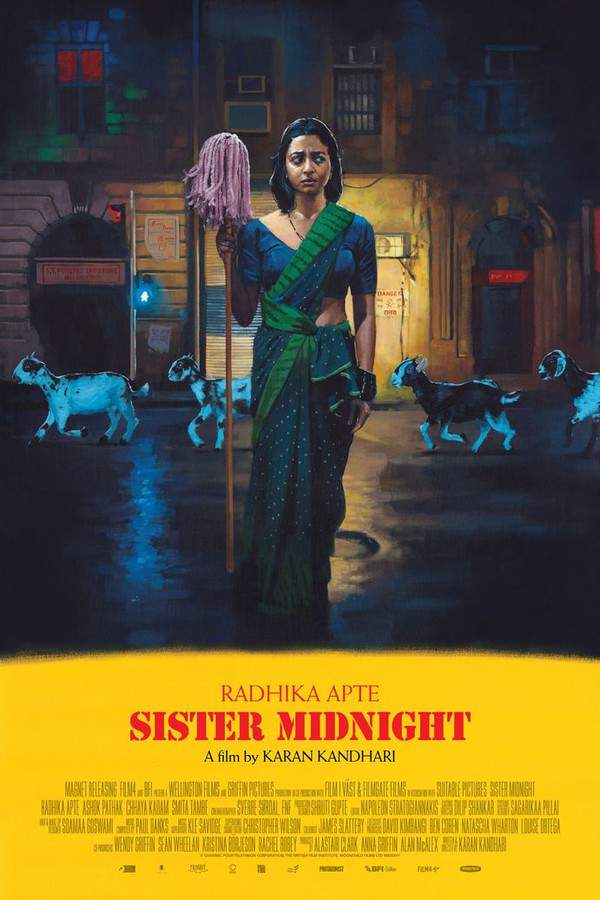
Sister Midnight (2025) movie poster

Ending Explained

Sister Midnight (2025) Ending Explained – Final Scene & Meaning

Release, runtime and language
2025 · 1 h 50 m · English
Echo score 78
Loading streaming availability…
Directed by
Karan Kandhari
Starring
Ashok Pathak, Radhika Apte, Chhaya Kadam, Smita Tambe, Navya Sawant, Dev Raaz

Uma, a rebellious young woman, leaves her small town for Mumbai, hoping for a fresh start. However, she finds herself ill-prepared for the challenges of domestic life and clashes with her neighbors while struggling to adjust to the intense urban environment. Feeling trapped by the expectations placed upon her, she decides to forge her own path and escape the constraints of traditional roles.

On this page (7)
  1. 1 Where to watch
  2. 2 What happens at the end
  3. 3 Final events in order
  4. 4 Ending questions answered
  5. 5 Movie threads
  6. 6 Movies like Sister Midnight
  7. 7 Every angle
Loading streaming availability…

Ending explained · contains spoilers

What Happens at the End of Sister Midnight?

How Sister Midnight (2025) ends, what the final scene means, which earlier moments set it up and how to read the ending if the film leaves it open. The full ending explained, with every spoiler.

The ending of Sister Midnight is both surreal and symbolic, emphasizing Uma’s complete transformation and her rejection of societal norms. After enduring a series of bizarre and horrific events—she becomes a vampire, kills her husband Gopal, and fights her way through fear and superstition—Uma finally sheds her former self and embraces her monstrous identity. When she boards the Himalayan Express train, she nonchalantly claims she has a "new face," symbolizing her liberation from conventional standards of beauty and normalcy. Her physical transformation into a vampire, with fangs, dark attire, and a defiant stance, signifies her rejection of the patriarchy, societal expectations, and her own suppressed emotions. The absurdity of the CGI goats trailing her on the train adds a humorous, almost parody-like touch to her metamorphosis, illustrating that she has become a creature of chaos and rebellion. Ultimately, the film suggests that Uma has accepted her true self—wild, powerful, and unapologetically monstrous—standing as a metaphor for breaking free from oppressive cultural constraints and embracing one’s authenticity, no matter how bizarre or frightening it may seem.

Last updated: June 25, 2025 at 08:44

Was this helpful?

The last 4 events

How Sister Midnight Ends: The Final Events in Order

The last events of Sister Midnight (2025) in chronological order, the run-up to the ending explained above. The complete timeline has all 15 events, scene by scene.

Open the full timeline
  1. Rescue by Buddhist nuns

    Uma collapses on the road and is rescued by female Buddhist monks. They patch her wounds, feed her, and tell stories of choosing freedom from social norms. The encounter offers shelter and a glimpse of a path beyond fear.

    When
    after collapse
    Where
    monastery
  2. House attacked by mob and burned

    Back in her neighborhood, men with flaming torches surround her house and burn it down. Birds escape from the inferno as the crowd wrongly believes she is inside. The destruction forces Uma to flee once more into the city.

    When
    night
    Where
    neighborhood, Mumbai
  3. Rescue and departure to the Himalayas

    Sheetal and a few friends arrive in a car with fresh clothes and supplies to help Uma. They drive her to a railway station where she boards the Himalayan Express, claiming a new face and a new identity. The group shows her that she can choose her own fate even if it means leaving behind her old life.

    When
    late night
    Where
    city streets to railway
  4. Final transformation and freedom

    On the Himalayan Express, Uma fully embraces her true identity. She reveals a new face and drapes herself in a black saree with black lipstick and fangs. She chooses to be a vampire and monster rather than a powerless wife, signaling a complete transformation and new freedom.

    When
    departure
    Where
    Himalayan Express, on the train

Ending questions answered

Sister Midnight Ending: Your Questions Answered

The questions people ask most about the ending of Sister Midnight (2025): what the final scene means, how the twist works, what happens to each character and how to read the ending. Each answer contains spoilers.

Q1

Why does Uma become a vampire in the ending

Uma becomes a vampire as part of her radical transformation from a suppressed housewife into a powerful, unapologetic entity. The vampirism represents her rejection of societal norms and her embrace of a monstrous identity that grants her the strength to escape her trapped circumstances. This supernatural change mirrors her psychological break from the expectations placed upon her.

Foreshadowing: Earlier scenes establish Uma's growing aggression and defiance toward her oppressors, hinting at her eventual transformation.

  • uma transformation
  • vampirism
  • supernatural escape
  • monster identity
Q2

Does Uma kill her husband Gopal in the movie

Yes, Uma kills her husband Gopal during her transformation into a vampire. This act represents the ultimate breaking point in her rejection of marital entrapment and traditional roles. The murder is portrayed as the climax of her violent departure from the life that confined her.

Foreshadowing: Tensions between Uma and Gopal escalate throughout the film as she struggles against domestic expectations.

  • gopal death
  • husband killed
  • marital violence
  • final act murder
Q3

What does Uma mean when she says she has a new face

When Uma claims she has a "new face," she is symbolically declaring her complete transformation and liberation from conventional standards of beauty and normalcy. The statement reflects her acceptance of her monstrous new identity. This "new face" represents her rejection of the social mask she was forced to wear as a submissive wife.

  • new face symbolism
  • identity transformation
  • self-acceptance
  • unconventional beauty
Q4

Why do CGI goats appear on the train in the ending

The CGI goats trailing Uma on the Himalayan Express add a humorous, parody-like element to her metamorphosis, blending the absurd with the horrific. This absurdist touch illustrates that she has become a creature of chaos and rebellion. The goats likely represent the rural, superstitious world she is leaving behind, now following her rather than fearing her.

  • cgi goats
  • absurdist humor
  • chaotic rebellion
  • symbolic animals
Q5

Is Uma free at the end of Sister Midnight

Uma achieves freedom at the end, but it comes at a terrible cost, she has permanently lost her humanity and committed murder. She boards the train literally and metaphorically free from the constraints of patriarchal society. However, this freedom is dark and bittersweet, as she is now permanently othered as a vampire.

  • freedom
  • escape
  • train journey
  • bittersweet ending
Q6

Is the ending of Sister Midnight happy or sad

The ending is bittersweet, Uma achieves hard-won freedom from oppressive societal norms, but at the terrible cost of her husband's life and her own humanity. She successfully escapes, yet she is now a monstrous vampire permanently separated from a normal life. The tone celebrates her rebellion while acknowledging its devastating consequences.

  • bittersweet ending
  • tragic freedom
  • ambiguous happiness
  • emotional conclusion
Q7

What does Uma's vampire transformation symbolize

Uma's vampirism serves as a clear metaphor for societal oppression and the monstrous demands placed upon women. Becoming a vampire gives her power and agency she was denied as a submissive wife. The transformation represents her rejection of patriarchy, suppressed emotions, and conventional expectations, it is a violent embrace of her authentic, wild self.

  • vampire metaphor
  • oppression symbolism
  • patriarchy critique
  • authenticity
Q8

Why does Uma choose to embrace her monstrous identity

Uma embraces her monstrous identity because the alternative was continued entrapment in a life of domestic oppression and spiritual death. After enduring graphic psychological pressure and violence, she chooses power over victimhood. Her choice represents a radical assertion of selfhood, even if that self is terrifying and permanently outside society's acceptance.

  • monster identity
  • self-actualization
  • power over oppression
  • radical choice
Q9

What happens to Uma's humanity in the ending

Uma loses her humanity entirely by embracing vampirism, she is permanently othered as a creature that must drink blood to survive. The film suggests this loss is the price of her freedom. She trading a suffocating but socially acceptable existence for a powerful but monstrous one.

  • humanity loss
  • monster transformation
  • permanent othering
  • cost of freedom
Q10

Why does the ending take place on a train to the Himalayas

The Himalayan Express train symbolizes Uma's journey from the urban chaos of Mumbai toward a remote, uncivilized frontier where she can exist outside societal norms. The Himalayas represent a space of wildness and freedom far from the expectations of city life. The train setting also provides a transitional space between her old life and her new monstrous existence.

  • himalayan train
  • journey symbolism
  • escape destination
  • spatial metaphor
Q11

Does Uma feel any guilt about killing Gopal

The film does not portray Uma as experiencing guilt over killing Gopal, instead, she appears liberated by the act. Her emotional state in the ending suggests acceptance rather than remorse. This reflects the movie's theme that sometimes breaking free requires violent rejection of those who trap us.

  • guilt
  • remorse
  • emotional state
  • moral ambiguity
Q12

What is the movie's message about patriarchy through the ending

The ending suggests that patriarchal structures can only be escaped through complete transformation, even becoming monstrous. Uma's journey shows that reform within the system is impossible; true freedom requires shedding one's assigned identity entirely. The film critiques a society that makes becoming a monster the only viable escape for oppressed women.

  • patriarchy critique
  • societal oppression
  • gender expectations
  • feminist message

Movie threads

More Movies Like Sister Midnight, by Mood & Story

Curated lists built around what makes Sister Midnight tick: the same mood, the same kind of story or the same emotional payoff. Each list explains why these movies belong together.

Movies about urban alienation and monstrous liberation like Sister Midnight

Characters pushed to their breaking point by the oppressive city. Explore films like Sister Midnight where characters undergo radical transformations to escape urban oppression. These movies share a dark tone, heavy emotional weight, and themes of societal rebellion, offering a similar experience of claustrophobic city life leading to monstrous self-discovery.

  • claustrophobic
  • unsettling
  • rebellious
  • suffocating
  • lonely
  • absurd
  • Tone: dark, unsettling
  • Pacing: steady, methodical
Why these movies?

The story pattern: A protagonist, often an outsider, arrives in a sprawling city hoping for a new life, only to be suffocated by its demands, loneliness, and rigid social structures. Their internal struggle against these pressures manifests in a literal or metaphorical metamorphosis, leading to a violent or surreal break from societal norms and a new, albeit monstrous, form of freedom.

Why they belong together: These films are grouped by their shared exploration of the city as a source of profound alienation and their use of dark, often supernatural, metaphors for psychological breakdown and rebellion. They deliver a consistent vibe of claustrophobia, intense emotional pressure, and a bittersweet victory born from extreme transformation.

Movies about female rebellion against patriarchy like Sister Midnight

Women violently breaking free from oppressive domestic roles. Discover films similar to Sister Midnight that focus on women violently overthrowing oppressive systems. If you liked the themes of marital entrapment and monstrous metamorphosis, these movies offer more stories of heavy, dark, and transformative female rebellion.

  • rebellious
  • suffocating
  • unsettling
  • triumphant
  • violent
  • claustrophobic
  • Tone: dark, bleak
  • Pacing: steady, deliberate
Why these movies?

The story pattern: A woman is ensnared in a domestic situation defined by tradition and male control, feeling her identity and agency erode. The internal pressure to conform clashes with a deep-seated desire for freedom, culminating in a graphic, often supernatural, act of violence that serves as both a destruction of her prison and a rebirth into a new, empowered, yet isolated state.

Why they belong together: This thread connects films through their core theme of female rage and liberation. They share a dark, heavy tone and a high-intensity viewing experience, using similar narrative devices like body horror to visualize the psychological cost of rebellion and the bittersweet nature of freedom won through drastic means.

If you liked this

Movies Like Sister Midnight

Similar movies to Sister Midnight: the same genre, themes or kind of story. Each one comes with its own plot summary, timeline and ending explained.

Browse all movie summaries

Every angle

Sister Midnight (2025) Explained: Plot, Ending, Timeline & Characters

Everything about Sister Midnight in one place: what happens in the plot summary, the timeline in chronological order, the characters and meaning, the ending explained and a spoiler-free summary. What's After the Movie adds the cast, box office and post-credit scenes.

Coming soon on iOS and Android

The Plot Explained Movie Summary App

Plot summaries, endings explained and timelines on your phone. Catch up on any movie in minutes, save your favorites and never miss a twist again.

Be the first to know when we launch. Your email stays private, always.

Learn more about the app