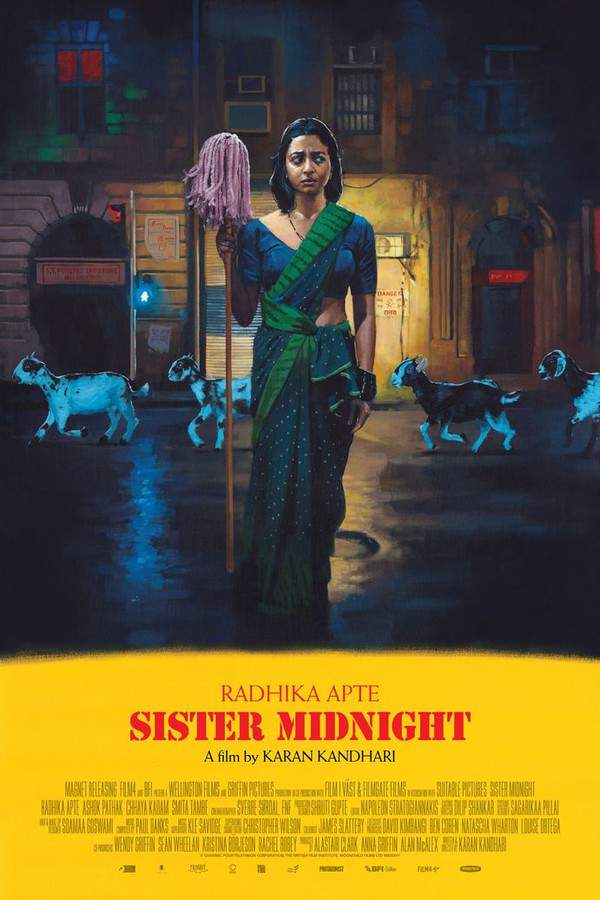
Uma, Radhika Apte, enters an arranged marriage with Gopal, Ashok Pathak, a man seen by many in the village as the least desirable match for a daughter’s future. The film follows a young woman whose spirit clashes with the claustrophobic rules of a life she never asked for. From the moment she steps into the cramped room in the Mumbai slums, Uma’s world feels suffocating: the constant clamor of the streets, the lack of sunlight, and a husband who seems more afraid of her than affectionate. The marriage is supposed to be a new start, but it reads like a quiet sentence, and Uma finds herself drifting between a sense of duty and a growing craving for air, space, and autonomy.
The daily grind tightens its grip. Uma can’t imagine a life spent cooking and pleasing others, a routine she can barely bear. She tries to connect with Gopal, but even simple intimacy eludes them, and his evenings are often spent with the bottle after a long day. When she summons the courage to speak of travel, he agrees, and together they set off on a journey that quickly proves poorly planned and unsatisfying, leaving them back at home with a hollow sense of defeat.
A spark of companionship appears in Sheetal, a neighbor who shares Uma’s ennui. Sheetal, Chhaya Kadam, becomes a practical ally as Uma learns to cook and begins to see a way to navigate life beyond the apartment’s shut windows. The two women trade stories of confinement and small escapes, and Uma’s resolve grows stronger. Yet the dream of freedom remains elusive, and she keeps searching for a way to break the hold of tradition.
Uma’s restlessness pushes her toward little acts of rebellion. She takes a job at a nearby office, where she playfully boasts that she is “the goddess of cleaning,” a line that hides a deeper hunger to prove she can contribute to the world outside her door. The new routine gives her brief breath—moments when she can step away from Gopal and the stifling environment at home. But the weight of her marriage and the sense that she is slowly dissolving inside it only intensifies.
As time passes, Uma’s health falters in ways that cannot be dismissed as mere nerves. She stops eating and suspects nothing more than a bad meal from a wedding, yet the sickness deepens into something unexplainable. The story hints at a metamorphosis—whether it is a feral turn of illness or a symbolic transformation commenting on the suffocating practice of marrying a stranger and becoming a passive spectator of one’s own life. Uma’s silhouette grows gaunt, her vitality drains away, and she begins to move through the night with a hunger that leaves no room for the daylight she was promised.
Her new identity emerges in the darkness: Uma becomes a predator, a creature who hunts not just for food but for agency. She embraces this shift with a fierce determination, using her nocturnal life to resist a world that would keep her in a passive role. The office job becomes a foothold for a little independence, even as she is drawn back into the dangerous margins of her own nature.
When Uma finally reveals the truth of what she is, the moment destabilizes the life she has, and the couple’s fragile bond is torn apart. A day at the beach with Gopal and the neighbor’s company ends in an act of passion that costs him his life. His death leaves Uma to grapple with guilt and the stark reality that her transformation has irrevocably changed her fate. She weaves flowers and lights around his decomposing body, trying to turn it into something quasi‑divine, a shrine that can be seen and understood by the others around her.
Neighbors become unsettled as the scent and the sounds of a strange ritual rise from the home. When a curious neighbor presses for answers, Uma defends herself in the only way she knows how, and the consequences escalate, culminating in the chilling act of a murder. With the help of a group of friends who admire Uma, several of whom are transgender, she moves the body away from the house and toward a more private resting place in the woods, eventually returning to the ritual of cremation that feels like a final rite of passage in a world that refuses to accept her.
An ascetic approaches Uma and rubs his own ashes onto her face as a stark, penetrating moment of contact with mortality. This odd exchange is followed by a quiet solidarity as he helps collect the ashes and shares a moment of reverent stillness with her. Yet the tranquility is short-lived; Uma’s body fails again, and she is found by Buddhist nuns who nurture her with meals, warm clothes, and a new sense of belonging in a monastery. This shelter feels like a respite from the world’s fear and suspicion, a space where women have chosen to redefine their relationship with faith, ritual, and the self.
Upon returning to her neighborhood, Uma encounters a mob of men with torches—an act of retribution that confirms the peril she faces for simply existing on her own terms. The burning house scene is brutal and frightening, but birds flying from the ruined home signal a form of defiant survival. She seeks help from Sheetal, but the response is delayed, and she finds herself caught between police, the religious authority, and the relentless superstition that surrounds her.
In a moment of crisis, Sheetal and a circle of friends intervene, arriving with fresh clothes and a promise of protection. The mob surrounds their car, threatening to end Uma’s tour of life there and then. Uma recognizes that her enemies fear her more than they want to harm her, and she leans into that fear, turning herself into a figure that unsettles the crowd rather than one they can easily pin down. They drive away, and when the car finally reaches the railway station, Uma steps onto the Himalayan Express with a new sense of purpose.
On the train, a question about her appearance prompts a quiet bravado: she tells a fellow passenger that she’s simply got a new face and walks on. In that moment, and as the journey unfolds, Uma fully embraces her transformed self. She chooses to cast off the expectations of others, to live as a vampire, witch, or monster if that is what freedom requires. She adopts a dramatic look—draped in a black saree, with black nails and black lipstick, her fangs bared to the world—an unapologetic declaration that she will no longer seek approval.
The film closes on a note of radical self-possession, a woman who has moved from captivity to sovereignty, from fear to a deliberately chosen ferocity. The transformation is not merely physical; it is a reclamation of identity in the face of a society that would rather she be quiet, compliant, and unseen. Uma’s journey—one of suffering, awakening, and defiance—resonates as a meditation on gender, power, and the peril and promise of choosing one’s own path.