Plot Explained Spoilers guaranteed!
Plot Explained

Browse by genre

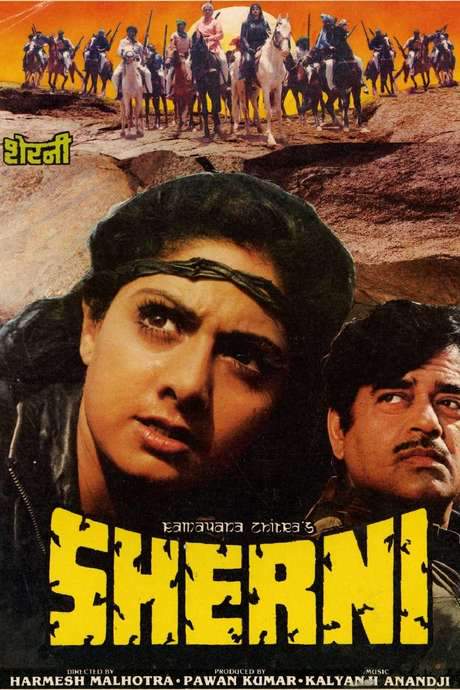
Sherni (2021) movie poster

Timeline

Sherni (2021) Timeline Explained – Every Event in Order

Release, runtime and language
2021 · Hindi
Echo score 81
Loading streaming availability…
Directed by
Amit Masurkar
Starring
Brijendra Kala, Vijay Raaz, Sharat Saxena, Ashwini Ladekar, Ila Arun, Mukesh Prajapati

A determined forest officer ventures deep into the Indian wilderness in pursuit of a tigress that has been preying on livestock. While tracking the animal, she confronts not only the dangers of the forest but also the complex relationship between humans and wildlife, and the challenges faced by those who protect it. The officer must find a way to resolve the conflict and restore balance in the region.

On this page (6)
  1. 1 Where to watch
  2. 2 Events in order (15)
  3. 3 Timeline questions answered
  4. 4 Movie threads
  5. 5 Movies like Sherni
  6. 6 Every angle
Loading streaming availability…

15 events in order · contains spoilers

Sherni Timeline: Events in Chronological Order

Every key event of Sherni (2021) in order, scene by scene, with when and where it takes place. Use it to untangle flashbacks, time jumps and parallel storylines, to refresh your memory before the sequel or to find the exact scene you are thinking of.

  1. Vidya Vincent is appointed DFO in a sensitive MP forest zone

    Vidya Vincent begins her first field posting as Divisional Forest Officer in a sensitive forest zone of Madhya Pradesh, determined to protect wildlife. She approaches the assignment with passion, aware of political pressures and local resistance she will face. She is joined by Pyare Lal, who installs motion-sensor cameras to track tiger movements, and by Babbal, her driver who keeps the operations grounded on the ground.

    When
    Day 1
    Where
    Madhya Pradesh forest zone
  2. Cameras monitor tiger movements with Pyare Lal

    Pyare Lal sets up motion-sensor cameras across the forest to map tiger activity. Vidya uses the data to understand how tigers move through the landscape and where conflicts might occur. Babbal, Vidya's driver, supports field operations as the team begins long hours in the wild.

    When
    Early weeks
    Where
    Forest base
  3. Water holes neglected; show-cause to contractor

    Vidya discovers water holes in the forest are not properly supplemented by contractor Manish. She admonishes him and serves a show-cause notice, attempting to enforce basic welfare for wildlife. Her authority is undermined by her senior Bansal, who is aligned with the local MLA GK Singh.

    When
    Early tenure
    Where
    Forest watering points
  4. Vidya debates resignation due to political pressure

    Facing political interference and bureaucratic resistance, Vidya speaks with her husband Pawan about quitting. Pawan argues that a permanent government salary offers security that private-sector work cannot. Yet Vidya feels trapped, unable to abandon the forest or collaborate with corrupt interests.

    When
    Early tenure
    Where
    Home and field
  5. Two locals killed in tiger attacks

    Two locals are killed by tiger attacks soon after Vidya assumes charge, triggering fear and anger in nearby villages. ACM Mohan attributes the killings to villagers provoking tigers by moving cattle in front of them, a pattern some say is subsidized by the state. The tragedy underscores the complexity of human-tiger conflicts in the sensitive zone.

    When
    Early phase
    Where
    Forest outskirts
  6. DNA sampling proposed to identify the tiger

    Hassan Noorani proposes taking DNA samples to identify the tiger responsible for the attacks. The plan is to capture the tiger and relocate it to a nearby National Park, reducing local wrath. Vidya endorses the DNA approach, hoping for a science-based resolution that protects both people and wildlife.

    When
    Pre-capture phase
    Where
    Forest lab
  7. Forest mosaics: human settlements inside the wild

    Vidya learns that pockets of human settlements exist between forest blocks, forcing animals to cross through inhabited areas. These crossings contribute to more encounters and attacks, complicating conservation efforts. She sees coexistence as essential for the survival of tigers and the communities that depend on the forest.

    When
    Early investigations
    Where
    Interspersed forest villages
  8. Election season heightens tensions

    With elections near, GK Singh promises cattle feed and electric fencing to win villagers' support, while PK Singh accuses the forest department of campaigning for GK. Vidya pledges to resolve the tiger issue and allows DNA sampling to proceed, seeking a neutral path. PK ultimately consents to the DNA sampling, leveraging it to push political narratives.

    When
    Election period
    Where
    Village/Forest region
  9. Bansal urged to hire hunters; conflicts with PK

    PK introduces Bansal to two hunters, DK and Ali, but Bansal refuses to hire them, seeking a transfer in exchange for toeing GK's political line. The department grows divided as officials weigh career risks against the mission to save the tiger. Vidya and Noorani continue to push for evidence-based action despite pressure.

    When
    Mid-stage
    Where
    Office/field
  10. Tigress T-12 identified; cubs and new threat

    DNA confirms the tiger is a tigress named T-12, with two cubs visible in the area. Her presence escalates the crisis, and a third killing stirs anger and mob action against the Forest Department. PK uses the turmoil to press for quick fixes, while Vidya persists in seeking a just approach.

    When
    Mid-phase
    Where
    Forest area
  11. Ranjan Rajhans enters; Nangia takes charge

    The MLA brings hunter Ranjan Rajhans into the arena to boost public support. Vidya and senior Nangia push back against Ranjan's approach and work to sideline him. Ranjan's reckless tactics, including defying orders, threaten to derail the operation.

    When
    Climax prep
    Where
    Forest operations zone
  12. Ranjan's tactics and the bear-scratch revelation

    Ranjan uses illegal methods, including luring the tigress with tiger urine and firing to kill before the authorities can respond. The team then claims a forced kill with tranquilizers to cover up the death. Vidya, aided by Noorani, learns that the dead tiger's scratches were from a bear, not the tigress, complicating the political narrative.

    When
    Climax
    Where
    Forest/near National Park
  13. Vidya contemplates resignation again; takes charge

    After the cover-up becomes apparent, Vidya contemplates resigning once more. Sought to be transferred, she is urged to keep fighting; she eventually tears a resignation letter but remains committed to the mission. Her determination is rekindled when she learns the cubs are still alive.

    When
    Post-cover-up
    Where
    Field and office
  14. Cubs found; Vidya returns to Lagur

    Jyoti and Vidya locate the tigress's cubs in a cave near Lagur and vow to keep their location secret. Vidya's resolve strengthens as she refuses to bow out, choosing to protect the cubs at all costs. She travels back into action, reaffirming her lioness-like spirit.

    When
    Post-cubs discovery
    Where
    Lagur region
  15. Ending: Vidya among remains in a museum

    In the closing scenes, Vidya inspects animal remains in a museum, irony highlighting her role with respect to living predators versus dead specimens. Her lioness-like resolve remains intact, signaling ongoing dedication to wildlife and justice. She is shown not as a conqueror of living tigers, but as a guardian of their memory and of truth.

    When
    Ending
    Where
    Museum

Last updated: March 05, 2026 at 18:39

Was this helpful?

Timeline questions answered

Sherni Timeline Explained: Your Questions Answered

When does it happen, and why in that order? The questions people ask about the chronology of Sherni (2021): time jumps, flashbacks, cause and effect between scenes and the correct order of events, each answered with spoilers.

Q1

Why does Vidya think about quitting her job as DFO?

Vidya considers resigning because she faces constant political interference from her senior Bansal, who is aligned with the local MLA. Her authority is undermined at every turn, and she feels trapped between her duty to protect wildlife and the impossibility of doing so without support. Her husband Pawan suggests she take the stable government job rather than fight a losing battle against systemic corruption.

Foreshadowing: Earlier scenes show Vidya being undermined by Bansal when she tries to hold contractor Manish accountable for neglected water holes.

  • vidya vincent
  • resignation
  • political pressure
  • bansilal bansal
  • forest officer
Q2

Why do some locals kill tigers despite the danger?

Some locals deliberately move cattle into tiger territory because the government issues compensation for livestock killed by tigers. This creates a perverse incentive where tigers are provoked, leading to attacks that benefit the villagers financially. The practice is mentioned by ACM Mohan as a likely cause of the escalating conflict.

Foreshadowing: The tension between conservation and livelihood is established early when Vidya discovers the forest's borders are a mosaic of human settlements interwoven with wildlife corridors.

  • tiger attack
  • compensation
  • locals
  • cattle
  • killing
Q3

How do politicians use the tiger attacks for their own benefit?

With elections approaching, incumbent MLA GK Singh promises cattle feed and electric fencing to win votes, while also pledging to capture the tiger and send it to a zoo or circus. His opponent PK Singh accuses the forest department of helping GK's campaign and resists DNA sampling to score political points. Both sides weaponize the tiger issue rather than seeking a genuine solution.

Foreshadowing: The political stakes are introduced early when Vidya's authority is undermined by Bansal, who is aligned with the local MLA.

  • election
  • gk singh
  • pk singh
  • politicians
  • tiger issue
Q4

Why does PK Singh initially oppose DNA testing on the tiger victims?

PK Singh opposes DNA sampling because he wants to use the tiger attacks as a political weapon against incumbent MLA GK Singh. He accuses the forest department of aiding GK's campaign and refuses to allow DNA work until Vidya personally guarantees that the tiger problem will be addressed. Once she does, PK allows the testing to proceed, leveraging it for his own political narrative.

Foreshadowing: The conflict between GK Singh and PK Singh over the tiger issue is established early in the election season timeline.

  • dna testing
  • pk singh
  • opposition
  • politics
  • forest department
Q5

Why is it significant that the killer tiger is identified as T-12 with cubs?

The DNA results reveal that the tiger responsible for the attacks is a tigress named T-12 who has two cubs. This complicates the situation because relocating a mother with cubs is extremely difficult, and killing her would leave the cubs orphaned. The identification raises ethical questions about whether a mother tiger protecting her territory should be punished for attacks largely caused by human encroachment.

Foreshadowing: Earlier scenes establish that villagers have been pushing deeper into the forest due to teak plantations, forcing tigers to defend their territory.

  • t-12
  • tigress
  • cubs
  • dna
  • identification
Q6

Why does Vidya's discovery that scratches were from a bear change everything?

Vidya discovers that the scratches on one victim's body were from a bear, not the tigress. This revelation means the tiger may not have been responsible for all the killings, potentially undermining the entire justification for the hunt. However, Nangia initially resists accepting this finding, preferring to maintain the narrative that the tigress is the sole threat.

Foreshadowing: The bear scratch discovery comes during the climax when Ranjan's reckless tactics are escalating the situation.

  • bear scratches
  • tigress
  • evidence
  • innocence
  • cover-up
Q7

Why does Ranjan use illegal methods like tiger urine to hunt the tigress?

Ranjan Rajhans uses tiger urine to lure the tigress out of hiding, a dangerous and illegal tactic that disregards protocol. This reckless approach succeeds in drawing out the tigress, allowing him to shoot her down. The authorities then deploy a tranquilizer after her death to make it appear as a required killing, creating a cover-up to justify the illegal action.

Foreshadowing: Earlier scenes show Vidya pushing back against Ranjan's approach, recognizing his calculating motives and danger to the operation.

  • ranjan rajhans
  • tiger urine
  • illegal
  • hunt
  • cover-up
Q8

Why does Vidya describe the tigress's killing as premeditated murder?

Vidya calls it premeditated murder because Ranjan used illegal luring tactics (tiger urine) specifically to draw out and kill the tigress, rather than following proper capture or relocation protocols. The subsequent use of a tranquilizer after death was a calculated cover-up to make the killing appear justified, rather than the lawful action it was meant to be.

Foreshadowing: The film establishes that Hassan Noorani's DNA-based relocation plan was the approved scientific approach, which Ranjan's tactics deliberately undermined.

  • premeditated murder
  • tigress
  • ranjan
  • vidya
  • cover-up
Q9

What makes Vidya tear up her resignation letter?

Vidya decides to stay after learning that the tigress's cubs have survived. A call from Jyoti and her family reveals the cubs' location in Lagur. This rekindles Vidya's determination to protect the surviving cubs and fulfill her duty to the forest. She tears up the resignation letter and reaffirms her commitment to the living beings she has sworn to protect.

Foreshadowing: The film establishes Vidya's deep commitment to wildlife protection from her first day as DFO, making her choice to stay consistent with her character arc.

  • resignation letter
  • cubs
  • lagur
  • vidya
  • commitment
Q10

What does the museum scene at the end signify about Vidya's career?

The ending shows Vidya examining animal remains in a museum, a starkly ironic image that underscores the paradox of her career. Despite being a capable officer with a lioness-like spirit, she ends up as the custodian of dead specimens rather than the guardian of living wildlife. However, her resolve remains intact, suggesting she will continue fighting for conservation despite the systemic failures she has witnessed.

Foreshadowing: The museum ending mirrors Vidya's earlier determination to protect the cubs, showing her commitment persists even after loss.

  • museum
  • ending
  • irony
  • vidya
  • career
  • conservation
Q11

Why do teak plantations increase human-tiger conflicts?

Local figure Saiprasad converted traditional grazing grounds into teak plantations, pushing villagers deeper into the forest just to sustain their livestock. This encroachment forces tigers to defend their territory in increasingly inhabited areas, leading to more frequent and dangerous encounters between humans and wildlife.

Foreshadowing: This conflict is introduced when villagers argue that their traditional grazing grounds have been taken over, forcing them into tiger territory.

  • teak plantation
  • saiprasad
  • grazing
  • encroachment
  • forest
Q12

Why does Bansal refuse to hire the hunters DK and Ali?

Bansal refuses to hire the hunters DK and Ali when PK Singh introduces them because he is waiting for a transfer in exchange for doing the MLA's political bidding. Rather than take action that might conflict with GK Singh's interests, Bansal prioritizes his career advancement and chooses to remain aligned with the incumbent MLA's wishes.

Foreshadowing: Bansal's alignment with the MLA and his undermining of Vidya's authority is established from her first day on the job.

  • bansal
  • hunters
  • dk
  • ali
  • transfer
  • political

Movie threads

More Movies Like Sherni, by Mood & Story

Curated lists built around what makes Sherni tick: the same mood, the same kind of story or the same emotional payoff. Each list explains why these movies belong together.

Movies about fighting bureaucracy like Sherni

Determined individuals face bureaucratic mazes and political resistance. If you liked Sherni, discover other movies where a protagonist's fight is against the system itself. These films feature determined individuals battling bureaucratic red tape, political pressure, and institutional corruption to achieve their goal, creating a tense and compelling narrative.

  • determined
  • frustrating
  • tense
  • gritty
  • hopeful
  • procedural
  • Tone: tense, determined, frustrating
  • Pacing: steady, procedural
Why these movies?

The story pattern: The narrative centers on a protagonist with a clear, morally justified goal who is consistently thwarted not by a traditional villain, but by procedural hurdles, uncooperative colleagues, and political maneuvering. The climax is often a small, hard-won victory that highlights the difficulty of systemic change.

Why they belong together: Movies are grouped here by their shared focus on the internal conflict between individual integrity and systemic obstacles. They share a tense, determined mood and a focus on perseverance in the face of institutional frustration.

Environmental conflict movies with bittersweet endings like Sherni

Stories where the fight to protect nature yields complex, bittersweet results. Fans of Sherni will appreciate these movies about human-wildlife conflict and environmental protection. They share a tense, atmospheric mood and explore the complex relationship between communities and nature, often ending on a bittersweet note that balances sacrifice with a sense of cautious hope.

  • atmospheric
  • tense
  • reflective
  • bittersweet
  • hopeful
  • gritty
  • Tone: tense, reflective, bittersweet
  • Pacing: steady, atmospheric
Why these movies?

The story pattern: The plot unfolds around a central ecological conflict, pitting conservation efforts against economic interests or human safety. The protagonist acts as a mediator or defender, facing moral ambiguity. The resolution is rarely a clean victory, instead offering a realistic compromise that acknowledges the costs of progress and the fragility of balance.

Why they belong together: These films are united by their thematic core of environmental conflict, their reflective and atmospheric tone, and their emotionally resonant, bittersweet conclusions that reflect the complexity of the issues at hand.

If you liked this

Movies Like Sherni

Similar movies to Sherni: the same genre, themes or kind of story. Each one comes with its own plot summary, timeline and ending explained.

Browse all movie summaries

Every angle

Sherni (2021) Explained: Plot, Timeline & Characters

Everything about Sherni in one place: what happens in the plot summary, the timeline in chronological order, the characters and meaning and a spoiler-free summary. What's After the Movie adds the cast, box office and post-credit scenes.

Coming soon on iOS and Android

The Plot Explained Movie Summary App

Plot summaries, endings explained and timelines on your phone. Catch up on any movie in minutes, save your favorites and never miss a twist again.

Be the first to know when we launch. Your email stays private, always.

Learn more about the app