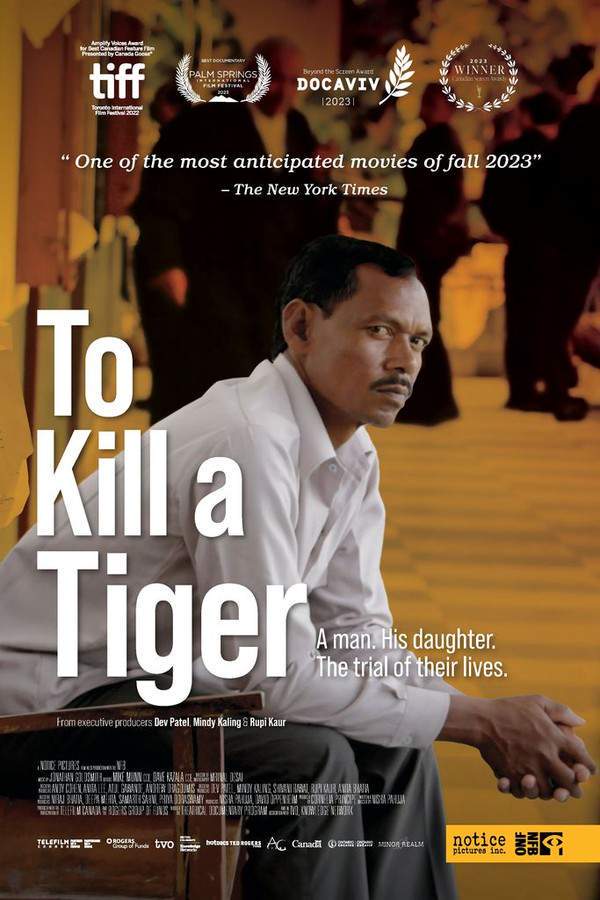
Gangaram is the Sarpanch, the respected leader of a village tucked inside the deep forest of the Pilibhit tiger reserve in Uttar Pradesh, India. The community battles ongoing famine and crop failure, made worse by wildlife encroachment that intrudes on scarce farmland. A government poster catches his eye, offering a ₹10,00,000 compensation to the kin of victims of fatal tiger encounters near tiger reserves. Desperate to lift his people out of poverty, he formulates a risky plan: to sacrifice himself in a tiger attack, hoping the gesture will spark aid and attention for his starving villagers. His search for a tiger leads him to cross paths with a ruthless poacher, a man named Jim Ahmed, and an unlikely alliance forms between two men from vastly different worlds.
The story follows their uneasy collaboration as they venture into the forest, chasing the elusive big cat. After days of pursuit, they finally spot a tiger. Courage cools into calculation as Gangaram steps toward the animal while the poacher prepares to shoot. Yet the tiger, full and wary, refuses to attack and slips away, leaving the two men with more questions than answers. Their pursuit is interrupted by forest officers, who intervene, shoot the poacher, and take Gangaram into custody. The village's fate hangs in the balance as the incident becomes a powerful symbol back home.
News travels fast as Gangaram’s tale resonates across India, turning him into a national figure and eventually earning him a pardon from the court. The transformation of a desperate village leader into a symbol of resilience and controversy unfolds against the backdrop of authorities weighing conservation, law, and the desperate needs of the poor. The film uses this sequence to spotlight the social issues faced by the less fortunate and to probe the moral complexities born from extreme hunger, hope, and the lure of dramatic solutions.
In the closing act, Gangaram returns to the jungle—not alone, but escorted in four-wheelers by officers who envision promoting tourism in the reserve. Yet the journey ends on a stark, solitary note: as he steps away to relieve himself in the jungle, he is confronted by a tiger, reminding viewers of the unpredictable costs of living at the edge of wildlife and poverty. The final image lingers on the tension between progress and peril, and the enduring question of who truly benefits when desperation meets policy. Here, the story remains firmly rooted in social realism, presenting a portrait of resilience, risk, and the fragile line between survival and spectacle.