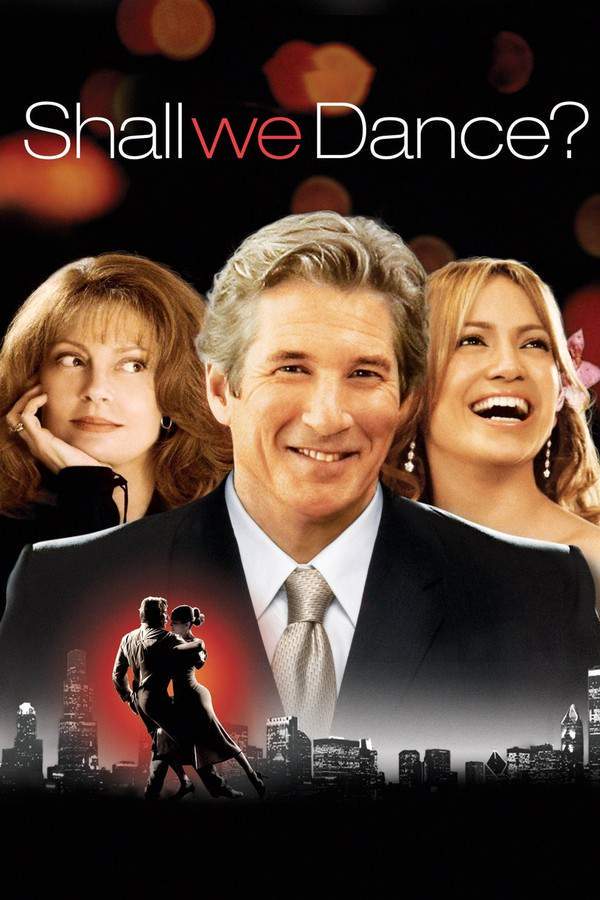
The film opens with a close-up of the inscription above the ballroom stage at the Blackpool Tower: "Bid me discourse, I will enchant thine ear," taken from Shakespeare’s Venus and Adonis. A narrator explains that in Japan, ballroom dancing is viewed with suspicion, a cultural spark that clashes with rigid social expectations. Against this backdrop, we meet Shohei Sugiyama, a successful salaryman who seems to have it all—a suburban home, a loving wife, Masako, and a teenage daughter, Chikage, while he works as an accountant in Tokyo. Yet beneath the surface he is rattled by a sense of directionless drift, and a creeping depression begins to shape his days.
Sugiyama’s ordinary routine is jolted one night when he glimpses a slender, melancholic figure gazing out from the window of a dance studio. The woman is Mai Kishikawa, a renowned figure on the Western ballroom circuit, and this chance encounter ignites an intense curiosity in him. He plunges into dance lessons, not for a grand romantic pursuit but to chase a new meaning in life that has eluded him. The studio’s instructor is Tamako Tamura, a patient mentor who guides him through the basics as he discovers a deeper pull toward the art form. In class he befriends a cast of fellow newcomers: Tōkichi Hattori, who joined to win back his wife; Masahiro Tanaka, who hopes to shed a few pounds; and Toyoko Takahashi, another student whose presence adds texture to the group. He also learns that a coworker from his firm, Tomio Aoki, is a secret dancer— balding in public but long-haired in private, thanks to a wig—revealing that passion can hide behind appearances and social masks.
The allure of dancing grows for Sugiyama, but it is not Mai who becomes his sole obsession; the activity itself becomes the source of life-affirming purpose. Meanwhile, his wife Masako notices his odd changes and, fearing infidelity, hires a private detective to shadow him. The detective’s findings—paired with Sugiyama’s increasing devotion to the studio—rally his classmates around a shared dream, and the mid-tier dream becomes a real goal when they enter an amateur competition. The day of the contest arrives with a mix of nerves and pride; Masako attends, having learned the truth from the detective who has somehow turned into a ballroom aficionado. During the performance, Sugiyama stumbles, nearly topples his partner, and in a flash the skirt of her dress is ripped. They withdraw from the contest, and the controversy surrounding Aoki’s disqualification reverberates through the workplace, where Sugiyama speaks up to defend those who pursue dancing despite misunderstanding from colleagues.
Back home, Sugiyama declares that he has given up dance. Yet the thread of dancing remains. Toyoko and Aoki visit again and bring Mai’s letter, in which she reflects on a past failure at Blackpool and explains how working with Sugiyama and Toyoko rekindled her trust in partnership. Through a candid, heartfelt conversation with Masako, Sugiyama begins to bridge the widening gap between them, though he initially resists Masako’s request to teach her. The two begin to repair their relationship with the gentle push of their daughter, Chikage, who steps in to remind them of what they mean to each other. Slowly, a new balance forms at home, and a renewed sense of possibility begins to take root in Sugiyama’s life.
As the family’s bond deepens, Sugiyama’s perspective shifts again when he sees a sign in the dance studio window on the train ride home: “Shall we dance.” The next day, he chooses to attend Mai’s farewell party in Blackpool, moving with a cautious hope toward the moment when Mai will select a partner for the final dance. The story culminates in a charged reunion at the dance floor, where Mai opens herself to a new partnership and invites Sugiyama to join her in a final, decisive question: > Shall we dance?