Amy finishes her shift at the city morgue and is ready to leave when Seth and their boss Holden are still handling the graveyard duties. A grim headline arrives: a mass murder attributed to Jacob Goodnight at the Blackwell Hotel has produced a fresh queue of bodies. Driven by duty, Amy chooses to postpone her birthday plans and rolls up her sleeves to help process the influx alongside her colleagues. The night air in the morgue grows heavier as more corpses come through the doors, including the infamous killer himself, whose remains carry an unsettling aura that unsettles the team and foreshadows the terror to come. This is a night where professional routine collides with a brutal chain of events, testing loyalties, nerves, and the limits of care in a place built to forget the dead.
Inside the morgue, the mood shifts as Tamara, who is drawn to death and the mythology of killers, convinces Carter to join her for a private look at Jacob Goodnight’ body. The moment of curiosity becomes something darker as desire interrupts caution, and the two venture into a forbidden proximity amid the clinical hush of the room. The thrill shatters when the killer stirs, abruptly awakening and turning the scene into a nightmare: Carter is killed in an instant, and Tamara manages to escape with her life—strained, shaken, and suddenly all too aware of the danger that lurks behind the sterile doors. The incident marks a brutal awakening for the group: death is not a rumor here, but a weapon in someone’s hands.
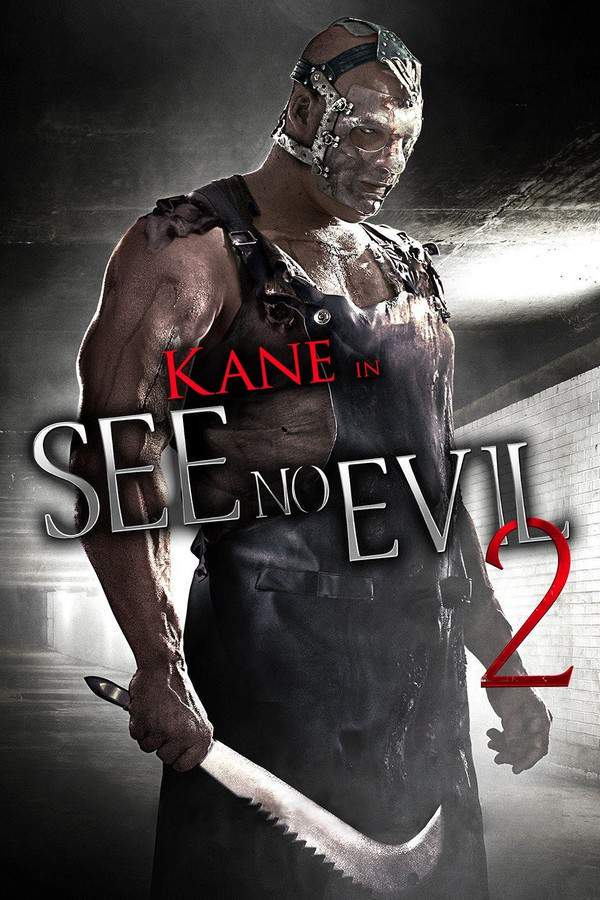
The killer’s plan unfolds as Jacob shrouds himself in a burn victim mask and collects surgical tools, then cuts the building’s electricity, plunging everyone into darkness. The power outage intensifies the claustrophobic horror as the partygoers scramble to locate one another amid the flickering lights and distant alarms. The pandemonium pushes Holden into a perilous confrontation with the masked intruder, and he is seized and mortally wounded, his fate sealed by the savage precision of the killer. The disorienting blackout amplifies fear and makes every shadow feel like a trap, forcing the remaining survivors to rethink every corner they travel.
With the lights out, the survivors venture toward the upper levels, hoping to escape the carnage. Seth returns with the keys to unlock an emergency stairwell, but Jacob is always just behind them, exploiting the maze-like corridors to set ambushes. As the group presses on, Kayla seeks refuge in a bathroom, only to be found by the relentless killer. In a chilling moment, Kayla mutters, "Why would God help you?" as Jacob’s memories—abusive and oppressive—flare up, coloring his next moves with a cold, stubborn remorselessness. The murder of Kayla deepens the sense that the killer’s pain has warped him into a calculation—an agent who turns fear into a ritual of control.
Jacob moves with merciless efficiency, capturing Will to use him as bait, drawing Seth and Amy into a trap that culminates in the brutal death of Amy’s brother. In the ensuing struggle, [Seth] fights back, taking a devastating electric knife blow and forcing Amy to improvise a rescue. She reveals that she left medical school because she felt death’s inevitability too heavy to treat every patient, a candid moment that adds a quiet gravity to the chaos. Amid the carnage, she and Seth share a rare moment of tenderness as he is wounded, and she tests a dangerous plan to seek help. She slips toward a ground-level window to escape, but the shifting chaos pulls her back as she discovers Jacob blocking the exit in the parking area. The moment is brutal and final for Amy, who is stabbed to death as she attempts to latch the door from inside.
Seth, bruised but determined, tries to flee in a broken vehicle and drives away, hoping to put distance between himself and the nightmare. At the gate, he discovers a grim truth: Jacob is not finished. The killer slips into the car, closes in from behind, and, in a brutal twist, gouges out Seth’s eyes, ending the chase in a single, terrifying act. The morgue’s lights flicker one last time as the bodies of the night’s victims are laid bare in a stark, sorrowful tableau, a grim reminder of the night’s toll and the cost of unchecked violence.
In the end, the camera lingers on the quiet aftermath—a silent montage of the fallen—before returning to the killer’s unmoved, almost contemplative face. Jacob Goodnight speaks with a cold finality that hints at a dénouement beyond the frame, uttering the final line that underscores the film’s themes of sin and guilt: I see it now. The closing image holds on the killer’s gaze, a chilling testament to the sins that saturated the night and the consequences that linger long after the lights have come back on.