Plot Explained Spoilers guaranteed!
Plot Explained

Browse by genre

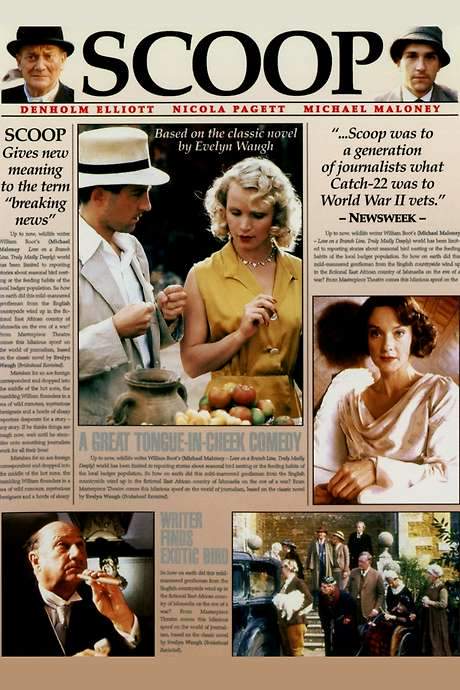
Scoop (1987) movie poster

Characters & Themes

Scoop (1987) Characters, Setting & Themes Explained

Release, runtime and language
1987 · 120 mins · English
Loading streaming availability…
Directed by
Gavin Millar
Starring
Denholm Elliott, Michael Hordern, Donald Pleasence, Tony Haygarth, Jack Shepherd, Martin Wimbush

The 1987 television film, directed by Gavin Millar and adapted by William Boyd from Evelyn Waugh’s 1938 satirical novel, follows a hapless journalist who is mistakenly dispatched to the fictional African country of Ishmaelia. Produced by Sue Birtwistle with executive producers Nick Elliott and Patrick Garland, it features an original score by Stanley Myers and retains the novel’s sharp satirical tone.

On this page (9)
  1. 1 Where to watch
  2. 2 Characters explained (3)
  3. 3 Where & when it takes place
  4. 4 Themes & meaning (3)
  5. 5 Character & meaning questions
  6. 6 The book behind the movie
  7. 7 Movie threads
  8. 8 Movies like Scoop
  9. 9 Every angle
Loading streaming availability…

3 main characters · contains spoilers

Scoop Characters Explained: Who Is Who

The main characters of Scoop (1987), heroes and villains: what drives them, how they change over the course of the story and what each of them reveals about the film's bigger ideas.

  • William Boot (Michael Maloney)

    A timid columnist accustomed to safe, bucolic topics who is thrust into war reporting. He is earnest and moral, often overwhelmed by intrigue, yet trying to maintain integrity amidst chaotic orders. His hesitation and naivety make him susceptible to manipulation, even as he clings to doing what’s right.

    • 🗞️ Journalist
    • 😨 Timid
  • Salter (Denholm Elliott)

    The editor of The Daily Beast, a seasoned but conflicted figure who pushes Boot toward the front lines. He navigates corporate pressure and fear of authority, often balancing loyalty with a sense of responsibility to truth. His guidance is evasive, revealing the compromises editors make under pressure.

    • 🗞️ Editor
    • 🤵 Power-broker
  • Lord Copper (Donald Pleasence)

    The feared boss who wields massive influence over the newsroom. He uses authority and intimidation to steer coverage and protect the institution’s image. His presence looms over the journalists, shaping decisions with a mix of menace and managerial cunning.

    • 🏛️ Boss
    • 🗡️ Manipulator

Last updated: February 18, 2026 at 23:07

Was this helpful?

Setting

Where and When Does Scoop Take Place?

The setting of Scoop (1987): the year and time period, the places and locations, and how they shape the characters, the mood and the tension of the story.

Time period

Location

Ishmaelia

Ishmaelia is a fictional country engulfed in war, with journalists confined to its capital. The government polices reporting through a powerful Ministry of Propaganda, shaping what can be covered. The setting centers on a chaotic press corps trying to secure a sensational scoop amid intrigue and danger.

  • 🗺️ War-torn nation
  • 📰 Press-controlled capital

Last updated: February 18, 2026 at 23:07

Was this helpful?

3 major themes

Scoop Meaning: Themes & Message Explained

What is Scoop (1987) really about? The emotional, social and philosophical themes the film keeps returning to, its symbolism and the message beneath the surface.

  • Media Satire

    The film skewers the newsroom and its power dynamics, showing editors who shape reality to fit a deadline or a boss’s whim. Journalists chase a scoop while being watched, judged, and sometimes manipulated by those in higher positions. It highlights how propaganda and prestige can distort truth in wartime reporting. The result is a sharp, humorous critique of sensationalism.

  • Pressure

    Characters grapple with the fear of losing status or their job, driving questionable decisions. The looming threat from leadership pushes reporters toward conformity, even when truth is at stake. The story examines how professional anxiety can warp ethics in pursuit of a headline. Resistance and integrity surface only faintly amid the stress.

  • Absurdity

    A parade of bizarre characters and mistaken motives turns serious war reporting into farce. The desert trek and tangled loyalties create a surreal backdrop for the daily grind of journalism. The satire rests on how chaos, miscommunication, and vanity collide in the pursuit of power and fame. It ultimately uses humor to critique the fragility of information.

Last updated: February 18, 2026 at 23:07

Was this helpful?

Character & theme questions

Scoop Characters & Meaning: Your Questions Answered

The questions people ask about Scoop (1987): who the characters really are, their relationships, what the symbols mean, where it takes place and what the movie is really about. Each answer contains spoilers.

Q1

Where is the film set?

The story takes place in Ishmaelia, a fictional African country caught in the middle of a war. Journalists are confined to the capital city, where the government controls what can be reported through a powerful Ministry of Propaganda.

  • ishmaelia
  • setting
  • fictional country
  • war zone
  • capital city
Q2

Who is William Boot?

William Boot is the protagonist, a timid columnist normally accustomed to writing safe, bucolic articles about rural life. He is unexpectedly thrust into war reporting and must navigate the dangerous world of frontline journalism while trying to maintain his integrity and moral compass.

  • william boot
  • protagonist
  • journalist
  • columnist
  • naive
Q3

What are the main themes of the movie?

The film explores three interconnected themes: media satire, which critiques how newsrooms shape reality to meet deadlines andbosses' whims; pressure, which examines how fear of losing status drives questionable decisions; and absurdity, which uses humor to highlight the chaos and miscommunication in the pursuit of headlines.

  • themes
  • media satire
  • pressure
  • absurdity
  • journalism
Q4

What does the movie satirize?

The film skewers the newsroom and its power dynamics, showing how editors shape reality to fit a deadline or a superior's preferences. It highlights how propaganda and the pursuit of prestige can distort truth in wartime reporting, delivering a sharp, humorous critique of sensationalism.

  • media satire
  • newsroom
  • propaganda
  • sensationalism
  • journalism
Q5

Who is Lord Copper?

Lord Copper is the feared owner of The Daily Beast newspaper who wields massive influence over the newsroom. He uses authority and intimidation to steer coverage and protect the institution's image, looming over journalists and shaping decisions with a mix of menace and managerial cunning.

  • lord copper
  • newspaper owner
  • authority
  • antagonist
  • editor
Q6

Who is Salter?

Salter is the editor of The Daily Beast, a seasoned but conflicted figure who pushes William Boot toward the front lines. He navigates corporate pressure and fear of authority, often balancing loyalty to his reporters with responsibility to truth, revealing the compromises editors make under pressure.

  • salter
  • editor
  • daily beast
  • journalism
  • pressure
Q7

How does the setting portray press freedom?

The capital of Ishmaelia operates under strict government control, with the Ministry of Propaganda policing what journalists can cover. Reporters are confined to the city and must navigate censorship and manipulation while trying to secure sensational stories amid intrigue and danger.

  • press freedom
  • censorship
  • propaganda
  • ministry
  • journalism
Q8

How does the movie use absurdity?

A parade of bizarre characters and mistaken motives turns serious war reporting into farce. The desert trek and tangled loyalties create a surreal backdrop where chaos, miscommunication, and vanity collide in the pursuit of power and fame, using humor to critique the fragility of information.

  • absurdity
  • humor
  • satire
  • chaos
  • miscommunication
Q9

What does the film say about journalism ethics?

The story examines how professional anxiety and the looming threat from leadership push reporters toward conformity, even when truth is at stake. Integrity surfaces only faintly amid the stress of deadline pressure and competitive scoop-chasing, suggesting ethics often take a backseat to ambition.

  • journalism ethics
  • integrity
  • pressure
  • truth
  • conformity

Movie threads

More Movies Like Scoop, by Mood & Story

Curated lists built around what makes Scoop tick: the same mood, the same kind of story or the same emotional payoff. Each list explains why these movies belong together.

Absurdist media satire movies like Scoop

A gently absurd and bemused look at the foibles of journalism and media. If you enjoyed Scoop's witty take on journalism, you'll like these other films that satirize the media world with a lighthearted, absurdist touch. Find stories with cynical reporters, chaotic newsrooms, and a gentle critique of sensationalism.

  • satirical
  • witty
  • absurd
  • bemused
  • cynical
  • lighthearted
  • Tone: whimsical, satirical
  • Pacing: steady, observational
Why these movies?

The story pattern: These narratives typically follow a 'fish out of water' character thrust into a chaotic media environment. The plot revolves around their misadventures as they navigate the bizarre logic and competitive frenzy of journalists, leading to a series of escalating absurdities rather than a high-stakes thriller.

Why they belong together: Movies are grouped here by their shared tone of whimsical satire and their thematic focus on media cynicism. They offer a similar viewing experience of light, observational comedy that pokes fun at institutional absurdity without heavy-handed drama.

Quirky fish-out-of-water comedies similar to Scoop

Awkward and hilarious journeys of naive characters in strange new worlds. Fans of Scoop's story of a naive journalist abroad will enjoy these other movies about charming misfits in strange situations. Discover similar lighthearted comedies focused on cultural clashes and delightful awkwardness.

  • awkward
  • quirky
  • lighthearted
  • bemused
  • chaotic
  • cultural clash
  • Tone: lighthearted, quirky, awkward
  • Pacing: steady, episodic
Why these movies?

The story pattern: The narrative pattern centers on a protagonist's journey of adaptation. Their initial incompetence and confusion in the new setting create comedic friction, but the story is less about profound change and more about the amusing situations that arise from the culture clash.

Why they belong together: These films share a core premise that guarantees a specific comedic vibe: the humor derived from a character's awkward navigation of an alien culture or bizarre social setting. The tone is consistently lighthearted and the pacing steady, focusing on episodic misadventures.

If you liked this

Movies Like Scoop

Similar movies to Scoop: the same genre, themes or kind of story. Each one comes with its own plot summary, timeline and ending explained.

Browse all movie summaries

Every angle

Scoop (1987) Explained: Plot, Timeline & Characters

Everything about Scoop in one place: what happens in the plot summary, the timeline in chronological order, the characters and meaning and a spoiler-free summary. What's After the Movie adds the cast, box office and post-credit scenes.

Coming soon on iOS and Android

The Plot Explained Movie Summary App

Plot summaries, endings explained and timelines on your phone. Catch up on any movie in minutes, save your favorites and never miss a twist again.

Be the first to know when we launch. Your email stays private, always.

Learn more about the app